
Lost foam casting, as an advanced manufacturing process, offers significant advantages such as high dimensional accuracy, excellent surface finish, minimal machining allowances, and reduced costs. The absence of flash and burrs on castings simplifies cleaning operations, further lowering expenses. These benefits have led to widespread adoption globally. While the technology for producing grey iron castings via lost foam casting is well-established domestically, the growing demand for lightweight components has spurred a trend toward replacing grey iron castings with aluminum alloy castings. Our company has dedicated nearly a decade to mastering lost foam aluminum alloy technology, achieving a yield rate exceeding 98%, which positions us at the forefront in the industry. Our existing aluminum alloy line incorporates advanced equipment like an American full-mold line, a German Strikowestofen melting furnace, an American Pyrotek aluminum purification system, and a German ABB robotic pouring system, among other auxiliary devices. Notably, there are no specialized domestic manufacturers for such integrated designs. To align with our strategic goals, we planned to retrofit an idle domestic lost foam production line originally for grey iron castings into an aluminum alloy line with minimal investment.
The original production line for grey iron castings consisted of two interchangeable lines. Each line included two medium-frequency induction melting furnaces, one semi-automatic pouring machine, one molding and push-box line, two vacuum systems, one integrated sand treatment system, one bag-type dust collector for the melting furnaces, three dust removal systems for the molding line and sand treatment, along with auxiliary equipment such as cooling towers, compressed air filters, and casting conveyor chains. This setup was optimized for the high-temperature demands of grey iron castings, which typically require pouring temperatures above 1500°C. The transition to aluminum alloy casting, with its much lower pouring temperature of around 760°C, necessitated comprehensive reevaluation and modification of key components.
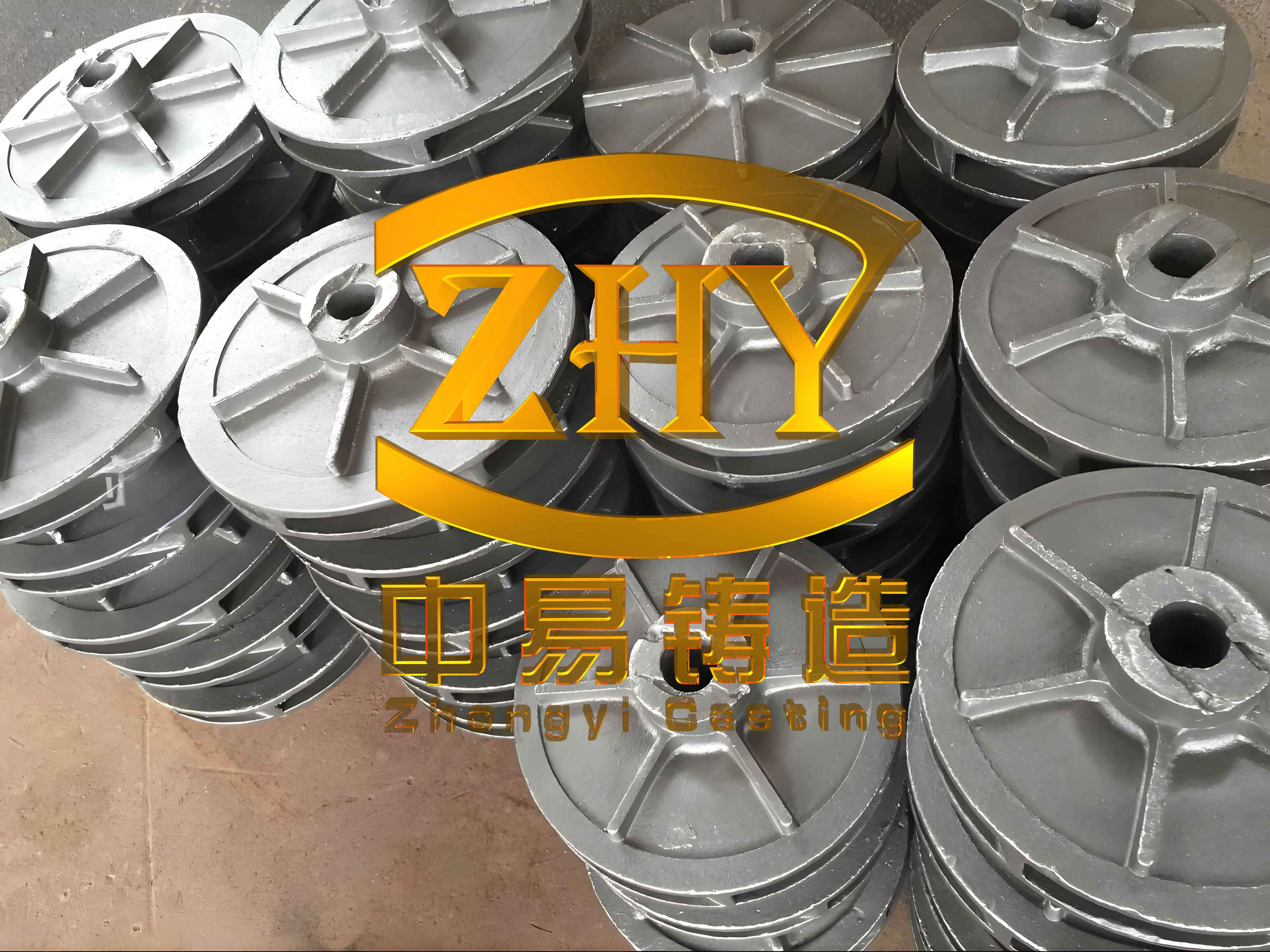
The conversion from a line designed for grey iron castings to one suitable for aluminum alloy involves fundamental differences in equipment and process requirements. Based on our experience with an imported American aluminum alloy lost foam line and an assessment of the existing setup, we identified several critical challenges that required addressed to ensure successful operation.
Melting Equipment
The original line utilized medium-frequency induction furnaces. In such furnaces, the induction coil generates eddy currents in the metal charge, creating a skin effect where heat is generated within the material itself. This allows for rapid melting with minimal metal loss, making it common in aluminum alloy melting, particularly for alloys with higher concentrations of elements like manganese, copper, and zinc. However, for producing high-integrity aluminum castings, this method presents drawbacks. The “hump” or vortex phenomenon during induction stirring can lead to significant gas entrapment in the aluminum melt, resulting in excessive porosity in castings, which is unacceptable for critical applications. Moreover, the original tilting mechanism of the induction furnaces limited continuous production, requiring transfer to a pouring station. This intermittent supply caused substantial temperature drops, adversely affecting casting quality. Energy consumption was another concern; compared to natural gas-fired furnaces, medium-frequency furnaces are less efficient and more costly. After a trial period of over a month using the existing furnaces for aluminum, we found that both casting quality and production efficiency fell short of requirements. Consequently, we decided to replace the induction furnaces entirely with new gas-fired melting and holding furnaces.
To quantify the thermal losses during transfer, consider the heat loss equation: $$Q = m \cdot c \cdot \Delta T$$ where \(Q\) is the heat lost (J), \(m\) is the mass of aluminum (kg), \(c\) is the specific heat capacity of aluminum (approximately \(900 \, \text{J/kg} \cdot \text{K}\)), and \(\Delta T\) is the temperature drop (K). For a typical transfer of 500 kg of aluminum with a drop of 100°C, the energy loss is substantial: $$Q = 500 \times 900 \times 100 = 45,000,000 \, \text{J}$$ This equates to significant wasted energy and necessitates preheating or compensation, adding to operational costs. The following table contrasts key parameters between the original induction furnaces for grey iron castings and the new gas-fired system for aluminum.
| Parameter | Original Induction Furnace (Grey Iron Castings) | New Gas-Fired Furnace (Aluminum Alloy) |
|---|---|---|
| Typical Pouring Temperature | >1500°C | ~760°C |
| Melting Rate | High for iron | 2 tons/hour (designed) |
| Energy Source | Electricity | Natural Gas |
| Gas Entrapment Risk | Low for iron | High if unmodified |
| Operational Continuity | Intermittent | Continuous with holding |
| Estimated Energy Cost per Ton | Higher | Lower |
The decision to switch was driven by the need for stable, low-gas melts essential for aluminum, unlike the more forgiving nature of grey iron castings.
Aluminum Melt Purification System
Melt purification is unique to aluminum casting and was absent in the line for grey iron castings. This necessitated entirely new equipment. Industry practices primarily involve two purification sequences. Sequence #1 involves: melting → tapping into transfer ladle → degassing unit → holding in a定量 pouring furnace → secondary degassing in the定量 furnace → pouring. Sequence #2 is: melting → flowing via launder into a holding furnace for refining → settling in holding furnace → online degassing through a launder → filtration box → pouring furnace → robotic pouring. We conducted a detailed analysis to select the optimal approach.
Sequence #1 requires multiple transfers via forklift, which increases gas pickup and causes temperature drops up to 100°C. The density index (a measure of gas content) tends to be higher and unstable. Pouring efficiency is low, at about 4 minutes per piece. Additionally, the tilting mechanism of定量 furnaces leads to poor pouring accuracy, reducing overall metal yield. For instance, for every 2 tons of aluminum, the variation can be 120-180 kg. In contrast, Sequence #2 with robotic pouring offers greater flexibility, enables constant flow pouring with high precision and stability. The reduction in temperature drop can be modeled by considering heat loss during transfer: $$\Delta T_{\text{drop}} = \frac{Q_{\text{loss}}}{m \cdot c}$$ where \(Q_{\text{loss}}\) is influenced by transfer time and insulation. Robotic pouring minimizes transfer time, thus reducing \(\Delta T_{\text{drop}}\).
| Aspect | Sequence #1 (Ladle Transfer) | Sequence #2 (Launder & Robotic) |
|---|---|---|
| Number of Transfers | Multiple (forklift) | Continuous flow |
| Max Temperature Drop | ~100°C | <30°C |
| Density Index Stability | Poor | Excellent |
| Pouring Efficiency (pieces/hour) | ~15 | 25+ |
| Metal Utilization Yield | Lower (high variation) | High (precise control) |
| Suitability for Automation | Low | High |
We opted for Sequence #2, integrating a Pyrotek purification system that includes online degassing and filtration, ensuring melt quality superior to what was necessary for grey iron castings.
Molding and Push-Box Loop Line
The original loop line for grey iron castings used hydraulic cylinders to push boxes, which were then transferred via shuttle cars. This system presented issues when adapted for aluminum. First, the relative motion between connected sand boxes caused wear on the bumpers at each box end. Assuming an average wear of 0.5 mm per bumper, for a line with 38 boxes, the total length reduction would be 19 mm. However, in practice, factors like box deformation and adhered metal slag from grey iron castings production caused inconsistent push lengths each cycle. This variability made it impossible to implement precise定点 pouring required for aluminum, whether with定量 furnaces or robots. Second, the hydraulic push mechanism resulted in severe shaking of the entire line upon stopping, which could disturb uncured castings, leading to gas entrapment or deformation defects.
To resolve this, we modified the line by fixing all boxes with connecting pins, eliminating gaps and relative movement, thus preventing wear. Key stations such as molding,定点 pouring, and shakeout were equipped with hydraulic positioning devices to ensure push accuracy. The drive system was upgraded from hydraulic cylinders to servo-driven ball screws. The synchronization of two drives improved control precision, and stopping became smooth without noticeable shaking. The positioning accuracy can be expressed as: $$\Delta L = \sum_{i=1}^{n} w_i$$ where \(\Delta L\) is the total length error, \(n\) is the number of boxes, and \(w_i\) is the wear per bumper. With fixed connections, \(w_i \approx 0\), so \(\Delta L \approx 0\). This enhancement significantly boosted product yield, a critical factor for aluminum compared to more tolerant grey iron castings.
Sand Treatment System
The sand system originally designed for grey iron castings required substantial modification due to the lower pouring temperature of aluminum (760°C vs. >1500°C). The exit sand temperature dropped from about 300°C to below 200°C, rendering the original cooling capacity excessive. Over-cooling not only wasted energy but also brought sand temperature below the optimal range for aluminum lost foam process, causing defects. After recalculation, we removed two fluidized bed coolers to right-size the system. Additionally, the lost foam aluminum process, unlike that for grey iron castings, does not use vacuum during pouring and operates at lower temperatures, leading to more EPS (expanded polystyrene) residue. This residue adheres to sand grains, impairing flowability and reducing intergranular spaces for gas adsorption, which can cause defects like backfire or porosity. To address this, we added an intermittent online sand calciner placed upstream of the remaining coolers. By calcining sand at about 600°C, organic contaminants burn off, restoring sand quality. The calciner uses direct natural gas heating for efficiency.
The sand system capacity is 30 tons per hour. Through trials, we determined that calcining 10% of the total sand flow (3 t/h) suffices to maintain quality. Over-calcining increases energy costs unnecessarily. The heat required for calcining can be estimated: $$Q_{\text{calcine}} = m_s \cdot c_s \cdot (T_{\text{calcine}} – T_{\text{in}}) + m_s \cdot \Delta H_{\text{comb}}$$ where \(m_s\) is sand mass flow, \(c_s\) is specific heat of sand (~800 J/kg·K), \(T_{\text{calcine}} = 600^\circ \text{C}\), \(T_{\text{in}}\) is inlet sand temperature, and \(\Delta H_{\text{comb}}\) is the heat of combustion of EPS residues. A comparison of sand parameters is shown below.
| Sand Property | Original Line for Grey Iron Castings | Modified Line for Aluminum Alloy |
|---|---|---|
| Typical Exit Sand Temperature | ~300°C | <200°C |
| Cooling Capacity | Over-designed | Optimized (coolers reduced) |
| EPS Residue Level | Lower (high temp burns off) | Higher (needs calcining) |
| Sand Calcining | Not required | 3 t/h (10% of flow) |
| Energy Focus | Cooling | Selective heating (calciner) |
This adjustment ensures sand quality tailored to aluminum, differing markedly from the needs of grey iron castings.
Other Auxiliary Equipment
Process changes also affected emission control. The fumes from aluminum lost foam casting contain viscous, unburned EPS residues, which are unsuitable for bag-type dust collectors used previously for grey iron castings. We replaced them with a three-stage wet scrubbing system. Learning from our imported line’s experience where carbon steel pipes corroded within six months and the scrubber tank within a year, we specified 304 stainless steel for all piping and the scrubber vessel, along with corrosion-resistant nylon pumps for the circulating water. This ensures durability and continuous operation, avoiding downtime that could affect production of both grey iron castings and aluminum alloy parts if lines were shared.
The selection of materials for wet scrubbers can be based on corrosion resistance models. For instance, the corrosion rate \(R\) might be approximated by: $$R = k \cdot C_{\text{acid}} \cdot e^{-E_a/(RT)}$$ where \(k\) is a constant, \(C_{\text{acid}}\) is acid concentration in the scrubber, \(E_a\) is activation energy, \(R\) is the gas constant, and \(T\) is temperature. Stainless steel offers lower \(k\) values compared to carbon steel, ensuring longevity.
Implementation and Results
After evaluating multiple suppliers, we selected a gas-fired melting and holding furnace from Dongda Sanjian with a melting rate of 2 t/h and a holding capacity of 4 tons, a Pyrotek aluminum purification system, and a redesigned push-box loop line and sand calciner from Beijing Tianzhe Lost Foam Technology Co., Ltd. The revamped line achieves an efficiency of 25 boxes per hour, operates with only 7 personnel, and maintains an equipment uptime exceeding 85%. The yield rate for heavy-duty transmission housings remains stable above 98%, surpassing the performance typically associated with grey iron castings lines in terms of precision and consistency.
The overall improvement in efficiency can be summarized by the production rate formula: $$P = \frac{N_{\text{boxes}}}{t_{\text{cycle}}}$$ where \(P\) is production rate (boxes/hour), \(N_{\text{boxes}}\) is number of boxes processed, and \(t_{\text{cycle}}\) is cycle time. The reduction in \(t_{\text{cycle}}\) due to faster, more precise pouring and reduced downtime boosts \(P\). The following table encapsulates key metrics before and after conversion.
| Metric | Original Line (Grey Iron Castings) | Converted Line (Aluminum Alloy) |
|---|---|---|
| Primary Metal | Grey Iron | Aluminum Alloy |
| Pouring Temperature | >1500°C | ~760°C |
| Typical Yield Rate | High (but not tracked as critically) | >98% |
| Production Rate (boxes/hour) | Variable, lower due to manual steps | 25 |
| Line Operators | More due to handling needs | 7 |
| Energy Consumption per Ton | Higher for melting iron | Lower with gas furnace |
| Sand System Capacity | 30 t/h (overcooled) | 30 t/h (optimized cooling + calcining) |
| Key Defect Risks | Different (e.g., shrinkage in grey iron castings) | Porosity, EPS residue issues |
The transformation underscores how a line originally engineered for grey iron castings can be effectively adapted for aluminum alloy production through targeted modifications in melting, purification, material handling, sand management, and emissions control. The repeated reference to grey iron castings throughout this analysis highlights the foundational differences that drive such a comprehensive retrofit. The success of this project demonstrates the viability of repurposing existing assets to meet evolving market demands for lightweight components, while maintaining the high standards of lost foam casting initially developed for grey iron castings.