
In modern industrial applications, grey iron castings have long been a cornerstone material due to their excellent castability, machinability, and damping capacity. Traditionally, these grey iron castings are predominantly used in agricultural machinery, textile equipment, and machine tools, where sections are often thick and heavy. However, with the rapid advancement of industries such as automotive and precision engineering, there is a growing demand for high-strength, thin-walled grey iron castings. These components require superior mechanical properties and consistent microstructures, even in sections as thin as 12 mm. This shift presents significant challenges in foundry practice, particularly in controlling graphite morphology and preventing the formation of undesirable undercooled graphite. In this article, I will delve into the production nuances of such high-strength thin-walled grey iron castings, drawing from my experiences and technical analyses to provide a comprehensive guide on optimizing composition, inoculation, and process parameters. The goal is to achieve a predominantly Type A graphite structure in thin sections, ensuring that the grey iron castings meet stringent performance criteria while maintaining cost-effectiveness and production efficiency.
The development of a specific automotive steering pump component serves as a pertinent case study. This part was designated with a grade of HT300, equivalent to a tensile strength requirement of 300 MPa. The critical specification was that in the thin-walled regions (approximately 12 mm thick), Type A graphite should constitute over 80% of the graphite phase, and the hardness should fall within the range of 190 HB to 230 HB. Achieving these targets in thin sections is non-trivial, as rapid cooling rates inherent to thin-walled grey iron castings promote undercooling, leading to the formation of Type D and Type E graphite, which detrimentally affect mechanical properties. Initial production attempts revealed these very issues, necessitating a deep dive into the metallurgical mechanisms at play.
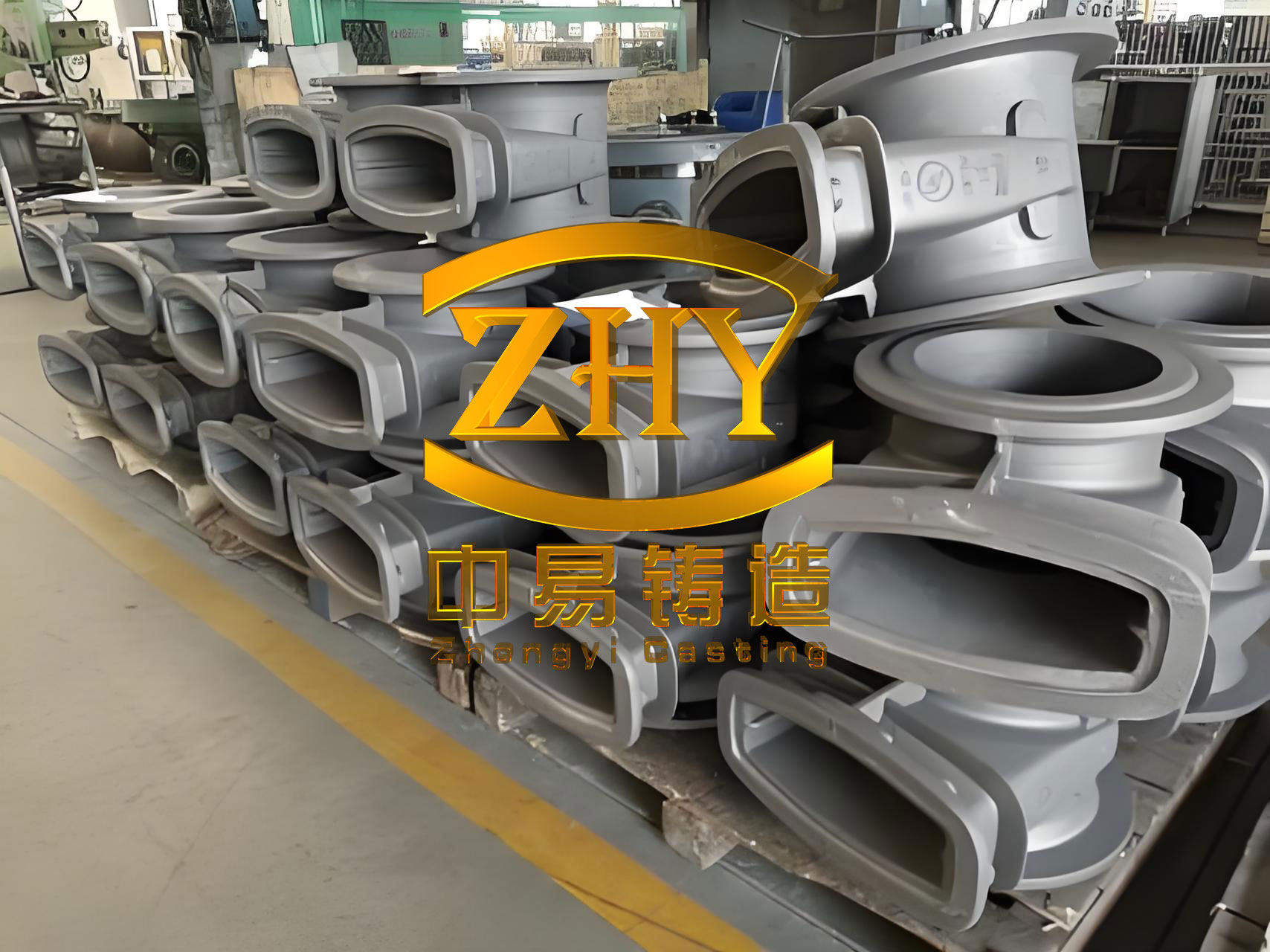
The foundry setup employed for producing these grey iron castings comprised a medium-frequency induction melting system, specifically a one-drag-two furnace configuration, ensuring high melting efficiency and consistent temperature control. For quality assurance, advanced detection equipment was utilized: a fully imported German spark spectrometer for precise chemical composition analysis, a Leica microscope for detailed metallographic examination, and a dedicated tensile testing machine for evaluating mechanical properties. This infrastructure is crucial for the rigorous control needed in manufacturing high-integrity grey iron castings.
Initial melting practices were based on historical data for standard grey iron castings. The chemical composition was controlled as summarized in Table 1. The pouring temperature was maintained between 1420°C and 1380°C, and standard test bars were cast alongside the components for evaluation.
| Element | Ladle Analysis | Final Composition |
|---|---|---|
| C | 3.05 – 3.15 | 2.95 – 3.10 |
| Si | 1.5 – 1.6 | 1.9 – 2.0 |
| Mn | 0.8 – 1.0 | 0.8 – 1.0 |
| P | < 0.05 | < 0.05 |
| S | 0.08 – 0.10 | 0.08 – 0.10 |
| Cu | 0.3 – 0.4 | 0.3 – 0.4 |
The results from this initial approach were telling. The separately cast test bar exhibited a tensile strength of 330 MPa and a hardness of 192 HB, which met the strength requirement but was at the lower end of the hardness range. More critically, the metallographic examination of the thin-walled section of the actual grey iron castings revealed a microstructure consisting of only about 30% Type A graphite, with the remainder being Type D and Type E undercooled graphite. The graphite flakes were notably short, and the matrix was nearly 98% pearlite. This microstructure, while high in pearlite content, was suboptimal due to the prevalence of undercooled graphite, which can act as stress concentrators and reduce the effective load-bearing capacity of the grey iron castings.
To address this, a thorough mechanistic analysis was undertaken. The formation of undercooled graphite (Types D and E) is a direct consequence of a high degree of undercooling during solidification. In thin-walled grey iron castings, the heat extraction rate is very high, leading to rapid cooling that suppresses the growth of stable, flake-like Type A graphite. Instead, the graphite nucleates and grows in the interdendritic regions of the primary austenite, resulting in a fine, branched, and randomly oriented morphology for Type D, or a more directional arrangement for Type E when the carbon equivalent is even lower and undercooling more severe. The fundamental relationship governing graphite formation can be linked to the cooling rate and the driving force for nucleation. The undercooling, $\Delta T$, can be expressed as a function of the alloy composition and thermal parameters:
$$ \Delta T = T_{eq} – T_{act} $$
where $T_{eq}$ is the equilibrium graphite-austenite eutectic temperature and $T_{act}$ is the actual solidification temperature. For grey iron castings, $T_{eq}$ is strongly influenced by the carbon equivalent (CE). A lower CE reduces $T_{eq}$, effectively increasing the undercooling $\Delta T$ for a given cooling condition. The carbon equivalent is a pivotal concept in iron metallurgy, typically calculated as:
$$ CE = \%C + \frac{1}{3}(\%Si + \%P) $$
For the initial composition, the CE ranged approximately from 3.58 to 3.75 for the ladle analysis. While this is within a common range for grey iron castings, it was apparently insufficient to counteract the undercooling effects in thin sections. Furthermore, the silicon-to-carbon ratio (Si/C) plays a critical role. A higher Si/C ratio promotes the formation of primary austenite, which can provide more nucleation sites for graphite and refine the matrix. The initial Si/C ratio was around 0.5 to 0.53, which is relatively low. Additionally, manganese content was on the higher side. Manganese combines with sulfur to form MnS inclusions, which can act as heterogeneous nucleation sites for graphite. However, an empirical formula suggests that for low sulfur levels (w(S) < 0.2%), the optimal manganese content to balance sulfide formation and avoid excessive segregation is:
$$ w(Mn)_{opt} = w(S) \times 1.73\% + 0.3\% $$
With sulfur around 0.09%, the optimal Mn would be approximately 0.456%, significantly lower than the 0.8-1.0% used initially. Excess manganese can segregate at grain boundaries and stabilize pearlite but may also increase the chilling tendency indirectly.
Based on this analysis, the adjustment strategy for producing superior thin-walled grey iron castings was formulated. The core objective was to reduce undercooling by increasing the carbon equivalent and modifying the solidification kinetics. Specifically, the plan involved:
- Increasing the carbon equivalent (CE) to shift the eutectic temperature upward, thereby reducing the effective undercooling during solidification of the thin-walled grey iron castings.
- Increasing the silicon-to-carbon ratio (Si/C) to promote a larger amount of primary austenite, which strengthens the ferritic-pearlitic matrix and improves the distribution of graphite.
- Reducing the manganese content closer to the stoichiometric amount required to balance sulfur, minimizing potential negative effects.
- Employing a powerful secondary inoculant containing strontium (Sr) to enhance graphite nucleation specifically for Type A formation in fast-cooling conditions.
- Adding a small amount of tin (Sn) as a pearlite promoter to ensure the matrix hardness remains within specification, compensating for any potential softening from increased CE.
To quantify the relationships, consider the effect of composition on the eutectic cell count and graphite morphology. The number of eutectic cells, $N_c$, which correlates with graphite nucleation, can be empirically related to composition and inoculation:
$$ N_c \propto \exp\left(k_1 \cdot CE + k_2 \cdot I\right) $$
where $k_1$ and $k_2$ are constants, and $I$ represents the inoculation potency. Increasing CE and using effective inoculants like Sr-bearing compounds increase $N_c$, leading to finer and more uniform Type A graphite in grey iron castings.
The revised chemical composition targets for the grey iron castings are detailed in Table 2. Compared to the initial values, the carbon and silicon contents were increased, manganese was decreased, and a controlled addition of tin was introduced.
| Element | Ladle Analysis | Final Composition |
|---|---|---|
| C | 3.20 – 3.30 | 3.10 – 3.25 |
| Si | 1.7 – 1.8 | 2.1 – 2.2 |
| Mn | 0.5 – 0.7 | 0.5 – 0.7 |
| P | < 0.05 | < 0.05 |
| S | 0.08 – 0.10 | 0.08 – 0.10 |
| Cu | 0.3 – 0.4 | 0.3 – 0.4 |
| Sn | – | 0.02 – 0.03 |
This adjustment raised the CE to approximately 3.8-3.95 for the ladle analysis, calculated as $CE = \%C + \frac{1}{3}\%Si$ (ignoring P due to its low level). The Si/C ratio increased to about 0.53-0.55 at the ladle stage and around 0.65-0.68 in the final composition, a significant enhancement. The manganese content was aligned with the stoichiometric calculation. For the secondary inoculation, a commercially available Si-Sr-Zr based inoculant with a granular size of 0.2 mm to 0.7 mm was employed. Strontium is a potent element that suppresses the formation of undercooled graphite and promotes Type A graphite by modifying the oxide/sulfide substrates in the melt. The inoculation process was carefully controlled as a late stream addition to maximize nucleation efficiency for these thin-walled grey iron castings.
The melting and pouring parameters were maintained: the pouring temperature stayed within the 1420°C to 1380°C range to ensure fluidity while minimizing gas dissolution and oxidation. After implementing these changes, the produced grey iron castings were evaluated. The test bars from the modified process showed a tensile strength of 337 MPa and a hardness of 202 HB, comfortably meeting the mechanical specifications. Most importantly, metallographic analysis of the 12 mm thin section of the grey iron castings revealed a dramatic improvement: Type A graphite content exceeded 85%, with a graphite length rating of 4 to 5 (according to standard scales), and the matrix remained predominantly pearlite (around 98%). This microstructure is ideal for high-strength applications, combining good tensile strength with excellent damping and machinability characteristics inherent to grey iron castings.
To further generalize the findings, let’s explore the theoretical underpinnings. The transition from undercooled to flake graphite in grey iron castings can be modeled using solidification theory. The growth velocity of graphite, $v_g$, is a function of undercooling and interfacial energy. For Type A graphite, the growth is relatively isotropic and steady-state. The condition for predominant Type A formation can be approximated by ensuring that the cooling rate, $R$, does not exceed a critical value that is composition-dependent:
$$ R_{crit} = A \cdot (CE – CE_0)^n $$
where $A$ and $n$ are material constants, and $CE_0$ is a threshold carbon equivalent. By increasing CE, we effectively raise $R_{crit}$, making the process more forgiving for thin-walled grey iron castings that inherently have high $R$. Moreover, the role of inoculation can be quantified by the increase in nucleation sites. The number of active nuclei, $N$, after inoculation is:
$$ N = N_0 + \Delta N_{inc} \cdot f(Sr, Zr, …) $$
where $N_0$ is the native nucleus count, $\Delta N_{inc}$ is the inoculant addition factor, and $f$ is a function of inoculant composition. Strontium particularly enhances the potency of nuclei, making them effective at higher undercoolings.
Another crucial aspect in producing high-quality grey iron castings is the control of trace elements. Elements like titanium, lead, bismuth, and arsenic can interfere with graphite formation. In our process, we ensured that raw materials were free from such detrimental traces. The use of copper and tin as alloying elements not only promotes pearlite but also refines the pearlite lamellar spacing, contributing to strength. The combined effect of composition on the ultimate tensile strength (UTS) of grey iron castings can be estimated using empirical relationships such as:
$$ UTS (MPa) = a + b \cdot (\%Pearlite) + c \cdot (\%Type A) – d \cdot (\%Undercooled Graphite) $$
where $a$, $b$, $c$, and $d$ are positive constants derived from regression analysis of historical data. By maximizing %Type A and %Pearlite, we directly enhance the UTS of the grey iron castings.
The economic and operational implications of these adjustments are significant. Consistently producing thin-walled grey iron castings with high Type A graphite content reduces scrap rates, improves machinability (lower tool wear), and enhances the fatigue life of components. It is worth noting that the principles discussed are not limited to automotive pumps but are applicable to a wide range of thin-walled grey iron castings used in sectors like hydraulic valves, compressor bodies, and advanced machinery frames.
To provide a more comprehensive view, Table 3 summarizes the key metallurgical parameters and their targeted values for optimal production of high-strength thin-walled grey iron castings.
| Parameter | Symbol | Target Range or Value | Rationale |
|---|---|---|---|
| Carbon Equivalent | CE | 3.8 – 4.0 | Reduces undercooling, promotes Type A graphite |
| Silicon-to-Carbon Ratio | Si/C | 0.65 – 0.70 | Increases primary austenite, improves matrix |
| Manganese Content | %Mn | ≈ 1.73·%S + 0.3% | Balances sulfide formation, minimizes segregation |
| Inoculant Type | – | Si-Sr-Zr based | Enhances nucleation at high cooling rates |
| Pouring Temperature | Tpour | 1380 – 1420°C | Ensures fluidity, minimizes gas pickup |
| Target Type A Graphite | – | > 85% in thin sections | For optimal mechanical properties |
| Matrix Pearlite | – | > 95% | For strength and hardness |
In addition to composition, process factors like mold design, cooling rate control, and gating system optimization play vital roles. For thin-walled grey iron castings, the mold material’s thermal conductivity should be selected to moderate the cooling rate slightly, perhaps using insulating sleeves or chills strategically. Numerical simulation of solidification can be an invaluable tool to predict temperature gradients and modify riser and gate designs to ensure directional solidification favorable for graphite growth.
The success of this approach underscores the importance of a holistic view in foundry engineering. It is not merely about adjusting one element but about understanding the synergistic effects of carbon, silicon, manganese, inoculation, and minor alloys on the solidification behavior of grey iron castings. The fundamental equation governing the stability of flake graphite versus undercooled graphite can be derived from thermodynamic and kinetic principles. The Gibbs free energy change for graphite nucleation, $\Delta G^*$, is inversely proportional to the square of the undercooling:
$$ \Delta G^* = \frac{16 \pi \sigma^3}{3 (\Delta G_v)^2} $$
where $\sigma$ is the interfacial energy and $\Delta G_v$ is the volumetric free energy difference, which increases with undercooling. However, with effective inoculation, $\sigma$ is reduced due to favorable substrates, lowering $\Delta G^*$ and enabling nucleation at lower undercoolings, thus favoring Type A graphite in grey iron castings.
Long-term production stability for such high-grade grey iron castings requires rigorous statistical process control (SPC). Monitoring key variables such as melt chemistry, temperature history, and inoculation efficiency through control charts ensures that any deviations are corrected promptly. Regular metallographic audits of production grey iron castings, especially from thin sections, are essential to maintain quality.
Furthermore, the environmental and sustainability aspects of producing grey iron castings should not be overlooked. Optimizing composition to reduce alloying element use (like manganese) not only saves costs but also minimizes the environmental footprint. The high integrity and longevity of properly manufactured grey iron castings contribute to resource efficiency in the end-use applications.
In conclusion, the production of high-strength thin-walled grey iron castings with a dominant Type A graphite structure is achievable through a meticulous combination of elevated carbon equivalent, increased silicon-to-carbon ratio, controlled manganese levels, and the use of potent strontium-containing secondary inoculants. These adjustments collectively mitigate the detrimental effects of high undercooling inherent in thin sections. The resulting grey iron castings exhibit excellent mechanical properties, meeting the demanding requirements of modern automotive and precision engineering applications. This methodology, grounded in metallurgical principles and practical foundry experience, provides a reliable framework for manufacturers seeking to excel in the production of advanced grey iron castings. Continuous research and development in inoculation technology and process control will further enhance the capabilities and applications of these versatile grey iron castings in the future.
To encapsulate the core relationships in a concise manner, here is a final set of formulas that summarize the key controls for high-quality thin-walled grey iron castings:
$$ CE_{opt} = \%C + \frac{1}{3}\%Si > 3.8 $$
$$ \left(\frac{Si}{C}\right)_{opt} \approx 0.65 \text{ to } 0.70 $$
$$ \%Mn_{opt} = 1.73 \cdot \%S + 0.3\% $$
$$ \text{Inoculation Effect} \propto \exp(-\beta \cdot \Delta T) \cdot [Sr] $$
$$ \text{Type A \%} = \alpha \cdot CE + \gamma \cdot I – \delta \cdot R $$
where $\alpha$, $\beta$, $\gamma$, $\delta$ are positive constants, $I$ is inoculation index, and $R$ is cooling rate. By mastering these variables, foundries can consistently produce superior grey iron castings that push the boundaries of strength and thin-wall design.