
In my extensive experience within a high-volume production foundry, encountering persistent and severe casting defects represents a critical operational and financial challenge. Recently, our production line for medium-speed engine flywheels was plagued by a significant incidence of shrinkage depression, manifesting as substantial凹坑 on the upper casting surface. The depth of these depressions frequently exceeded 3 mm, with the most severe cases surpassing 5 mm, leading directly to part rejection and scrapping. This issue severely impacted our production costs and jeopardized order fulfillment schedules, necessitating an immediate and systematic investigation to identify the root causes and implement effective countermeasures. The problem was intrinsically linked to the specific challenges of producing thick-section, high-integrity gray iron casting components.
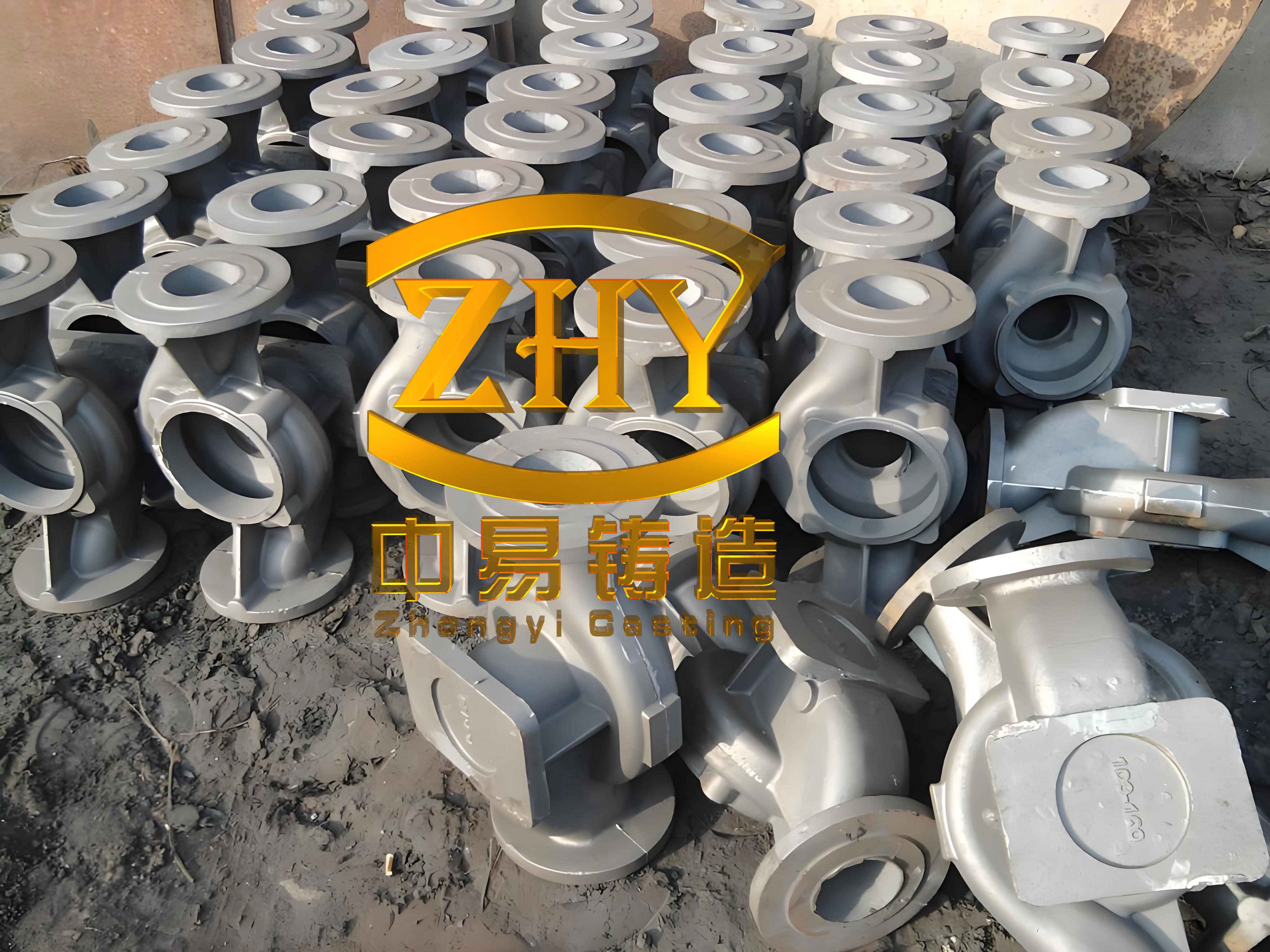
The affected component was a heavy-duty flywheel, a quintessential gray iron casting for engine applications. Its specifications are summarized below:
| Parameter | Specification |
|---|---|
| Outline Dimensions | Ø702 mm × 133 mm |
| Minimum Wall Thickness | 46 mm |
| Cast Weight | 245 kg |
| Material | HT250 (Gray Iron) |
| Hardness | 190 – 240 HBW |
| Microstructure Requirement | Predominantly Type A graphite (≥ 4 length), Pearlite ≥ 98% |
| Heat Treatment | Stress Relief Annealing |
The initial production process was standardized for our flow line. Molding utilized alkaline phenolic resin-bonded sand, with two castings arranged horizontally in a single mold box. The gating system was a traditional pressurized design, with the choke area at the ingates. The key sectional area ratio was: ∑ASprue : ∑ARunner : ∑AIngate = 1.64 : 2.05 : 1. The melt chemistry targeted a medium-strength gray iron casting grade, with a typical composition shown in Table 2.
| Element | C | Si | Mn | P | S | Cu | Cr |
|---|---|---|---|---|---|---|---|
| Content | 3.25 | 1.9 | 0.95 | 0.04 | 0.09 | 0.4 | 0.28 |
The pouring temperature was maintained between 1350°C and 1360°C, with one ladle serving two molds. The defect presented as a smooth, depressed cavity on the upper cope surface of the gray iron casting. Occasionally, small “iron droplets” were found within the cavity. Crucially, before shot blasting, the cavity walls were coated with the refractory coating, while any “droplets” were metallurgically clean. This observation was key to defect classification: the depression resulted from volumetric shrinkage during solidification, while the droplets were expelled liquid iron pushed out during the final stages of graphite expansion, thus not exposed to the coating. This confirmed the defect as a classical shrinkage depression, not a gas defect or sand inclusion.
In-Depth Root Cause Analysis
The formation of shrinkage depression in a gray iron casting is a complex interplay of metallurgical factors, process parameters, and mold behavior. A thorough analysis pointed to four primary, interlinked causes.
1. Sub-Optimal Carbon Equivalent (CE)
The initial carbon content of 3.25% resulted in a Carbon Equivalent calculated as:
$$ CE = C + \frac{1}{3}(Si + P) $$
$$ CE_{initial} = 3.25 + \frac{1}{3}(1.9 + 0.04) \approx 3.25 + 0.65 = 3.90 $$
This placed the iron composition firmly in the hypoeutectic region. Hypoeutectic gray irons have a wider solidification range (the temperature difference between liquidus and eutectic). The total volumetric contraction during solidification (εtotal) can be conceptually broken down:
$$ \epsilon_{total} = \epsilon_{liquid} + \epsilon_{solidification} – \epsilon_{graphite} $$
Where:
– εliquid is contraction from pouring temperature to liquidus.
– εsolidification is contraction from liquidus to solidus (including austenite formation).
– εgraphite is the expansion due to graphite precipitation.
In hypoeutectic irons, εsolidification is more significant due to the primary austenite formation. While graphite expansion provides compensation, a lower CE reduces the amount of graphite precipitated, thereby diminishing this compensatory effect. The net result is a higher propensity for shrinkage cavity formation. The relationship between shrinkage tendency and CE for a given section size is often described by a U-shaped curve, with the minimum shrinkage at an optimal, slightly hypereutectic CE. Our initial CE of ~3.90 was likely on the left, shrinkage-prone side of this curve for this heavy-section gray iron casting.
2. Excessively High Pouring Temperature
A pouring temperature of 1350-1360°C directly exacerbated the liquid contraction term (εliquid). Liquid contraction for iron alloys is approximately linear with temperature drop:
$$ \epsilon_{liquid} \approx \alpha_{liquid} \cdot (T_{pour} – T_{liquidus}) $$
Where αliquid is the coefficient of thermal contraction for liquid iron (~1.0 × 10⁻⁴ /°C). By raising Tpour, the temperature interval (Tpour – Tliquidus) increases, leading to a larger volumetric deficit before solidification even begins. This deficit must be fed by liquid metal from the gating system or risers. In our configuration, the gating system was the sole feeding source, making it highly sensitive to this initial contraction.
3. Inadequate Mold Stiffness (Sand Rigidity)
Green sand molds, and even chemically bonded sand molds if not adequately compacted, can deform under the metallostatic pressure of the liquid metal. This phenomenon, known as mold wall movement, effectively increases the mold cavity volume during pouring and early solidification. The deformation δ can be related to pressure P and sand compressive strength σ:
$$ \delta \propto \frac{P}{\sigma} $$
For a gray iron casting, the subsequent graphite expansion phase can partially compensate for this enlarged cavity, but if the expansion is insufficient or poorly timed, a surface depression remains. Our initial molding process, with a shorter compaction time, may have produced a mold with lower hot compressive strength, promoting wall movement and contributing to the volumetric deficit manifesting as shrinkage depression.
4. Non-Optimal Gating System Design
The original pressurized gating system with the choke at the ingates was fundamentally misapplied for this heavy, thick-section gray iron casting. The issues were twofold:
a) Turbulent and Uncontrolled Fill: The high velocity at the ingate (Vingate), estimated by Bernoulli’s principle, was excessive:
$$ V_{ingate} \approx \sqrt{2gh_{sprue}} $$
With a sprue height (hsprue) of ~200mm, Vingate approached 200 cm/s. This caused severe turbulence, air entrainment, and an unsteady filling pattern. Visually, this resulted in a violent “splashing” fill and a significant “draw-down” or backward flow in the sprue/runner once pouring stopped, as the system sought equilibrium. This draw-down drastically reduced the effective metallostatic head available for feeding liquid contraction immediately after pouring.
b) Premature Ingate Freeze-Off: The ingate cross-section was tall and narrow (e.g., 5mm height). The solidification time (tsolid) of a section can be approximated by Chvorinov’s Rule:
$$ t_{solid} = k \cdot \left( \frac{V}{A} \right)^n $$
Where V is volume, A is surface area, and k is a mold constant. A thin ingate has a low Volume-to-Surface-Area (V/A) ratio, leading to very rapid solidification. This meant the feeding path from the runner to the casting was sealed off early in the solidification process, precisely when the casting was undergoing significant liquid and austenitic contraction. The gating system was thus rendered ineffective as a liquid feed source during the critical mid-to-late stages of solidification.
Systematic Implementation of Corrective Measures
The solution required a holistic approach, addressing all identified root causes simultaneously. The measures were implemented in a coordinated manner.
| Factor | Initial State | Corrective Action | Intended Effect |
|---|---|---|---|
| Carbon Equivalent | CE ~ 3.90 (C=3.25%) | Increase Carbon to 3.30% | Increase graphite expansion, reduce solidification shrinkage, move closer to optimal CE. |
| Pouring Temperature | 1350 – 1360°C | Strictly control at 1330 – 1340°C | Reduce liquid contraction (εliquid). |
| Mold Stiffness | Standard compaction (15s) | Increase compaction time to 25s | Increase sand strength (σ), reduce mold wall movement (δ). |
| Gating Design | Pressurized (Choke at ingate) | Pressurized-Open (Choke at sprue base), enlarged ingates. | Calm fill, maintain feeding head, delay ingate freeze-off. |
Metallurgical Adjustment: The carbon content was raised from 3.25% to 3.30%. This increased the CE to approximately:
$$ CE_{new} = 3.30 + \frac{1}{3}(1.9 + 0.04) \approx 3.30 + 0.65 = 3.95 $$
This shift, while seemingly small, moved the composition toward the eutectic point, reducing the primary austenite interval and increasing the amount of graphite formed during the eutectic reaction, thereby enhancing the internal expansion compensation within the gray iron casting.
Process Control Enhancement: Pouring temperature was strictly capped at 1340°C. This was enforced by installing pyrometers in the pouring area and scheduling flywheel batches to be poured directly after furnace tapping, avoiding temperature buildup from holding or pouring other thinner-section castings. The reduction of 15-20°C significantly lowered the liquid contraction component.
Molding Process Improvement: The sand compaction time on the molding machine was increased by 67%, from 15 seconds to 25 seconds. This ensured a higher and more uniform mold density, directly increasing the hot strength of the resin sand mold and its resistance to deformation during casting.
Gating System Redesign via Simulation: We employed Magma simulation software to virtually test and optimize the gating design. The new design principles were:
1. Pressurized-Open System: A choke was placed at the base of the sprue, creating an initial pressure to ensure complete filling of the runner. The system was then open (unpressurized) between the runner and ingates. This design calmed the metal flow. Simulated ingate velocities dropped from ~200 cm/s to below 80 cm/s.
2. Flow Stabilization: The full circular runner was modified to a 3/4 circle with a slag trap at the end, promoting dirt separation and further flow tranquility.
3. Delayed Ingate Solidification: Ingate height was increased from 5mm to 8mm (with proportional width reduction to maintain area). This increased the ingate’s V/A ratio, thereby extending its solidification time according to Chvorinov’s Rule. The relationship can be simplified for a rectangular ingate of height h and width w (assuming length L is constant):
$$ \left( \frac{V}{A} \right)_{ingate} = \frac{h \cdot w \cdot L}{2(h+w)L} = \frac{h \cdot w}{2(h+w)} $$
Increasing h significantly increases this modulus, delaying freeze-off and keeping the feeding path open longer to compensate for contraction in the casting.
The simulated solidification sequence clearly showed the modified gating system remained liquid and functional as a feeder well into the critical period of the casting’s solidification, whereas the original design solidified prematurely. A calculated “feed volume” metric from the simulation confirmed the enhanced feeding capability of the new design.
Verification and Conclusion
Following the implementation of all corrective measures, a production batch of over 100 flywheel castings was manufactured. The results were definitive: the upper surfaces of the gray iron casting components were consistently smooth and free from any measurable shrinkage depression. The defect was completely eliminated, validating the multi-factorial root cause analysis and the synergistic solution set.
The successful resolution of this shrinkage depression problem in a heavy-section gray iron casting provides a validated framework for addressing similar issues. The key conclusions are:
1. For thick-section gray iron castings, aiming for a slightly higher carbon equivalent (near the eutectic point) is critical to maximize beneficial graphite expansion and minimize shrinkage tendency.
2. Pouring temperature must be controlled at the minimum level required for complete fill to reduce liquid contraction. Process discipline is as important as the target number.
3. Mold stiffness is a non-negotiable requirement. Adequate sand compaction is essential to resist wall movement and provide a stable cavity for solidification.
4. The gating system must be designed with feeding, not just filling, in mind. For feeding via gates, a calm fill (often using an open or pressurized-open system) combined with ingates designed to delay solidification is paramount. Computational simulation is an invaluable tool for validating such designs before committing to expensive tooling changes.
This case underscores that producing sound, high-quality gray iron casting components, especially heavy ones, requires a balanced optimization of chemistry, thermal parameters, mold properties, and hydraulic design. Neglecting any one of these pillars can lead to significant defects like shrinkage depression, but a systematic engineering approach can reliably ensure casting integrity and production economy.