
In the pursuit of carbon neutrality and stringent environmental regulations, diesel engines are continuously engineered for higher thermal efficiency and reduced emissions. This evolution demands elevated combustion temperatures and peak pressures, imposing more rigorous requirements on the tensile strength and fatigue resistance of critical components like cylinder heads. Gray iron castings have long been the material of choice for diesel engine cylinder heads, validated by decades of industrial practice. The flake graphite structure inherent to gray iron castings effectively dampens vibrations, reducing noise and operational震动. Furthermore, the excellent fluidity and low shrinkage of gray iron make it exceptionally suitable for casting complex geometries typical of cylinder heads. Through micro-alloying, the thermal fatigue performance of gray iron can be significantly enhanced, mitigating crack initiation due to thermal cycling. Alloyed gray iron, incorporating elements such as chromium, copper, molybdenum, or niobium, is thus employed to meet the demands of high-load applications, offering improved strength, wear resistance, and thermal stability.
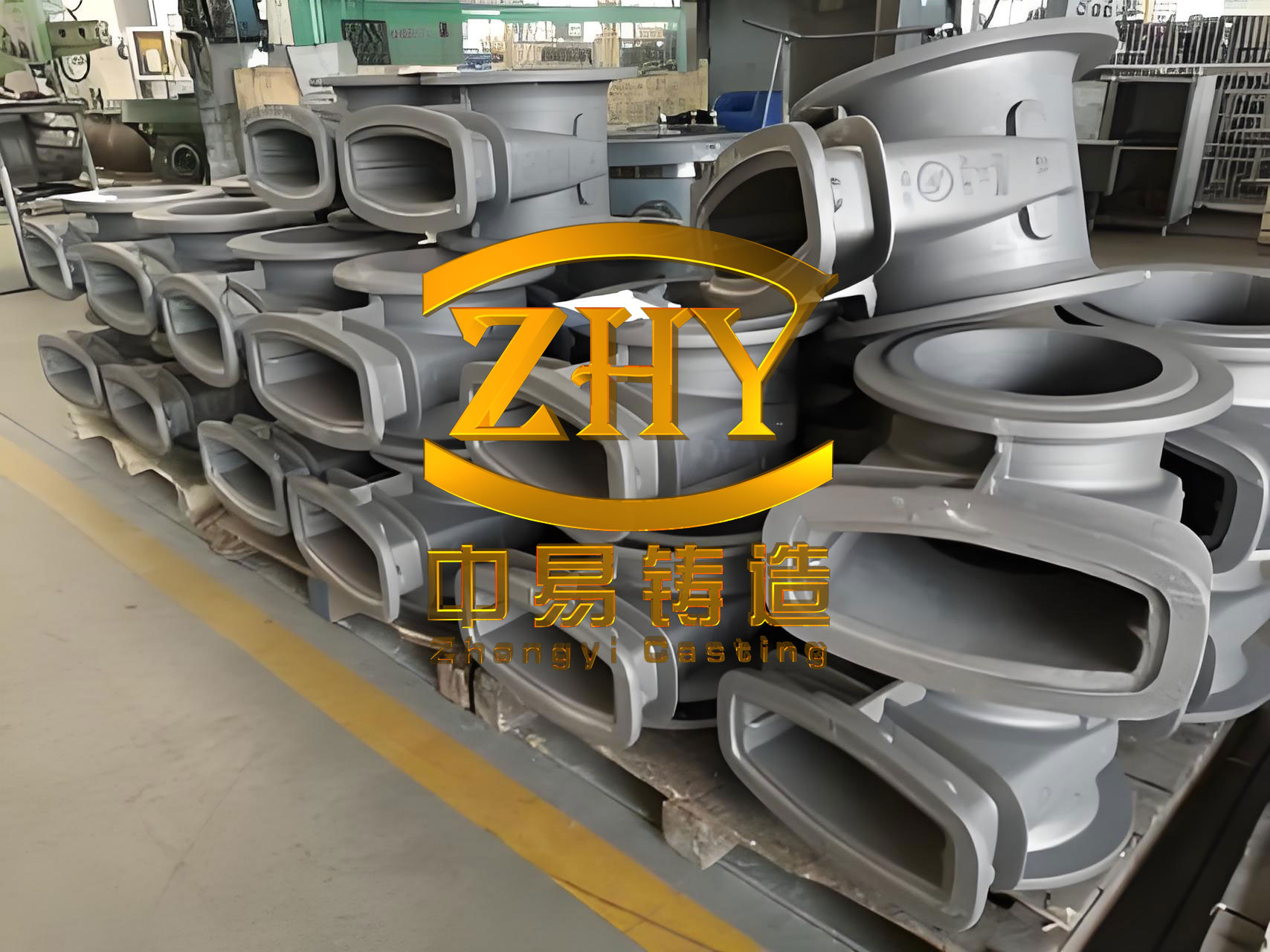
Molybdenum has been a conventional alloying element for strengthening gray iron castings in cylinder heads. However, its application is fraught with economic challenges due to the high and volatile price of ferromolybdenum, which imposes significant cost pressure and operational risk on foundries. In contrast, ferroniobium offers a compelling alternative with relatively stable pricing and a secure supply chain. This article, from our research and industrial practice perspective, delves into the mechanistic rationale and practical implementation of partially substituting molybdenum with niobium in gray iron castings for cylinder heads. The primary objective is to develop a more cost-effective alloying strategy that reduces dependency on price-sensitive molybdenum while maintaining, or even enhancing, the required mechanical properties, thereby significantly improving the economic efficiency for manufacturers of gray iron castings.
The fundamental premise for substitution lies in the strengthening mechanisms of niobium in gray iron castings. Our foundational research, conducted in collaboration with metallurgical laboratories, has extensively characterized the role and morphology of niobium in gray iron. The strengthening effect of niobium primarily stems from a potent refinement mechanism. Niobium additions lead to a comprehensive microstructural refinement in gray iron castings: it reduces the size of eutectic cells, decreases the pearlite lamellar spacing, and shortens the graphite flake length. This triad of refining actions collectively contributes to enhanced mechanical strength. The refinement of microstructural features like grain size or interlamellar spacing can be correlated to strength increments through classical relationships. For instance, the Hall-Petch type relationship can be adapted to describe the strength contribution from refined eutectic cells or pearlite colonies, while the relationship between strength and graphite morphology is more complex but empirically established.
We can express the overall yield strength ($\sigma_y$) of a gray iron casting as a sum of various strengthening contributions:
$$ \sigma_y = \sigma_{matrix} + \sigma_{graphite} + \Delta\sigma_{refinement} + \Delta\sigma_{solid solution} $$
Where $\sigma_{matrix}$ is the intrinsic strength of the ferritic-pearlitic matrix, $\sigma_{graphite}$ represents the weakening effect due to graphite flakes (often negative), and $\Delta\sigma_{refinement}$ and $\Delta\sigma_{solid solution}$ are the strengthening increments from microstructural refinement and solid solution effects, respectively. For niobium, $\Delta\sigma_{refinement}$ is the dominant term. The refinement effect on pearlite lamellar spacing ($\lambda$) can be linked to strength via a relationship similar to that for lamellar composites:
$$ \Delta\sigma_{\lambda} \propto \frac{1}{\sqrt{\lambda}} $$
Similarly, a finer eutectic cell size ($d_{ec}$) contributes to strength as:
$$ \Delta\sigma_{d_{ec}} \propto {d_{ec}}^{-1/2} $$
Comparative studies, including data published by leading foundry societies, indicate that the strengthening efficiency of niobium per unit mass in gray iron castings is superior to that of molybdenum. Molybdenum, typically added in the range of 0.2% to 0.6% in high-grade gray iron castings, also strengthens through solid solution hardening and by promoting pearlite formation and stability. However, its refinement effect is generally less pronounced than that of niobium. This efficiency differential suggests that a lower mass fraction of niobium could potentially replace a higher mass fraction of molybdenum to achieve equivalent mechanical performance in gray iron castings. Based on this theoretical framework and preliminary data, we hypothesized a substitution ratio of Nb:Mo = 0.7:1 by weight for our industrial trial.
The experimental validation was conducted at a commercial engine foundry under standard production conditions. The trial focused on manufacturing cylinder heads with a specified material grade equivalent to HT300 (a common specification for gray iron castings with a minimum tensile strength of 300 MPa). The existing production process used molybdenum as the primary strengthener. Our goal was to formulate a niobium-modified composition that would yield comparable properties.
1. Materials and Experimental Methodology
The cornerstone of reproducible melting for high-quality gray iron castings is the use of consistent and high-grade raw materials. For this trial, the foundry’s standard materials were employed to ensure result accuracy and relevance to regular production.
| Material | Specification / Selection Criteria | Key Characteristics |
|---|---|---|
| Pig Iron | Grades Z10 / Z14 | Low and stable levels of trace impurity elements. |
| Steel Scrap | Q235 or equivalent | Stable source and consistent composition. |
| Returns (Recirculated Casting) | Shot-blasted and crushed | Sorted by grade; specifically selected to be molybdenum-free for composition control. |
| Carburizer | Graphitized, low-nitrogen | Stable supply to ensure consistent carbon recovery and low nitrogen pickup. |
| Ferroniobium (FeNb) | 65% Nb, particle size <5 mm | High purity, designed for high and consistent recovery in induction furnace melting. |
| Ferromolybdenum (FeMo) | 60% Mo, particle size <5 mm | Standard commercial grade for comparison. |
The melting was performed in an 8-ton medium-frequency coreless induction furnace, following the foundry’s standard operating procedure. The molding process utilized hot-box cores. The castings were poured in a vertical orientation, with two cylinder heads per mold. To ensure complete dissolution and high recovery, both ferromolybdenum (for baseline heats) and ferroniobium (for trial heats) were added directly to the furnace bath. The alloy addition practice is critical for gray iron castings to achieve target chemistry.
The chemical composition was carefully designed. The niobium-strengthened grade aimed to replace the molybdenum entirely while keeping all other elements within the standard production ranges for HT300-grade gray iron castings. The target compositions for the baseline (Mo) and trial (Nb) heats are summarized below.
| Element | Baseline (Mo-Strengthened) Range | Trial (Nb-Strengthened) Range | Common Elements Range |
|---|---|---|---|
| C | 3.28 – 3.33 | 3.28 – 3.33 | 3.28 – 3.33 |
| Si | 1.75 – 1.85 | 1.75 – 1.85 | 1.75 – 1.85 |
| Mn | 0.70 – 0.80 | 0.70 – 0.80 | 0.70 – 0.80 |
| S | 0.06 – 0.12 | 0.06 – 0.12 | 0.06 – 0.12 |
| P | ≤ 0.06 | ≤ 0.06 | ≤ 0.06 |
| Sn | 0.06 – 0.08 | 0.06 – 0.08 | 0.06 – 0.08 |
| Mo | 0.25 – 0.30 | — | — |
| Nb | — | 0.16 – 0.21 | — |
The substitution ratio is evident: a target niobium content of 0.16-0.21% replaces a molybdenum content of 0.25-0.30%, closely adhering to the Nb:Mo = 0.7:1 principle for gray iron castings.
The detailed melting and pouring sequence for the trial heat was as follows: The furnace was charged and melted according to standard practice. After the charge was fully molten, the composition was adjusted, and slag was removed. At a temperature not lower than 1450°C, 25 kg of fine ferroniobium was added to the furnace. The bath temperature was then raised to 1520°C and held for ten minutes to ensure complete dissolution and homogenization. A sample was taken for optical emission spectrometry (OES) analysis. Once the chemistry was confirmed, the tap was initiated at approximately 1480°C. Inoculation was performed in the pouring ladle. The pouring temperature was carefully controlled, commencing at 1390°C. Subsequent processes—shaking out, heat treatment (if any), cleaning, and inspection—followed the standard production flow for gray iron castings.
2. Results and Comprehensive Analysis
The trial heat yielded 12 cylinder head castings from 8 tons of molten gray iron. The addition of 25 kg of 65% FeNb resulted in a measured niobium content of 0.19% in the final casting, corresponding to an excellent recovery rate of approximately 92%. All 12 castings passed initial visual and dimensional inspections.
| Element | C | Si | Mn | S | P | Sn | Mo | Nb |
|---|---|---|---|---|---|---|---|---|
| Measurement (from casting body) | 3.31 | 1.90 | 0.69 | 0.07 | 0.03 | 0.07 | — | 0.19 |
Metallographic examination of a sample taken from the casting body revealed a high-quality microstructure characteristic of well-inoculated gray iron castings: Graphite distribution was 100% Type A (randomly oriented flakes), with a graphite size rating of 4 (according to relevant standards). The matrix consisted of 96% pearlite with a lamellar structure, and the carbide content was a low 1.6%. This microstructure is indicative of the refining effect of niobium, leading to a uniform and fine pearlitic matrix with well-dispersed graphite, which is crucial for the performance of gray iron castings.
Mechanical properties were evaluated from test bars machined from the body of a dissected cylinder head. The results are summarized below and compared with the typical specification range for the original molybdenum-containing gray iron castings.
| Property | Typical Spec for Mo-Strengthened Grade | Measured Value from Nb-Strengthened Trial Casting | Assessment |
|---|---|---|---|
| Tensile Strength (MPa) | ≥ 300 (nominal) | 270 – 310 | Meets functional requirement range; comparable to baseline. |
| Hardness (HBW) | Approx. 190 – 220 | 202 – 213 | Well within the specified range. |
The tensile strength range of 270-310 MPa and hardness of 202-213 HBW confirm that the niobium-modified gray iron castings satisfy the product’s mechanical performance requirements. The properties are equivalent to, or in some cases slightly superior to, those obtained from the standard molybdenum-alloyed gray iron castings. Furthermore, all castings underwent rigorous pressure testing to validate their integrity under simulated engine operating conditions. Every cylinder head successfully passed high-pressure leak tests and hydrostatic pressure tests without any signs of leakage or seepage.
Following the successful trial, the foundry proceeded with several additional production batches. To date, over five thousand niobium-strengthened gray iron cylinder heads have been manufactured and delivered. These components have been in field service for over a year without reported issues, demonstrating the long-term reliability of this alloying approach for gray iron castings. The economic driver for this transition became even more compelling as ferromolybdenum prices surged in the subsequent period, while ferroniobium prices remained relatively stable. At times, the cost per unit of alloying element for 60% FeMo and 65% FeNb became comparable, but since the required mass of niobium is lower, the overall alloy cost saving was substantial. A simplified cost model can illustrate this.
Let $C_{Mo}$ be the price per kg of 60% FeMo, $C_{Nb}$ be the price per kg of 65% FeNb, $W_{Mo}$ be the target mass% of Mo, and $W_{Nb}$ be the target mass% of Nb. For a fixed mass of gray iron melt ($M$), the alloy cost for molybdenum ($Cost_{Mo}$) and niobium ($Cost_{Nb}$) can be approximated as:
$$ Cost_{Mo} = M \cdot \left( \frac{W_{Mo}}{0.60} \right) \cdot C_{Mo} $$
$$ Cost_{Nb} = M \cdot \left( \frac{W_{Nb}}{0.65} \right) \cdot C_{Nb} $$
Using our substitution ratio $W_{Nb} = 0.7 \cdot W_{Mo}$, the cost ratio becomes:
$$ \frac{Cost_{Nb}}{Cost_{Mo}} = \frac{ \left( \frac{0.7 \cdot W_{Mo}}{0.65} \right) \cdot C_{Nb} }{ \left( \frac{W_{Mo}}{0.60} \right) \cdot C_{Mo} } = \frac{0.7 \cdot 0.60}{0.65} \cdot \frac{C_{Nb}}{C_{Mo}} \approx 0.646 \cdot \frac{C_{Nb}}{C_{Mo}} $$
Therefore, for the niobium substitution to be cost-neutral, we require $0.646 \cdot (C_{Nb}/C_{Mo}) \leq 1$, or $C_{Nb}/C_{Mo} \leq 1.55$. In practice, the price ratio $C_{Nb}/C_{Mo}$ has often been below 1, and even when close to 1, the niobium route offers savings due to the coefficient of 0.646. This formula clearly demonstrates the inherent cost advantage of using niobium in gray iron castings under typical market conditions. The economic benefit is amplified when considering the volatility of $C_{Mo}$, which introduces procurement and planning uncertainties absent with the more stable $C_{Nb}$.
3. Discussion on Microstructural Mechanisms and Industrial Implications
The successful substitution hinges on the nuanced understanding of how niobium alters the solidification and transformation kinetics of gray iron castings. Niobium is a strong carbide-forming element, but in the carbon-saturated environment of gray iron castings and at the levels used (below 0.3%), it primarily exists in solid solution or forms extremely fine, dispersed carbo-nitrides that act as potent heterogeneous nucleation sites during solidification. This promotes the formation of a larger number of eutectic cells, refining the overall solidification structure. The relationship between eutectic cell count ($N_{ec}$) and cooling rate or nucleation potency can be complex, but the effect on mechanical properties is well-documented for gray iron castings.
Furthermore, niobium in solid solution inhibits the diffusion of carbon and iron during the austenite-to-pearlite transformation, leading to a finer pearlite lamellar spacing. The interlamellar spacing ($\lambda$) is a key determinant of pearlite strength. The refining effect on graphite is also critical. A finer eutectic cell structure tends to constrain graphite growth, resulting in shorter, more branched graphite flakes (while maintaining Type A morphology), which are less detrimental to tensile strength compared to long, straight flakes. The cumulative effect of these refinements can be conceptualized as shifting the property-composition relationship for gray iron castings. We can model the tensile strength ($TS$) as a function of carbon equivalent ($CE$) and an alloy factor ($AF$) that incorporates the effects of niobium:
$$ TS(MPa) = K_1 – K_2 \cdot (CE) + K_3 \cdot (AF) $$
Where $CE = \%C + 0.33(\%Si + \%P)$ for gray iron castings, and $AF = f(\%Nb, \%Mo, …)$. For niobium, the function $f$ has a higher coefficient than for molybdenum for equivalent strengthening in gray iron castings, as confirmed by industry data.
The industrial implementation of this alloy change for gray iron castings is remarkably straightforward. No modifications to the existing melting, molding, or core-making processes were required. The fine particle size of the ferroniobium ensured rapid dissolution in the induction furnace, and its recovery was consistent and high. This ease of integration is a significant advantage for foundries considering material cost optimization for gray iron castings without capital investment. The stability of niobium’s performance across multiple heats, as evidenced by the production of over five thousand parts, underscores its reliability as an alloying element for high-volume production of gray iron castings.
| Factor | Molybdenum (Mo) Alloying | Niobium (Nb) Alloying | Implication for Gray Iron Castings |
|---|---|---|---|
| Primary Strengthening Mechanism | Solid solution hardening, pearlite promotion/refinement. | Potent microstructural refinement (eutectic cells, pearlite, graphite). | Nb offers a more efficient refinement-based strengthening pathway. |
| Typical Addition Range for HT300 | 0.25% – 0.30% | 0.16% – 0.21% | Lower mass addition required with Nb for equivalent performance. |
| Alloy Material Price Trend | High volatility, often expensive. | Historically more stable, less prone to spikes. | Nb reduces cost volatility risk in gray iron casting production. |
| Recovery in Induction Melting | High (>90%) | High (>90%) with proper addition practice. | Both are efficient; process control is similar. |
| Effect on Foundry Processes | None (standard practice). | None; direct drop-in substitute. | Easy adoption for existing gray iron casting lines. |
| Long-term Field Performance | Well established. | Verified in trial and subsequent production (1+ years). | Nb provides reliable long-term performance in gray iron castings. |
4. Conclusion
The pursuit of cost-effective and reliable materials is paramount in the competitive landscape of engine manufacturing. This investigation demonstrates a successful and economically advantageous alloy design strategy for high-strength gray iron castings. By leveraging the potent microstructural refinement capability of niobium, we have validated that a partial substitution at a ratio of Nb:Mo = 0.7:1 by weight can produce cylinder head castings with mechanical properties fully equivalent to those achieved with traditional molybdenum alloying. The implementation is seamless within standard foundry operations for gray iron castings, requiring no process alterations. Most significantly, this approach mitigates dependency on the price-volatile ferromolybdenum market. The stable pricing and secure supply of ferroniobium, combined with its higher strengthening efficiency, translate directly into reduced alloying costs and improved economic predictability for manufacturers. This case study provides a robust template for the optimization of gray iron castings in automotive and other heavy-duty applications, highlighting niobium as a strategic and cost-effective alloying element for enhancing both performance and profitability in the production of high-quality gray iron castings.
The future development of gray iron castings will continue to involve such material innovations. Further research could quantitatively map the relationships between niobium content, cooling rates specific to different gray iron casting geometries, and the resulting mechanical and thermal fatigue properties. This would enable even more precise alloy design for next-generation gray iron castings operating under extreme conditions. The principles established here—favoring stable, efficient alloying elements that provide robust microstructural control—will remain central to advancing the science and economics of gray iron castings.