
In the realm of internal combustion engine manufacturing, components like cylinder blocks, cylinder heads, and crankcases represent the very heart of the assembly. The demand for enhanced power density, fuel efficiency, and reduced emissions has driven the need for materials with superior mechanical properties. High-strength gray iron castings, particularly grades like HT300, have become indispensable in meeting these challenges. The transition from cupola to coreless induction furnace melting has revolutionized the production landscape, offering greater flexibility and control. However, this shift introduces distinct metallurgical characteristics that require a profound understanding and meticulous control of the entire production process. From my extensive experience in operating medium-frequency induction furnaces for high-volume production, achieving consistent quality in high-strength gray iron castings hinges on a holistic approach encompassing raw material science, precise melt management, strategic alloying, and optimized inoculation.
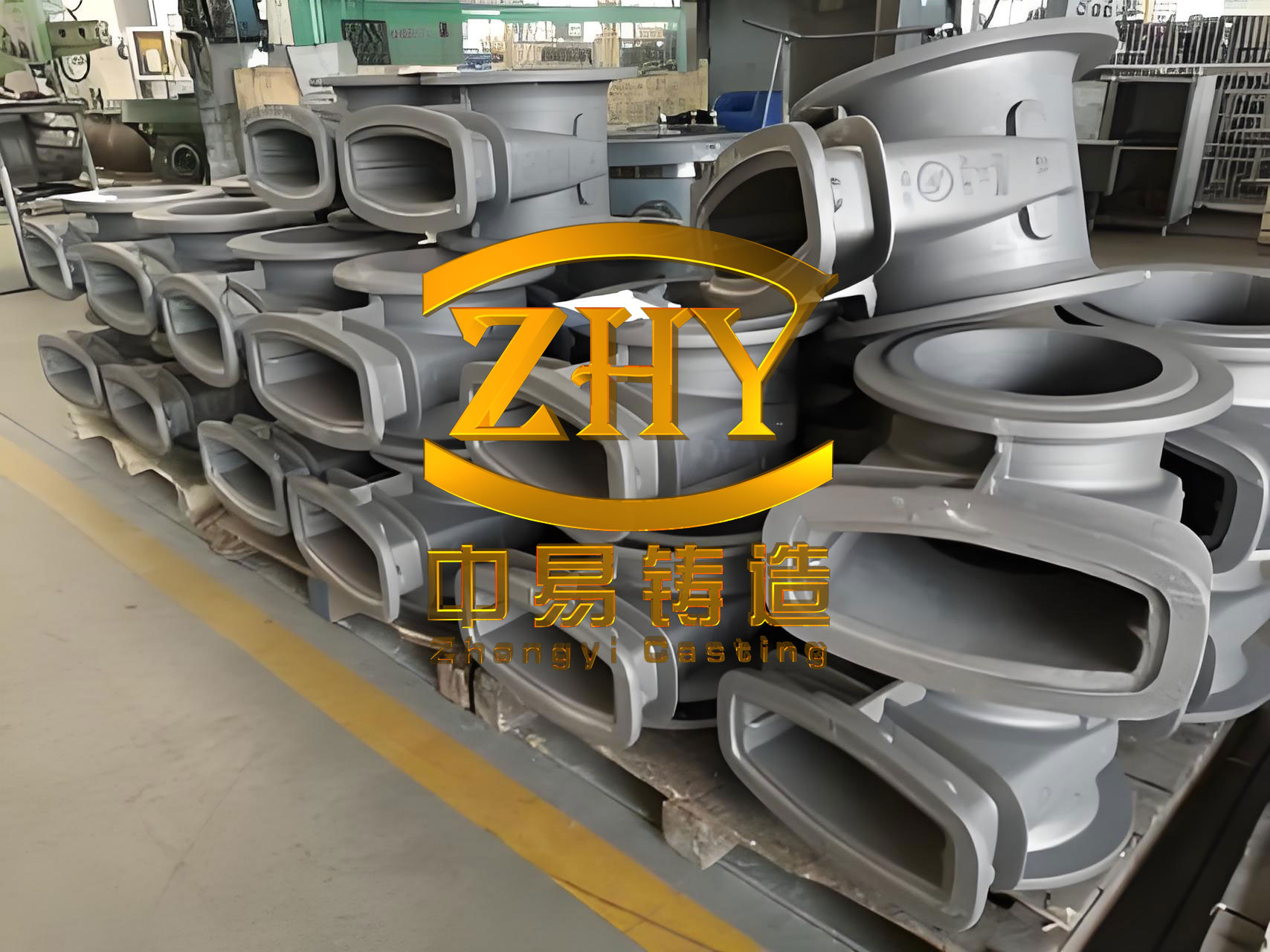
The journey of a high-integrity gray iron casting begins long before the molten metal is poured. The choice and preparation of raw materials set the foundational stage for the final microstructure and properties. Unlike cupola melting, the induction process lacks significant metallurgical reactions and an inherent slagging system, making the purity and condition of charge materials critically important.
The primary charge consists of steel scrap, returns, and potentially pig iron. A prevailing strategy for achieving high strength involves using a high proportion of steel scrap, often reaching 70-90% of the charge, balanced with 10-30% clean, shot-blasted returns. This approach deliberately minimizes or eliminates pig iron. The rationale is to break the hereditary influence of coarse graphite flakes often present in pig iron, thereby refining the graphite structure in the final gray iron casting and enhancing tensile strength. The use of high-quality carbon steel scrap is paramount; rust, oil, and contaminants lead to excessive oxidation and poor melt cleanliness, adversely affecting graphite morphology and matrix structure. Furthermore, the increased use of manganese-rich steel scrap necessitates careful monitoring of final manganese content.
To compensate for the lack of carbon from coke, the addition of high-quality recarburizers is essential. Graphitized recarburizers, where carbon exists as crystalline graphite, are preferred over non-graphitized types. The efficiency of carbon dissolution depends on particle size, melt temperature, and addition practice. A fundamental relationship governing the solubility limit of carbon in molten iron, which is crucial when calculating recarburizer needs, is given by:
$$C_{sat} = 1.3 + 0.0257T – 0.31\%\text{Si} – 0.33\%\text{P} – 0.45\%\text{S} + 0.028\%\text{Mn}$$
where \( C_{sat} \) is the carbon solubility (%), and \( T \) is the temperature in degrees Celsius. This equation highlights that silicon hinders carbon absorption while manganese promotes it, guiding the sequence of additions: manganese first, then carbon, then silicon. Adding recarburizer in batches early in the melt cycle ensures high absorption rates exceeding 90%.
Silicon carbide (SiC) is another vital additive, serving dual roles as a preconditioner and a deoxidizer. With a melting point around 2700°C, it dissolves into the melt via a reaction: SiC + Fe → FeSi + C (active, non-equilibrium graphite). This nascent carbon acts as potent nucleation sites for graphite, promoting the formation of Type A graphite, refining flakes, and reducing chill tendency, ultimately strengthening the gray iron casting. Typical addition levels range from 0.6% to 1.0% of the melt weight.
The role of sulfur in induction-melted gray iron castings has been re-evaluated. While traditionally considered harmful, a controlled sulfur level (0.04-0.10%) is now recognized as beneficial. Sulfur forms sulfides (e.g., MnS) that provide substrates for graphite nucleation, enhancing inoculation effectiveness. It also segregates at the solidification front, restricting the growth of eutectic cells and promoting shorter, thicker, and more curved graphite flakes. Below approximately 0.03% S, undercooled (Type D) graphite may form due to poor nucleation. Above 0.11%, the chilling effect can become excessive, again promoting undercooled graphite. Therefore, the judicious use of a sulfur additive is often necessary to maintain this optimal window, which is crucial for the performance of high-strength gray iron castings.
| Charge Material | Typical Proportion (%) | Key Quality Requirement | Primary Function in Gray Iron Castings |
|---|---|---|---|
| Steel Scrap | 70-90 | Low rust, oil, and contaminants; known chemistry | Provides low-impurity iron base; increases strength potential. |
| Returns | 10-30 | Clean, shot-blasted, and sorted | Improves yield, provides nucleation sites. |
| Graphitized Recarburizer | 1.5-3.0 (varies) | High fixed carbon >98%, low sulfur & nitrogen | Adjusts final carbon content; provides graphite nuclei. |
| Silicon Carbide (SiC) | 0.6-1.0 | Purity >90% | Preconditioner/deoxidizer; generates active carbon nuclei. |
| Sulfur Additive | As needed | Controlled composition | Adjusts S to optimal range (0.04-0.10%) for nucleation. |
Metallurgy and Chemical Composition Control
The microstructure, and thus the mechanical performance, of a gray iron casting is a direct consequence of its chemical composition. For high-strength grades like HT300, the goal is to achieve a fine, uniform distribution of Type A graphite in a fully pearlitic matrix, with minimal ferrite and interdendritic carbides. This requires a delicate balance of elements.
Carbon and silicon are the primary graphitizers. A higher Carbon Equivalent (CE) improves castability and reduces shrinkage and chill tendencies but can coarsen graphite and reduce strength. For high-strength, thin-section castings, the base iron CE is often controlled in a relatively narrow range of 3.8-3.9%. The ratio of silicon to carbon (Si/C) is also significant; a ratio between 0.6 and 0.7 generally yields a good combination of strength and machinability. The CE is calculated as:
$$CE = \%C + \frac{1}{3}(\%Si + \%P)$$
Manganese and sulfur have an interactive relationship. Manganese promotes pearlite formation and combines with sulfur to form MnS inclusions. A classic formula to ensure all sulfur is combined and to provide some free manganese for strengthening is:
$$\%Mn_{req} = 1.73(\%S) + 0.3\%$$
Phosphorus is kept as low as possible (<0.03% with high scrap usage) to avoid the formation of brittle, low-melting-point phosphide eutectics at grain boundaries.
Alloying is indispensable for producing high-strength gray iron castings, especially when a high CE is maintained for castability. Elements like copper, chromium, tin, molybdenum, and nickel are added to strengthen the matrix, refine the pearlite, and improve hardenability and uniformity across sections.
| Alloying Element | Typical Range (%) | Primary Function in Gray Iron Castings |
|---|---|---|
| Copper (Cu) | 0.4-1.2 | Promotes graphite nucleation, refines and stabilizes pearlite, mild solid solution strengthener. |
| Chromium (Cr) | 0.15-0.35 | Stabilizes carbide, promotes pearlite, increases hardness and strength. Can increase chill. |
| Tin (Sn) | 0.04-0.08 | Powerful pearlite promoter, effectively eliminates ferrite. Added in small, precise amounts. |
| Molybdenum (Mo) | 0.2-0.5 | Refines pearlite and increases strength, especially at elevated temperatures. Reduces section sensitivity. |
| Nickel (Ni) | 0.5-1.5 | Promotes graphite nucleation, neutralizes chill from Cr, improves uniformity. |
Trace elements and gas content are critical quality indicators. Lead, arsenic, and aluminum can lead to undercooled graphite, pinholes, or intergranular weakness. Nitrogen, often introduced via scrap and recarburizers, refines graphite and pearlite up to ~80-100 ppm but can cause fissure-type gas porosity in heavy sections or at the cope surface if supersaturated. A comparison of trace elements is essential for process control.
| Sample | Pb (%) | As (%) | V (%) | Ti (%) | Al (%) | N (ppm) |
|---|---|---|---|---|---|---|
| Melt 1 | <0.005 | <0.01 | 0.010 | 0.017 | 0.013 | ~70 |
| Melt 2 | <0.005 | <0.01 | 0.012 | 0.020 | 0.010 | ~75 |
| Melt 3 (Cupola Benchmark) | <0.005 | <0.01 | 0.014 | 0.014 | 0.011 | ~100 |
Melting Process Dynamics
The power management and thermal history during induction melting profoundly influence the quality of the gray iron casting. The principle of “full-charge, high-power, rapid melting” is widely advocated. Starting with a full or near-full furnace and using high power minimizes the time charge materials are exposed to the atmosphere and lining, reducing oxidation, gas pickup, and slag formation. Care must be taken to avoid “bridging” of scrap. Power is typically reduced at the start when the molten pool is small to protect the lining.
Following melt-down, the process enters a critical refining and superheating stage. Once the bath is liquid and at a temperature like 1450°C, a slag coagulant is added and the primary slag is skimmed off. The chemistry is then adjusted to its final target. Subsequently, the melt is rapidly heated to a superheating or “holding” temperature, typically between 1500°C and 1530°C, and held for 10 to 15 minutes. This high-temperature treatment is vital for producing superior gray iron castings for several reasons:
- It dissolves undesirable inherited nuclei from charge materials (e.g., coarse graphite).
- It promotes the removal of non-metallic inclusions and gases through enhanced flotation and degassing.
- It homogenizes the bath temperature and chemistry.
However, excessive temperature or time (>1550°C or >20 min) can destroy favorable nuclei, increase undercooling, and coarsen the matrix, defeating the purpose. The superheating practice must be precisely controlled.
The final tap temperature is dictated by the casting requirements. For complex, thin-walled engine components like cylinder heads, a tap temperature of 1430-1480°C is typical to allow for heat loss during transfer and inoculation, achieving a pouring temperature in the range of 1380-1410°C. If the iron must be held in the furnace for an extended period, the temperature should be lowered to 1380-1420°C to prevent “fading” of nucleation sites.
| Process Stage | Key Parameter | Typical Target/Control | Rationale for Gray Iron Casting Quality |
|---|---|---|---|
| Charging & Melting | Power Profile | High power after initial melt pool forms | Minimizes oxidation, gas pickup, and lining interaction. |
| Refining | Superheat Temperature | 1500 – 1530 °C | Dissolves impurities, removes gases/inclusions, eliminates heredity. |
| Refining | Superheat Time | 10 – 15 minutes | Allows sufficient time for purification reactions. |
| Tapping | Furnace Tap Temperature | 1430 – 1480 °C | Ensures correct pouring temperature after treatment and transfer. |
| Holding | Idle Holding Temperature | 1380 – 1420 °C | Prevents nucleation fade during extended holds. |
The Mechanisms of Inoculation and Alloying
Inoculation is the cornerstone of producing sound, high-strength gray iron castings. Its essence is to introduce foreign nuclei into the melt to facilitate the heterogeneous nucleation of graphite during solidification. This increases the number of eutectic cells, promotes the formation of Type A graphite, reduces undercooling and chill, and improves mechanical properties and machinability.
A dual-inoculation practice is highly effective. Primary inoculation is performed at the spout during tapping, adding 0.3-0.6% of a strong inoculant like a FeSi-based alloy containing Ba, Sr, or Zr. This creates a high population of nuclei. To counteract inoculation fade—the dissolution or deactivation of nuclei over time—a secondary, late-stream inoculation is performed during pouring into the mold, adding 0.06-0.15% of a fade-resistant inoculant like FeSiSr. The efficiency of inoculation is highly dependent on particle size, which must be optimized for the treatment temperature and method. An overly fine powder will oxidize; overly coarse particles will not dissolve fully. A general guideline for grain size related to the thermal mass of the treated iron can be conceptualized, though practice-specific optimization is needed. The dissolution time \( t_d \) is roughly proportional to the square of the particle radius \( r \), emphasizing the need for correct sizing:
$$ t_d \propto r^2 $$
| Inoculation Type | Addition Point | Typical Addition Rate (%) | Common Inoculant Types | Primary Objective for Gray Iron Castings |
|---|---|---|---|---|
| Primary (Spout) | Furnace Tap Stream | 0.3 – 0.6 | FeSiBa, FeSiSr, FeSiZr | Generate a high density of graphite nucleation sites. |
| Secondary (Late) | Pouring Stream into Mold | 0.06 – 0.15 | FeSiSr, FeSiCa | Re-activate nucleation just before solidification, combatting fade. |
Alloying, as previously mentioned, works synergistically with inoculation. While inoculation controls graphite morphology, alloying elements strengthen the metallic matrix. A typical alloying package for an HT300-grade gray iron casting for a cylinder head might involve a combination like Cu-Cr-Mo-Sn. The exact blend is tailored to the casting’s section size and required performance profile. Copper and nickel aid graphitization, countering the chilling effect of chromium and molybdenum, which in turn provide solid solution strengthening and enhance hardenability. Tin is a potent, low-addition pearlite stabilizer. The interaction of these elements refines the pearlite lamellar spacing and strengthens the boundaries, contributing significantly to the high tensile strength of the final gray iron casting.
| Target Gray Iron Casting Grade | Typical Base CE | Example Alloying Strategy | Expected Key Microstructure |
|---|---|---|---|
| HT250 | ~4.0 – 4.1 | Cu, low Cr | Type A graphite, >95% Pearlite |
| HT300 | ~3.9 – 4.0 | Cu-Cr-Sn, or Cu-Cr-Mo | Type A Graphite (4-6), >98% Fine Pearlite |
| HT350 | ~3.8 – 3.9 | Cu-Cr-Mo-Sn-Ni | Type A Graphite (5-7), 100% Very Fine Pearlite |
Industrial Application and Defect Mitigation
The integration of these principles is best illustrated through a production case. Consider the manufacture of a cylinder head for a large natural gas engine, requiring HT300 material. The casting is complex, with critical wall sections around 5±1 mm. The charge consists of 85% selected steel scrap and 15% clean returns. The melting follows the high-power, superheating protocol. The base chemistry targets a CE of 3.95-4.05%, alloyed with a Cu-Cr-Mo-Sn combination. Inoculation employs 0.4% FeSiSr at the spout and 0.1% FeSiSr during pouring. The tap temperature is 1450-1480°C, resulting in a pouring temperature of 1380-1410°C.
This controlled process yields gray iron castings with consistent tensile strength above 280 MPa, a microstructure of 95-98% fine pearlite with Type A graphite (ASTM size 4-6), and excellent machinability. The defect rate for such a process, when all parameters are stable, can be maintained at very low levels (e.g., ~3% overall scrap).
A common challenge in high-strength gray iron castings, especially in stress-prone areas like sharp corners or between stiffening ribs (e.g., between ventilation ports on a block), is cracking. These are typically “cold cracks” occurring at temperatures below the elastic range, driven by residual stresses exceeding the material’s strength. Analysis via solidification and stress simulation software is invaluable for identifying these high-stress zones. Solutions involve a multi-pronged approach:
- Casting Design Modification: Adding fillets, changing section transitions, and increasing local strength to avoid stress concentration.
- Mold/Core System Optimization: Using cores with better collapsibility or deformability to reduce mechanical resistance during contraction.
- Metallurgical Adjustments: Moderating alloying elements that increase hardness and reducing shrinkage tendency (e.g., optimizing CE and inoculation).
- Process Control: Ensuring shakeout occurs at an appropriate temperature to relieve stresses.
| Crack Cause Category | Specific Mechanism | Corrective Action for Gray Iron Castings |
|---|---|---|
| Thermal/Mechanical Stress | High residual stress from restricted contraction in complex geometry. | Optimize casting design (radii, section changes). Improve core collapsibility. |
| Metallurgical | Low matrix ductility due to excessive pearlite/carbides, high hardness. | Adjust alloying (reduce Cr, Mo); optimize CE and inoculation to ensure graphite formation. |
| Process-Induced | Early or rough shakeout; non-uniform cooling. | Control shakeout temperature and process; ensure uniform mold filling and cooling. |
In conclusion, the consistent production of high-quality, high-strength gray iron castings in modern induction foundries is not the result of a single action but a symphony of controlled steps. It begins with the scientific selection and preparation of raw materials to create a clean, predictable melt base. Precise control of both major and minor elements, coupled with strategic alloying, tailors the matrix strength and graphite formation potential. The melting dynamics—rapid melt-down followed by a controlled high-temperature treatment—purify the iron and prepare it for nucleation. Finally, a robust inoculation practice, often employing dual additions, activates graphite formation, refines the microstructure, and unlocks the full mechanical potential designed into the chemistry. Each step is interlinked; a lapse in one area can compromise the entire endeavor. By mastering this integrated process, foundries can reliably produce gray iron castings that meet the ever-increasing demands for strength, durability, and precision in the most challenging applications.