
In my years of experience in the foundry industry, particularly focusing on engine components, I have dedicated significant effort to mastering the production of high-strength gray iron castings. These castings, such as cylinder blocks, cylinder heads, and crankcases, demand exceptional mechanical properties, including tensile strengths exceeding 300 MPa, to withstand the rigorous conditions of modern diesel engines. The shift from cupola to induction electric furnace melting has introduced both challenges and opportunities in achieving consistent quality for gray iron castings. This article delves into the comprehensive process control and optimization strategies I have explored and implemented, covering raw material selection, melting process control, alloying, and enhanced inoculation treatments. Throughout this discussion, I will emphasize the critical aspects that ensure the reliability and performance of gray iron castings, supported by tables and formulas to summarize key points. The goal is to provide a detailed guide for producing superior gray iron castings that meet the stringent requirements of high-performance applications.
The foundation of producing high-quality gray iron castings lies in the careful selection and management of raw materials. In induction furnace melting, the absence of significant metallurgical reactions and inherent slagging systems necessitates stringent control over feedstock purity and dryness. I primarily use three types of charge materials: steel scrap, returns, and pig iron. However, to minimize the hereditary effects of coarse graphite often present in pig iron, I have adopted a high steel scrap ratio approach. Typically, the charge composition consists of 70–90% steel scrap and 10–30% returns, completely eliminating pig iron. This not only reduces graphite inheritance but also enhances the tensile strength of gray iron castings. It is crucial to use clean, rust-free, and dry materials to prevent excessive oxidation and impurity inclusion, which can degrade the melt quality and adversely affect the microstructure of gray iron castings.
| Material | Percentage (%) | Purpose |
|---|---|---|
| Steel Scrap | 70–90 | Increase strength, reduce graphite inheritance |
| Returns (cleaned) | 10–30 | Recycle material, ensure consistency |
| Pig Iron | 0 | Avoided to eliminate coarse graphite |
In addition to charge materials, I incorporate additives like silicon carbide (SiC), carburizers, and sulfurizers to optimize the melt. Silicon carbide, with a purity around 90%, serves as a pre-treatment and deoxidizer. It dissolves in the iron melt via the reaction: $$\text{SiC} + \text{Fe} \rightarrow \text{FeSi} + \text{C (non-equilibrium graphite)}$$ This non-equilibrium carbon acts as a nucleation site, promoting Type A graphite formation, refining graphite flakes, and increasing graphite nucleation, thereby improving the mechanical properties of gray iron castings. I add SiC at 0.6–1.0% of the melt weight, introducing it in batches to the center of the furnace crucible to avoid wall contact.
Carburizers are essential for adjusting carbon content, especially with high steel scrap ratios. I prefer graphitized carburizers, where carbon atoms exhibit a flake graphite structure, to enhance absorption. The dissolution and diffusion of carbon depend on particle size; finer particles dissolve faster but oxidize more, while coarser ones have slower dissolution. Based on furnace capacity, I select an appropriate粒度. The carbon solubility limit in iron melt can be estimated using the formula: $$C = 1.3 + 0.0257T – 0.31\%\text{Si} – 0.33\%\text{P} – 0.45\%\text{S} + 0.028\%\text{Mn}$$ where \(T\) is temperature in °C. This guides carburizer addition, typically done early in batches to achieve absorption rates over 90%. For gray iron castings, maintaining proper carbon levels is vital to prevent defects and ensure strength.
Sulfur, once considered detrimental, is now recognized as beneficial in controlled amounts for gray iron castings. I use sulfurizers to maintain sulfur content between 0.04% and 0.10%. Sulfur influences graphite morphology by forming sulfides that act as nucleation substrates and by segregating at solidification fronts, increasing undercooling. At low levels (<0.03%), it can lead to undercooled graphite like Type D, while high levels (>0.11%) promote white iron formation. Optimal sulfur refines graphite, improves inoculation response, and enhances the strength of gray iron castings. The relationship between manganese and sulfur is critical: $$\text{Mn\%} = 1.73\text{S\%} + 0.3\%$$ This ensures manganese sulfide formation, which aids nucleation but must be controlled to avoid slag porosity defects in gray iron castings.
Controlling the chemical composition is paramount for achieving the desired microstructure and mechanical properties in gray iron castings. The basic elements—carbon, silicon, manganese, phosphorus, and sulfur—must be balanced based on the casting grade, wall thickness, and complexity. For high-strength gray iron castings like HT300, I aim for a carbon equivalent (CE) of 3.8–4.0%, calculated as: $$\text{CE} = \%\text{C} + 0.33\%\text{Si} + 0.33\%\text{P} – 0.027\%\text{Mn}$$ A higher CE improves castability but reduces strength, so I adjust the silicon-to-carbon ratio (Si/C) to 0.6–0.7 for optimal hardness and tensile strength. Manganese and sulfur are managed as per the above formula, while phosphorus is kept below 0.03% to prevent phosphide eutectics and cold cracking in gray iron castings.
| Element | Range (wt.%) | Effect on Gray Iron Castings |
|---|---|---|
| Carbon (C) | 3.0–3.3 | Promotes graphite, affects strength |
| Silicon (Si) | 1.8–2.2 | Graphitizer, influences CE |
| Manganese (Mn) | 0.8–1.2 | Strengthens pearlite, balances S |
| Phosphorus (P) | <0.03 | Minimize to avoid brittleness |
| Sulfur (S) | 0.04–0.10 | Improves inoculation, refines graphite |
Trace elements and impurities can significantly impact gray iron castings. Elements like lead, arsenic, and aluminum, often introduced via scrap, must be monitored. For instance, lead can cause Widmanstätten graphite, while aluminum above 0.1% may lead to pinholes. Nitrogen content has gained attention; in induction furnaces, it can accumulate from carburizers and resin binders, potentially causing nitrogen blowholes if exceeding 80–130 ppm. I regularly analyze melts to ensure trace elements are within safe limits for gray iron castings. Below is a summary of typical trace element controls:
| Element | Maximum Limit (ppm) | Potential Issue in Gray Iron Castings |
|---|---|---|
| Lead (Pb) | <5 | Widmanstätten graphite |
| Arsenic (As) | <10 | Increased leakage, cracks |
| Aluminum (Al) | <100 | Pinholes, slag defects |
| Nitrogen (N) | 70–100 | Blowholes at high levels |
The melting process in induction furnaces requires precise control to ensure high-quality gray iron castings. I adhere to the principle of “full furnace, high power, rapid melting” to minimize contact time between charge, atmosphere, and lining, reducing oxidation and gas absorption. During the initial melting stage, I use lower power to protect the lining, gradually increasing it as the melt pool forms. Avoiding “bridging” or “shelling” of charge materials is essential for efficient melting.
After melting, the iron enters a refining phase where I raise the temperature to a superheating range of 1,500–1,530°C and hold for 10–15 minutes. This high-temperature holding is crucial for gray iron castings: it dissolves coarse graphite particles, eliminates gas and inclusion defects, and removes hereditary effects from charge materials. The process enhances melt purity, refines graphite and matrix structure, and promotes Type A graphite. However, excessive temperature or time can destroy nucleation sites, increase undercooling, and degrade properties. I carefully monitor this step to optimize the microstructure of gray iron castings.
Tap temperature is another critical parameter. I control it between 1,430 and 1,480°C, depending on casting size and wall thickness. For thin-section gray iron castings, higher tap temperatures ensure fluidity and prevent cold shuts, but excessive temperatures can cause burning-on and rough surfaces. Conversely, low temperatures risk gas porosity and hard spots. When storing iron for extended periods, I maintain it at 1,380–1,420°C to preserve nucleation sites and prevent undercooled graphite formation in gray iron castings.
Inoculation treatment is a cornerstone of producing high-integrity gray iron castings. It involves adding inoculants to the melt to create nucleation sites for graphite, reducing chilling tendency, increasing eutectic cell count, and improving graphite morphology. I employ a dual-inoculation approach: ladle inoculation during tapping and stream inoculation during pouring. For ladle inoculation, I use ferrosilicon-based inoculants like FeSi, FeSi-Ba, or FeSi-Sr at 0.3–0.6% of the melt weight. Stream inoculation involves adding FeSi-Zr or FeSi-Sr at 0.06–0.15% to combat inoculation fading. The effectiveness depends on inoculant粒度; too fine, it oxidizes, too coarse, it dissolves incompletely. I optimize粒度 based on melt temperature and casting requirements for gray iron castings. The inoculation reaction can be modeled as: $$\text{Inoculant} \rightarrow \text{Nucleation Sites} \rightarrow \text{Graphite Precipitation}$$ This enhances the uniformity and strength of gray iron castings.
| Method | Inoculant Type | Addition Rate (%) | Purpose in Gray Iron Castings |
|---|---|---|---|
| Ladle Inoculation | FeSi, FeSi-Ba, FeSi-Sr | 0.3–0.6 | Promote graphite nucleation, reduce chill |
| Stream Inoculation | FeSi-Zr, FeSi-Sr | 0.06–0.15 | Prevent fading, enhance late-stage nucleation |
Alloying is essential for achieving high strength in gray iron castings, especially when carbon equivalent is kept relatively high for castability. I incorporate elements such as copper, chromium, tin, nickel, molybdenum, and vanadium to strengthen the matrix. Copper promotes graphite化 and refines pearlite, contributing about 20% of silicon’s graphitizing effect. Tin strongly increases pearlite and eliminates ferrite. Nickel acts similarly to copper, reducing chill tendency. Chromium stabilizes cementite and enhances pearlite formation. Molybdenum and vanadium increase undercooling, refine austenite dendrites, and improve strength uniformity. For gray iron castings with varying section thicknesses, I tailor alloy combinations to balance properties. Below is a summary of alloying effects:
| Element | Typical Addition (wt.%) | Effect on Gray Iron Castings |
|---|---|---|
| Copper (Cu) | 0.3–0.8 | Graphitizer, pearlite refiner, increases strength |
| Chromium (Cr) | 0.1–0.3 | Promotes pearlite, increases hardness |
| Tin (Sn) | 0.04–0.08 | Eliminates ferrite, enhances pearlite |
| Nickel (Ni) | 0.2–0.5 | Similar to Cu, improves toughness |
| Molybdenum (Mo) | 0.2–0.4 | Refines matrix, increases high-temperature strength |
| Vanadium (V) | 0.1–0.2 | Strengthens matrix, refines structure |
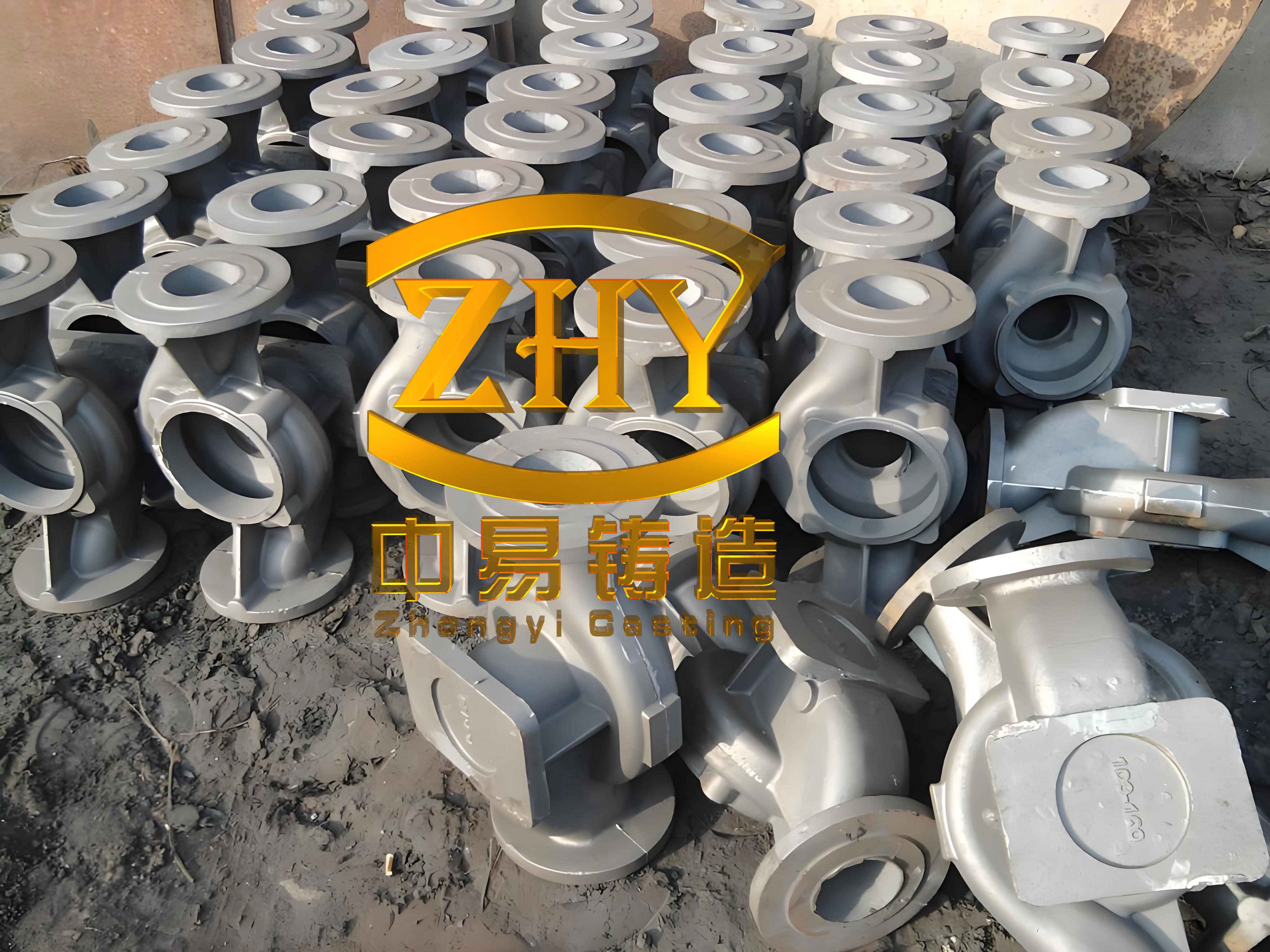
In practical applications, I have applied these principles to produce cylinder head castings from HT300 gray iron. The castings have dimensions around 980 mm × 330 mm, with main wall thicknesses of 5 ± 1 mm. Using a charge of 85% steel scrap and 15% returns, I melt in a 12-ton induction furnace, employ Cu-Cr-Mo-Sn alloying, and implement dual inoculation. Tap temperatures are controlled at 1,450–1,480°C, with pouring temperatures of 1,380–1,410°C. The resulting gray iron castings exhibit tensile strengths above 280 MPa, Type A graphite (grades 4–6), and pearlite content over 98%, meeting stringent engine requirements. This success underscores the importance of integrated process control for high-performance gray iron castings.
To further elaborate on the melting dynamics, the induction furnace’s electromagnetic stirring plays a vital role in homogenizing the melt for gray iron castings. This stirring action helps in the removal of non-metallic inclusions and promotes uniform temperature distribution. However, it can also lead to excessive agitation if not controlled, potentially increasing oxidation. I optimize stirring by adjusting power settings during different stages. The energy efficiency of the furnace can be expressed as: $$\eta = \frac{P_{\text{melt}}}{P_{\text{input}}} \times 100\%$$ where \(P_{\text{melt}}\) is the power used for melting and \(P_{\text{input}}\) is the total input power. Maintaining high efficiency reduces costs and improves consistency for gray iron castings.
Another aspect is the control of oxide formation. In induction furnaces, the melt surface is exposed to air, leading to oxidation of elements like silicon and manganese. I use covering fluxes to protect the melt and facilitate slag removal. The slag basicity index, defined as: $$B = \frac{\% \text{CaO} + \% \text{MgO}}{\% \text{SiO}_2 + \% \text{Al}_2\text{O}_3}$$ is kept around 1.2–1.5 to ensure proper fluidity and inclusion absorption for gray iron castings. Regular slag analysis helps in adjusting flux additions.
The solidification behavior of gray iron castings is influenced by cooling rates and nucleation sites. The Chvorinov’s rule can be applied to estimate solidification time: $$t = k \left( \frac{V}{A} \right)^2$$ where \(t\) is time, \(V\) is volume, \(A\) is surface area, and \(k\) is a constant dependent on mold material and pouring temperature. For thin-walled gray iron castings, faster cooling can lead to undercooled graphite, so I adjust inoculation and alloying to compensate. The graphitization potential can be estimated using: $$G_p = \text{CE} – 4.3 + 0.33\% \text{Si} – 0.027\% \text{Mn}$$ where higher \(G_p\) indicates better graphite formation. This guides process adjustments for gray iron castings.
Quality assurance involves rigorous testing of gray iron castings. I perform tensile tests, hardness measurements, and microstructural analysis. The relationship between tensile strength (\(\sigma_t\)) and Brinell hardness (HB) for gray iron castings can be approximated by: $$\sigma_t (\text{MPa}) \approx 1.8 \times \text{HB} – 200$$ This helps in non-destructive evaluation. Additionally, ultrasonic testing is used to detect internal defects in critical gray iron castings.
Environmental and economic considerations are also key. The high steel scrap ratio reduces reliance on pig iron, lowering carbon footprint and costs for gray iron castings. However, it requires quality scrap management to avoid contamination. I implement scrap sorting and pre-treatment to ensure consistency. The overall cost per ton of gray iron castings can be optimized by balancing raw material costs, energy consumption, and yield rates.
In conclusion, producing high-strength gray iron castings demands a holistic approach to process control. From raw material selection to melting, inoculation, and alloying, each step must be meticulously managed. The use of high steel scrap ratios, controlled sulfur addition, optimized inoculation, and strategic alloying has enabled me to achieve consistent properties in gray iron castings. The integration of tables and formulas, as presented, provides a practical framework for foundries aiming to enhance their gray iron castings. Future trends may involve advanced simulation tools and real-time monitoring to further refine processes for gray iron castings. By sharing these insights, I hope to contribute to the ongoing improvement in the production of reliable and high-performance gray iron castings for demanding applications.