
In my extensive experience with foundry operations, the issue of cracking in grey cast iron components is a persistent and critical challenge that can arise at various stages—during casting, machining, or even in service. Cracking fundamentally occurs when the applied stress exceeds the strength of the grey cast iron, whether that stress is residual from the casting process, externally applied, or a combination of both. While factors such as component design, process engineering, molding materials, cooling protocols, and operational practices all play significant roles, the chemical composition of the grey cast iron is a paramount determinant. This article, drawn from practical insights, delves into the quantitative relationships between cracking and chemical composition, focusing on mechanisms like chill formation, the influence of trace elements, and phosphorus content, while presenting preventive strategies. The discussion will be enriched with tables, formulas, and detailed explanations to provide a comprehensive guide for practitioners.
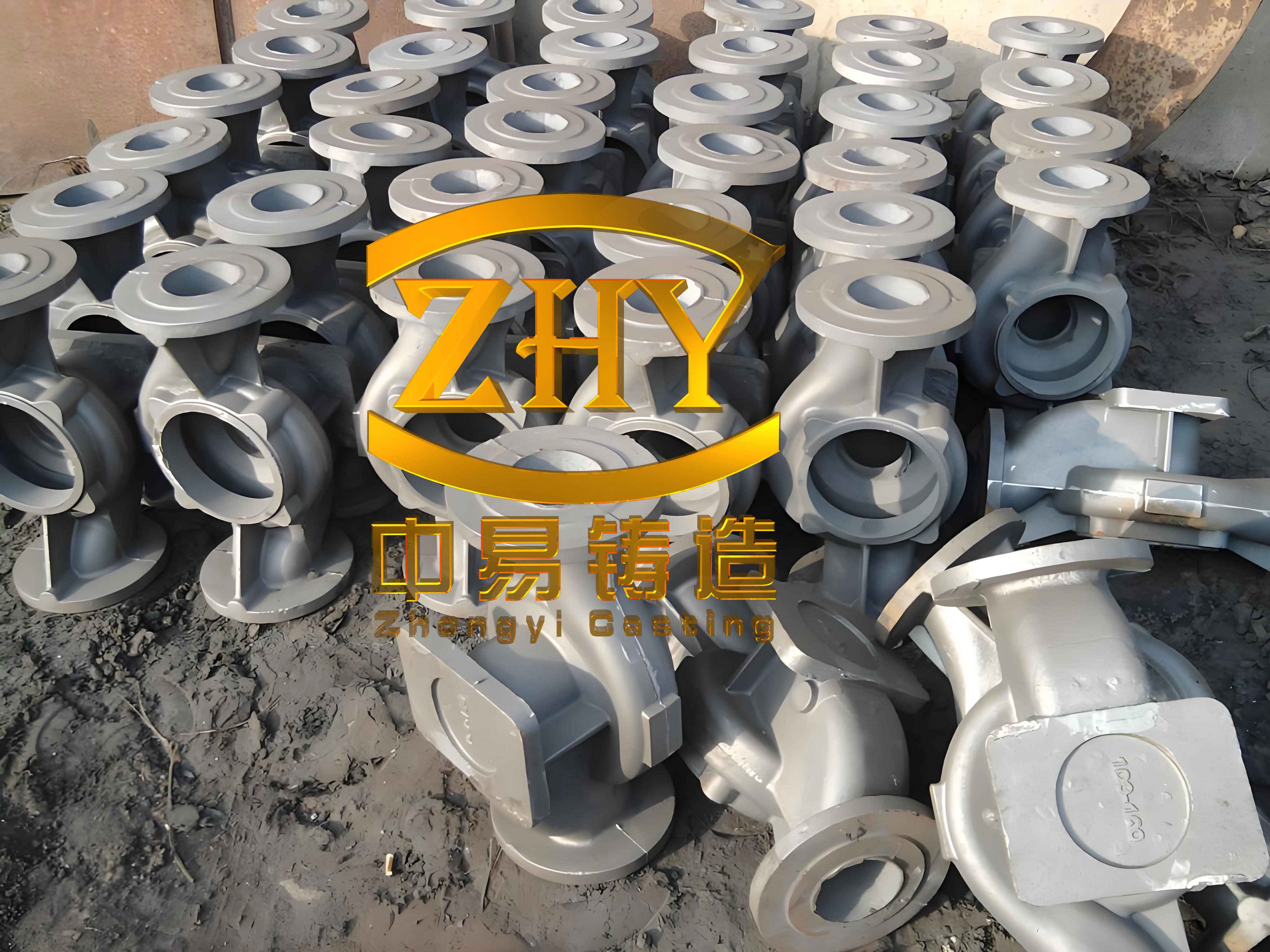
The microstructure of grey cast iron, characterized by graphite flakes embedded in a metallic matrix, is highly sensitive to chemical composition. Variations in key elements can drastically alter the formation of phases like cementite (iron carbide) or phosphides, leading to embrittlement and increased susceptibility to cracking. I have observed that a deep understanding of these compositional effects is essential for producing reliable grey cast iron castings. In this context, I will systematically explore how specific elements contribute to cracking, supported by empirical data and theoretical frameworks.
One of the most prevalent causes of cracking in grey cast iron is the formation of chill, or white iron, at section edges, corners, or thin walls. Chill regions, consisting primarily of cementite, are extremely hard and brittle compared to the pearlitic or ferritic matrix of standard grey cast iron. This brittleness creates stress concentrators, making the casting prone to fracture under thermal or mechanical loads. The propensity for chill formation is intrinsically linked to the carbon equivalent (CE) of the melt and the effectiveness of inoculation practices. The carbon equivalent for grey cast iron is typically calculated using the formula: $$CE = w(C) + \frac{1}{3} \left( w(Si) + w(P) \right)$$ where \(w(C)\), \(w(Si)\), and \(w(P)\) represent the weight percentages of carbon, silicon, and phosphorus, respectively. A lower CE generally increases the risk of chill, especially in thinner sections.
To quantify this relationship, I have compiled and expanded upon data correlating grey cast iron grade, carbon equivalent, and the minimum section thickness resistant to chill before inoculation. This is crucial for designing castings and selecting appropriate compositions. The following table elaborates on these relationships, incorporating additional grades for a broader perspective.
| Grey Cast Iron Grade | Typical Carbon Equivalent (CE, %) | Minimum Section Thickness Resistant to Chill (Pre-Inoculation, mm) | Notes on Microstructure Tendency |
|---|---|---|---|
| HT150 (Analogous to ASTM Class 25) | 4.50 – 4.55 | 2 – 3 | High graphitization potential, prone to ferritic matrix. |
| HT200 (Analogous to ASTM Class 30) | 4.20 – 4.25 | 6 – 9 | Balanced graphitization, typically pearlitic. |
| HT250 (Analogous to ASTM Class 35) | 3.90 – 3.95 | 9 – 14 | Lower graphitization, increased pearlite. |
| HT300 (Analogous to ASTM Class 40) | 3.55 – 3.60 | 15 – 28 | High strength, significant chill risk without treatment. |
| High-Strength Grey Cast Iron (e.g., with alloying) | 3.30 – 3.50 | 25 – 40 | Alloying elements (e.g., Cr, Mo) further promote chill. |
This table underscores a fundamental inverse relationship: as the strength grade of the grey cast iron increases (often requiring lower CE), the inherent risk of chill in thinner sections rises dramatically. Therefore, for high-strength grey cast iron components with varying wall thicknesses, meticulous control of composition and mandatory inoculation become non-negotiable. Inoculation, typically with ferrosilicon-based inoculants, introduces nucleation sites for graphite, suppressing cementite formation and effectively reducing the chill width. A practical rule-of-thumb I employ is that for a casting to be chill-free in a given section (in mm), the chill width observed on a standard wedge test piece (in mm) should satisfy the condition: $$\text{Casting Chill-Free Section (mm)} > 3 \times \text{Wedge Chill Width (mm)}$$ Post-inoculation, the chill width can be reduced by 50% or more, significantly enhancing the integrity of the grey cast iron.
Sulfur is a potent chill-promoting element in grey cast iron. Its presence in the melt can lead to excessive chill, particularly at edges and in thin sections. However, this detrimental effect can be counteracted by maintaining an appropriate manganese level. Manganese combines with sulfur to form manganese sulfide (MnS) inclusions, which are less harmful and can even act as graphite nucleation sites if properly controlled. The required manganese content can be estimated using the classical formula: $$w(\text{Mn}) = 1.7 \times w(\text{S}) + 0.3\%$$ Here, the 0.3% represents a baseline of “free” manganese necessary for metallurgical balance. If the actual manganese is below this calculated value, excess sulfur remains active, promoting chill and increasing cracking tendency. For example, if a grey cast iron melt has 0.12% S, the target Mn would be: $$w(\text{Mn}) = 1.7 \times 0.12 + 0.3 = 0.504\%$$ Failure to achieve this balance, often encountered when using high-sulfur pig iron or coke, can result in widespread casting defects. I recall instances where the use of local, high-sulfur charge materials led to catastrophic cracking across multiple batches of grey cast iron castings until the charge mix was corrected.
Chromium is another element that significantly promotes chill in grey cast iron. While small additions (below 0.2%) can be tolerated and are sometimes used to increase hardness and strength, levels exceeding 0.2% dramatically increase the risk of white iron formation, especially in thin-walled grey cast iron castings. The effect is nonlinear and can be summarized by the empirical risk factor \(R_{Cr}\) for chill: $$R_{Cr} = e^{k \cdot (w(Cr) – 0.2)}$$ where \(k\) is a constant dependent on base composition (typically between 5 and 10). This means that a grey cast iron with 0.3% Cr could have a chill risk several times higher than one with 0.15% Cr. Contamination from chromium-bearing scrap, such as stainless steel, must be vigilantly avoided. Similar caution applies to other strong carbide formers like vanadium, titanium, and boron, which can enter the melt through contaminated scrap. The presence of these elements necessitates more aggressive inoculation and possibly adjustment of the carbon equivalent for the grey cast iron.
Beyond the major elements, certain trace elements—often introduced through “tramp” or contaminated scrap—can have a disproportionately damaging effect on the integrity of grey cast iron, leading to severe embrittlement and cracking. These elements typically alter graphite morphology or form deleterious intermetallic phases at grain boundaries.
Lead (Pb) is particularly notorious. At levels as low as 0.0004% to 0.0005% (4-5 ppm), lead can induce the formation of Widmanstätten graphite and “spiky” graphite morphologies. This degradation of graphite structure catastrophically reduces tensile strength—often by half—and drastically increases the cracking propensity of the grey cast iron. The mechanism is synergistic with hydrogen pick-up from damp charge materials, linings, or molds. The detrimental effect can be modeled as a strength reduction factor \(f_{Pb}\): $$\sigma_{u, Pb} = \sigma_{u,0} \times f_{Pb}$$ where \(\sigma_{u,0}\) is the base tensile strength and \(f_{Pb}\) decreases from 1 to near 0.5 as Pb content approaches 0.001%. Sources of lead include free-machining steel scrap, painted scrap (with lead-based paints), and lead-containing non-ferrous parts, all of which must be rigorously excluded from the charge for quality grey cast iron production.
Boron and antimony, often originating from enameled steel scrap, are other harmful trace elements. They tend to segregate at grain boundaries, embrittling the grey cast iron matrix. A practical limit is to keep the charge content of enameled scrap below 5% by weight to avoid cumulative contamination. The embrittling effect can be particularly severe in thin-section grey cast iron castings, where ductility is already limited.
Tin is sometimes intentionally added to grey cast iron (up to 0.1%) to promote a fully pearlitic matrix and increase hardness. However, exceeding this threshold is dangerous. Tin levels above 0.1% lead to the formation of brittle intermetallic compounds and can significantly reduce impact strength and increase the cracking tendency of the grey cast iron. The relationship between tin content and relative brittleness \(B_{Sn}\) can be approximated for a typical pearlitic grey cast iron as: $$B_{Sn} \propto (w(Sn) – 0.05)^2 \quad \text{for} \quad w(Sn) > 0.05\%$$ This quadratic dependence indicates a rapidly escalating risk with small over-additions.
To consolidate the effects of these trace elements, the following table provides a summary of their critical limits and primary impacts on grey cast iron properties.
| Trace Element | Critical Concentration Range for Detrimental Effects | Primary Mechanism of Damage | Effect on Cracking Tendency in Grey Cast Iron | Common Sources in Charge |
|---|---|---|---|---|
| Lead (Pb) | > 0.0004 – 0.0005% (4-5 ppm) | Promotes Widmanstätten/spiky graphite; synergism with H₂. | Very High (Severe strength reduction) | Free-machining steel, old painted scrap, batteries. |
| Boron (B) | > 0.002% | Forms hard borides; grain boundary embrittlement. | High | Enameled scrap, certain alloy steels. |
| Antimony (Sb) | > 0.002% | Promotes undercooled graphite; segregates at boundaries. | High (Especially in thin sections) | Enameled scrap, some bearing metals. | Tin (Sn) | > 0.10% | Forms brittle intermetallics; reduces toughness. | Moderate to High | Bronze scrap, intentional addition overdose. |
| Bismuth (Bi) | > 0.002% | Similar to lead; promotes chill. | High | Contaminated scrap, certain alloys. |
Phosphorus content is another critical factor influencing the brittleness and cracking behavior of grey cast iron. Phosphorus forms a ternary phosphide eutectic (steadite) with iron and carbon, which manifests as a hard, brittle network at grain boundaries. While small amounts of phosphorus (up to 0.2%) can improve fluidity, higher levels dramatically increase brittleness. Grey cast iron with phosphorus content between 1.0% and 1.2% becomes exceedingly brittle, prone to spontaneous cracking during cooling or under minimal stress. The volume fraction of phosphide eutectic \(V_P\) can be estimated as: $$V_P \approx k_P \cdot (w(P) – 0.05)$$ where \(k_P\) is a constant (~0.1 for typical compositions), and \(w(P)\) is the weight percent phosphorus. This linear relationship suggests that reducing phosphorus content directly reduces the amount of brittle phase. I have witnessed cases where the use of high-phosphorus pig iron resulted in pervasive cracking in grey cast iron castings; simply switching to a low-phosphorus source virtually eliminated the problem. For most engineering grades of grey cast iron, maintaining phosphorus below 0.15% is advisable to ensure adequate toughness and crack resistance.
The combined effect of multiple elements on the cracking resistance of grey cast iron can be conceptualized through a “Cracking Susceptibility Index” (CSI). While simplified, such an index helps in making compositional decisions. A proposed form, based on my observations, is: $$CSI = \frac{[S]_{eff}}{CE^2} + \alpha \cdot \sum (w(E_i) – w(E_i)_{crit})^+ + \beta \cdot (w(P) – 0.1)^+$$ where:
- \([S]_{eff}\) is the effective sulfur not balanced by manganese: \([S]_{eff} = w(S) – \frac{w(Mn)-0.3}{1.7}\) (if positive).
- \(CE\) is the carbon equivalent.
- \(w(E_i)\) is the concentration of a detrimental trace element (Pb, B, Sb, etc.).
- \(w(E_i)_{crit}\) is its critical threshold.
- The \((x)^+\) operator denotes \(max(x, 0)\).
- \(\alpha\) and \(\beta\) are weighting factors (empirically, \(\alpha \approx 100\), \(\beta \approx 10\)).
A lower CSI indicates a lower predicted cracking risk for the grey cast iron. This index underscores that managing cracking is a multivariable optimization problem.
Preventive measures against cracking in grey cast iron, from a chemical composition standpoint, are systematic. First, the carbon equivalent must be selected appropriately for the desired grade and section thickness of the grey cast iron casting, using Table 1 as a guide. For complex castings with varying sections, the composition should be tailored to the most critical thin section. Second, effective inoculation is non-negotiable for all but the very high-CE, low-strength grey cast iron. The inoculant type, addition rate, and method (stream, mold, or late inoculation) must be optimized to ensure maximum graphite nucleation.
Third, a strict charge control program is essential. This involves:
- Using certified low-sulfur and low-phosphorus pig iron and steel scrap for grey cast iron production.
- Implementing spectroscopic analysis of incoming materials and melt batches to detect tramp elements.
- Calculating and verifying the Mn:S ratio for every heat of grey cast iron, aiming for the formula \(w(Mn) \geq 1.7w(S) + 0.3\%\).
- Absolutely excluding known contaminants: painted scrap (unless certified lead-free), enameled scrap (limit <5%), free-machining steel, stainless steel, and non-ferrous metals from the grey cast iron charge.
Fourth, for alloyed grey cast iron, elements like chromium must be kept below 0.2% unless specifically required and compensated for with higher inoculation and CE.
Fifth, process controls must complement chemical control. This includes proper gating and risering to minimize thermal gradients, controlled cooling to reduce residual stresses in the grey cast iron, and stress-relief annealing for high-phosphorus or complex castings. The annealing can help soften the phosphide network and relieve internal stresses.
To illustrate the interplay of these factors, consider the following extended table summarizing preventive actions for common compositional issues in grey cast iron.
| Compositional Issue | Primary Risk to Grey Cast Iron | Corrective/Preventive Action | Expected Outcome |
|---|---|---|---|
| Low Carbon Equivalent (CE) | Excessive chill, especially in thin sections. | Increase C and/or Si content; use graphitizing inoculants (FeSi75); consider charge mix change. | Reduced chill width, improved machinability, lower cracking rate. |
| High Effective Sulfur | Chill, embrittlement, poor graphite structure. | Add manganese to achieve \(w(Mn) = 1.7w(S)+0.3\%\); use desulfurizing fluxes if severe. | Formation of benign MnS, normalized graphite flakes, decreased chill. |
| Presence of Tramp Elements (Pb, Bi, etc.) | Severe graphite degeneration, drastic strength loss. | Eliminate contaminated scrap sources; use only certified clean charge for grey cast iron. | Restoration of normal graphite morphology and mechanical properties. |
| High Phosphorus (>0.15%) | Brittle phosphide network, low impact strength. | Source low-P pig iron; blend charges to dilute P; employ stress-relief annealing. | Reduced intergranular brittleness, higher tolerance to thermal shock. |
| Excessive Chromium or other Carbide Stabilizers | Hard chill, unmachinable edges, cracking. | Limit Cr to <0.2% unless specifically alloyed; avoid contaminated scrap; super-inoculate. | Controlled hardness gradient, feasible machining, lower residual stress. |
| Insufficient or Faded Inoculation | Chill, undercooled graphite, reduced strength. | Use late inoculation techniques; optimize inoculant particle size and addition method; control pouring temperature. | Consistent A-type graphite, uniform properties across casting sections. |
In conclusion, preventing cracking in grey cast iron is a multifaceted endeavor where chemical composition acts as the foundation. By rigorously controlling the carbon equivalent, ensuring effective manganese-sulfur balance, eliminating harmful trace elements, and managing phosphorus levels, the inherent cracking susceptibility of grey cast iron can be minimized. Inoculation serves as a powerful tool to mitigate chill, a primary initiator of cracks. From my experience, a proactive approach—combining careful charge selection, real-time melt analysis (like thermal analysis or quick wedge tests), and adherence to established compositional guidelines—is far more effective than troubleshooting defective grey cast iron castings after the fact. The grey cast iron industry must continue to emphasize purity of charge materials and precision in melt treatment to produce reliable, crack-free components for demanding applications. The formulas and tables presented here provide a quantitative framework for making informed decisions that enhance the quality and performance of grey cast iron.
Furthermore, ongoing research into advanced inoculants, trace element neutralizers (such as rare earth elements to counteract lead effects), and computational modeling of microstructure development will further empower foundries to optimize grey cast iron compositions. The goal remains constant: to harness the excellent castability and mechanical properties of grey cast iron while eliminating its vulnerability to cracking through masterful control of its chemical essence.