
In the landscape of modern foundry practice, the V-process, or vacuum-sealed molding process, has emerged as a significant method for producing high-quality castings, particularly for large and complex geometries. The inherent advantages of the process—excellent dimensional accuracy, superior surface finish, and environmental friendliness—make it highly attractive. However, applying this process to complex, large-plate gray iron castings presents a unique set of challenges that demand specialized process control strategies. This analysis, based on extensive hands-on development work, details the critical control points necessary for the successful V-process production of such components.
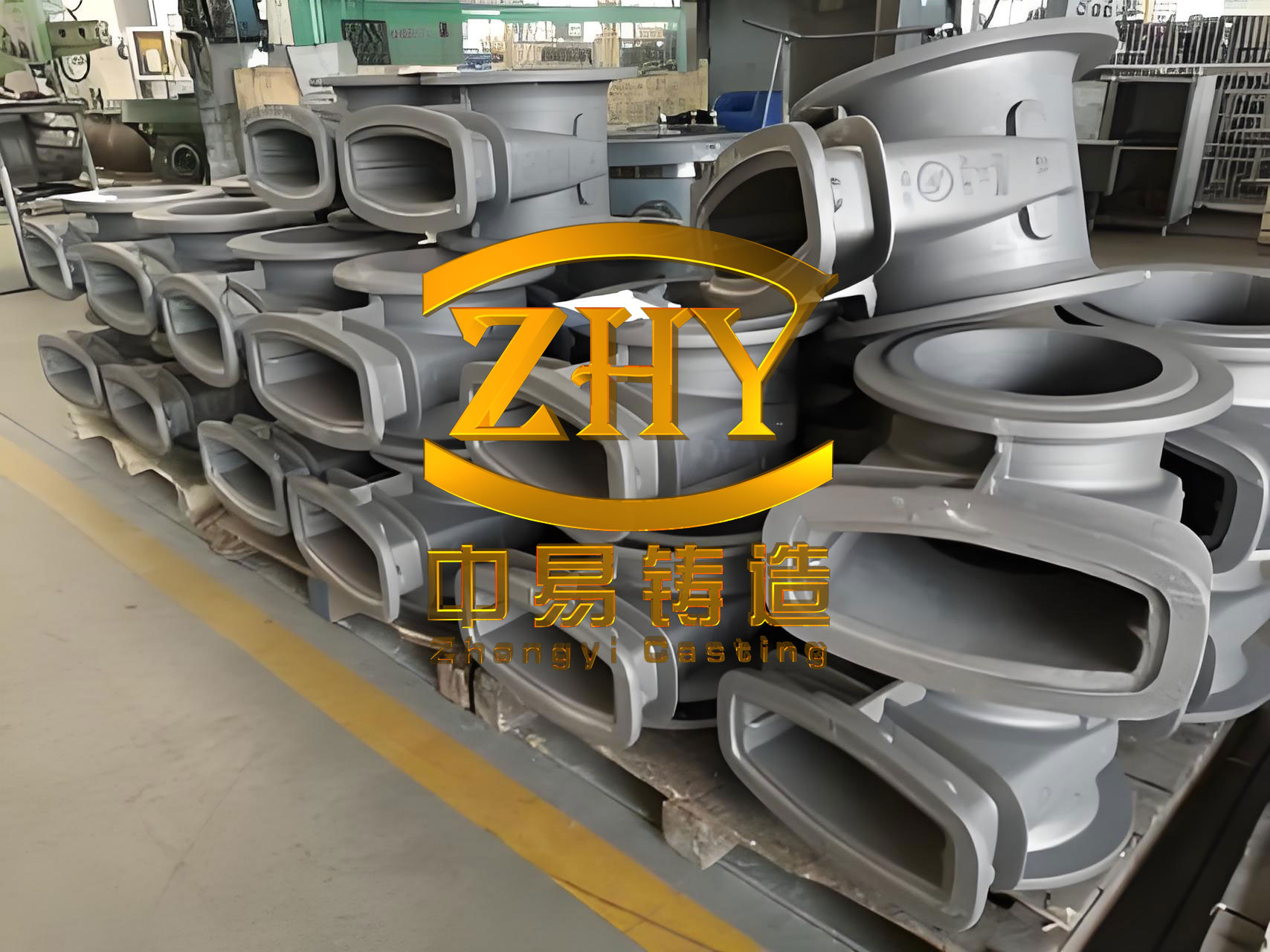
The target components, typified by bases for woodworking machinery, are characterized by their expansive, relatively thin main plate section reinforced by an intricate network of ribs. These gray iron castings must maintain strict dimensional tolerances for flatness, wall thickness, and critical center distances for assembly, all while achieving a surface quality that minimizes machining. Traditional green sand or resin sand methods often struggle with consistency, labor intensity, and environmental control. The V-process, utilizing unbonded dry sand consolidated under vacuum pressure with a thin plastic film, offers a compelling alternative. Yet, the very features that define these gray iron castings—large planar areas and complex ribbing—interact with the V-process in ways that require careful management of every stage, from pattern design to solidification control.
Fundamental Principles and Advantages of the V-Process
The V-process sequence involves heating and draping a thermoplastic EVA film over a pattern containing vacuum holes. Vacuum suction draws the film tightly onto the pattern contours. A coating is applied to the film surface. A flask is then placed over the pattern, filled with dry, unbonded sand, and vibrated for compaction. A sprue cup is formed, and the mold’s back is covered with another plastic sheet. Vacuum is then applied to the flask, transferring the vacuum pressure through the sand, which causes the sand grains to lock together, forming a rigid mold. The vacuum on the pattern is released, allowing the mold to be stripped. Cope and drag molds are assembled, and molten metal is poured while the vacuum is maintained. After pouring, the vacuum is held for a specified time before release, allowing the casting to solidify and cool.
The key advantages driving the adoption for producing gray iron castings include:
- Superior Surface Finish and Dimensional Accuracy: The smooth plastic film and precise pattern replication yield cast surfaces with roughness ($R_a$) often in the range of 12.5 to 50 μm, significantly better than conventional sand casting. The lack of a molding draft angle is a major benefit for machined components.
- Simple Sand System: The use of dry, unbonded sand eliminates the need for binders, catalysts, and associated mixing equipment. Sand reclamation is vastly simplified, involving only cooling and dust removal.
- Reduced Environmental Impact: The process generates minimal fumes, dust, or waste compared to resin-bonded systems.
- Lower Labor Skill Requirement: The molding process is less dependent on highly skilled labor compared to intricate manual clay-sand molding.
Challenges Specific to Complex Large-Plate Gray Iron Castings
While the V-process offers clear benefits, its application to large-plate gray iron castings with complex rib structures magnifies certain process sensitivities:
- Film Drapping and Integrity: Deep draws and sharp corners, especially at the intersections of multiple ribs, can exceed the thermoplastic elongation limits of the EVA film, leading to tears or thin spots. This compromises mold integrity from the very first step.
- Coating Application: Ensuring a uniform, defect-free refractory coating on vertical ribs and complex geometries is more challenging than on simple surfaces. Inadequate coating leads to gross metal penetration (burn-on/roughness).
- Mold Stability During Pouring: A large, flat cavity presents a significant area where metal pressure acts against the mold wall. The mold’s strength relies entirely on the vacuum-induced sand interlock. Any instability, leak, or local pressure imbalance can lead to mold wall movement or collapse.
- Dimensional Control (Shrinkage & Distortion): This is the most critical challenge. Unlike bonded sand molds which offer substantial resistance to contraction, the unbonded sand in the V-process offers negligible resistance once the vacuum is released. Therefore, gray iron castings undergo near-free contraction. However, the internal rib network creates internal constraints, making the overall shrinkage behavior anisotropic and difficult to predict. Furthermore, the large, thin plate section is highly susceptible to warping (warpage) due to uneven cooling and the loss of mold support after vacuum release.
- Gating and Venting Design for Uniform Filling: Achieving a smooth, rapid fill without excessive film burn-back or local turbulence is crucial. Venting must be ample and strategically placed to ensure vacuum stability throughout the entire cavity volume, particularly in isolated sections of the rib network.
Case Study Analysis: Process Development and Problem-Solving
The development journey for a specific large-plate woodworking machine base (material: HT200 gray iron) highlights these challenges and the empirical derivation of solutions. The casting dimensions were approximately 1800 mm x 960 mm x 110 mm (main plate thickness: ~11 mm), with a dense network of reinforcing ribs on one side.
Initial Process Design and Outcomes
The initial gating system used a bottom gating approach with multiple ingates spaced along a runner to promote even filling. Vents were placed at the highest points. The first trial immediately revealed core issues:
| Problem Observed | Root Cause Analysis |
|---|---|
| Severe film tearing at complex rib intersections | Local strain exceeded the elongation capability of the available EVA film. Manual patching was required, making the process unsuitable for production. |
| Extensive metal penetration and rough surface after shot blasting | Non-uniform coating application (brushing was used) resulted in weak or missing coating layers, allowing sand grains to fuse with the metal surface of the gray iron castings. |
| Localized mold collapse in one area | Insufficient venting in that region led to a pressure differential between the mold cavity and the vacuum system, collapsing the unsupported sand. |
| Excessive warpage (up to 10 mm bow) | Thermal stresses during cooling in an essentially unrestricted mold after early vacuum cutoff caused distortion of the large plate. |
Data-Driven Adjustment of Shrinkage Allowances
Accurate prediction of shrinkage is paramount. In bonded sand, a hindered shrinkage allowance of 0.6-0.8% might be used. For V-process gray iron castings of this geometry, actual measured shrinkage was significantly different and non-uniform. Data from initial pours was analyzed to establish new allowances:
| Dimension | Planned Allowance | Actual Measured Shrinkage | Recommended V-Process Allowance |
|---|---|---|---|
| Length (1800 mm) | 0.6% | ~1.1% | 1.1% |
| Width (960 mm) | 0.6% | ~1.25% | 1.3% |
| Height/Thickness | 0.6% | ~1.1% | 1.2% |
| Critical Center Distance | 0.6% | ~0.88% | Case-specific, ~0.9% |
The variation can be conceptually linked to the restraining effect of the ribs. A simplified model for the net linear shrinkage in a constrained direction could be expressed as a function of free shrinkage and a restraint factor:
$$
S_{net} = S_{free} – (R_f \cdot S_{free})
$$
where $S_{net}$ is the observed shrinkage, $S_{free}$ is the inherent free shrinkage of the iron alloy (typically ~1.0-1.2% for gray iron), and $R_f$ is a dimensionless restraint factor (0 ≤ $R_f$ < 1) representing the geometric constraint. For the width direction with more contiguous ribbing, $R_f$ was lower, resulting in $S_{net}$ closer to $S_{free}$.
Implemented Solutions and Final Results
A multi-faceted correction plan was executed, addressing each failure mode systematically:
- Pattern Modification for Film Integrity: In consultation with the product designer, sharp corners at rib intersections were radiused generously. The height of some non-critical ribs was slightly reduced. This dramatically improved film drawability without compromising part function.
- Coating Process Upgrade: Brushing was replaced by controlled spray application, ensuring complete, uniform coverage of all surfaces. Proper drying was enforced to develop coating strength.
- Enhanced Venting Strategy: Additional venting points were added in remote areas of the cavity to ensure uniform vacuum pressure distribution and prevent isolated “islands” of higher pressure.
- Distortion Control: A combination of methods was used:
- Pattern Camber (Reverse Distortion): A convex camber of 5-8 mm was added to the pattern’s large face to compensate for the anticipated concave warpage of the casting.
- Extended Vacuum “Hold” Time: The vacuum was maintained for a significantly longer period after pouring, allowing the casting to gain sufficient strength within the rigid mold before being released to cool freely. This is critical for gray iron castings to resist distortion from internal stresses during the eutectic solidification and cooling.
- Tilted Pouring: The mold was tilted to promote directional solidification and reduce thermal shock on the film at the sprue.
The results were transformative. The castings produced were complete, with excellent surface finish (minimal cleaning required), and dimensional accuracy was within specification. The warpage was reduced to a manageable 1-2 mm, which could be removed with minimal machining stock.
Comprehensive Process Control Framework
Synthesizing from this and similar projects, the following control points form a essential framework for V-process production of complex plate-type gray iron castings.
1. Dimensional Management: Beyond Standard Allowances
Shrinkage and distortion control cannot rely on handbook values for bonded sand. A proactive, empirical approach is required:
- Shrinkage Allowances: Must be determined experimentally for each major casting axis, accounting for part geometry. Initial patterns should be sized using best estimates (often closer to free shrinkage values, e.g., 1.0-1.3% for gray iron), with the expectation of iterative refinement.
- Distortion Compensation: The primary tool is pattern camber. The required camber ($C$) can be estimated from initial trial data and is a function of plate span ($L$), thickness ($t$), and process conditions:
$$
C \propto \frac{L^4}{t^2} \cdot \Delta T_{gradient}
$$
where $\Delta T_{gradient}$ represents the thermal gradient during cooling. The optimal camber is found by balancing extended vacuum hold time (which reduces $C$ needed) with energy costs.
| Parameter | Green Sand / Resin Sand | V-Process |
|---|---|---|
| Surface Roughness ($R_a$) | ≥ 50 μm, often with burnt sand | 12.5 – 50 μm, clean |
| Draft Angle Requirement | Necessary (e.g., 1-3°) | Unnecessary for many features |
| Dimensional Consistency | Variable, depends on skill & mold wear | High, controlled by pattern |
| Shrinkage Behavior | Hindered, more predictable | Near-free, anisotropic, geometry-dependent |
| Distortion Control | Via mold strength & chilling | Via pattern camber & vacuum hold time |
| Core Sand & Binder Usage | High | None for main mold; cores may need binder |
| Environmental Footprint | Higher (binder fumes, waste) | Lower |
2. Vacuum System Management: The Backbone of Mold Integrity
The vacuum system is not merely a tool; it defines the mold’s existence. Its control must be staged and precise:
- Molding Vacuum ($V_m$): Must be sufficient to create a rigid mold for handling. Typically ranges from -0.04 to -0.06 MPa (gauge).
- Pouring & Holding Vacuum ($V_p$): This is most critical. It must counteract the metallostatic pressure $P_m$:
$$
P_m = \rho \cdot g \cdot h
$$
where $\rho$ is the molten iron density (~7000 kg/m³), $g$ is gravity, and $h$ is the head height. The net pressure on the mold wall is $P_m – |V_p|$. $V_p$ must be stable and uniform. The ratio of total vent area ($A_v$) to choke area ($A_c$, often the sprue base) is a key design parameter. For stable plates, a higher ratio (3:1 to 4:1) than typical recommendations is beneficial:
$$
\frac{A_v}{A_c} \geq 3
$$ - Hold Time ($t_h$): A function of casting modulus ($M_c$, Volume/Surface Area) and alloy. For plate-type gray iron castings, $t_h$ should extend well into the eutectic solidification and early cooling phase to prevent distortion. $t_h$ can be approximated as:
$$
t_h \propto M_c^n
$$
where $n$ is often between 1.5 and 2. Premature release leads to guaranteed warpage.
3. Gating, Venting, and Feeding Strategy
The goal is rapid, quiescent filling and uniform temperature distribution to minimize thermal gradients that cause stress and distortion.
- Gating: Use multiple, distributed ingates along the longer dimension of the plate. Bottom gating is preferred to reduce turbulence and film burn-through. The cross-section should be designed for a rapid fill time to prevent film degradation.
- Venting: Vents must be located at the pattern’s highest points and, crucially, in any isolated pocket created by ribs. Their purpose is twofold: to allow air evacuation during fill and to ensure vacuum pressure reaches every part of the cavity to stabilize the sand. Neglecting vents in rib pockets is a common cause of local collapse.
- Feeding: While gray iron’s graphitic expansion often compensates for shrinkage, large, flat sections can benefit from subtle temperature gradients promoted by the gating design to ensure soundness.
4. Pattern and Film Drapping Technology
Successful film application is the foundation of quality.
- Pattern Design for Manufacturability (DFM): Close collaboration with the product designer is essential to radius edges, adjust rib heights/slopes, and potentially modify non-critical features to aid film drawability. This step is more impactful than searching for a “perfect” film.
- Film Selection: Balance thickness, elongation, and hot strength. Thinner films (0.05-0.08 mm) often have better elongation for deep draws but are more delicate. Heating uniformity across the entire film sheet during the drape cycle is vital; edge areas often cool faster, leading to failure there first.
- Vacuum Draw Screen Design: The pattern must have a sufficient density of small-diameter vacuum holes, especially in deep ribs and corners, to pull the film into sharp contours without bridging.
5. Coating Application and Control
The coating is the primary barrier against metal penetration and surface defects. For these gray iron castings:
- Application Method: Spraying is strongly preferred over brushing for complex geometries to ensure a consistent layer thickness over ribs and vertical faces.
- Key Parameters: Control slurry density, viscosity, and application thickness. A common target is a dried coating thickness of 0.2-0.5 mm.
- Drying: The coating must be thoroughly dried before sand filling to develop adequate strength and prevent steam-related defects during pouring.
Conclusion
The V-process represents a highly viable and advantageous method for producing complex, large-plate gray iron castings, offering unmatched surface quality and environmental benefits. However, its successful implementation hinges on recognizing and actively managing the unique process interactions specific to this geometry. Key dimensional parameters like shrinkage and distortion follow different rules than in bonded sand and must be derived empirically. The vacuum system’s role evolves from a molding aid to a critical process variable controlling stability, solidification, and final shape. Gating and venting must ensure not just proper filling but also uniform vacuum distribution. Finally, achieving a perfect mold starts with a pattern designed for film drapeability and is realized through meticulous coating control.
By embracing these control points—treating dimensional allowances as variable and geometry-dependent, staging vacuum control with an extended hold time, designing venting for stability, collaborating on pattern DFM, and enforcing robust coating practices—foundries can reliably and economically produce high-integrity, precision gray iron castings via the V-process, even for the most challenging large-plate components. The process shifts the challenge from skilled floor labor to upfront engineering and process control, paving the way for more consistent and sustainable production of these essential industrial parts.