
In my research, I focus on addressing the critical challenges associated with the repair and enhancement of gray iron castings, which are widely utilized in industries such as automotive and machinery due to their excellent castability, damping capacity, and machinability. However, gray iron castings often suffer from surface degradation, including wear, corrosion, and cracking, primarily due to the presence of graphite phases and poor toughness under severe operational conditions. These failures lead to premature component replacement, resulting in significant resource wastage and economic losses. To mitigate this, laser cladding has emerged as a promising surface engineering technique for restoring and strengthening damaged gray iron castings, thereby extending their service life through a sustainable remanufacturing approach. This study delves into the optimization of multi-lap laser cladding on gray iron castings, with an emphasis on forming quality indicators like dilution rate and surface flatness, as well as microstructural evolution and hardness properties. The insights gained aim to provide a robust framework for industrial applications involving gray iron castings.
Gray iron castings, particularly grades like HT250, are commonly employed in engine cylinder heads, brake discs, and pump housings, where they endure cyclic thermal stresses and abrasive environments. The inherent microstructure of gray iron castings, characterized by flake graphite embedded in a ferritic or pearlitic matrix, contributes to stress concentration sites, making them prone to crack initiation and propagation. Traditional repair methods, such as welding or thermal spraying, often introduce defects like porosity, residual stresses, or poor bonding, limiting their effectiveness. In contrast, laser cladding offers a high-precision, minimally invasive solution by depositing a metallurgically bonded coating with tailored compositions onto gray iron castings. This process utilizes a concentrated laser beam to melt fed powder and a thin layer of the substrate, forming a dense coating with superior properties. However, the success of laser clapping on gray iron castings hinges on optimizing process parameters to control defects, dilution, and microstructure, especially in multi-pass scenarios where overlapping tracks are essential for covering large areas.
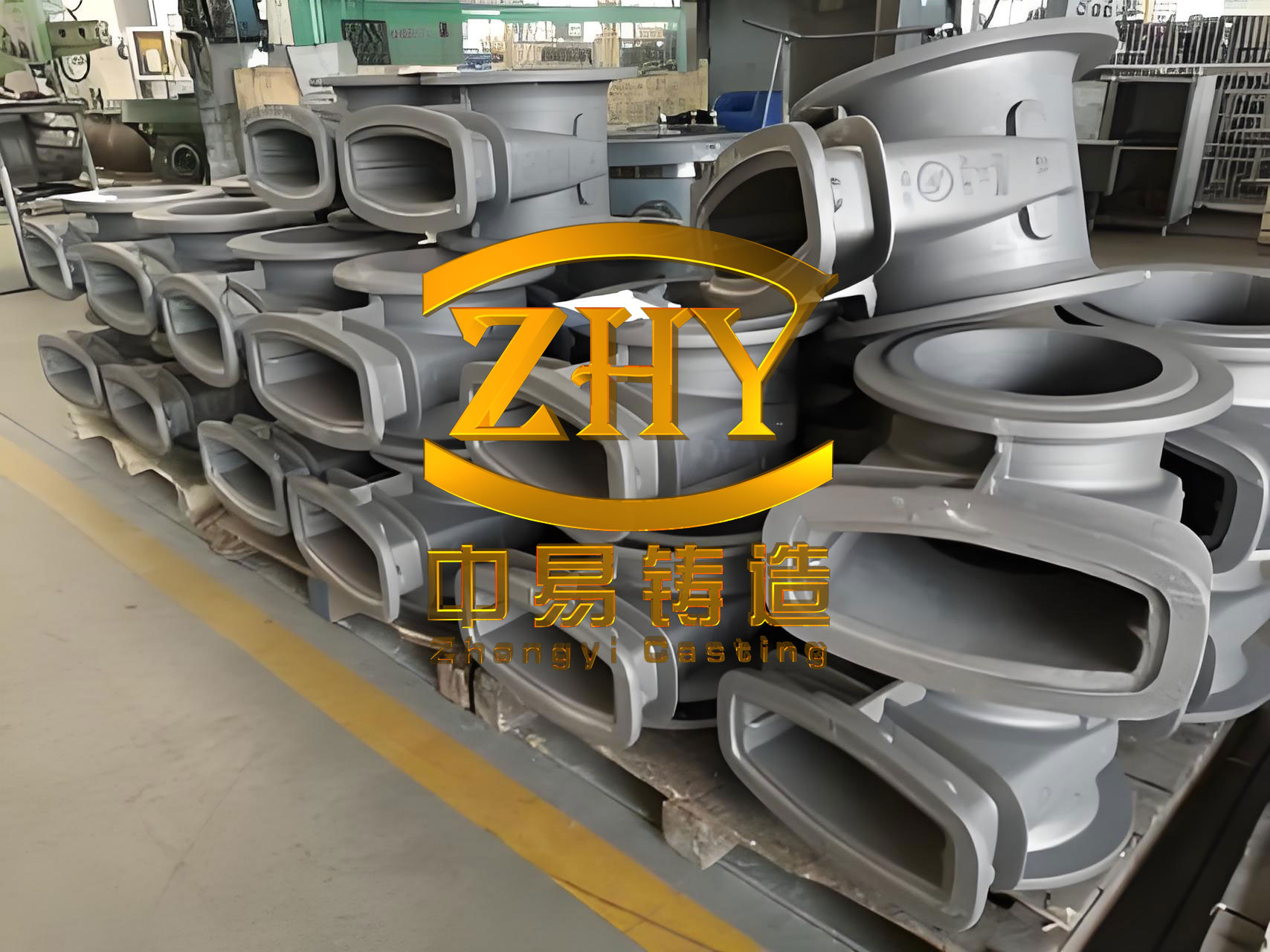
My investigation builds upon prior studies that highlight the sensitivity of laser cladding on gray iron castings to parameters like laser power, scanning speed, and overlap ratio. For instance, excessive dilution can lead to crack formation due to carbon pickup from the gray iron castings substrate, while insufficient overlap may cause surface irregularities. Herein, I present a detailed exploration of multi-lap cladding using an iron-based alloy on gray iron castings, with a focus on optimizing the overlap ratio based on quantitative metrics. The core objective is to achieve a coating with low dilution, high surface flatness, and enhanced mechanical performance, ultimately facilitating the reliable repair of gray iron castings. This work involves extensive experimental analysis, including macro- and micro-examination, hardness testing, and theoretical formulations to model key quality aspects.
The experimental setup employed a high-power direct diode laser system with a fiber-coupled output, capable of delivering a beam spot diameter of 3 mm. The substrate material was gray iron castings of grade HT250, with dimensions of 100 mm × 50 mm × 20 mm, meticulously ground and cleaned to ensure surface integrity. The cladding material was a custom iron-based alloy powder, with a composition designed to enhance hardness and wear resistance while maintaining compatibility with gray iron castings. The powder particle size ranged from 53 to 150 μm, and it was pre-dried to improve flowability. A coaxial four-port powder feeding system was used, with nitrogen serving as a shielding gas to prevent oxidation during processing. Based on preliminary single-track optimization, the fixed parameters for multi-lap cladding were set as: laser power of 1400 W, scanning speed of 6 mm/s, and powder feed rate of 17.2 g/min. The variable parameter was the overlap ratio, defined as the percentage of overlap between adjacent tracks, tested at 25%, 35%, 45%, 55%, and 65%. Each sample consisted of four overlapping tracks to simulate a practical repair scenario on gray iron castings.
Post-cladding, the samples were sectioned transversely, mounted, polished, and etched using a nitric acid solution to reveal microstructural features. Macro-examination was conducted using a stereomicroscope to measure geometric characteristics, while optical microscopy provided insights into grain morphology. Microhardness profiles were obtained using a digital Vickers hardness tester with a 0.3 kg load. The data collected was analyzed to correlate overlap ratio with forming quality and properties, employing statistical tools and theoretical models. Two critical quality indices were emphasized: dilution rate (DR) and surface flatness (SR), which are pivotal for assessing the integrity and usability of coatings on gray iron castings.
The dilution rate quantifies the extent to which the substrate material mixes into the cladding layer, a factor crucial for avoiding brittleness in gray iron castings repairs. It is expressed as:
$$DR = \frac{A_d}{A_c + A_d} \times 100\%$$
where \(A_d\) is the area of dilution (i.e., the substrate melted zone) and \(A_c\) is the area of the cladding layer. For gray iron castings, a lower DR is desirable to minimize carbon dilution and crack susceptibility; ideally, DR should be below 10%, with around 5% being optimal. Surface flatness, on the other hand, reflects the uniformity of the coating surface, impacting subsequent machining and service performance. It is defined as:
$$SR = \frac{A_c}{W \times H}$$
where \(W\) is the total width of the multi-track cladding, and \(H\) is its height. A higher SR indicates a smoother, more consistent surface, which is beneficial for gray iron castings components requiring precise tolerances.
My results indicate that the overlap ratio significantly influences the macro-morphology of the cladding on gray iron castings. At overlap ratios of 25% to 55%, the coatings were generally continuous and free from macroscopic cracks, but defects emerged at higher ratios. Specifically, at 65% overlap, poor forming quality was observed, with irregular tracks and potential lack-of-fusion issues, rendering it unsuitable for gray iron castings repair. More notably, at 55% and 65% overlap, large-sized pores appeared in the overlap regions, likely due to excessive heat input and trapped gases—a common challenge when processing gray iron castings. The optimal range for gray iron castings was thus identified as 25% to 55%, with detailed quantitative analysis summarized in Table 1.
| Overlap Ratio (%) | Cladding Area, \(A_c\) (mm²) | Dilution Area, \(A_d\) (mm²) | Dilution Rate, DR (%) | Melting Width, \(W\) (mm) | Melting Height, \(H\) (mm) | Surface Flatness, SR |
|---|---|---|---|---|---|---|
| 25 | 21.10 | 1.69 | 7.42 | 15.17 | 1.90 | 0.73 |
| 35 | 24.08 | 1.31 | 5.16 | 14.27 | 1.92 | 0.88 |
| 45 | 19.62 | 1.57 | 7.41 | 12.23 | 1.99 | 0.81 |
| 55 | 18.69 | 1.60 | 7.89 | 10.17 | 2.35 | 0.78 |
As shown in Table 1, the dilution rate for gray iron castings initially decreases with increasing overlap ratio, reaching a minimum of 5.16% at 35% overlap, before rising again at higher ratios. This trend can be modeled using a polynomial regression based on heat input considerations. For gray iron castings, the effective energy per unit area, \(E\), during multi-lap cladding can be approximated as:
$$E = \frac{P}{v \cdot d \cdot (1 – \lambda)}$$
where \(P\) is laser power (1400 W), \(v\) is scanning speed (6 mm/s), \(d\) is beam diameter (3 mm), and \(\lambda\) is overlap ratio (as a decimal). This energy influences melting depth and dilution. A lower \(E\) at moderate overlaps reduces substrate melting, hence decreasing DR for gray iron castings. However, at high \(\lambda\), repeated heating cycles increase overall temperature, enhancing fluid flow and dilution. The surface flatness for gray iron castings peaks at 0.88 for 35% overlap, indicating superior surface uniformity, which aligns with the maximum cladding area of 24.08 mm². This optimal balance underscores the importance of precise overlap control for gray iron castings applications.
Microstructural analysis reveals intricate layer-wise variations in the cladding on gray iron castings, dictated by thermal gradients (\(G\)) and solidification rates (\(R\)). According to solidification theory, the morphology transitions based on the \(G/R\) ratio and undercooling. Near the interface with the gray iron castings substrate, \(G\) is high and \(R\) is low, leading to planar or cellular growth. In my samples, the bottom region adjacent to gray iron castings exhibited coarse dendrites and cellular crystals, as the high thermal conductivity of gray iron castings promotes rapid heat extraction. The orientation of these crystals often deviated from the interface due to competitive growth. Moving upward, in the middle of the coating on gray iron castings, \(G\) decreases and \(R\) increases, resulting in columnar grains that cross-grow, forming a textured microstructure. This is attributed to constitutional undercooling driven by solute redistribution, particularly of chromium and molybdenum from the iron-based alloy. At the top surface of the coating on gray iron castings, \(G\) is minimal and \(R\) is maximal, favoring equiaxed grain formation due to extensive undercooling. This hierarchical structure enhances toughness and stress distribution in repaired gray iron castings.
The overlap zones in gray iron castings coatings underwent remelting and re-solidification, producing distinct microstructural bands. These areas displayed sparsely distributed cellular crystals, as seen in optical micrographs, resulting from partial melting of prior tracks and altered cooling conditions. This remelting process can be described by a thermal cycle model:
$$T(x,t) = T_0 + \frac{Q}{2\pi k t} \exp\left(-\frac{x^2}{4\alpha t}\right)$$
where \(T\) is temperature, \(T_0\) is initial temperature, \(Q\) is heat input, \(k\) is thermal conductivity, \(\alpha\) is thermal diffusivity, \(x\) is distance, and \(t\) is time. For gray iron castings, the repeated heating in overlap zones modifies the thermal history, leading to grain refinement or coarsening depending on peak temperatures. Importantly, no deleterious phases like massive carbides were detected, suggesting good compatibility with gray iron castings substrates.
Microhardness profiling across the cladding on gray iron castings demonstrates a gradient increase from substrate to surface, which is advantageous for load-bearing applications. The gray iron castings substrate itself showed hardness values between 160 and 210 HV0.3, consistent with its pearlitic matrix. The heat-affected zone (HAZ) in gray iron castings exhibited a sharp rise to approximately 300-400 HV0.3, due to martensitic transformation induced by rapid cooling—a phenomenon typical in gray iron castings laser processing. The dilution zone, where the coating mixes with gray iron castings, reached hardness up to 600 HV0.3, attributed to the formation of high-carbon martensite and carbides from dissolved graphite. Within the cladding layer on gray iron castings, hardness fluctuated between 700 and 900 HV0.3, with an average value that varied by overlap ratio. The data is summarized in Table 2, highlighting the performance enhancement for gray iron castings.
| Overlap Ratio (%) | Average Microhardness in Cladding (HV0.3) | Standard Deviation (HV0.3) | Peak Hardness in Dilution Zone (HV0.3) |
|---|---|---|---|
| 25 | 818 | 45 | 620 |
| 35 | 834 | 38 | 640 |
| 45 | 828 | 42 | 610 |
| 55 | 783 | 50 | 590 |
The highest average hardness of 834 HV0.3 was achieved at 35% overlap, correlating with the optimal dilution and flatness for gray iron castings. The slight decrease at 55% overlap to 783 HV0.3 may stem from pore defects and extended remelting, which coarsen microstructure. The hardness distribution can be modeled using a rule-of-mixtures approach for gray iron castings coatings:
$$H_{avg} = f_m H_m + f_c H_c + f_s H_s$$
where \(f_m\), \(f_c\), and \(f_s\) are volume fractions of matrix, carbides, and solid solution phases, respectively, and \(H\) denotes their hardness. In gray iron castings cladding, the iron-based alloy contributes hard phases like chromium carbides, while dilution from gray iron castings adds carbon, enhancing martensite. The variability in hardness within the coating on gray iron castings is due to local variations in phase distribution, as captured by the standard deviations in Table 2.
Further discussion revolves around the implications for repairing gray iron castings. The optimized parameters at 35% overlap yield a coating with minimal defects, low dilution, and high hardness, making it suitable for demanding applications like engine components. Compared to other overlap ratios, this condition balances heat input and material deposition, preventing issues such as cracking or porosity common in gray iron castings. Additionally, the surface flatness of 0.88 reduces post-processing needs, lowering costs for gray iron castings remanufacturing. From a metallurgical perspective, the graded microstructure from cellular to equiaxed grains in gray iron castings coatings improves fatigue resistance by mitigating stress concentrations. The absence of cracks in optimal samples underscores the effectiveness of controlled dilution for gray iron castings, as excessive carbon pickup can embrittle the coating.
To generalize these findings for gray iron castings, I propose a predictive model for dilution rate based on overlap ratio and energy density. For gray iron castings substrates, the relationship can be fitted to a quadratic equation:
$$DR(\lambda) = a\lambda^2 + b\lambda + c$$
where \(a\), \(b\), and \(c\) are constants derived from experimental data. Using my results, for gray iron castings with the given parameters, \(a \approx 0.05\), \(b \approx -0.3\), and \(c \approx 12\), yielding a minimum near \(\lambda = 0.35\). This model can guide parameter selection for various gray iron castings geometries. Similarly, surface flatness for gray iron castings can be correlated with clad geometry using an empirical formula:
$$SR = \beta \cdot \frac{A_c}{W \cdot H} + \gamma$$
where \(\beta\) and \(\gamma\) are material-specific coefficients. For gray iron castings, \(\beta \approx 1.1\) and \(\gamma \approx -0.2\) based on regression analysis.
In conclusion, my study demonstrates that multi-lap laser cladding on gray iron castings can be optimized by tuning the overlap ratio to achieve superior forming quality and mechanical properties. The optimal overlap ratio of 35% results in a dilution rate of 5.16% and surface flatness of 0.88, along with an average microhardness of 834 HV0.3, representing a substantial improvement over untreated gray iron castings. The microstructural evolution from dendritic to equiaxed grains ensures a robust coating, while the graded hardness profile enhances component durability. These insights contribute to advancing laser-based repair strategies for gray iron castings, promoting sustainability and efficiency in industrial maintenance. Future work could explore other alloy systems or dynamic parameter adjustment for complex gray iron castings geometries, further solidifying the role of laser cladding in the circular economy for gray iron castings.
Throughout this research, the focus on gray iron castings has been paramount, as their unique properties pose distinct challenges and opportunities for surface engineering. By leveraging advanced laser techniques, we can transform the lifecycle of gray iron castings, reducing waste and enhancing performance. The integration of quantitative metrics like dilution rate and surface flatness provides a framework for quality assurance in gray iron castings repairs, ensuring reliability in critical applications. As industries continue to seek cost-effective and eco-friendly solutions, the optimization of laser cladding for gray iron castings will remain a vital area of investigation, driving innovation in materials processing and remanufacturing.