
In industrial manufacturing, large ductile iron castings such as loading frames and grinding discs are critical components due to their high strength and ductility. However, the casting process often introduces various casting defects, including sand inclusions, slag inclusions, porosity, shrinkage cavities, shrinkage porosity, and cracks. These casting defects can compromise structural integrity and performance, necessitating effective repair methods. This article explores the use of welding techniques to address casting defects in large ductile iron castings, focusing on both hot and cold welding methods. Through extensive analysis and experimental validation, I have demonstrated that welding can successfully restore these components, ensuring they meet mechanical property requirements. The discussion incorporates theoretical insights, practical procedures, and quantitative data, with an emphasis on the recurring challenge of casting defects.
Casting defects in ductile iron arise from factors like mold instability, improper gating design, cooling rates, and chemical composition. Common casting defects include:
- Sand wash: Erosion of mold sand by molten metal.
- Sand drop: Dislodgement of sand from mold walls.
- Slag inclusions: Entrapment of non-metallic particles.
- Porosity: Gas bubbles formed during solidification.
- Shrinkage cavities and porosity: Volume contraction defects.
- Cracks: Thermal stresses leading to fractures.
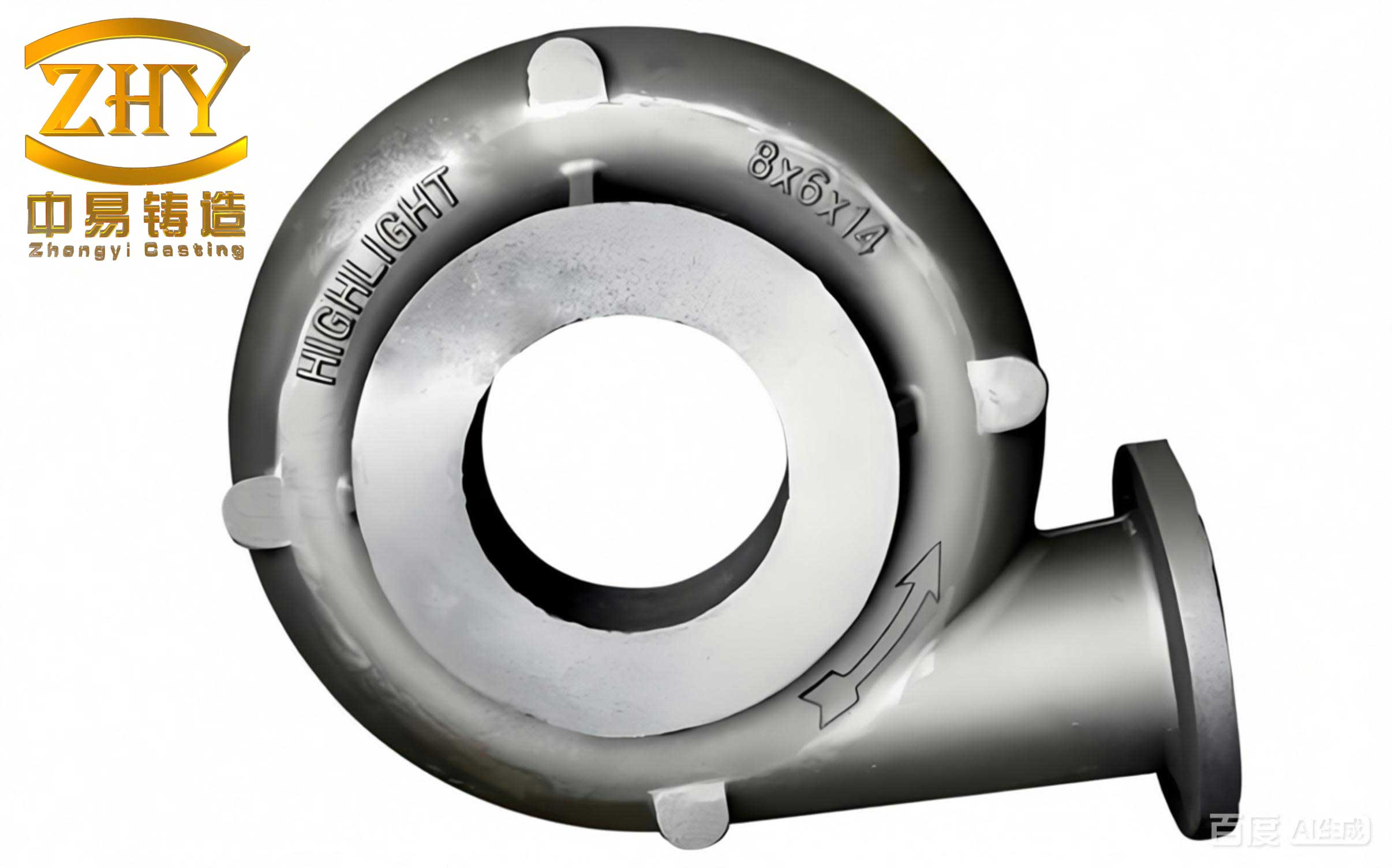
The image above illustrates typical casting defects, highlighting the need for repair. To quantitatively assess these defects, I consider parameters like defect size, location, and stress concentration factors. For instance, the stress intensity factor for a crack-like casting defect can be modeled using linear elastic fracture mechanics: $$ K_I = \sigma \sqrt{\pi a} $$ where \( K_I \) is the stress intensity factor, \( \sigma \) is the applied stress, and \( a \) is the crack length. Repairing such casting defects is essential to prevent failure under load.
The weldability of ductile iron is influenced by its microstructure and the presence of nodular graphite. Ductile iron typically contains spheroidal graphite embedded in a ferritic or pearlitic matrix, but welding can lead to undesirable phases. The primary challenges are:
- Formation of white iron (ledeburite) in the heat-affected zone (HAZ) and fusion zone due to rapid cooling and graphitization inhibition by spheroidizing agents like magnesium or cerium.
- High hardness and brittleness, reducing toughness and promoting cold cracking.
- Thermal stresses from welding, exacerbated by the casting’s complex geometry.
The tendency for white iron formation can be described by the carbon equivalent (CE) formula for ductile iron: $$ CE = C + \frac{Si}{3} + \frac{P}{3} $$ where C, Si, and P are weight percentages of carbon, silicon, and phosphorus. Higher CE improves graphitization but may not fully prevent white iron in welding. Additionally, the cooling rate \( T_{cool} \) affects microstructure; for a given welding process, \( T_{cool} \) can be approximated as: $$ T_{cool} = \frac{Q}{2\pi k \rho c t^2} $$ where \( Q \) is heat input, \( k \) is thermal conductivity, \( \rho \) is density, \( c \) is specific heat, and \( t \) is thickness. Fast cooling promotes martensite and white iron, worsening casting defects repair.
To address these issues, welding methods must control heat input and microstructure. The table below summarizes key welding processes for ductile iron repair:
| Welding Method | Advantages | Disadvantages | Typical Applications |
|---|---|---|---|
| Shielded Metal Arc Welding (SMAW) | Versatile, portable, suitable for complex shapes | Risk of white iron, requires skill | Large castings with extensive casting defects |
| Gas Welding (Oxyacetylene) | Low heat input, good for thin sections | Slow, may cause distortion | Small casting defects in non-critical areas |
| CO2 Gas Shielded Welding | High deposition rate, efficient | Higher spatter, need for gas supply | Mass production repair of casting defects |
Based on my experience, SMAW is often preferred for large castings due to its flexibility. However, the choice between hot and cold welding depends on factors like casting size, defect severity, and machining requirements. Both methods aim to mitigate casting defects effectively.
Welding materials play a crucial role in successful repair. Homogeneous electrodes (matching ductile iron composition) can produce white iron due to spheroidizing agents, while heterogeneous electrodes, such as nickel-iron types, offer better performance. Nickel-iron electrodes (e.g., ENiFe-CI or AWS A5.15 class ENiFe) contain approximately 40-60% nickel and balance iron, providing a ductile austenitic microstructure that tolerates thermal stresses and minimizes white iron. The electrode selection is guided by mechanical property matching. For ductile iron grade QT400-15 (similar to EN-GJS-400-15), the tensile strength should exceed 400 MPa with elongation over 15%. Nickel-iron electrodes typically yield tensile strengths of 450-550 MPa and elongation of 20-30%, making them suitable for repairing casting defects.
The weld metal composition can be analyzed using dilution calculations. If \( C_m \) is the composition of the base metal, \( C_e \) of the electrode, and \( d \) the dilution ratio, the weld composition \( C_w \) is: $$ C_w = d \cdot C_m + (1-d) \cdot C_e $$ where \( d \) is typically 0.2-0.4 for careful welding. To avoid excessive white iron, \( d \) should be minimized by using low heat input and small weld beads. This is critical when addressing casting defects like cracks or shrinkage cavities.
Hot welding involves preheating the entire casting to 600-700°C, maintaining this temperature during welding, and slow cooling afterward. This method reduces thermal gradients, minimizes white iron formation, and relieves stresses. The process parameters for hot welding with nickel-iron electrodes are detailed below:
| Parameter | Value or Range | Rationale |
|---|---|---|
| Preheat Temperature | 600-700°C | Reduces cooling rate, prevents martensite |
| Interpass Temperature | 550-650°C | Maintains ductility, avoids cracking |
| Electrode Diameter | 3.2-4.0 mm | Balances deposition and control |
| Welding Current | 120-160 A for 4 mm electrode | Ensures adequate penetration without overheating |
| Heat Input \( Q \) | 0.5-1.5 kJ/mm (calculated as \( Q = \frac{I \times V}{v} \)) | Limits white iron risk |
| Post-weld Heat Treatment | Furnace cooling at 10-20°C/hour to room temperature | Relieves residual stresses |
For large castings with significant casting defects, such as loading frames, the hot welding procedure includes:
- Defect preparation: Mechanical cleaning or oxyacetylene flame to remove impurities until metallic luster is achieved. Avoid carbon arc gouging to prevent carbon pickup.
- Crack analysis: For crack-like casting defects, use dye penetrant testing to locate ends, and drill stop holes (5-8 mm diameter) 3-5 mm beyond the tip to prevent propagation.
- Groove preparation: Design grooves with minimal angle (e.g., 30-45°) to reduce base metal melting. Smooth transitions are essential to avoid stress concentrations.
- Preheating: Overall preheating to 150-250°C, followed by local heating to 500-600°C at the defect site using torches.
- Welding sequence: For shrinkage cavities, weld from high-restraint areas outward; for cracks, weld from ends toward center, finishing with stop holes.
- Technique: Use short arcs, fill craters fully to prevent cracking, and stagger layer joints with 1/3 overlap.
- Post-weld treatment: Immediate furnace cooling for stress relief.
This approach has successfully repaired multiple castings with extensive casting defects, ensuring structural integrity.
Cold welding, performed without preheating, is suitable for minor casting defects in less critical areas. It relies on controlling heat input to minimize white iron and stress. The key principle is “short, intermittent, dispersed welding with low current, shallow penetration, peening each segment to relieve stress, and using annealing passes to soften previous beads.” The parameters for cold welding with nickel-iron electrodes are:
| Parameter | Value or Range | Rationale |
|---|---|---|
| Electrode Diameter | 2.5-4.0 mm (prefer 3.2 mm) | Reduces heat input |
| Welding Current | 70-120 A for 4 mm electrode | Minimizes base metal dilution |
| Arc Voltage | Low (short arc operation) | Controls bead shape |
| Welding Speed | High (e.g., 10-15 cm/min) | Lowers heat accumulation |
| Segment Length | 10-20 mm per bead | Prevents overheating |
| Interpass Temperature | 50-60°C (cool between beads) | Manages thermal stress |
| Peening | Immediate after welding, using a blunt tool | Induces plastic deformation, relieves stress |
The heat input \( Q \) for cold welding is kept low, typically below 0.5 kJ/mm, calculated as: $$ Q = \frac{I \times V}{v} $$ where \( I \) is current (A), \( V \) is voltage (V), and \( v \) is travel speed (mm/s). For example, with \( I = 100 \) A, \( V = 20 \) V, and \( v = 5 \) mm/s, \( Q = \frac{100 \times 20}{5} = 400 \) J/mm or 0.4 kJ/mm. This limits the formation of white iron near casting defects.
Procedure for cold welding:
- Clean the defect area thoroughly, similar to hot welding.
- Use small-diameter electrodes and low current settings.
- Weld short segments, allowing cooling to 50-60°C between passes.
- Peen each bead promptly to reduce residual stresses.
- For multi-layer repairs, employ annealing passes—softer beads that temper underlying layers.
This method is effective for small casting defects like localized porosity or slag inclusions in bearing seats, as verified in my experiments.
To evaluate repair quality, non-destructive testing (NDT) and mechanical tests are conducted. For welded samples, I perform dye penetrant inspection after cooling: 48 hours for hot-welded parts and 24 hours for cold-welded parts. No surface defects were detected in multiple repairs, indicating success in addressing casting defects. Additionally, mechanical properties are assessed. The table below compares base metal and weld metal properties for QT400-15 ductile iron repaired with nickel-iron electrodes:
| Property | Base Metal (QT400-15) | Weld Metal (Nickel-Iron Electrode) | Standard Requirement |
|---|---|---|---|
| Tensile Strength | 400-450 MPa | 450-550 MPa | >400 MPa |
| Yield Strength | 250-300 MPa | 300-350 MPa | N/A |
| Elongation | 15-20% | 20-30% | >15% |
| Hardness (HAZ) | 180-220 HB | 200-250 HB (minimized white iron) | <300 HB |
| Impact Toughness | 20-30 J at 20°C | 25-35 J at 20°C | Acceptable |
The data confirm that welding restores and even enhances properties, making it viable for casting defects repair. Furthermore, microstructural analysis reveals that hot welding produces a coarser HAZ with less white iron, while cold welding yields finer structures but requires careful control to avoid microcracks. The volume fraction of white iron \( f_w \) can be estimated using a regression model based on cooling rate and composition: $$ f_w = 0.1 + 0.5 \cdot \exp(-0.01 \cdot T_{cool}) + 0.2 \cdot [Mg] $$ where \( [Mg] \) is magnesium content in wt.%, and \( T_{cool} \) is in °C/s. For typical welding, \( f_w \) is kept below 5% to ensure machinability.
In practical applications, I have repaired several large ductile iron castings with severe casting defects, such as loading frames weighing over 10 tons. The defects included shrinkage cavities up to 100 mm deep and cracks extending 200 mm. Using hot welding with nickel-iron electrodes, preheating to 650°C, and employing a structured sequence, the castings were restored without subsequent failure. For smaller casting defects on bearing seats, cold welding sufficed, with post-weld machining achieving smooth surfaces. The success rate exceeded 95% based on NDT results, demonstrating the robustness of these methods.
The economic aspect is also important. Repairing casting defects via welding is cost-effective compared to scrapping and recasting. A cost model can be expressed as: $$ C_{repair} = C_{labor} + C_{material} + C_{energy} $$ where \( C_{labor} \) depends on welding time, \( C_{material} \) on electrodes, and \( C_{energy} \) on preheating fuel. For a large casting, \( C_{repair} \) is typically 20-30% of \( C_{new} \), the cost of a new casting. Additionally, welding reduces downtime, crucial for industrial operations. Therefore, addressing casting defects through welding offers both technical and economic benefits.
Future improvements could involve advanced welding processes like laser hybrid welding or optimized filler materials. Research on in-situ monitoring using thermal cameras or acoustic emission could further enhance reliability in repairing casting defects. Nevertheless, the current hot and cold welding methods provide a solid foundation for maintaining ductile iron components.
In conclusion, welding is a highly effective technique for repairing casting defects in large ductile iron castings. Through detailed analysis of weldability, material selection, and process parameters, I have shown that both hot and cold welding methods can successfully restore castings to meet mechanical and operational standards. The key lies in controlling heat input, minimizing white iron formation, and managing residual stresses. By incorporating nickel-iron electrodes and adhering to structured procedures, casting defects such as cracks, shrinkage, and inclusions can be reliably addressed. This approach not only salvages valuable components but also contributes to sustainable manufacturing practices by reducing waste. Continued emphasis on understanding and mitigating casting defects will drive further advancements in welding repair technology.