
In the manufacturing of large steam turbines, the intermediate pressure outer casing is a critical component that endures high temperatures and pressures. Due to its massive size and complex geometry, it is typically produced through casting processes. However, casting defects such as micro-cracks, porosity, and slag inclusions are common issues that can compromise the integrity and performance of the casing. These casting defects, if not properly addressed, pose significant safety risks and can delay production cycles. Therefore, developing effective welding repair techniques for these casting defects is essential to ensure product quality and operational reliability. This article delves into the comprehensive approach for repairing casting defects in ZG15Cr1Mo1 alloy cast steel, focusing on weldability analysis, material characterization, welding methodology, and practical applications.
The presence of casting defects in components like the intermediate pressure outer casing is a widespread challenge in the industry. These defects often emerge during the casting process due to factors like improper cooling, mold design, or material impurities. Addressing these casting defects requires a thorough understanding of the base material’s properties and the welding processes involved. In this context, I will explore the steps taken to analyze, test, and apply welding repair solutions for such casting defects, emphasizing the use of advanced welding techniques and materials to achieve durable repairs.
To begin, the weldability of ZG15Cr1Mo1 alloy cast steel must be assessed. Weldability refers to the ease with which a material can be welded without introducing defects, and it is influenced by factors such as chemical composition and thermal properties. For ZG15Cr1Mo1, the carbon equivalent value (CEV) is a key indicator of its susceptibility to welding-related issues like cold cracking. The CEV can be calculated using the formula derived from international standards, which helps predict the material’s behavior during welding. The formula is given as:
$$ CEV = C + \frac{Mn}{6} + \frac{Cr + Mo + V}{5} + \frac{Ni + Cu}{15} $$
For ZG15Cr1Mo1, the calculated CEV is approximately 0.77. According to welding literature, a CEV greater than 0.45 indicates a high tendency for hardening and increased risk of cold cracking under conditions of high restraint and rapid cooling. This highlights the importance of implementing preventive measures during welding repair of casting defects. Such measures include preheating the material, controlling interpass temperature, performing post-weld heat treatment, and using techniques like peening to redistribute stresses. By managing these factors, the likelihood of defects like cold cracks and reheat cracks can be minimized, ensuring the integrity of the repair.
The chemical composition and mechanical properties of ZG15Cr1Mo1 are crucial for understanding its performance in service and during repair. This material is a heat-resistant cast steel with enhanced high-temperature strength, making it suitable for steam turbine applications. Below, I present tables summarizing the standard and tested values for its composition and properties. These tables help illustrate the material’s characteristics and the stringent controls in place to mitigate casting defects.
| Material | C (%) | Mn (%) | S (%) | P (%) | Si (%) | Cr (%) | Mo (%) | Rm (MPa) | ReL (MPa) | A (%) | Hardness (HBW) |
|---|---|---|---|---|---|---|---|---|---|---|---|
| Standard Values (δ=38mm) | 0.10–0.18 | 0.20–0.50 | ≤0.012 | ≤0.020 | 0.20–0.60 | 1.00–1.50 | 0.90–1.20 | ≥550 | ≥345 | ≥18 | 170–220 |
| Tested Values (δ=38mm) | 0.13 | 0.44 | 0.001 | 0.011 | 0.35 | 1.40 | 1.13 | 618 | 459 | 27 | 193 |
From Table 1, it is evident that the levels of harmful elements like carbon, sulfur, and phosphorus are tightly controlled, while chromium and molybdenum are optimized to enhance thermal strength. This composition plays a vital role in resisting degradation under high-temperature conditions and reducing the propensity for casting defects during manufacturing. The mechanical properties, including tensile strength and elongation, meet or exceed standard requirements, ensuring the material’s reliability in demanding applications.
When it comes to repairing casting defects, selecting an appropriate welding process is paramount. Traditional methods like shielded metal arc welding (SMAW) have been used, but for large castings with extensive casting defects, efficiency and quality are enhanced by adopting advanced techniques. In this case, flux-cored arc welding (FCAW) with a rich argon混合气体保护焊 (gas mixture) was chosen. This method offers benefits such as higher deposition rates, better penetration, and improved control over welding parameters, which are essential for addressing complex casting defects. The use of a gas mixture, typically 80% argon and 20% carbon dioxide, provides stable arc characteristics and reduces spatter, leading to cleaner welds and minimizing the risk of introducing new defects.
The choice of welding consumables is equally critical. For repairing casting defects in ZG15Cr1Mo1, the welding material must match the base metal’s chemical composition and mechanical properties to ensure compatibility and performance. After evaluation, E621T1-B3M flux-cored wire, specifically TWE-911B3M with a diameter of 1.2 mm, was selected. This wire is designed for heat-resistant steels and offers excellent weld metal properties. The table below details the chemical composition and mechanical properties of the weld metal deposited by this wire, demonstrating its suitability for repairing casting defects.
| Wire Type | C (%) | Si (%) | Mn (%) | P (%) | S (%) | Cr (%) | Mo (%) | Rm (MPa) | ReL (MPa) | A (%) | Impact Energy (J) at 10°C |
|---|---|---|---|---|---|---|---|---|---|---|---|
| Standard Values (E621T1-B3M) | 0.05–0.12 | ≤0.80 | ≤1.25 | ≤0.03 | ≤0.03 | 2.00–2.50 | 0.90–1.20 | 620–760 | ≥540 | ≥17 | – |
| Tested Values (TWE-911B3M) | 0.058 | 0.207 | 0.866 | 0.016 | 0.012 | 2.09 | 1.02 | 705 | 640 | 18.5 | 73 (average) |
The data in Table 2 confirm that the weld metal meets all standard specifications, with adequate strength and toughness to withstand operational stresses. This makes it ideal for repairing casting defects, as it ensures the repaired areas maintain integrity under high-temperature conditions. The welding parameters for the repair process were carefully optimized to control heat input and minimize distortion, which is crucial when dealing with casting defects that may be sensitive to thermal cycles.
To validate the welding repair approach, a comprehensive welding procedure qualification test was conducted in accordance with ASME IX standards. This test involved preparing test plates from ZG15Cr1Mo1 material with a thickness of 38 mm, using a V-groove joint design. The welding parameters were meticulously controlled to simulate real repair conditions for casting defects. The key parameters are summarized in the table below, which includes details on preheat, interpass temperature, and heat input management.
| Parameter | Value |
|---|---|
| Welding Process | Flux-Cored Arc Welding (FCAW) |
| Protection Gas | 80% Argon + 20% CO2 |
| Gas Flow Rate | 15–18 L/min |
| Polarity | Direct Current Electrode Positive (DCEP) |
| Welding Current | 250–270 A |
| Arc Voltage | 27–28 V |
| Travel Speed | 300–510 mm/min |
| Heat Input | 10–13 kJ/cm |
| Preheat Temperature | 250°C |
| Interpass Temperature | 250–350°C |
The heat input is a critical factor in welding, as it affects the microstructure and mechanical properties of the weld. It can be calculated using the formula:
$$ Q = \frac{60 \times I \times V}{v \times 1000} $$
where \( Q \) is the heat input in kJ/cm, \( I \) is the current in amperes, \( V \) is the voltage in volts, and \( v \) is the travel speed in mm/min. For the parameters above, the heat input was kept within the specified range to prevent excessive grain growth and reduce the risk of defects like reheat cracking, which is common when repairing casting defects in heat-resistant steels.
After welding, the test plates underwent post-weld heat treatment (PWHT) to relieve residual stresses and improve toughness. This involved a local hydrogen relief treatment at 350°C for 2 hours, followed by a full annealing treatment at 680°C for 8 hours. The annealing curve, which illustrates the temperature-time profile, is essential for ensuring uniform heating and cooling, thereby minimizing the formation of new casting defects or weaknesses in the repaired area. The mechanical properties of the welded joint were then evaluated through tensile and bend tests. The results, shown in the table below, demonstrate that the repair met all required standards, with tensile strengths exceeding 600 MPa and bend tests showing no signs of failure.
| Base Material | Welding Wire | Tensile Strength (MPa) | Bend Test Results (180°) |
|---|---|---|---|
| ZG15Cr1Mo1 (δ=38mm) | TWE-911B3M (φ1.2mm) | 643, 635 | All four side bends passed |
These positive outcomes validate the welding procedure for repairing casting defects, confirming that the selected materials and parameters can restore the structural integrity of the casing. The success of this qualification test paved the way for practical application in production settings, where actual casting defects in steam turbine casings needed repair.
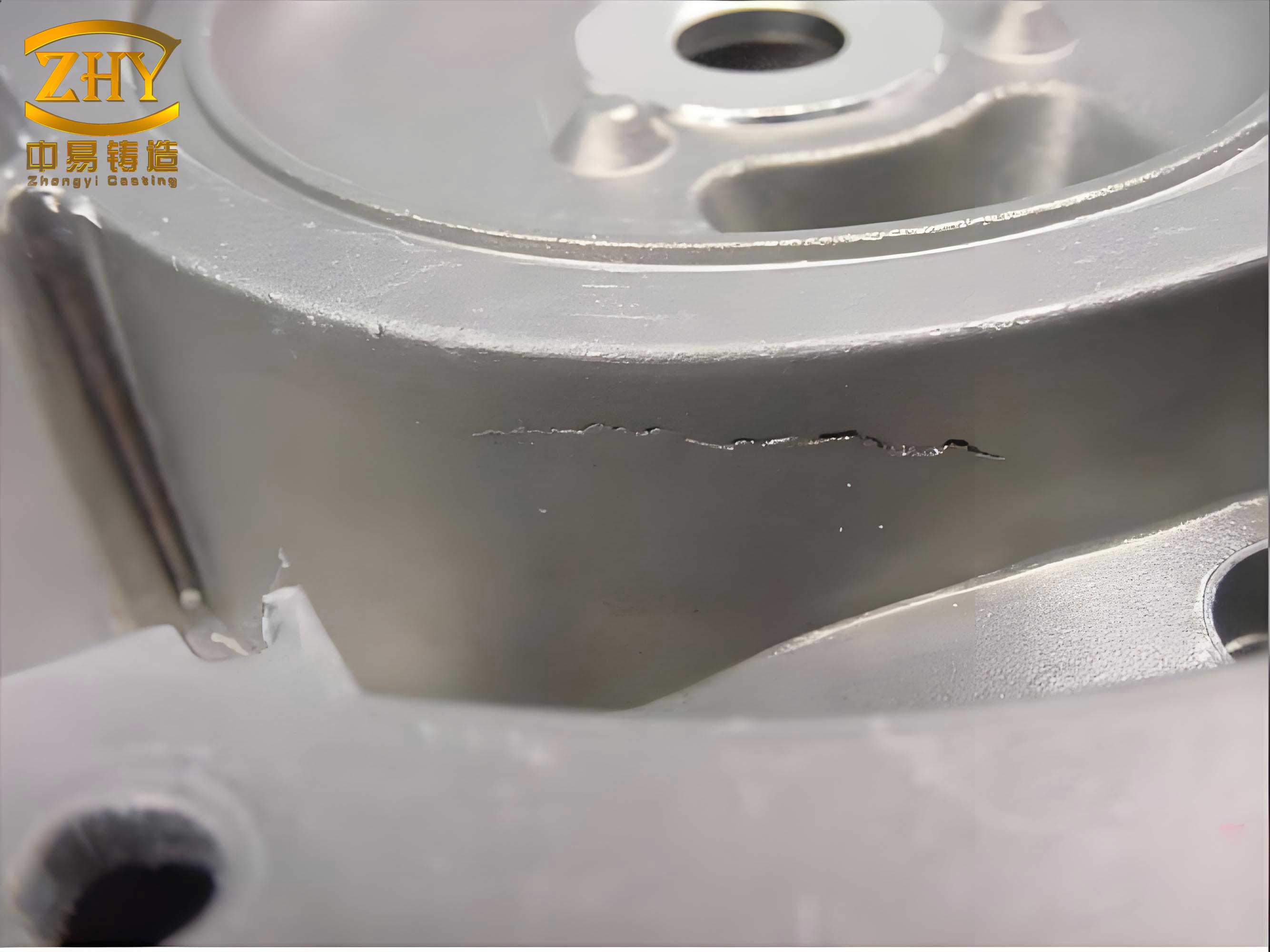
In production, the intermediate pressure outer casing for a 350 MW steam turbine was the focus. This casing, with an outer diameter of 3436 mm and a wall thickness of 80 mm, is typically cast in two segments: an upper part weighing 41 tons and a lower part weighing 47 tons. During machining, casting defects such as cracks and porosity were detected on the surfaces, necessitating immediate repair. The repair process began with thorough defect removal using mechanical methods like grinding or machining until clean metal was exposed. Non-destructive testing methods, such as dye penetrant inspection, were employed to verify the complete elimination of casting defects before welding commenced.
The welding repair was carried out following the qualified procedure. Key steps included preheating the area to 250°C, using the FCAW process with TWE-911B3M wire, and applying multi-pass welding techniques to fill the defects. Each weld pass was peened immediately after deposition to reduce residual stresses—a crucial practice when dealing with casting defects that are prone to stress concentration. Interpass temperature was strictly controlled between 250°C and 350°C to prevent overheating and maintain weld quality. After completing the repair, a local hydrogen relief treatment at 350°C for 2 hours was performed, followed by a full annealing treatment at 680°C for 8 hours to ensure the entire casing achieved uniform properties and stress relief.
Throughout the process, the heat input was kept low to avoid excessive thermal effects that could exacerbate casting defects or introduce new ones. The use of small-diameter wire and controlled parameters allowed for precise deposition, which is especially important when repairing intricate casting defects in thick sections. Post-repair, the casing underwent ultrasonic testing and visual inspection to confirm that the repaired areas were free of defects and met all product specifications. The results were satisfactory, with no indications of flaws, demonstrating the effectiveness of the welding repair strategy for casting defects.
The integration of advanced welding technologies and rigorous procedure qualification has proven essential for addressing casting defects in critical components like steam turbine casings. By understanding the material’s weldability, optimizing welding parameters, and using compatible consumables, it is possible to achieve repairs that restore functionality and extend service life. This approach not only mitigates the risks associated with casting defects but also enhances overall manufacturing efficiency, reducing downtime and costs. Future work may involve further refinement of welding techniques or the exploration of automated systems to improve consistency in repairing casting defects.
In conclusion, the welding repair of casting defects in ZG15Cr1Mo1 alloy cast steel requires a systematic approach that combines material science, welding engineering, and quality assurance. The carbon equivalent formula provides a foundation for assessing weldability, while detailed tables on composition and properties guide material selection. The use of flux-cored arc welding with argon混合气体保护焊, coupled with appropriate heat treatment, ensures durable repairs that withstand operational demands. Through procedure qualification and practical application, this methodology has been validated, offering a reliable solution for mitigating casting defects in large steam turbine components. As industries continue to push the boundaries of performance, such repair techniques will remain vital for maintaining infrastructure integrity and safety.