
In our foundry, we recently undertook a large-scale project involving the production of truck body castings, which presented significant challenges due to their complex geometry and high-quality requirements. These castings, made from ductile iron, weighed approximately 1,200 kg each, with overall dimensions of 1,200 mm × 3,000 mm × 185 mm. The structure featured thick sections at the axle ends and thinner main beams in the middle, necessitating precise control over casting processes to avoid defects. The primary issue we encountered was the occurrence of severe casting defects, including hot tearing, distortion, and dimensional inaccuracies, which threatened the project’s success. This article details our journey in identifying, analyzing, and resolving these casting defects through systematic process improvements, with a focus on enhancing yield and reducing costs.
The initial casting process employed a three-box molding system, where the axle ends were oriented upward in the pouring position to facilitate feeding and shrinkage compensation. The molding materials included sodium silicate-bonded sand for the drag section (due to high surface quality requirements) and limestone sand for other parts. The gating system was designed with ingates connected to two risers at the center, aiming to feed the thick sections. However, this approach led to persistent casting defects, as summarized in the table below.
| Defect Type | Location | Severity | Impact on Quality |
|---|---|---|---|
| Hot Tears | Mid-section at rib and main beam junctions | Width: 8-18 mm | Unacceptable for welding; led to scrap |
| Dimensional Inaccuracy | Overall length (1,200 mm dimension) | Exceeded by 15-25 mm | Out-of-tolerance; required rework |
| Distortion (Warping) | Entire casting, especially main beams | Deflection: 6-11 mm | Insufficient machining allowance; needed repair |
| Mold Box Deformation | Intermediate flask | Progressive cracking and bending | Reduced mold life; handling difficulties |
These casting defects were not merely superficial; they fundamentally compromised the structural integrity and functionality of the castings. To understand the root causes, we delved into the thermomechanical behavior during solidification and cooling. The hot tearing, for instance, is often associated with tensile stresses developed in the mushy zone when contraction is restrained. This can be approximated by the following formula for thermal stress: $$ \sigma = E \cdot \alpha \cdot \Delta T $$ where $\sigma$ is the thermal stress, $E$ is Young’s modulus, $\alpha$ is the coefficient of thermal expansion, and $\Delta T$ is the temperature gradient. In our case, the restraint from the thick axle ends and the拦板 (restraining walls) exacerbated these stresses at hot spots, leading to cracks. Additionally, the distortion resulted from uneven cooling rates between the upper and lower sections of the main beams, which have different wall thicknesses (e.g., upper wall: 12 mm, lower wall: 6 mm). This induced differential shrinkage, described by: $$ \epsilon = \alpha \cdot (T_{\text{initial}} – T_{\text{final}}) $$ where $\epsilon$ is the strain due to shrinkage. The combination of these factors created a perfect storm for casting defects.
A detailed root cause analysis revealed several key contributors to these casting defects. First, the use of sodium silicate-bonded sand in the drag offered poor collapsibility, hindering free contraction of the casting during cooling. Second, the gating design concentrated heat input at the central risers, intensifying thermal gradients and hot spot formation. Third, the structural constraints—such as the 250 mm high restraining walls—imposed mechanical resistance to shrinkage, amplifying stresses. Fourth, the intermediate flask, with a height of only 420 mm but a large planar area (1,200 mm × 3,000 mm), was prone to deformation under cyclic thermal loading, further aggravating misalignment and distortion. These issues are encapsulated in the table below, which correlates process parameters with defect mechanisms.
| Root Cause | Mechanism | Effect on Casting Defects |
|---|---|---|
| Poor Sand Collapsibility | Restricted contraction due to rigid mold walls | Increased hot tearing and distortion risks |
| Centralized Gating | Localized heat accumulation at hot spots | Enhanced thermal stresses and cracking |
| Structural Restraints | Mechanical hindrance from thick sections and walls | Dimensional inaccuracies and warping |
| Flask Design Weakness | Inadequate stiffness under thermal cycling | Mold deformation leading to casting defects |
| Uneven Wall Thickness | Differential cooling rates between sections | Distortion from unbalanced shrinkage |
To mitigate these casting defects, we implemented a comprehensive set of process modifications. The overarching goal was to improve mold collapsibility, redistribute heat input, and enhance tooling durability. One critical change involved redesigning the molding system: the intermediate and drag boxes were fabricated separately and then bolted together to increase rigidity. Additionally, metal cores were integrated into the drag plate to replace sand cores, simplifying production and improving accuracy. The gating system was revised to relocate the ingates to the cope, spaced 1,200 mm apart, thereby dispersing heat and reducing hot spot intensity. Furthermore, we introduced anti-distortion measures by incorporating a 3-5 mm reverse camber on the metal cores. To address restraint issues, dry sand or straw mats were placed in the 250 mm high wall sections to enhance collapsibility. At hot spots, internal chills (12 mm diameter) were installed, coupled with venting risers (18 mm diameter), and the central risers were eliminated. Pouring temperature was strictly controlled at 1,350 ± 10°C to promote rapid solidification. These improvements are summarized in the table below.
| Improvement Area | Specific Action | Expected Benefit |
|---|---|---|
| Mold Design | Separate intermediate/drag boxes with bolting; metal cores in drag | Enhanced tooling life and dimensional stability |
| Gating System | Ingates moved to cope, spaced 1,200 mm apart | Reduced thermal gradients and hot tearing |
| Collapsibility Enhancement | Dry sand/straw mats in restraint zones; improved sand properties | Lowered shrinkage resistance and distortion |
| Heat Management | Internal chills (12 mm) at hot spots; venting risers (18 mm) | Controlled solidification to minimize casting defects |
| Pouring Parameters | Low-temperature fast pouring (1,350 ± 10°C) | Reduced porosity and improved microstructure |
| Anti-Distortion Measures | Reverse camber (3-5 mm) on cores | Compensated for warping; achieved net-shape casting |
The effectiveness of these modifications was evaluated over a production run of 100 castings. The results were strikingly positive: hot tearing was completely eliminated, dimensional deviations on the 1,200 mm length were within tolerance, and distortion was reduced to less than 5 mm. However, we observed minor deformation during high-temperature annealing in two castings, which was resolved by orienting them sideways and using wedges for support. The integration of metal cores not only streamlined molding operations but also saved on sand consumption and reduced costs. Moreover, the bolstered flask design extended tooling service life significantly. To quantify the impact, consider the following formula for defect rate reduction: $$ R_{\text{defect}} = \frac{N_{\text{defect, initial}} – N_{\text{defect, improved}}}{N_{\text{defect, initial}}} \times 100\% $$ where $R_{\text{defect}}$ is the percentage reduction in casting defects. In our case, the defect rate dropped from approximately 15% to near-zero, underscoring the success of the improvements.
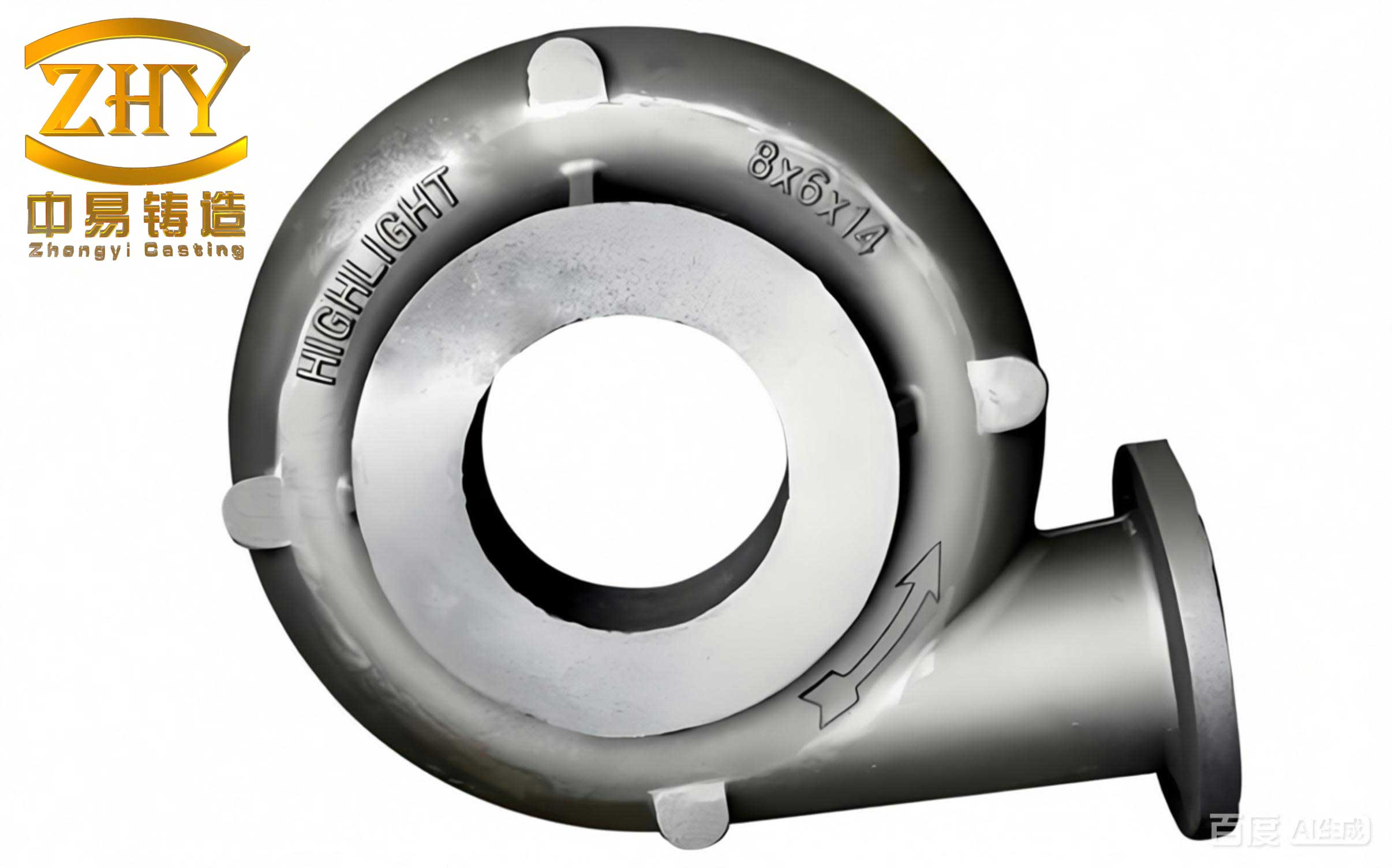
The visual representation above illustrates typical casting defects, such as hot tears and distortion, which we aimed to eradicate through our process enhancements. This image serves as a reminder of the critical importance of meticulous foundry practices in preventing such issues. Our journey highlights that casting defects are not inevitable; they can be systematically addressed through a combination of material science, thermal management, and mechanical design. For instance, the use of internal chills can be modeled using heat transfer equations like: $$ \frac{\partial T}{\partial t} = k \nabla^2 T $$ where $T$ is temperature, $t$ is time, and $k$ is thermal diffusivity. By optimizing chill placement, we accelerated cooling at critical junctions, thereby reducing the time spent in the vulnerable mushy zone and mitigating hot tearing.
In conclusion, the elimination of casting defects in complex castings like truck bodies requires a holistic approach that addresses both mold properties and thermal dynamics. Our experience demonstrates that improving sand collapsibility, redistributing heat input, and reinforcing tooling are effective strategies for combating hot tearing, distortion, and dimensional inaccuracies. These measures not only enhanced product quality but also yielded economic benefits through reduced scrap rates and lower production costs. Future work could involve advanced simulation techniques to predict casting defects more accurately, using finite element analysis to model stress distributions. Ultimately, the key takeaway is that persistent casting defects can be overcome through iterative process optimization, fostering a culture of continuous improvement in foundry operations. As we move forward, we plan to explore new materials and technologies to further minimize casting defects in even more challenging applications.
To reinforce our findings, the table below provides a comparative summary of key performance indicators before and after the process improvements, highlighting the dramatic reduction in casting defects.
| Metric | Initial Process | Improved Process | Improvement |
|---|---|---|---|
| Hot Tearing Incidence | ~15% of castings | 0% | Complete elimination |
| Dimensional Accuracy (1,200 mm length) | Deviation: +15 to +25 mm | Within ±2 mm | Within tolerance |
| Distortion (Max Deflection) | 6-11 mm | <5 mm | Reduced by over 50% |
| Mold Flask Life | ~50 cycles before failure | >200 cycles | Increased by 300% |
| Production Cost per Casting | High due to rework and scrap | Reduced by 20% | Significant cost savings |
| Overall Defect Rate | ~20% (including all casting defects) | <2% | Drastic reduction |
This case study underscores that casting defects, while challenging, are manageable through targeted interventions. By leveraging principles of solidification science and mechanical engineering, foundries can achieve higher yields and better quality. We encourage other practitioners to share their experiences in combating casting defects, as collaborative learning drives industry-wide advancement. The journey from defect-ridden castings to flawless products is a testament to the power of innovation and perseverance in metallurgy and manufacturing.