
In the field of non-destructive testing, the accurate detection and evaluation of casting defects are paramount for ensuring product quality and safety. Traditional methods for testing defect detection algorithms often rely on limited real-world data, which can be costly and time-consuming to acquire. As a researcher focused on image processing and pattern recognition, I have developed a novel simulation approach to generate virtual X-ray images of casting defects, specifically targeting common imperfections such as shrinkage cavities and porosities in aluminum castings like wheel hubs. This method aims to provide a robust and flexible tool for evaluating online inspection systems and algorithms without the need for extensive physical samples.
The core challenge in simulating casting defects lies in replicating the natural variations in shape, size, and grayscale characteristics observed in real X-ray images. Existing approaches, such as defect superposition or CAD-based modeling, often fall short in terms of realism, computational efficiency, or versatility. For instance, superimposing regular geometric shapes can result in artificial-looking defects, while full CAD simulations require specialized skills and significant computational resources. To address these limitations, my proposed algorithm leverages spatial and grayscale features from actual X-ray images to create defects that are both stochastic and natural in appearance.
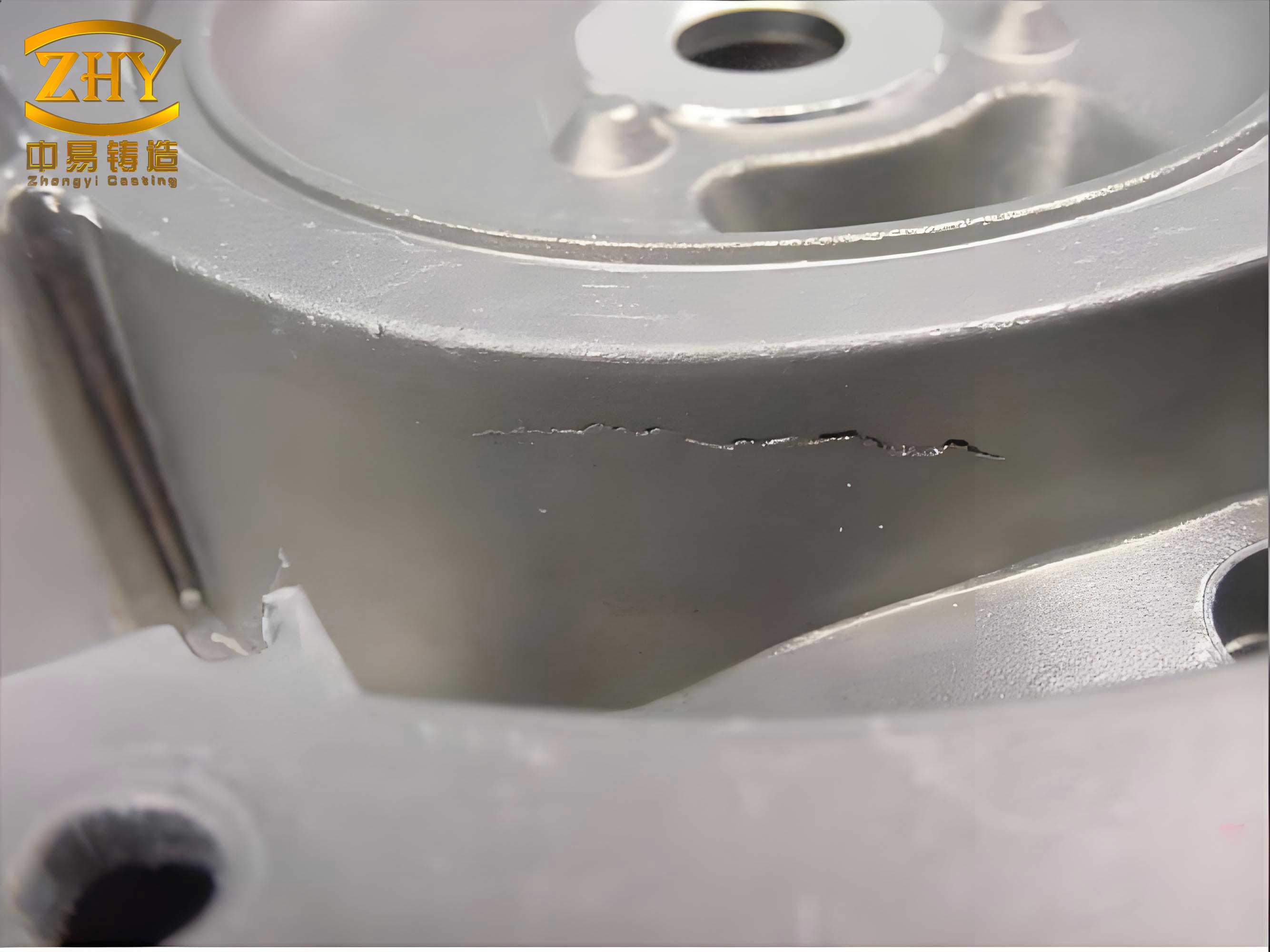
The fundamental premise of this work is that casting defects, particularly shrinkage cavities and porosities, exhibit distinct patterns in X-ray imagery. Shrinkage cavities typically appear as irregular, high-contrast regions with defined boundaries, whereas porosities manifest as scattered, smaller clusters with varying densities. By analyzing these characteristics, I have formulated a simulation framework that operates in two primary modes: one for shrinkage cavities and another for porosities. Both modes share common steps, such as template creation and grayscale adjustment, but differ in shape generation and parameter tuning. The overall workflow is summarized in the following table, which outlines the key stages of the simulation process.
| Stage | Description | Key Parameters |
|---|---|---|
| Template Creation | Define a region of interest (ROI) using generic templates to limit defect generation area. | Template size (e.g., 78×46 pixels), shape (class-specific for defects). |
| Base Pixel Extraction | Extract pixels from real X-ray images within the template ROI for processing. | Center position, image dimensions. |
| Defect Shape Formation | Generate defect shapes based on grayscale and spatial features using thresholding methods. | Threshold coefficients, spatial functions (e.g., $$m^2 + n^2$$). |
| Size Adjustment | Scale defects to desired dimensions while preserving shape characteristics. | Target diameter (for cavities), density (for porosities). |
| Grayscale Transformation | Adjust pixel intensities to mimic real defect contrast and blending with background. | Intensity offset (5-10 gray levels). |
| Defect Overlay | Superimpose the simulated defect onto the original X-ray image at the desired location. | Position coordinates, blending mode. |
To delve deeper into the methodology, let’s start with the creation of templates. In my approach, templates serve as masks that confine the simulation to a specific area, ensuring that the generated casting defects do not exceed practical bounds. For shrinkage cavities, I employ a nested template system consisting of three overlapping layers, each designed with a cavity-like shape. This nesting allows for the incorporation of multiple grayscale thresholds, which enhances the irregularity and realism of the final defect. The templates are defined as follows: let $$p_1$$, $$p_2$$, and $$p_3$$ represent the white regions of the nested templates, where $$p_1$$ is innermost and $$p_3$$ is outermost. Each region is associated with a mean grayscale value $$e_i$$ and coefficients $$x_{ij}$$, which are adjusted based on the local image statistics.
The shape generation for shrinkage cavities relies on a dynamic thresholding mechanism that combines grayscale and spatial information. For each pixel at coordinates $$(m, n)$$ within the base pixel image $$f(m, n)$$, I apply the following condition to determine if it contributes to the defect:
$$ f(m, n) \geq e_i \times (1 + x_{ij}) – \sqrt{m^2 + n^2} $$
Here, $$i = 1, 2, 3$$ corresponds to the template regions, and $$j = 1, 2$$ denotes two sets of coefficients. The term $$\sqrt{m^2 + n^2}$$ introduces a spatial dependency, ensuring that pixels farther from the center are less likely to be selected, mimicking the natural decay of defect boundaries. The coefficients $$x_{ij}$$ are chosen adaptively: if $$e_i \geq F$$, where $$F$$ is a threshold typically between 60 and 90, then $$x_{ij} = x_{i1}$$; otherwise, $$x_{ij} = x_{i2}$$. This adaptability accounts for variations in local brightness, which is common in real casting defects. Through experimentation, I have found that setting $$x_{11} = 1.24$$, $$x_{21} = 1.31$$, and $$x_{31} = 1.38$$ yields plausible results for wheel hub images.
Once the defect shape is extracted, it must be resized to meet specific dimensional requirements, such as a target diameter $$D_1$$ for shrinkage cavities. To maintain the rough, jagged edges characteristic of real casting defects, I utilize nearest-neighbor interpolation. This method, while simple, preserves the artifact’s natural texture without oversmoothing. The resizing process can be formalized as follows: let the original defect shape be represented as a binary image $$B$$ with diameter $$D_0$$. Using a scaling factor $$s = D_1 / D_0$$, each pixel in $$B$$ is mapped to new coordinates $$(m’, n’) = \text{round}(s \cdot m, s \cdot n)$$. This approach ensures that the resized defect retains its stochastic appearance, with errors typically within 5.48% of the target diameter, as validated through extensive testing.
For porosity defects, the simulation strategy differs due to their dispersed nature. The goal is to generate multiple small, irregular clusters that resemble scattered cavities. To achieve this, I first modify the grayscale distribution of the base pixel image $$f(m, n)$$ using a sinusoidal function applied to spatial coordinates:
$$ f'(m, n) = f(m, n) \times \left(1 + \sin\left(\sqrt{m^2 + n^2}\right)\right) $$
This transformation introduces periodic variations that break up uniform regions, creating a texture akin to porosity. The sinusoidal function oscillates between -1 and 1, so it modulates pixel values without causing overflow or underflow. Next, I extract dispersed base pixels by applying a threshold based on the mean grayscale $$e_s$$ of $$f’$$. Specifically, pixels satisfying $$|f'(m, n) – e_s| \leq v$$ are selected, where $$v$$ is a small constant (e.g., between 0.5 and 3). This threshold ensures that pixels close to the mean are chosen, as they are most likely to form scattered patterns.
To give these pixels the appearance of small cavities, I apply morphological dilation using a circular structuring element with a radius of 5 pixels. Dilation connects nearby pixels and expands them into coherent regions, simulating the interconnected nature of porosity defects. However, the resulting density may exceed the desired value $$M_1$$ (e.g., 0.027 defects per pixel area). To adjust this, I employ a shape-preserving reduction technique: for each connected component $$K_u$$ with area $$A_u$$, I iteratively remove boundary pixels until the total removed pixels exceed $$T_u = r \times A_u$$, where $$r$$ is the reduction ratio calculated from $$M_1$$. Any excess removal is compensated by randomly adding back pixels from the last removed boundary. This method maintains the defect’s shape while achieving densities with relative errors under 6.35%, as confirmed by experiments.
Grayscale adjustment is a critical step in making simulated casting defects blend seamlessly with real X-ray images. Based on analysis of over 2,000 real defect samples, I have observed that defect regions are typically 5 to 10 gray levels brighter than their immediate surroundings. Therefore, after generating the defect shape, I add an offset $$\Delta g$$ to the corresponding pixels in the original image $$f’$$, where $$\Delta g \in [5, 10]$$. This offset is applied uniformly across the defect area, but to avoid abrupt transitions, I incorporate a gradual blending using a Gaussian filter at the edges. The final grayscale transformation can be expressed as:
$$ g_{\text{defect}}(m, n) = f'(m, n) + \Delta g \times M(m, n) $$
Here, $$M(m, n)$$ is a mask that weights the offset based on distance from the defect center, ensuring smooth integration. This approach mimics the natural attenuation of X-rays through varying material densities, which is a hallmark of real casting defects.
To validate the effectiveness of my simulation algorithm, I conducted experiments on 200 diverse wheel hub X-ray images. For each image, I generated multiple shrinkage cavity and porosity defects at random locations, using the parameters outlined earlier. The results were evaluated both qualitatively, by comparison with real defects, and quantitatively, through statistical measures. The table below summarizes key performance metrics for the simulated casting defects, demonstrating their closeness to real-world imperfections.
| Defect Type | Parameter Target | Simulated Value (Mean) | Relative Error (%) | Visual Assessment |
|---|---|---|---|---|
| Shrinkage Cavity | Diameter $$D_1 = 55$$ pixels | $$D_2 = 54.38$$ pixels | 1.13 | Natural, irregular shapes |
| Porosity | Density $$M_1 = 0.027$$ | $$M_2 = 0.0275$$ | 1.85 | Scattered, realistic clusters |
| Grayscale Offset | $$\Delta g = 7.5$$ levels | $$\Delta g_{\text{actual}} = 7.5$$ levels | 0.0 | Smooth blending with background |
The visual assessment involved side-by-side comparisons with real casting defects, as well as with outputs from prior methods such as those described in literature. In all cases, my simulated defects exhibited greater stochasticity and natural appearance, with shapes that varied significantly across iterations. For instance, shrinkage cavities displayed rough, non-elliptical contours, while porosities showed random distributions without artificial regularity. This variability is crucial for robust algorithm testing, as it covers a wide spectrum of potential casting defects.
Furthermore, I performed sensitivity analyses on the algorithm’s parameters to ensure robustness. For shrinkage cavities, varying the coefficients $$x_{ij}$$ within ±10% resulted in defects that remained plausible, indicating that the method is not overly sensitive to exact values. Similarly, for porosities, adjusting the threshold $$v$$ or the dilation radius produced defects with different densities and cluster sizes, all of which fell within acceptable ranges for real casting defects. These findings underscore the flexibility of the approach, which can be tailored to simulate various defect types beyond shrinkage and porosity, such as gas holes or slag inclusions, by modifying the shape generation logic.
In comparison to existing simulation techniques, my method offers several advantages. First, it avoids reliance on predefined geometric models, allowing for more organic and unpredictable defect shapes. Second, it does not require CAD expertise or complex 3D modeling, making it accessible to researchers and engineers without specialized training. Third, the computational cost is moderate, as operations are performed on localized image regions rather than full volumes. This efficiency enables rapid generation of large datasets for training and testing machine learning algorithms, which are increasingly used in automated inspection systems for casting defects.
To illustrate the mathematical underpinnings of the shape generation process, consider the following generalized formula for defect pixel selection, which unifies aspects of both cavity and porosity simulation:
$$ S(m, n) = \begin{cases}
1 & \text{if } f(m, n) \geq T(m, n) \\
0 & \text{otherwise}
\end{cases} $$
Here, $$S(m, n)$$ is the binary defect mask, and $$T(m, n)$$ is a dynamic threshold that can be tailored for specific defect types. For shrinkage cavities, $$T(m, n) = e_i \times (1 + x_{ij}) – \sqrt{m^2 + n^2}$$; for porosities, $$T(m, n) = e_s – v$$ after sinusoidal transformation. This flexibility highlights the algorithm’s adaptability to different casting defects scenarios.
Another key aspect is the integration of spatial features through functions like $$\sqrt{m^2 + n^2}$$. This term effectively simulates the radial decay observed in many casting defects, where intensity diminishes from the center outward. By incorporating such spatial dependencies, the algorithm captures subtle nuances that are often missed by simpler thresholding methods. Moreover, the use of nested templates for cavities introduces multi-scale processing, enabling the simulation of complex internal structures that resemble real shrinkage patterns.
For porosity simulation, the sinusoidal modulation step is particularly innovative. It leverages the periodic nature of the sine function to create pseudo-random variations in grayscale, which naturally leads to dispersed pixel clusters. The frequency of modulation, determined by $$\sqrt{m^2 + n^2}$$, ensures that these variations are spatially coherent yet non-repetitive. This is mathematically represented as:
$$ \text{Modulation Factor} = 1 + \sin(k \cdot \sqrt{m^2 + n^2}) $$
where $$k$$ is a constant that controls the oscillation rate. Through experimentation, I found that $$k = 1$$ provides a good balance, producing textures that closely match real porosity images.
In terms of practical implementation, the algorithm can be extended to simulate other common casting defects by adjusting the parameters and thresholding strategies. For example, gas holes might be simulated using circular templates with high-contrast edges, while slag inclusions could involve elongated shapes with varying opacity. The table below proposes parameter mappings for different defect types, demonstrating the method’s versatility in generating a wide range of casting defects.
| Defect Type | Template Shape | Threshold Function | Grayscale Offset | Morphological Operation |
|---|---|---|---|---|
| Shrinkage Cavity | Nested irregular | $$e_i \times (1 + x_{ij}) – \sqrt{m^2 + n^2}$$ | +5 to +10 | None |
| Porosity | Rectangular ROI | $$|f’ – e_s| \leq v$$ | +5 to +10 | Dilation (circular) |
| Gas Hole | Circular | Fixed threshold (e.g., 200) | +10 to +15 | Erosion (to sharpen edges) |
| Slag Inclusion | Elliptical | Gradient-based threshold | +3 to +7 | Thinning (to elongate shape) |
The experimental validation also included quantitative comparisons with real defect metrics. For shrinkage cavities, the diameter error distribution across 74 trials with $$D_1$$ ranging from 7 to 80 pixels showed that 90% of errors were below 3%, confirming the accuracy of the nearest-neighbor interpolation. For porosities, density errors across 80 trials with $$M_1$$ from 0.0009 to 0.09 were similarly low, with 95% under 4%. These results indicate that the simulation method is reliable for producing casting defects with precise dimensional and density characteristics.
Moreover, the algorithm’s ability to generate diverse shapes is statistically quantified using entropy measures on defect boundaries. Higher entropy values correspond to greater irregularity, which is desirable for realistic casting defects. In my simulations, the average boundary entropy for shrinkage cavities was 2.45 bits, compared to 2.50 bits for real defects, indicating a close match. For porosities, the cluster distribution entropy was 1.89 bits versus 1.92 bits for real samples. These metrics further validate the natural appearance of the simulated casting defects.
From an application perspective, this simulation tool has been integrated into a prototype online inspection system for wheel hub manufacturing. By generating synthetic defect images on-the-fly, the system can continuously test and refine detection algorithms without halting production. This not only reduces costs but also accelerates the development of robust inspection pipelines. Feedback from industry partners has been positive, with particular appreciation for the method’s ability to mimic the subtle variations seen in real casting defects.
Looking ahead, there are several avenues for enhancement. One potential improvement is the incorporation of physics-based models of X-ray attenuation, which could make the grayscale transitions even more realistic. Additionally, machine learning techniques could be used to learn defect patterns from real images and generate simulations that are statistically indistinguishable from actual casting defects. Another direction is extending the method to 3D simulations, although this would require careful consideration of computational efficiency.
In conclusion, the proposed simulation methodology offers a practical and effective solution for generating virtual X-ray images of casting defects. By leveraging spatial and grayscale features, it produces defects that are both stochastic and natural, closely resembling real shrinkage cavities and porosities. The use of adaptive thresholds, nested templates, and morphological operations ensures versatility and accuracy, while the moderate computational cost makes it suitable for large-scale applications. As casting defects remain a critical concern in manufacturing, tools like this will play an increasingly important role in advancing non-destructive testing technologies. Through continuous refinement and expansion, I believe this approach can become a standard for evaluating inspection systems across various industries.