
As a materials engineer specializing in bearing alloys, I have extensively studied the metallurgical characteristics and manufacturing challenges of tin-based Babbitt alloys. These alloys, widely used in engine bearings due to their excellent conformability, embeddability, and oil affinity, are typically cast onto low-carbon steel backs to form bimetallic bearings. However, with the trend toward high-speed and heavy-load engines, the limitations of Babbitt alloys—such as low load capacity, insufficient fatigue strength, and rapid mechanical property degradation at elevated temperatures—have become apparent. Despite this, their unique advantages ensure continued application in gasoline engines, low-speed marine diesel engines, turbines, compressors, and other machinery. In this article, I will delve into the microstructural features and, particularly, the casting defects that plague tin-based Babbitt alloys, offering insights based on years of hands-on experience. The term ‘casting defects’ will be recurrent, as understanding these imperfections is crucial for improving alloy performance and bearing longevity.
The foundation of tin-based Babbitt alloys lies in their crystallization behavior and elemental influences. The most common system is the tin-antimony (Sn-Sb) binary alloy. From the Sn-Sb equilibrium phase diagram, for alloys with antimony content below approximately 10 wt%, the as-cast microstructure consists of a primary solid solution of antimony in tin (α-phase). Upon cooling, if the antimony content exceeds this threshold but remains under 20 wt%, the alloy first precipitates cubic-shaped SnSb intermetallic compounds (β-phase). In practice, due to rapid cooling during casting, the precipitation of β-phase from the α-solid solution is often suppressed. However, this can lead to segregation issues, as the lighter β-phase tends to float, causing gravity segregation. To mitigate this, copper is added, typically below 6 wt%. From the Sn-Cu phase diagram, when copper content is between 0.5 wt% and 8 wt%, the alloy forms needle-like Cu6Sn5 compounds (η-phase) during solidification. These compounds, with their star-like skeletal structure, help anchor the β-phase and prevent its flotation. The interplay of elements can be summarized using the following empirical relation for effective alloy design:
$$ \text{Optimal Composition} = \text{Sn}_{base} + \text{Sb}_{5-15\%} + \text{Cu}_{3-6\%} + \text{Trace Elements} $$
Where trace elements like arsenic (As) or cadmium (Cd) may be added for grain refinement. The ternary Sn-Sb-Cu system at room temperature can be divided into microstructural regions, as shown in Table 1, which I have compiled based on experimental observations.
| Region | Composition Range (wt%) | Microstructural Constituents | Typical Properties |
|---|---|---|---|
| I | High Sn, Low Sb & Cu | α-solid solution + fine β-precipitates | Soft, ductile, good conformability |
| II | Moderate Sb (10-15%), Low Cu | α-matrix + coarse β-crystals | Prone to segregation, reduced bonding strength |
| III | Moderate Sb & Cu (3-6% Cu) | α + β + η (Cu6Sn5) needles | Balanced, minimal segregation, optimal for bearings |
| IV | High Cu (>6%) | α + excessive η-phase network | Brittle, poor fatigue resistance |
| V | High Sb (>20%) | Dominant β-phase with α-interdendritic | Hard, wear-resistant but prone to casting defects |
The crystallization process is governed by cooling rates and alloy thermodynamics. The undercooling ΔT during solidification affects the nucleation rate N and growth velocity V, which can be approximated by:
$$ N = N_0 \exp\left(-\frac{\Delta G^*}{kT}\right), \quad V = V_0 \exp\left(-\frac{Q}{RT}\right) $$
where ΔG* is the activation energy for nucleation, k is Boltzmann’s constant, T is temperature, Q is activation energy for diffusion, and R is the gas constant. Fast cooling promotes fine α-grains but may suppress β-precipitation, while slow cooling allows coarse β and η formation, exacerbating casting defects. This delicate balance is critical in avoiding common casting defects such as shell detachment, poor bonding, coarse crystallization, and compound segregation.
Now, let’s focus on the casting defects that frequently occur in tin-based Babbitt alloys. These casting defects are not merely cosmetic; they directly impact the bonding integrity, fatigue life, and overall reliability of bearings. The most prevalent casting defects include shell detachment and poor bonding, coarse crystallization, and compound segregation. Other casting defects like cracks, shrinkage pores, gas porosity, and slag inclusion also pose significant challenges. I will discuss each in detail, emphasizing their causes and mitigation strategies.
First, shell detachment and poor bonding are among the most critical casting defects. They lead to early fatigue spalling of the alloy layer during service. The causes are multifaceted. Inadequate steel back preparation—such as residual oxides, oil, or contaminants—can prevent proper tin coating adhesion. The tin coating process itself must be meticulous: using high-purity tin (above 99.9%), maintaining a coating temperature around 250–300°C to avoid oxidation or poor wetting, and ensuring uniform thickness. If the coating is too thick or the steel back is too cool before casting, bonding weakens. Casting parameters also play a role. Excessive pouring temperature, for instance, slows cooling in the compound crystallization range, promoting coarse structures and segregation of Cu6Sn5 near the steel interface, which undermines bonding. Rapid cooling after solidification induces high residual stresses, reducing bond strength. Centrifugal casting at high speeds exacerbates compound segregation due to centrifugal forces. Moreover, thicker alloy layers slow cooling, allowing compounds to grow and segregate, while increasing shrinkage stresses. The bonding quality also depends on alloy type; for example, Sn-Sb-Cu alloys with more compounds are harder and brittler, yielding lower bond strength than leaner alloys. Steel back material matters too: low-carbon steel bonds well, but medium- or high-carbon steels and cast iron offer poorer adhesion due to differential thermal expansion. Defects like shrinkage pores or gas pockets at the interface further aggravate these casting defects.
Second, coarse crystallization is a detrimental casting defect where intermetallic compounds like SnSb and Cu6Sn5 grow excessively large. This coarsening deteriorates alloy properties, reducing strength and increasing brittleness, making the bearing prone to layer exfoliation. To prevent this, controlled melting and casting are essential. Adding grain refiners such as arsenic or cadmium in small amounts (0.1–0.5 wt%) can effectively refine the microstructure. The effect of refiners can be modeled using the grain size equation:
$$ d = k \cdot (G \cdot t)^{-n} $$
where d is grain diameter, k and n are material constants, G is temperature gradient, and t is solidification time. By optimizing cooling rates and adding refiners, coarse crystallization casting defects can be minimized.
Third, compound segregation is a casting defect characterized by inhomogeneous distribution of microstructural constituents, leading to inconsistent mechanical and chemical properties across the alloy layer. This segregation often manifests as β-phase or η-phase clustering near the steel back or outer surface. Preventive measures mirror those for coarse crystallization: proper melting practices, controlled pouring temperature, thorough melt stirring before casting, rapid cooling post-casting, and use of grain refiners. The segregation tendency can be quantified using the segregation coefficient S:
$$ S = \frac{C_{max} – C_{min}}{C_{avg}} $$
where Cmax, Cmin, and Cavg are maximum, minimum, and average concentrations of an element in the alloy. Aiming for S < 0.1 indicates acceptable homogeneity. Table 2 summarizes common casting defects, their causes, and remedies based on my experience.
| Casting Defect | Primary Causes | Prevention Strategies | Impact on Bearing Performance |
|---|---|---|---|
| Shell Detachment / Poor Bonding | Dirty steel back, improper tin coating, high pouring temperature, fast cooling, thick alloy layer | Thorough cleaning, optimal coating parameters, controlled pouring (320-380°C), moderate cooling, use of grain refiners | Reduced fatigue life, early spalling |
| Coarse Crystallization | Slow cooling in compound range, high Sb/Cu content, lack of refiners | Rapid cooling during compound formation, add As/Cd, stir melt before casting | Lower strength, increased brittleness |
| Compound Segregation | Gravity or centrifugal segregation, slow cooling, inadequate stirring | Fast cooling post-pouring, centrifugal speed control, melt homogenization | Inconsistent properties, localized weakness |
| Cracks | Rapid cooling after solidification, uneven cooling, machine vibration | Uniform cooling, precision centrifugal alignment, stress relief annealing | Catastrophic failure under load |
| Shrinkage Pores/Cavities | Fast cooling without feeding, low centrifugal speed | Moderate cooling, adequate feeder design, optimized rpm | Reduced load-bearing area, stress concentrators |
| Gas Porosity | High melting temperature causing gas absorption, quick cooling trapping gas, cold molds | Melt degassing, controlled pouring temperature, preheated molds (150-200°C) | Decreased density, fatigue initiation sites |
| Slag Inclusion | Low pouring temperature poor fluidity, impurity entrapment | Proper pouring temperature (340-360°C), melt skimming, clean handling | Mechanical weak points, poor surface finish |
To visually appreciate the severity of these issues, consider the following representation of typical casting defects.
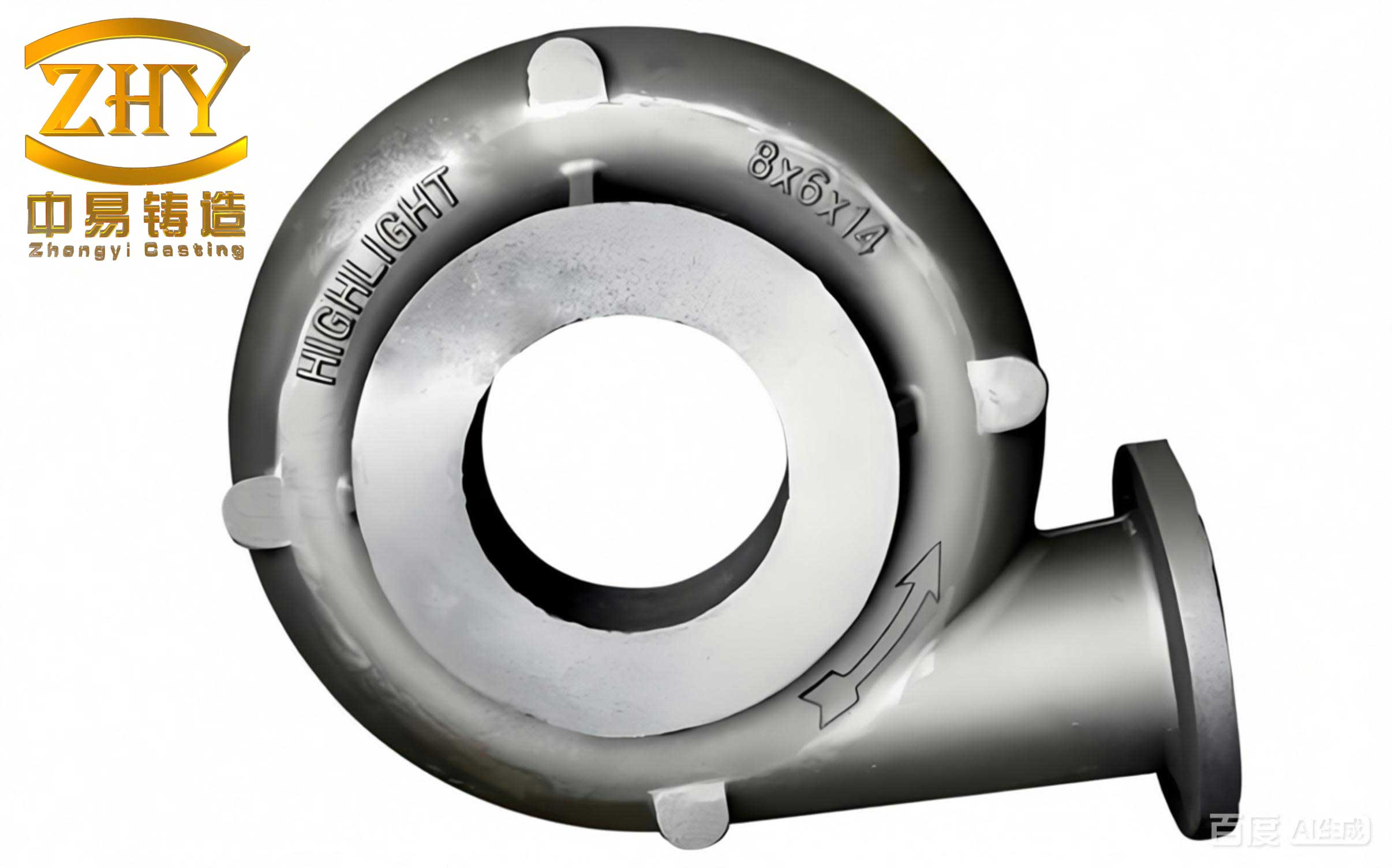
This image underscores the real-world manifestations of casting defects, such as porosity and segregation, which align with the discussions above.
Cracks, as casting defects, primarily arise from overly rapid cooling after complete solidification, uneven cooling, or vibrations during crystallization in centrifugal casting. The thermal stress σth can be estimated using:
$$ \sigma_{th} = E \cdot \alpha \cdot \Delta T $$
where E is Young’s modulus, α is coefficient of thermal expansion, and ΔT is temperature difference. When σth exceeds the alloy’s fracture strength, cracks initiate. Shrinkage pores, another type of casting defect, result from insufficient feeding during solidification, often due to high cooling rates or low centrifugal speeds that hinder liquid metal flow. Gas porosity casting defects stem from gas absorption at high melting temperatures (e.g., above 400°C for Sn alloys), with trapped gas bubbles forming pores upon rapid cooling. Slag inclusion casting defects occur when low pouring temperatures reduce fluidity, preventing slag flotation, or when impurities are introduced during casting.
In preventing these casting defects, a holistic approach is vital. For instance, in centrifugal casting, the centrifugal force Fc should be optimized:
$$ F_c = m \cdot \omega^2 \cdot r $$
where m is mass, ω is angular velocity, and r is radius. Too high ω加剧 segregation, while too low ω leads to shrinkage. An optimal range of 500-1000 rpm for typical bearing dimensions is recommended. Additionally, alloy purity is crucial; impurities like lead or iron can form low-melting phases that exacerbate casting defects. The use of high-purity raw materials, coupled with controlled atmosphere melting, reduces such risks.
Beyond traditional methods, innovative techniques like water-based lubricants for steel preparation can indirectly influence casting defects by improving surface conditions. However, that is a topic for another discussion. Returning to tin-based Babbitt alloys, I emphasize that mastering the interplay between composition, cooling rate, and process parameters is key to minimizing casting defects. For example, the cooling curve during casting can be modeled to predict defect formation. Suppose the temperature profile T(t) follows:
$$ T(t) = T_{\text{pour}} \cdot \exp(-k_c \cdot t) + T_{\text{mold}} $$
where kc is cooling constant. By adjusting kc through mold design or cooling media, one can avoid critical ranges where casting defects proliferate.
In conclusion, casting defects in tin-based Babbitt alloys—ranging from shell detachment and coarse crystallization to segregation and porosity—are significant hurdles in bearing manufacturing. Through meticulous control of metallurgical factors and process variables, these casting defects can be mitigated. As an engineer, I advocate for continuous research into alloy modifications and advanced casting technologies to further reduce these casting defects. The future of Babbitt alloys in demanding applications hinges on our ability to master these imperfections, ensuring reliable performance in everything from automotive engines to industrial machinery.