
In my extensive experience within the heavy machinery casting sector, particularly in the production of high-pressure, high-temperature components for power generation equipment, addressing casting defects is a paramount concern. The manufacturing of components like the 00BOB cylinder, a crucial pressure-retaining casting for supercritical steam turbines, presents significant challenges. These components, often fabricated from alloys like ZG25Cr-MoV-1+7 steel, are susceptible to a range of casting defects that can compromise their structural integrity and performance. The primary casting defects encountered include sand inclusions, gas porosity, and hot tearing or cracks. This article delves into a comprehensive analysis of these casting defects, their root causes, and the systematic improvements developed and validated through practical application. The goal is to share a detailed methodology for defect prevention that significantly enhances product quality and reliability.
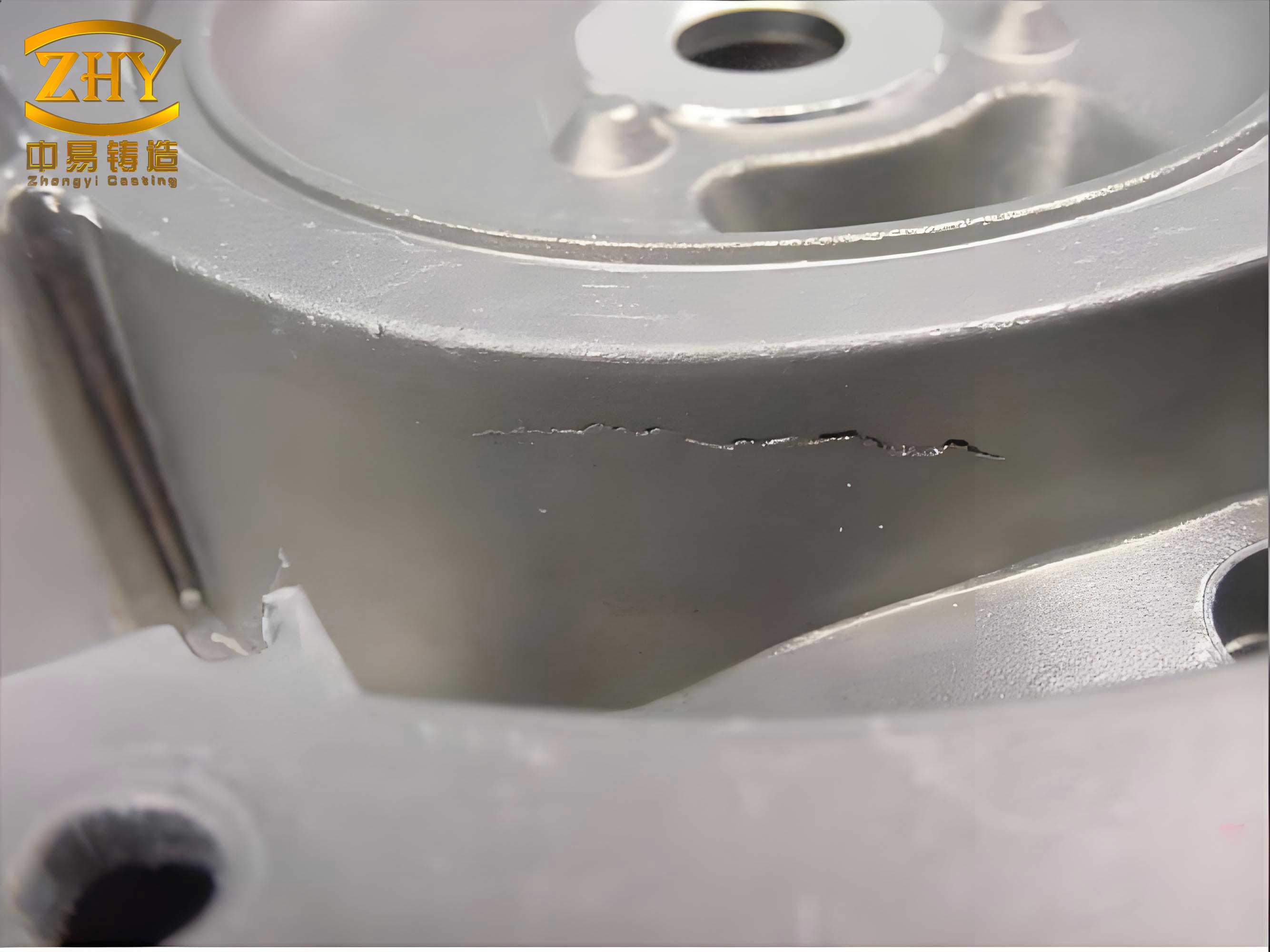
The occurrence of casting defects is not merely a production nuisance; it represents a critical failure point that can lead to catastrophic equipment failure. Therefore, a profound understanding of the mechanisms behind these casting defects is essential. In the case of large, complex steel castings, the interplay between mold design, sand properties, metal purity, and solidification dynamics is intricate. My investigation began with a specific case where finished cylinders exhibited severe sand inclusion near the parting line and riser areas, accompanied by distributed gas porosity and surface cracking upon machining and non-destructive testing. The initial conditions involved using furan resin sand for mold and core making, with environmental controls in place. However, the manifestation of these casting defects pointed to deeper systemic issues in the process.
Comprehensive Root Cause Analysis of Casting Defects
A thorough process audit and metallurgical analysis were conducted to pinpoint the origins of the observed casting defects. The investigation was segmented into three primary defect categories, each with distinct causative factors.
1. Sand Inclusion and Core Movement Defects
The defect analysis revealed that a primary contributor to sand inclusion was core flotation or displacement, often termed “core lift” or “floating core.” In the original design, a large core defining internal flow channels was supported only at one end (core print A), leaving the opposite end (terminal B) suspended at the mold parting line. Furthermore, risers were placed directly above this unsupported core end. During pouring, the buoyant force exerted by the molten metal on the core can be significant. The net upward force, $F_b$, can be approximated by Archimedes’ principle:
$$F_b = \rho_{metal} \cdot g \cdot V_{core} – \rho_{sand} \cdot g \cdot V_{core}$$
where $\rho_{metal}$ is the density of molten steel, $\rho_{sand}$ is the effective density of the sand core, $g$ is gravity, and $V_{core}$ is the submerged volume of the core. When the core’s restraining force (from the core print and friction) is less than $F_b$, displacement occurs.
This displacement had multiple detrimental effects: it misaligned the core, obstructing the riser feed paths, which in turn prevented slag and inclusions from floating to the riser, directly causing sand inclusion defects. The obstruction also restricted venting, leading to a boiling phenomenon in the risers. The entrapped gases subsequently contributed to concentrated gas porosity in the adjacent casting body. Moreover, the compromised riser function led to inadequate feeding, promoting shrinkage porosity, another critical category of casting defects. The interdependence of these issues highlights how a single flaw in core support can cascade into multiple, severe casting defects.
2. Gas Porosity Defects
Gas porosity, appearing as spherical or elongated voids within the casting matrix, is a classic and pervasive type of casting defect. The investigation focused on the mold sand’s properties. Furan resin sand, while offering good strength, can generate large volumes of gas during metal pouring due to the thermal decomposition of the resin binder. The key factor controlling this is the sand’s permeability and the amount of volatile content. Analysis of the reclaimed sand used in the problematic castings showed suboptimal characteristics, which are summarized in the table below.
| Property / Sieve Analysis (Mesh) | Target Value | Measured Value (Batch 1) | Measured Value (Batch 2) | Impact on Casting Defects |
|---|---|---|---|---|
| Loss on Ignition (%) | ≤ 3.0 | 3.2 | 3.1 | High volatile content increases gas pressure. |
| Fines Content (< 200 mesh) (%) | ≤ 2.0 | 2.38 | 2.30 | Reduces permeability, traps gases. |
| Retained on 100 Mesh (%) | ≥ 15 | 10.2 | 9.2 | Finer overall distribution lowers permeability. |
| Permeability Number (Standard Test) | ≥ 120 | 85 | 88 | Directly correlates with gas venting efficiency. |
The gas pressure, $P_g$, building up at the mold-metal interface can be modeled as a function of gas generation rate $G(t)$ and venting resistance:
$$P_g(t) = \frac{R T}{V} \int_0^t G(\tau) – Q_v(\tau) \, d\tau$$
where $R$ is the gas constant, $T$ is temperature, $V$ is the pore volume, and $Q_v$ is the venting flow rate. A high fines content and low permeability drastically reduce $Q_v$, allowing $P_g$ to exceed the metallostatic pressure $P_m = \rho g h$, forcing gas into the solidifying metal and creating porosity. These gas-related casting defects are thus a direct consequence of inadequate sand conditioning.
3. Hot Tearing and Cracking Defects
Cracking defects in castings, particularly in alloy steels like Cr-Mo-V grades, are often hot tears formed during the late stages of solidification. The alloy’s inherent susceptibility combines with mold constraints. Furan resin sand molds possess high rigidity and low collapsibility (poor concession). The thermal expansion of the sand exerts tensile stresses on the contracting casting. The stress, $\sigma$, can be related to the strain from thermal contraction and mechanical restraint:
$$\sigma = E(T) \cdot \alpha \cdot \Delta T \cdot f_R$$
Here, $E(T)$ is the temperature-dependent Young’s modulus of the solidifying metal skin, $\alpha$ is the coefficient of thermal contraction, $\Delta T$ is the temperature drop over the vulnerable range, and $f_R$ is a restraint factor (0 to 1) representing the mold’s resistance. For complex geometries with varying section thicknesses, stress concentration factors further amplify $\sigma$ at corners and junctions. When $\sigma$ exceeds the high-temperature strength (or more precisely, the fracture strain limit) of the alloy in the mushy zone, hot tearing occurs. This type of casting defect is therefore a thermo-mechanical failure initiated by the mold’s inability to yield during casting contraction.
Developed and Implemented Preventive Strategies for Casting Defects
Based on the root cause analysis, a multi-faceted improvement plan was designed and executed to systematically eliminate these casting defects. The strategies target each identified cause directly.
1. Measures to Eliminate Sand Inclusion and Core Movement
To prevent core flotation, the core support system was radically redesigned. The core end near the parting line was provided with additional, positive location supports integrated into the mold cavity (as conceptually shown in the referenced image). The buoyancy force calculation was used to design the number and strength of these supports. Furthermore, the riser placement was altered to be positioned away from core ends and over heavier sections of the casting to ensure effective feeding without interfering with cores. Additional slag traps were incorporated along the parting line to collect inclusions before they could enter the casting proper. The gating system was also modified to ensure a smoother, less turbulent fill, reducing the initial impact and冲刷 force on the cores. These changes collectively addressed the root causes of sand-related casting defects.
2. Measures to Mitigate Gas Porosity Defects
A rigorous sand control protocol was instituted to combat gas porosity defects. The specification for reclaimed sand was tightened, as outlined in the improved standards table below.
| Parameter | New Specification Limit | Control Method | Rationale |
|---|---|---|---|
| Loss on Ignition (LOI) | ≤ 2.5% | Daily thermal analysis | Minimizes volatile gas generation. |
| Fines (< 200 Mesh) | ≤ 1.5% | Automatic sieving and dust extraction | Maximizes sand permeability. |
| Grain Distribution (AFS GFN) | 45 – 55 | Regular sieve analysis | Ensures optimal packed permeability. |
| Permeability Number | ≥ 140 | Standard permeability tester | Ensures rapid gas evacuation. |
Venting was drastically improved by adding numerous vent channels directly from the mold cavity to the atmosphere and using permeable venting ropes at critical locations. The venting capacity required was estimated based on the total gas generation potential of the mold materials. The Darcy flow equation for gas through porous media guided this design:
$$Q_v = \frac{k A}{\mu} \frac{\Delta P}{L}$$
where $k$ is the sand permeability, $A$ is the vent cross-sectional area, $\mu$ is gas viscosity, $\Delta P$ is the pressure differential, and $L$ is the vent length. By maximizing $k$ (through sand control) and $A$ (through added vents), $Q_v$ was increased to keep interfacial gas pressure below critical levels, thereby preventing the formation of gas porosity casting defects.
3. Measures to Prevent Hot Tearing and Cracking Defects
Improving mold and core collapsibility was the key to preventing cracking defects. For large cores, especially those inside complex internal passages, the core mixture was modified by adding combustible materials or creating hollow sections filled with dry, loose sand or polystyrene foam inserts. This reduced the core’s overall hot strength and its resistance to contraction. The collapsibility can be characterized by a concession index, which was empirically determined for different core compositions. Additionally, all external chills were meticulously finished to a smooth surface, preheated, and dried to avoid creating severe thermal gradients that could initiate cracks. The cooling rate and stress development were modeled to optimize chill placement. The thermal stress equation was considered in a simplified 2D form for critical sections:
$$\nabla \cdot (\kappa \nabla T) = \rho C_p \frac{\partial T}{\partial t}$$
$$\sigma_{thermal} = \int_{T_s}^{T} E(T’) \alpha(T’) dT’$$
where $\kappa$ is thermal conductivity, $\rho$ is density, $C_p$ is heat capacity, $T_s$ is the solidus temperature. By managing the temperature field $T(x,y,t)$ through controlled collapsibility and chilling, the thermal stress $\sigma_{thermal}$ was kept below the cracking threshold, effectively suppressing this category of casting defects.
Experimental Validation and Results
The comprehensive set of improvements was implemented in a controlled production run of six 00BOB cylinder castings. Every aspect—from sand preparation and core making to mold assembly, gating, venting, and pouring—was carried out under the new protocols. The pouring temperature, speed, and atmosphere were closely monitored. Post-casting, the components underwent a full battery of non-destructive evaluation (NDT) including ultrasonic testing (UT), radiographic testing (RT), and magnetic particle inspection (MPI), followed by extensive machining.
The results were unequivocal. All six cylinders were found to be fully compliant with the stringent technical specifications for pressure boundary components. Specifically:
- Sand Inclusion Defects: No instances of core shift or sand inclusion were detected in the riser areas or parting line regions.
- Gas Porosity Defects: Ultrasonic testing revealed a clean, homogeneous structure with no indications of clustered or distributed gas porosity beyond acceptable limits. The risers showed calm fill patterns without boiling.
- Cracking Defects: Dye penetrant and magnetic particle inspections of machined surfaces, especially in areas of former high stress concentration, showed no evidence of hot tears or surface cracks.
The successful elimination of these casting defects confirmed the validity of the root cause analysis and the effectiveness of the corrective actions. The improvement was not marginal but definitive, moving from a 100% defect rate in the initial batch to a 100% success rate in the validation batch.
Discussion and Broader Implications for Casting Defect Prevention
The successful resolution of these persistent casting defects offers several generalizable principles for heavy-section steel casting. First, it underscores the critical importance of quantitative design in foundry engineering. Rather than relying on empirical rules, using fundamental physics—buoyancy calculations, gas flow dynamics, and thermo-mechanical stress analysis—provides a predictive framework for preventing casting defects. The formulas presented here, while sometimes simplified, guide key decisions on core support, vent sizing, and mold material selection.
Second, it highlights that casting defects are rarely isolated; they are systemic. Poor sand quality (leading to gas porosity) can exacerbate problems in a mold already prone to core movement. Therefore, a holistic process control approach is necessary. The tables used in this study are not just records; they are active control tools that define the necessary conditions for defect-free production.
Finally, the role of collapsibility cannot be overstated for crack-prone alloys. The foundry industry’s move towards stronger binder systems often comes at the cost of concession. This case demonstrates that deliberate design for collapsibility—through core internal structure and material selection—is a non-negotiable requirement for preventing solidification-related cracking defects, especially in intricate, high-integrity castings.
In conclusion, the battle against casting defects in critical components like turbine cylinders is waged on multiple fronts: mechanical stability of the mold assembly, physicochemical control of molding materials, and management of thermal stresses during solidification. By implementing a science-based strategy encompassing core stabilization, rigorous sand property management with enhanced permeability, and deliberate improvement of mold collapsibility, the major classes of casting defects—sand inclusion, gas porosity, and hot tearing—can be effectively prevented. This methodology has proven itself in practice, delivering a dramatic improvement in the internal soundness and surface quality of high-value castings, thereby ensuring their reliability in demanding service environments. The continuous monitoring and application of these principles form the bedrock of advanced casting defect prevention programs.