
The production of high-integrity cast iron components, particularly for demanding applications such as the automotive sector, relies heavily on the controlled properties of the molding sand. Among the various sand casting processes, green sand molding—utilizing moist, clay-bonded sand—remains predominant for high-volume production due to its efficiency and cost-effectiveness. A critical additive within the green sand system for iron castings is coal dust. Its primary function is to interact with the molten metal during pouring, creating conditions that yield a superior casting surface finish. This article delves into the technical specifications of coal dust, their quantitative impact on mold and casting properties, and provides a comprehensive analysis of its application, drawing upon extensive production data.
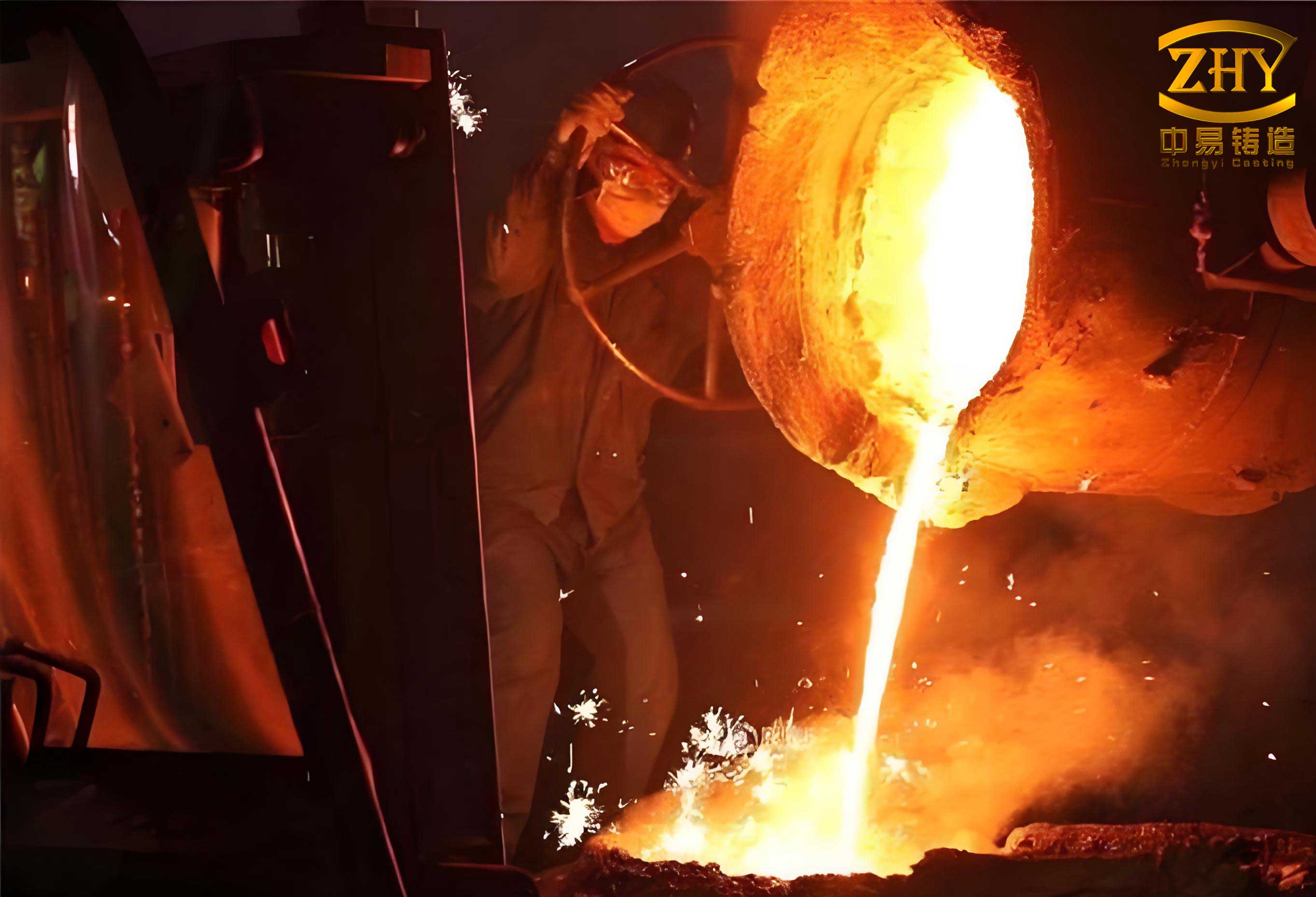
The fundamental mechanism of coal dust in sand casting is based on its pyrolysis upon contact with the hot metal. This decomposition releases a voluminous cloud of reducing gases (primarily hydrocarbons, hydrogen, and carbon monoxide) at the mold-metal interface. This atmosphere suppresses the oxidation of iron to FeO, a precursor to metal penetration and burn-on defects. Concurrently, a more specific phenomenon occurs: the deposition of a lustrous carbon layer. Certain volatile components of the coal dust crack to form a thin, glossy film of pyrolytic carbon on the sand grains. This film acts as a physical barrier, preventing the fusion of sand to the metal and significantly enhancing surface smoothness. Furthermore, the gas generation can help cushion the sand mold against the thermal shock of metal entry, reducing the tendency for scabbing and other expansion-related defects common in silica-based sands. The efficacy of these mechanisms is not uniform across all coal dust types; it is intrinsically tied to the material’s chemical composition and physical characteristics.
Critical Technical Indicators for Foundry-Grade Coal Dust
Selecting an appropriate coal dust for sand casting requires rigorous evaluation against several key performance indicators. The following parameters, often standardized in industry specifications (e.g., JB/T9222-2008), define the quality and expected behavior of the additive in the mold.
- Volatile Matter (VM): This is the percentage of the coal mass, excluding moisture, that is liberated as gas and tar upon heating in the absence of air. A high volatile content (typically 33-38%) is desirable as it is the primary source for both the protective reducing atmosphere and the precursors for lustrous carbon formation. The relationship between volatile yield and gas pressure can be conceptually viewed as:
$$ P_{gas} \propto \eta \cdot [VM] \cdot \dot{Q} $$
where \( P_{gas} \) is the local gas pressure at the interface, \( \eta \) is an efficiency factor for gas formation, \( [VM] \) is the volatile matter content, and \( \dot{Q} \) is the heat flux from the metal. - Lustrous Carbon (LC): This specific metric quantifies the potential of the coal dust to form the protective carbon film. It is measured by condensing and weighing the carbon deposited from the volatiles under controlled pyrolysis. Premium coal dust exhibits values between 12% and 16%. The film’s effectiveness \( E_{film} \) in preventing penetration can be modeled as inversely proportional to the sand pore size \( r \) and directly proportional to the film continuity factor \( C_f \), which itself depends on LC:
$$ E_{film} \propto \frac{C_f([LC])}{r} $$ - Ash Content: The inorganic residue left after complete combustion. A low ash content (5-7%) is critical. High ash increases the clay demand in the sand system (as ash particles do not contribute to bonding), raises the compactability requirement for a given strength, and can lead to friable mold surfaces that contribute to inclusions.
- Moisture: As-received moisture should be low (≤4.0%). High moisture in the additive contributes unpredictably to the total moisture of the molding sand, affecting green strength and potentially leading to pinhole defects from excess hydrogen.
- Sulfur Content: Must be minimized (≤0.5%). High sulfur can lead to the formation of iron sulfide at the casting surface, causing friable edges and promoting slag formation. It can also be a source of sulfur dioxide (SO₂) emissions.
- Fixed Carbon & Calorific Value: While not always directly specified, a high fixed carbon (implying high calorific value >6500 kcal/kg) indicates a richer coal that contributes efficiently to the endothermic reactions at the mold surface.
- Coking Behavior (Crucible Swelling Number/CSN or Coke Type): Describes the physical nature of the residue after pyrolysis. A rating of 4-5 is generally preferred, indicating a residue that is slightly swelling and sintered, providing some structural stability to the sand layer immediately adjacent to the casting.
- Particle Size (AFS Fineness Number): An AFS value of 170-210 ensures adequate distribution throughout the sand mixture without excessive dustiness. Finer particles may oxidize too quickly, while coarser ones may segregate or react incompletely.
The following table presents a comparative analysis of various coal dust types based on these critical indicators, contrasting subpar products with a high-performance specification.
| Parameter | Industry Benchmark (SMF-1) | High-Performance Dust (SMFZ-1 Type) | Substandard Type A | Substandard Type B | Substandard Type C |
|---|---|---|---|---|---|
| Moisture (%) | ≤ 4.0 | 3.6 – 4.0 | 6.5 – 9.0 | 5.5 – 8.5 | 8.0 – 12.0 |
| Ash Content (%) | ≤ 7.0 | 5.7 – 6.5 | 7.5 – 11.5 | 7.2 – 10.5 | 9.0 – 13.0 |
| Volatile Matter (%) | ≥ 30 | 34 – 36 | 30 – 34 | 32 – 35 | 30 – 32 |
| Lustrous Carbon (%) | ≥ 12 | 14 – 16.6 | 9 – 12 | 9 – 12 | 4.0 – 9.6 |
| Sulfur Content (%) | ≤ 0.6 | 0.42 – 0.48 | 0.65 – 0.75 | 0.60 – 0.70 | 1.0 – 1.3 |
| Coke Type | 4 – 6 | 4 – 5 | 4 – 5 | 4 – 5 | 4 – 6 |
| Key Characteristic | Standard | High LC, High VM, Low S/Ash | High Moisture & Ash | Elevated Moisture | Very High Moisture, S, Ash; Low LC |
Impact on Green Sand System Formulation and Properties
The quality of coal dust has a profound and measurable impact on the formulation and working properties of the green sand used in sand casting. A high-performance coal dust with “Three Highs and Three Lows” (High Volatile, High Lustrous Carbon, High Calorific Value; Low Ash, Low Sulfur, Low Moisture) allows for optimization of the entire sand system. The primary benefit is a reduction in the required addition rate while maintaining or improving performance. This is because a higher proportion of its mass contributes usefully to the interfacial reactions rather than becoming inert filler (ash) or disrupting sand chemistry (sulfur, excess moisture).
The effective bentonite content in a system is a key control parameter. It represents the active, water-absorbing clay available for bonding, calculated by subtracting the base demand (influenced by inert fines like coal ash and dead clay) from the total clay. High-ash coal dust increases the base demand, effectively “poisoning” the sand by rendering more bentonite inactive. The relationship can be simplified as:
$$ [B]_{eff} \approx [B]_{total} – k \cdot [Ash]_{coal} – [Clay]_{dead} $$
where \( [B]_{eff} \) is effective bentonite, \( [B]_{total} \) is total bentonite, \( k \) is a factor representing the inerting power of coal ash, and \( [Clay]_{dead} \) is the dead clay from previous cycles.
The following tables illustrate the operational differences. Table 2 shows how the sand formulation can be adjusted, notably reducing the coal dust addition when using a premium product. Table 3 demonstrates the resulting improvement in controlled sand properties, particularly in maintaining optimal compactability (CB), strength, and permeability with a lower loss on ignition (LOI).
| Component / Property | Baseline Process Target | With Substandard Dust (A/B) | With Substandard Dust (C) | With High-Performance Dust |
|---|---|---|---|---|
| Return Sand (%) | 97 – 99 | 97 – 99 | 97 – 99 | 97 – 99 |
| Fresh Silica Sand (%) | 1 – 3 | 1 – 3 | 1 – 3 | 1 – 3 |
| Bentonite Addition (%) | 0.9 – 1.2 | 0.9 – 1.2 | 0.9 – 1.2 | 0.9 – 1.2 |
| Coal Dust Addition (%) | 0.4 – 0.6 | 0.46 – 0.60 | 0.50 – 0.65 | 0.3 – 0.5 |
| Starch/Cellulose Addition (%) | 0.01 – 0.07 | 0.01 – 0.07 | 0.01 – 0.07 | 0.01 – 0.07 |
| Relative Dust Consumption | Baseline (100%) | ~115% (of target low) | ~125% (of target low) | ~75% (of target low) |
| Property | Process Specification | With Substandard Dust (A/B) | With Substandard Dust (C) | With High-Performance Dust |
|---|---|---|---|---|
| Moisture (%) | 3.2 – 3.6 | 3.3 – 3.8 | 3.5 – 4.0 | 3.2 – 3.5 |
| Compactability, CB (%) | 34 – 39 | 32 – 35 | 32 – 36 | 34 – 36 |
| Green Compression Strength (kPa) | 160 – 180 | 160 – 175 | 160 – 170 | 165 – 185 |
| Permeability Number | 100 – 130 | 90 – 120 | 90 – 120 | 100 – 135 |
| Effective Bentonite (%) | 7.5 – 9.5 | 7.2 – 9.5 | 7.0 – 9.5 | 7.0 – 8.5 |
| Loss on Ignition, LOI (%) | 3.0 – 4.0 | 3.0 – 3.55 | 3.0 – 3.30 | 3.5 – 3.80 |
| AFS Grain Fineness | 58 – 63 | 58 – 63 | 58 – 63 | 58 – 63 |
The data shows that the high-performance dust enables operation at the lower end of the moisture specification while maintaining excellent compactability—a sign of good mulling efficiency and clay activation. The higher LOI achieved with a lower addition rate is particularly noteworthy; it indicates a greater proportion of combustible, beneficial material rather than inert content.
Casting Quality Outcomes and Economic Implications
The ultimate validation of any material change in sand casting is the quality of the finished component. The shift to a high-performance coal dust directly and significantly improves key casting metrics, especially for visually and structurally critical parts like automotive differential cases, pump housings, and brake components.
Surface Finish and Cleaning Efficiency: The enhanced lustrous carbon formation creates a more effective parting layer. This results in castings that are virtually free from gross metal penetration and severe burn-on. The surface roughness of non-machined surfaces shows an improvement of up to two grade levels on standard comparator scales. This superior surface has a dramatic effect on the post-casting cleaning process. Shot blasting time for initial cleaning (to remove adhering sand and oxide scale) is reduced by approximately 50-75%. In many cases, a secondary “finish” blasting operation can be eliminated entirely. The economic saving in reduced abrasive consumption, energy usage for blasting equipment, and labor time is substantial.
Defect Rate Reduction: The combined effect of a stable, reducing atmosphere and a robust carbon film leads to a marked decrease in specific casting defects. The protective atmosphere minimizes hydrogen pickup and oxidation, reducing gas-related porosity. The carbon film and the gas cushion mitigate thermal shock, lowering the incidence of scabs and expansion-related defects. A longitudinal analysis of defect types clearly demonstrates this benefit.
| Defect Category | Annual Rate (Prior Year) | Annual Rate (Implementation Year) | Annual Rate (Following Year) | Rate at Mid-Point of Subsequent Year |
|---|---|---|---|---|
| Sand Inclusions (%) | 1.18 | 0.76 | 0.82 | 0.72 |
| Gas Porosity/Pinholes (%) | 0.45 | 0.29 | 0.26 | 0.20 |
| Burn-on / Metal Penetration (%) | 0.86 | 0.07 | 0.26 | 0.04 |
The most dramatic improvement is seen in burn-on defects, which are directly addressed by the lustrous carbon mechanism. The reduction in gas porosity also suggests a cleaner metal-sand interaction. Furthermore, for ductile iron castings, the consistent reducing environment at the mold wall contributes to more stable graphite nodulization at the surface and subsurface, potentially improving pressure tightness and fatigue performance.
The Critical Issue of Spontaneous Combustion and Storage Safety
An often-overlooked but critical operational aspect of coal dust in a sand casting facility is its propensity for spontaneous combustion during storage. Low-grade coal dusts, particularly those with higher inherent moisture, volatile content, and finer particle sizes, are prone to exothermic oxidation. This process can accelerate under warm, humid conditions, leading to smoldering or open fire within storage piles, creating significant safety hazards and material loss.
High-performance coal dust designed for foundry use addresses this problem through integrated production and packaging controls. The risk is mitigated by a combination of factors:
1. Selection of a coal seam with a lower inherent oxygen-to-carbon (O/C) ratio, reducing the oxidation potential.
2. Employing a “low-temperature, long-duration” drying process post-grinding to thoroughly remove moisture without creating localized hot spots that initiate oxidation.
3. Using an open-circuit grinding system that minimizes the temperature rise of the product during milling.
4. Utilizing vacuum-sealed or nitrogen-flushed packaging, which removes the oxidizing agent (air) during storage and transport.
This systemic approach results in a product that is not only functionally superior in the mold but also inherently stable in the warehouse. Facilities report the elimination of spontaneous combustion incidents even during periods of prolonged ambient heat, transforming coal dust from a fire safety concern into a stable, manageable inventory item.
Environmental and Holistic Process Considerations
The choice of coal dust extends beyond immediate casting quality to encompass broader environmental and process health considerations. Premium coal dusts are typically derived from selected natural coal seams and processed without the addition of supplemental hydrocarbon materials like coal tar pitches or petroleum-based additives. This pure composition minimizes the emission of polycyclic aromatic hydrocarbons (PAHs), phenols, and other complex organic compounds during pouring, improving the working environment around molding lines and reducing the burden on foundry exhaust gas cleaning systems.
From a total process cost perspective, the economics favor the high-performance product. While the unit cost per kilogram may be higher, the significant reduction in addition rate (often 25-40%) directly lowers material cost per ton of sand. This is compounded by substantial savings in bentonite consumption (due to lower ash), reduced shot blasting costs, lower scrap and rework rates, and eliminated losses from inventory spoilage due to self-heating. The overall return on investment is strongly positive, making it a strategically sound choice for any high-volume, quality-focused green sand sand casting operation.
Conclusion
The application of coal dust in green sand molding for iron castings is a precise science, not a generic material addition. The technical indicators—Volatile Matter, Lustrous Carbon, Ash, Sulfur, and Moisture—serve as definitive predictors of performance in the sand casting process. Empirical production data conclusively demonstrates that specifying and utilizing a high-performance coal dust characterized by “Three Highs and Three Lows” yields multifaceted benefits. These include optimized sand system chemistry, reduced additive consumption, superior casting surface finish, significantly lower defect rates, enhanced process safety through elimination of storage hazards, and improved environmental profile. For foundries producing critical components such as automotive castings, where surface integrity, dimensional accuracy, and cost-effectiveness are paramount, the selection of such a premium coal dust is not merely an option but a fundamental requirement for achieving and sustaining manufacturing excellence. The compound effect on sand control, yield, quality, and safety establishes it as the rational and economically advantageous standard for modern green sand foundry practice.