
The pursuit of lightweight, high-performance components in aerospace, automotive, and electronics industries has driven significant interest in magnesium alloys. Their excellent specific strength and stiffness, good thermal conductivity, dimensional stability, and superior damping capacity make them ideal candidates. Among various manufacturing routes, magnesium alloy sand casting remains a prevalent method due to its inherent advantages: excellent mold permeability reducing gas-related defects, good collapsibility minimizing hot tearing, and the capability to produce very large and geometrically complex parts. However, conventional sand casting techniques often struggle with achieving high dimensional accuracy and surface finish, and the assembly of multiple cores can lead to mismatch errors, limiting the precision of final components.
A transformative approach to address these limitations is the application of Selective Laser Sintering (SLS) for fabricating coated sand molds and cores. This additive manufacturing technology enables the direct, layer-by-layer construction of complex sand molds from a digital model, offering unparalleled benefits such as rapid prototyping, high flexibility, excellent reproducibility, and the ability to create monolithic mold-core assemblies for intricate internal geometries. SLS-produced molds achieve dimensional accuracy comparable to CT6-8 grades and surface roughness (Ra) as low as 3.2-6.3 μm, rivaling permanent mold casting standards. While successfully applied for aluminum alloys, cast irons, and steels, its adoption for magnesium alloy sand casting has been hindered by a critical challenge: severe interfacial reactions and burning.
During the pouring of molten magnesium into a sand mold, the high reactivity of magnesium can lead to oxidation and violent combustion at the mold-metal interface, especially at elevated pouring temperatures. Traditional mitigation relies solely on applying refractory coatings to the mold surface. However, for SLS coated sand molds, this protective coating layer often proves insufficient, failing to prevent localized burning and resulting in catastrophic surface defects like micro-pores, cavities, and sand inclusions on the castings. This severely degrades both the surface quality and the mechanical integrity of magnesium alloy sand casting parts. Therefore, the core objective of our research was to develop a novel SLS-coated sand material integrated with effective flame retardants, enabling the successful and high-quality sand casting of magnesium alloys.
| Flame Retardant | Chemical Formula / Type | Particle Size | Primary Function |
|---|---|---|---|
| Carbon Powder | C | ≤ 150 mesh | Thermal conductivity enhancer, oxygen barrier |
| Pyrite (Iron Sulfide) | FeS₂ | ≤ 150 mesh | Exothermic reactant under laser, sulfur donor |
| Boric Acid | H₃BO₃ | ≤ 150 mesh | Forms protective glassy layer (B₂O₃) |
Our research was conducted using a developed 140/270 mesh SLS-coated sand as the base material. To impart flame retardancy, we selected three agents with particle sizes ≤150 mesh: carbon powder, pyrite (FeS₂), and boric acid (H₃BO₃). Initial experiments focused on understanding the individual effects of these additives on the SLS processability and initial (“green”) strength of the sand. Single-component systems were prepared and sintered using constant SLS parameters: laser power of 45 W, scan speed of 3000 mm/s, layer thickness of 0.20 mm, scan spacing of 0.20 mm, and preheating temperature of 60°C. Green strength was measured using standard “figure-8” specimens.
The results, summarized quantitatively below, revealed distinct behaviors. Boric acid severely compromised the cured strength of the phenolic resin binder. Pyrite, due to an exothermic reaction under laser irradiation, initially increased strength at low concentrations but caused degradation at higher levels. Carbon powder provided a marginal strength increase only at very low additions.
| Flame Retardant | Optimum Content for Strength | Trend | Green Strength at Optimum (MPa) |
|---|---|---|---|
| Boric Acid (H₃BO₃) | < 1 wt.% | Rapid decrease with content >1% | < 0.4 (at 1%) |
| Pyrite (FeS₂) | ~2 wt.% | Increase to 2%, then decrease | ~0.62 |
| Carbon Powder (C) | ≤ 0.2 wt.% | Slight increase ≤0.2%, then neutral/negative | ~0.58 |
The detrimental effect of boric acid on strength can be modeled by a decay function, while the effect of pyrite shows a parabolic trend:
$$ S_{H_3BO_3} = S_0 \cdot e^{-k \cdot C_{H_3BO_3}} \quad \text{for} \quad C_{H_3BO_3} \geq 1\% $$
$$ S_{FeS_2} = S_0 + a \cdot C_{FeS_2} – b \cdot C_{FeS_2}^2 $$
where $S$ is the green strength, $S_0$ is the base sand strength (~0.56 MPa), $C$ is the concentration, and $k$, $a$, $b$ are material constants.
Based on these findings, a synergistic triple-composite flame retardant system was designed: 2 wt.% Pyrite + 0.1 wt.% Carbon Powder + 0.5 wt.% Boric Acid. This formulation aimed to leverage the exothermicity of pyrite to aid resin curing, the thermal conductivity of carbon to distribute heat, and the protective action of boric acid, while minimizing the individual negative impacts on strength. The SLS parameters remained unchanged. The resulting green strength was 0.58 MPa, representing a 3.6% improvement over the base sand. The fine particle size of the additives ensured no negative impact on the dimensional accuracy or surface finish of the sintered molds; deviations in X, Y, and Z directions were all below 0.5%.
The SLS-fabricated sand molds required post-processing to achieve full strength for handling and pouring. The process involved: 1) Flame-sealing the surface with a gas torch to improve surface integrity and roughness. 2) Embedding the mold in glass microbeads to provide uniform support during baking and to constrain thermal expansion, thereby controlling dimensional shrinkage. 3) Thermal curing in an oven at 170°C. After this treatment, the mold’s tensile strength reached 2.34 MPa, and its gas evolution value was 9.7 mL/g. These properties are comparable to those of standard SLS coated sand (2.40 MPa, 9.0 mL/g) and are fully adequate for sand casting operations.
| Sand Type | Green Strength (MPa) | Post-Cured Strength (MPa) | Gas Evolution (mL/g) |
|---|---|---|---|
| Base SLS Coated Sand | 0.56 | 2.40 | 9.0 |
| Sand with Triple Composite FR | 0.58 | 2.34 | 9.7 |
The target alloy for sand casting was ZM2 magnesium alloy. Its nominal composition is provided below:
| Zn | Zr | RE (Rare Earth) | Cu | Ni | Mg |
|---|---|---|---|---|---|
| 3.5 – 5.0 | 0.5 – 1.0 | 0.7 – 1.7 | < 0.1 | < 0.01 | Bal. |
Melting and pouring were conducted under a protective atmosphere using standard flux-based practices. The alloy was melted in a steel crucible using a resistance furnace, protected by RJ-5 covering flux. After alloying and refining at 780°C, the melt was held at 750°C for pouring. During pouring, sulfur powder was sprinkled over the melt stream for additional oxidation protection. The mold design featured a complex, streamlined blade geometry with a minimum wall thickness of 5 mm, a shape ideally suited for showcasing the capability of monolithic SLS mold fabrication as opposed to multi-piece assembly in traditional sand casting.
The effectiveness of the flame-retardant (FR) sand system was validated through comparative casting trials. Pouring ZM2 alloy into a standard SLS coated sand mold (without FR) resulted in a casting with a completely black, heavily oxidized and burned surface, featuring large eroded areas, rendering the part scrap. Using an SLS mold with only a surface-applied boric acid coating improved the situation but still led to localized burning spots and defects. In stark contrast, the casting produced from the triple-composite FR sand mold exhibited a clean, metallic-luster surface free from oxidation spots or burn-in defects, both on external and internal surfaces.
| Mold System | Surface Quality | Oxidation/Burning | Major Defects | Result |
|---|---|---|---|---|
| Standard SLS Sand | Very Poor, Black | Severe, Overall | Large Erosion, Micro-pores | Scrap |
| SLS Sand + Surface Coating | Poor | Localized | Burning Spots, Inclusions | Scrap |
| SLS Sand with Composite FR | Good, Metallic Luster | None Visible | None Detected | Sound Casting |
Microscopic examination of the casting surface from the FR mold revealed a smooth, dense morphology covered by a continuous, net-like protective film, indicating effective suppression of the magnesium-air reaction at the interface. Chemical analysis confirmed the final casting composition well within the ZM2 specification limits. Non-destructive inspection (fluorescent penetrant and X-ray) showed no shrinkage porosity, gas holes, or inclusions, confirming sound metallurgical quality.
The microstructure of the as-cast ZM2 alloy consisted of an α-Mg matrix with a fine dispersion of secondary phases. The absence of oxidation-induced defects and the integrity of the mold-metal interface contributed to a dense, uniform cast structure. This directly translated to superior mechanical properties. Tensile samples taken from the casting produced with the composite FR mold exhibited an ultimate tensile strength (UTS) of 172 MPa and an elongation of 4.0%. This represents a 36% increase in UTS compared to a casting from a mold with only a surface coating (126.75 MPa), unequivocally demonstrating the benefit of integrated flame retardants for magnesium alloy sand casting.
| Mold System | Ultimate Tensile Strength (MPa) | Elongation (%) | Strength Increase vs. Coated-Only Mold |
|---|---|---|---|
| SLS Sand + Surface Coating Only | 126.75 | N/A | Baseline |
| SLS Sand with Composite FR | 172.0 | 4.0 | ~36% |
The technology was successfully applied to produce a more complex magnesium alloy component featuring intricate thin-wall tubular channels. The SLS process fabricated this mold as a single, monolithic piece with integrated cores, eliminating core assembly errors—a significant advantage over conventional sand casting. The green strength provided by the composite FR formulation was sufficient for safe handling and post-processing.
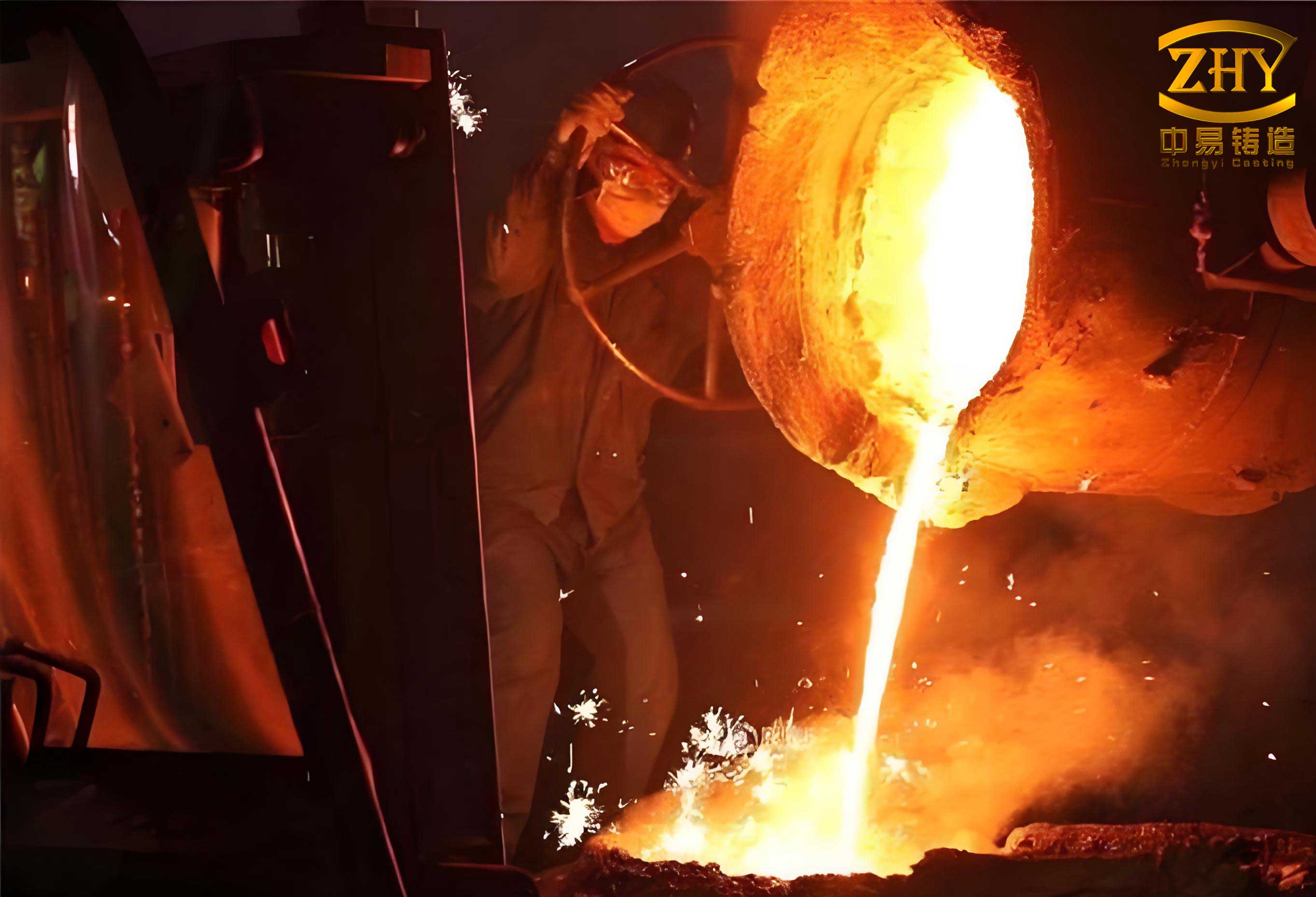
In conclusion, our research successfully developed a novel SLS-coated sand material modified with a triple-composite flame retardant system (Pyrite-Carbon-Boric Acid). This material maintains excellent SLS processability, achieving sufficient green and post-cured strength while providing exceptional protection against magnesium combustion. The subsequent sand casting of ZM2 magnesium alloy at 750°C yielded high-integrity castings with clean surfaces, sound internal quality, and significantly enhanced mechanical properties. This work establishes a viable and effective pathway for applying SLS-based rapid tooling to the precision sand casting of reactive light metals like magnesium, combining the design freedom of additive manufacturing with the robustness of foundry processes.