
The pursuit of durable components for extreme wear applications consistently leads us to high-chromium cast irons. These alloys, celebrated for their superior abrasion resistance, elevated temperature strength, and commendable toughness, have become indispensable in sectors like mining, mineral processing, and heavy-duty material handling. My recent, and particularly challenging, engagement involved the sand casting of a large, thin-walled four-way pipe intended for a critical role in dredging vessel systems. This component acts as a central manifold for abrasive slurry, demanding not only exceptional wear and erosion resistance but also impeccable internal surface finish, dimensional accuracy, and absolute structural integrity—devoid of any defects like gas holes, inclusions, or, most critically, cracks.
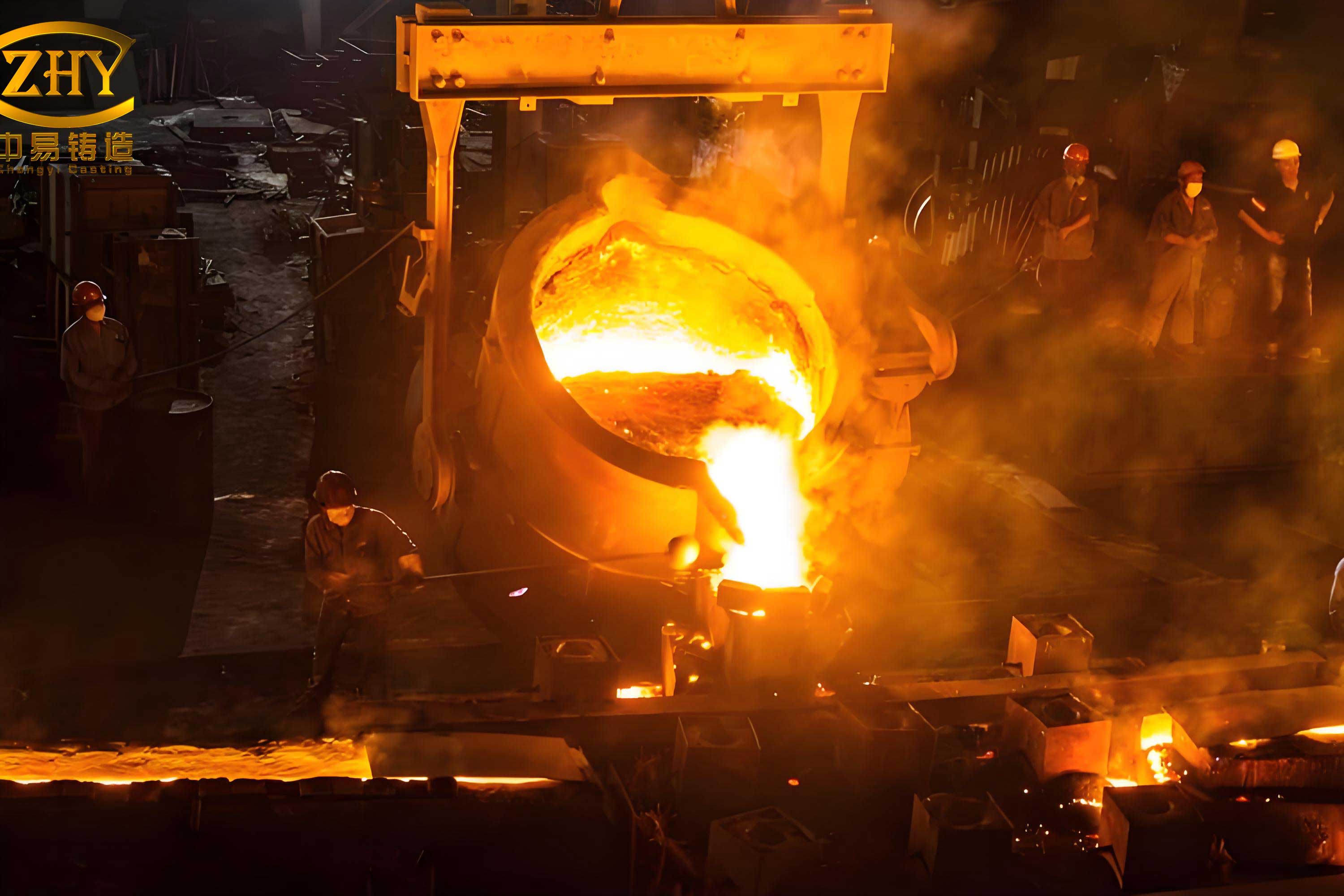
Our initial approach utilized a well-established sand casting method employing a CO2-sodium silicate (water glass) sand system. This binder offers excellent collapsibility for simpler geometries and fast production cycles. The alloy selected was a standard KmTBCr26-type high-chromium iron. Despite careful planning, the outcome was disheartening: both castings produced exhibited severe localized cracking upon knockout, even though the process was conducted gently at temperatures below 100°C. The cracks were not random; they appeared identically at the internal junctions, or corners, where the four pipe sections intersected. The fracture morphology clearly indicated that the failure had originated during the later stages of solidification or the early cooling phase within the mold, long before knockout. This repeatable failure prompted a deep investigation into the root causes, focusing on the intricate interplay between alloy behavior, component design, and the sand casting process itself. The goal was clear: develop a robust sand casting methodology to eliminate this defect and ensure a high yield for such demanding thin-walled geometries.
Root Cause Analysis: A Multi-Faceted Failure
Thermal cracking in castings is seldom attributable to a single factor. It is typically the consequence of a vulnerable material state meeting excessive thermal stress. In this case, three primary interconnected factors converged at the pipe junctions to cause failure.
1. The Inherent Nature of the Alloy
High-chromium white cast irons solidify through a metastable Fe-C-Cr system, forming hard carbides (M7C3) in an austenitic matrix that may later transform to martensite. A key characteristic influencing hot tearing susceptibility is the alloy’s freezing range. These alloys have a relatively wide solidification interval, often between approximately 1200°C and 1300°C, depending on composition:
$$ T_{freezing\ range} = T_{liquidus} – T_{solidus} \approx 1300 – 1200 = 100\, ^\circ\mathrm{C} $$
During solidification, a coherent dendritic network (the “coherency point”) is established while a significant amount of residual liquid remains. As cooling continues through this wide mushy zone, the solid skeleton undergoes substantial linear thermal contraction. If this contraction is constrained, tremendous tensile strains develop within the partially solid structure, which has very limited ductility. The strain rate at this vulnerable stage can be conceptualized as:
$$ \dot{\varepsilon} = \alpha \cdot \frac{\Delta T_{critical}}{t_{critical}} $$
where $\dot{\varepsilon}$ is the strain rate, $\alpha$ is the linear thermal contraction coefficient of the solid skeleton, $\Delta T_{critical}$ is the temperature range over which the material is weak but coherent, and $t_{critical}$ is the time to traverse this range. A wide $\Delta T_{critical}$ (large freezing range) coupled with a short $t_{critical}$ (rapid cooling in thin sections) leads to a high strain rate, pushing the material beyond its hot strength limit.
2. The Geometry of the Casting
The four-way pipe, while seemingly uniform in wall thickness, creates natural stress concentrators. The junctions where the cylindrical pipes merge form internal hot spots or thermal nodes. These junctions act as hubs where contraction from multiple directions (each pipe leg) is focused. The small fillet radii in the original design intensified this effect by creating sharper notches and larger thermal masses relative to the thin walls. The resulting stress field is complex, but the principal tensile stress ($\sigma_t$) at the junction corner can be simplified as a function of constrained contraction:
$$ \sigma_t \approx E(T) \cdot \alpha \cdot \Delta T \cdot \left(1 – \frac{R_{actual}}{R_{ideal}}\right) $$
Here, $E(T)$ is the temperature-dependent Young’s modulus (which is low but non-zero in the mushy state), $\alpha$ is the thermal contraction coefficient, $\Delta T$ is the temperature drop from coherency, and the ratio $R_{actual}/R_{ideal}$ represents a geometric constraint factor (less than 1), quantifying how much the actual junction design impedes free contraction compared to an ideal, stress-free geometry.
3. The Constraints of the Sand Mold
The sand casting process using CO2-water glass sand introduced a major source of restraint. While this sand system develops high initial strength and good surface finish, its high-temperature (thermomechanical) properties are problematic. During cooling, the layer of sand in contact with the hot casting partially sinters and weakens, but the core bulk remains relatively cool and strong. This creates a hard, unyielding mass inside the casting’s cavities. Although we had incorporated some hollow regions and loose filler material in the core (a standard practice to improve collapsibility), the overall high-temperature yield strength of the core was still too great for the contracting high-chromium iron. The core’s resistance force ($F_{core}$) counteracts the casting’s contraction force ($F_{contract}$). Cracking occurs when:
$$ F_{contract}(T) = A \cdot \sigma_t(T) > F_{core}(T) = f(S_{sand}(T), A_{contact}) $$
Where $A$ is the load-bearing cross-sectional area of the casting section, $\sigma_t(T)$ is the thermal stress, $S_{sand}(T)$ is the high-temperature strength of the sand core, and $A_{contact}$ is the interfacial contact area. The water glass sand’s $S_{sand}(T)$ in the 800-1100°C range was sufficient to resist the casting’s contraction, leading to stress build-up and crack initiation at the weakest, hottest point—the junctions.
| Factor Category | Specific Issue | Effect on Hot Tearing |
|---|---|---|
| Alloy Properties | Wide solidification range (~100°C) | Creates a long, vulnerable mushy stage with low strength/high contraction. |
| Casting Geometry | Sharp internal junctions & thin walls | Creates stress concentration points and promotes high cooling strain rates. |
| Sand Casting Process | High hot strength of CO2-water glass sand cores | Provides excessive mechanical restraint during critical contraction phase. |
A Strategic Triad of Countermeasures
To defeat the cracking problem, a multi-pronged strategy was essential, addressing each root cause systematically within the framework of sand casting.
1. Enhancing the Alloy’s Intrinsic Resistance to Cracking
Modifying the metallurgical structure was the first line of defense. We moved beyond simple rare-earth inoculation to a complex, multi-element modification treatment. The new inoculant contained carefully balanced additions of Aluminum (Al), Magnesium (Mg), along with refined rare-earth silicides. The synergistic effect of these elements is profound:
- Al & Mg: Act as powerful deoxidizers, cleansing the melt and reducing the number of non-metallic inclusions that can initiate cracks.
- Complex Modifiers: Promote extreme grain refinement. The added elements provide countless heterogeneous nucleation sites, resulting in a much finer austenitic dendritic structure and a more dispersed carbide network.
This refinement dramatically increases the number of grain boundaries per unit volume, making the boundaries more tortuous. According to the Hall-Petch relationship, strength ($\sigma_y$) increases with finer grain size ($d$):
$$ \sigma_y = \sigma_0 + k_y \cdot d^{-1/2} $$
where $\sigma_0$ and $k_y$ are material constants. More importantly for hot tearing, the fine, interlocking structure distributes localized strains over a vastly greater number of grain boundaries, preventing the concentration of stress needed to propagate a crack. The improved ductility at elevated temperature can be the difference between strain accommodation and catastrophic failure.
| Addition | Primary Function | Metallurgical Benefit | Impact on Hot Tearing |
|---|---|---|---|
| Aluminum (Al) | Powerful Deoxidizer | Reduces oxide inclusions; can form fine nitrides. | Removes potential crack initiation sites. |
| Magnesium (Mg) | Deoxidizer / Structure Modifier | Cleans melt; influences graphite morphology in other irons; here, aids refinement. | Improves metal purity and contributes to fine structure. |
| Rare Earth (RE) | Inoculant / Sulfur Control | Forms high-melting-point RE-oxysulfides, neutralizing harmful sulfides. | Prevents grain boundary embrittlement by low-melting-point sulfides. |
| Combined Effect | Synergistic Refinement | Produces a fine, uniform austenite dendrite and carbide matrix. | Distributes strain, increases high-temperature strength/ductility. |
2. Redesigning the Geometry for Strength
Altering the client’s part design was not an option. Therefore, the solution was to integrate sacrificial and reinforcing features into the sand casting pattern itself. We designed and added small, strategically placed “cooling fins” or “contraction ribs” directly onto the pattern at the critical junction areas. These ribs, with a cross-section about 30-40% of the main wall thickness, serve two crucial purposes:
- Stress Transfer: They solidify and gain strength before the main junction body. As the thicker junction region later contracts, it pulls on these already-strong ribs, transferring the tensile stress away from the vulnerable corner and into the rib. The rib acts as a preferred site for contraction strain.
- Enhanced Cooling: They increase the surface area-to-volume ratio at the hot spot, promoting more uniform and faster cooling of the junction, thereby reducing the duration ($t_{critical}$) the metal spends in the vulnerable temperature range.
The effectiveness of a rib can be related to its ability to carry stress. The stress in the rib ($\sigma_{rib}$) versus the stress in the junction ($\sigma_{junction}$) is inversely proportional to their cross-sectional areas ($A$) if they strain equally:
$$ \frac{\sigma_{rib}}{\sigma_{junction}} \approx \frac{A_{junction}}{A_{rib}} $$
By making $A_{rib}$ significantly smaller than $A_{junction}$ (the effective load-bearing area of the corner), the rib is designed to yield or absorb the strain, protecting the main casting body. They are removed by grinding after heat treatment.
3. Revolutionizing Core Design for Maximum Yielding
The most significant process change came in re-engineering the sand core. The goal was to drastically reduce the high-temperature compressive strength ($S_{sand}(T)$) of the core mass without compromising its ability to hold shape during metal pouring. We abandoned the monolithic, strong core concept. Instead, we developed a composite core structure:
- Outer Shell: A normal CO2-water glass sand mixture was used to form a shell approximately 50-80mm thick, ensuring good definition and surface finish against the molten metal.
- Core Infill: The vast internal volume of the core was filled not with solid sand, but with a engineered loose, granular material mixed with a minimal percentage of a special low-temperature binder. This material is designed to have minimal strength at temperatures above 600°C.
This design ensures the core has adequate “green strength” for handling and “initial hot strength” to resist metal static pressure. However, once the casting solidifies and begins to contract, the heat transferred to the core sinters and collapses the inner infill material. The thin outer shell can easily crack and collapse inward under the contracting force of the casting because there is no strong, monolithic interior to support it. The improved collapsibility can be quantified by a Yield Index (YI):
$$ YI = \frac{\delta_{composite}}{\delta_{solid}} $$
where $\delta$ represents the deformation under a standard load at an elevated temperature (e.g., 900°C). Our measurements indicated that the composite core design achieved a Yield Index between 1.25 and 1.40 compared to the traditional solid core, meaning it deformed 25-40% more easily under the same thermal stress, providing the crucial yielding needed to prevent cracking.
| Aspect | Traditional CO2-Water Glass Process | Improved Integrated Process |
|---|---|---|
| Alloy Treatment | Standard Rare Earth inoculation. | Multi-element (Al-Mg-RE) complex modification for superior grain refinement. |
| Coring | Solid or partially hollowed sand core with good ambient strength. | Composite core: strong shell with specially formulated, highly collapsible interior infill. |
| Mold Aids | Standard mold coatings. | Use of contraction ribs/chills at junctions on the pattern. |
| Core Yield Index (YI) | ~1.0 (Baseline) | 1.25 – 1.40 |
| Primary Defense | Relied on alloy toughness and moderate core collapsibility. | 1. Enhanced alloy hot ductility. 2. Geometric stress management. 3. Radically improved core yielding. |
Validation and Results
Implementing this triad of solutions—the enhanced alloy, the strategic contraction ribs, and the revolutionary composite core—was a resounding success in our sand casting operation. The subsequent castings produced were completely free from the junction cracking that had plagued the initial trials. Knockout was smoother, and the castings exhibited the desired dimensional stability and surface quality. The internal cavities, defined by the collapsing composite cores, were clean and required minimal cleaning effort. This confirmed that the thermal cracking originated from the combined stress state during cooling and was not a latent defect from handling.
The success of this project underscores a fundamental principle in advanced sand casting, particularly for challenging alloys like high-chromium iron: defect prevention is a holistic exercise. It requires a simultaneous consideration of metallurgy, geometry, and process mechanics. One cannot simply rely on a strong alloy to overcome a rigid mold, nor on a weak mold to compensate for a crack-sensitive alloy and poor design. The solution lies in harmonizing all three elements:
- Optimize the Material to be as resistant to cracking as possible within its specification.
- Optimize the Design (through pattern features) to manage stress concentration and thermal gradients.
- Optimize the Process (through innovative mold/core materials) to minimize restraining forces during contraction.
This integrated approach, developed through rigorous analysis and practical innovation, has now been solidified as our standard sand casting practice for large, thin-walled, high-integrity components made from high-chromium and other high-strength cast irons. It has dramatically increased the yield rate for such complex castings, providing a reliable and repeatable manufacturing pathway for critical wear parts across heavy industries.