
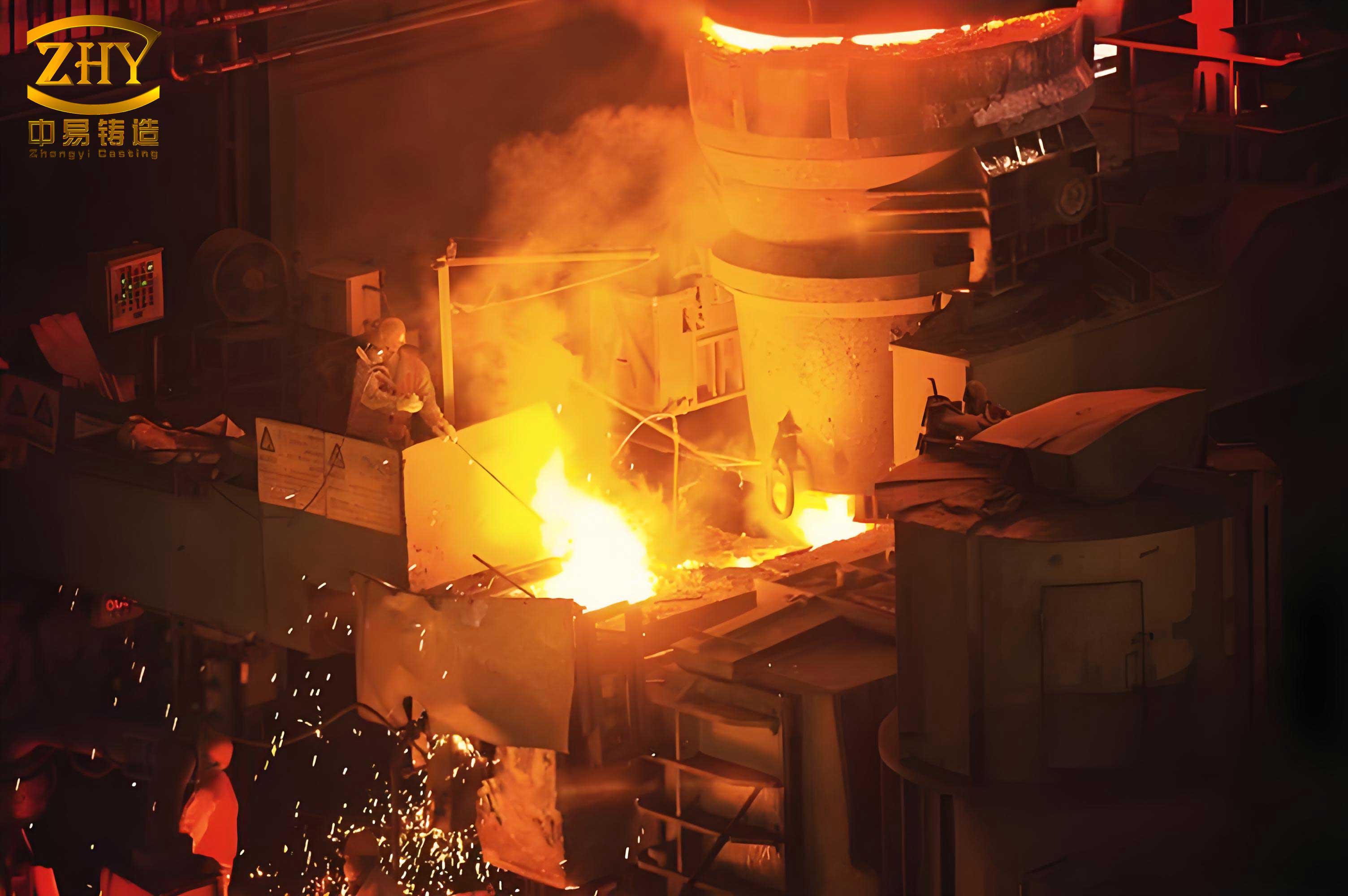
The manufacturing of mechanical components via foundry processes is a cornerstone of modern industry. Among these processes, sand casting stands out for its remarkable flexibility, cost-effectiveness for low to medium production volumes, and ability to produce parts of nearly unlimited size and geometric complexity. The fundamental principle involves creating a mold cavity from compacted sand that matches the shape of the desired part, into which molten metal is poured. Upon solidification and cooling, the sand mold is broken away to reveal the metal casting. The versatility of sand casting is evident in its application across a vast spectrum of parts, from massive machine bases weighing several tons to intricate, small-scale components like hand wheels and pulleys.
Hand wheels, ubiquitous in valves, manual controls, and various mechanical systems, are quintessential candidates for sand casting. Their geometry typically features a central hub, spokes (or a web), and an outer rim. This structure, while functionally simple, presents classic solidification challenges in sand casting. The hub is often the thickest section, acting as a thermal mass or “hot spot.” During cooling, thinner sections like the spokes and rim solidify first, potentially isolating the still-liquid metal in the hub. If this liquid metal cannot be fed adequately to compensate for the volumetric shrinkage inherent to most metals during phase change, internal defects such as shrinkage porosity, macro-shrinkage cavities, or even surface sinks will form. For aluminum alloys like A356 (similar to ZL101), which have a significant shrinkage volume (approximately 3.5-6.5%), designing a feeding system to promote directional solidification towards a feeder (riser) is critical.
This article delves into a detailed methodological approach for optimizing the sand casting process for a small aluminum alloy hand wheel. The focus is on moving from a conventional gating approach to an advanced integrated system, supported by numerical simulation and fundamental metallurgical principles. We will explore the root cause analysis of defects, the application of simulation software (ProCAST) as a virtual foundry tool, the design and validation of an optimized gating and risering strategy, and the practical considerations for implementing such a solution in a production sand casting environment. The overarching goal is to outline a replicable framework for enhancing yield and quality in sand casting of similar geometries.
Case Study: Geometry and Initial Process
The subject component is a hand wheel with the following key dimensions, which are critical for thermal analysis:
- Overall Diameter: 150 mm
- Overall Height: 60 mm
- Hub Outer Diameter: 40 mm (solid, with a 20 mm machined hole)
- Hub Height/Thickness: 30 mm
- Rim and Spoke Thickness: 10 mm
The material is a hypoeutectic Al-Si-Mg casting alloy, comparable to A356 or ZL101, chosen for its good castability, corrosion resistance, and reasonable strength. Its solidification characteristics are paramount to process design. The key properties relevant to sand casting simulation are summarized in the table below.
| Material | Property | Value / Description |
|---|---|---|
| Aluminum Alloy | Liquidus Temperature ($T_L$) | ~615 °C |
| Solidus Temperature ($T_S$) | ~555 °C | |
| Pouring Temperature ($T_{pour}$) | 700 °C (initial process) | |
| Volumetric Shrinkage ($\beta$) | $$ \beta = \frac{\rho_s – \rho_l}{\rho_s} \approx 0.05 $$ (where $\rho_s$ and $\rho_l$ are solid and liquid density) | |
| Green Sand Mold | Material | Silica sand with clay binder |
| Initial Temperature | 25 °C (ambient) | |
| Heat Transfer Coefficient (metal-mold interface) | ~500 W/m²·K (typical for sand casting) |
The initial, conventional sand casting process employed a side-gating system in a two-part green sand mold. The parting line was placed along the curved profile of the wheel. A single ingate was attached to the rim. This setup is common for small parts due to its simplicity in patternmaking and molding. However, radiographic and destructive testing of castings produced with this method consistently revealed shrinkage defects in the hub region. As predicted, the thick hub was the last to solidify. More critically, the gating system, being of smaller cross-section than the hub, solidified earlier, severing the liquid feed path from the riser (which was essentially the pouring basin and sprue in this simple setup). This resulted in an isolated liquid pocket in the hub, leading to either a concentrated shrinkage pipe or dispersed microporosity, severely compromising the mechanical integrity of the part.
Methodology: Numerical Simulation Setup
To understand the thermal history and solidification sequence quantitatively, numerical simulation using finite element analysis (FEA) was employed. The software ProCAST was chosen for its robust capabilities in modeling filling, solidification, and defect prediction in sand casting processes. The methodology followed these steps:
- 3D Geometry and Meshing: The CAD model of the hand wheel, along with the initial sprue, runner, and ingate, was created. A crucial step was the generation of a high-quality volumetric mesh. The domain was discretized into tetrahedral elements, with finer mesh sizing applied to the casting and gating channels to accurately capture thermal gradients, and a coarser mesh for the sand mold to reduce computational cost. A mesh sensitivity analysis was performed to ensure results were independent of element size.
- Material Properties and Boundary Conditions: Temperature-dependent thermophysical properties for the aluminum alloy (density, thermal conductivity, specific heat, enthalpy) and the sand mold were assigned. The interfacial heat transfer coefficient (IHTC) between the metal and the sand was defined. Boundary conditions included an initial mold temperature of 25°C and heat loss from the outer surfaces of the sand mold via convection and radiation to the environment.
- Process Parameters: The filling phase was simulated as a transient process, though for solidification analysis, an instantaneous fill assumption is often a valid and simpler starting point. The primary parameter was the pouring temperature of 700°C.
- Governing Equations: The simulation solves the fundamental equations of heat transfer and fluid flow. The energy conservation equation during solidification, considering the release of latent heat ($L$), is central:
$$ \rho c_p \frac{\partial T}{\partial t} = \nabla \cdot (k \nabla T) + \rho L \frac{\partial f_s}{\partial t} $$
where $\rho$ is density, $c_p$ is specific heat, $T$ is temperature, $t$ is time, $k$ is thermal conductivity, and $f_s$ is the solid fraction. The software also calculates the feeding flow driven by pressure differences due to shrinkage, which is key for predicting shrinkage porosity.
Analysis of the Initial Sand Casting Process
The simulation of the initial side-gating scheme provided a clear visualization of the problem. The sequence of solidification, represented by plots of liquid fraction over time, confirmed the experimental findings.
- Stage 1 (Early Solidification): The thin rim and spokes began to solidify rapidly, losing heat to the sand mold from all surfaces.
- Stage 2 (Intermediate): The junctions between the spokes and the rim, having slightly more mass, became secondary hot spots but continued to cool.
- Stage 3 (Critical Stage): The gating system (sprue and ingate) completely solidified. At this point, the central hub remained largely liquid, with a solid shell forming around it.
- Stage 4 (Final Solidification): The hub’s liquid pool, now isolated from any external liquid metal source, solidified from the outside in. As the final liquid metal in the center transformed to solid, it contracted. With no liquid available to feed this contraction, a volumetric deficit formed, resulting in either a cavity or dispersed porosity. The Niyama criterion, a widely used indicator for predicting shrinkage porosity, can be applied here. It is expressed as:
$$ N_y = \frac{G}{\sqrt{\dot{T}}} $$
where $G$ is the temperature gradient and $\dot{T}$ is the cooling rate at the end of solidification. Regions with a Niyama value below a critical threshold (specific to the alloy) are prone to shrinkage porosity. The simulation confirmed low Niyama values in the entire hub region.
The simulated defect location was primarily in the upper portion of the hub. In practice, due to slight variations in mold heating and gravity effects, the exact location could shift, sometimes breaking through to the surface as a sink, as seen in the initial experiments. This validated the simulation model’s accuracy for the sand casting process.
Optimized Sand Casting Process Design
The failure analysis pinpointed the root cause: the lack of a sustained feeding path to the primary hot spot (the hub). The optimization goal was to redesign the sand casting process to enforce directional solidification, where the casting solidifies progressively from the extremities (rim, spokes) towards the hub, and finally into a dedicated feeder that remains liquid longest.
The proposed solution was an integrated gating and risering system. Instead of a side gate, the hand wheel was inverted in the mold. The central hub was extended upward to form a vertical feeder neck, which connected directly to a top-mounted cylindrical riser. This riser also served as the pouring cup and sprue. The design logic is encapsulated in the following principle: The thermal center of the casting (the hub) must be connected via a channel of adequate modulus to a thermal center of greater modulus (the riser). The modulus ($M$) is defined as the volume-to-cooling-surface-area ratio ($M = V/A_c$). For effective feeding, $M_{riser} > M_{hub}$.
| Feature | Initial Side-Gating Process | Optimized Integrated Gating-Riser Process |
|---|---|---|
| Part Orientation | Horizontal (parting on profile) | Vertical (hub at top) |
| Gating Location | Attached to the rim | Attached directly to the hub extension |
| Riser Function | Nonexistent/ineffective | Combined pouring cup, sprue, and live riser |
| Solidification Sequence | Rim & Spokes → Gating → Hub (Isolated) | Rim & Spokes → Hub → Riser/Sprue |
| Feeding Mechanism | Uncontrolled, interrupted | Controlled, directional, sustained |
| Primary Defect Risk | High (Shrinkage in Hub) | Low (Shrinkage in Riser) |
| Process Yield | Higher (but with scrap) | Optimized (sound casting, removable riser) |
The new 3D model was re-meshed and simulated under identical boundary conditions. The results demonstrated a fundamental improvement:
- The rim and spokes solidified first, as before.
- The hub began to solidify but remained connected through the feeder neck to the large thermal mass of the riser/sprue, which was still fully liquid.
- As the hub solidified and contracted, it drew liquid metal from the riser above it, effectively using the riser as a liquid reservoir.
- Finally, solidification was completed in the riser itself, concentrating all shrinkage defects within this sacrificial portion of the metal, which is later removed. The Niyama criterion map showed the critical region now confined to the upper part of the riser, confirming a sound casting in the hand wheel body.
This integrated approach is particularly elegant for sand casting of small-to-medium parts, as it simplifies patternmaking (often a single-piece pattern with the riser) and improves metal yield compared to adding a separate, large side riser.
Practical Implementation and Quality Assurance in Sand Casting
While the integrated gating-riser system solves the feeding problem in sand casting, it introduces two practical challenges that must be addressed on the foundry floor:
1. Inclusion Control: In a conventional gating system, the sprue well, runner, and ingate are designed to trap oxide films and non-metallic inclusions before metal enters the cavity (a principle known as “slag trapping”). In the integrated top-pouring design, metal falls directly from the pouring basin into the mold cavity (the riser). This turbulent flow can promote oxide entrainment. Mitigation strategies are essential:
- Pouring Practice: Employ a “teapot spout” ladle to draw metal from below the surface oxide layer. Maintain a non-turbulent, continuous pour to minimize fresh oxide formation.
- Filtration: Insert a ceramic foam filter in the pouring basin or at the top of the sprue/riser. This filter traps inclusions but must be sized correctly to avoid premature choking and mis-runs. The pressure drop across a filter can be approximated using the Darcy-Forchheimer equation for flow through porous media.
- Melt Quality: Implement rigorous degassing (e.g., using rotary impeller degassers with argon) and cleaning fluxes prior to pouring to minimize the inclusion load in the molten aluminum.
2. Mold Venting: With a single top entry point, the displacement of air and gases from the mold cavity during pouring becomes more critical. Inadequate venting can lead to back pressure, causing mistuns or gas porosity (pinholes). Solutions specific to sand casting include:
- Permeable Sand: Ensure the green sand mixture has adequate permeability to allow gases to escape through the sand itself.
- Vent Channels: Strategically place thin vent channels (made with wires or vents cut into the sand) at the highest points of the mold cavity opposite the ingate, particularly at the junction of the spokes and rim.
- Vacuum-Assisted Sand Casting: For critical applications, applying a mild vacuum to the mold can dramatically improve filling and reduce gas-related defects.
| Potential Issue | Root Cause | Preventive Measure | Key Consideration |
|---|---|---|---|
| Oxide Inclusions | Turbulent top-pouring; lack of slag trap. | Use teapot ladle; Install ceramic foam filter; Improve melt treatment. | Filter size and thermal shock resistance; Degassing efficiency. |
| Gas Porosity/Pinholes | Inadequate evacuation of air and binder gases from mold. | Optimize sand permeability; Add strategic vent channels in mold. | Vent location at high points; Vent size to prevent metal penetration. |
| Mistuns/Cold Shuts | Back pressure from trapped gas; excessive heat loss in thin sections. | Improve venting (see above); Ensure adequate pouring temperature & speed. | Balance between filling speed and turbulence. |
| Riser Removal Difficulty | Feeder neck too large or wrong shape. | Design neck with a “breaker” core or reduced modulus for easy knockout. | Neck must be large enough to feed but weak enough to break cleanly. |
Conclusion
The optimization of the sand casting process for an aluminum alloy hand wheel demonstrates a systematic engineering approach to solving manufacturing defects. The journey from a defective side-gating scheme to a robust integrated gating-riser system underscores several key principles in foundry technology. First, a thorough understanding of the component’s geometry and its interaction with the solidification characteristics of the alloy is non-negotiable. Second, numerical simulation tools like ProCAST are indispensable for modern sand casting, providing a virtual prototyping environment that saves significant time and material costs by predicting thermal profiles, solidification sequences, and defect formation before any metal is poured. The software solves complex, coupled thermo-fluid equations that would be intractable analytically, providing insights like the Niyama criterion map which directly guides riser placement and sizing.
The proposed integrated system elegantly aligns the thermal, hydraulic, and practical requirements of sand casting. It ensures directional solidification by creating a thermal gradient from the casting into the riser, effectively moving the shrinkage defect from a critical functional area into a disposable appendage. This directly enhances the mechanical reliability of the sand cast component. However, this optimization is not a universal template but rather a case study in applied principles. Each new sand casting project requires a fresh analysis of geometry, alloy properties, and quality requirements. The successful implementation also hinges on complementary foundry practices—meticulous melt preparation, controlled pouring, and effective mold venting—to mitigate the new set of challenges introduced by the optimized design. In conclusion, the synergy of fundamental metallurgical science, advanced computational modeling, and practical foundry knowledge is the definitive path toward achieving high-quality, cost-effective, and reliable components through the versatile process of sand casting.