
In the field of metal casting, sand casting remains a cornerstone due to its cost-effectiveness, simplicity, and versatility for producing complex components. Among various alloys, hypoeutectic Al-Si alloys are extensively utilized in aerospace and automotive applications, such as engine blocks and structural parts, owing to their excellent castability, lightweight nature, and balanced mechanical properties. A critical aspect of enhancing these alloys is the modification of eutectic Si morphology, which directly influences strength and ductility. Antimony (Sb) has been identified as an effective modifier, but its mechanisms under specific sand casting conditions, particularly gravity sand casting, warrant deeper exploration. In this study, we investigate the influence of Sb on the primary α-Al grains and eutectic Si in an Al-7Si alloy processed via gravity sand casting, employing thermal analysis, microscopy, and diffraction techniques to unravel the underlying phenomena.
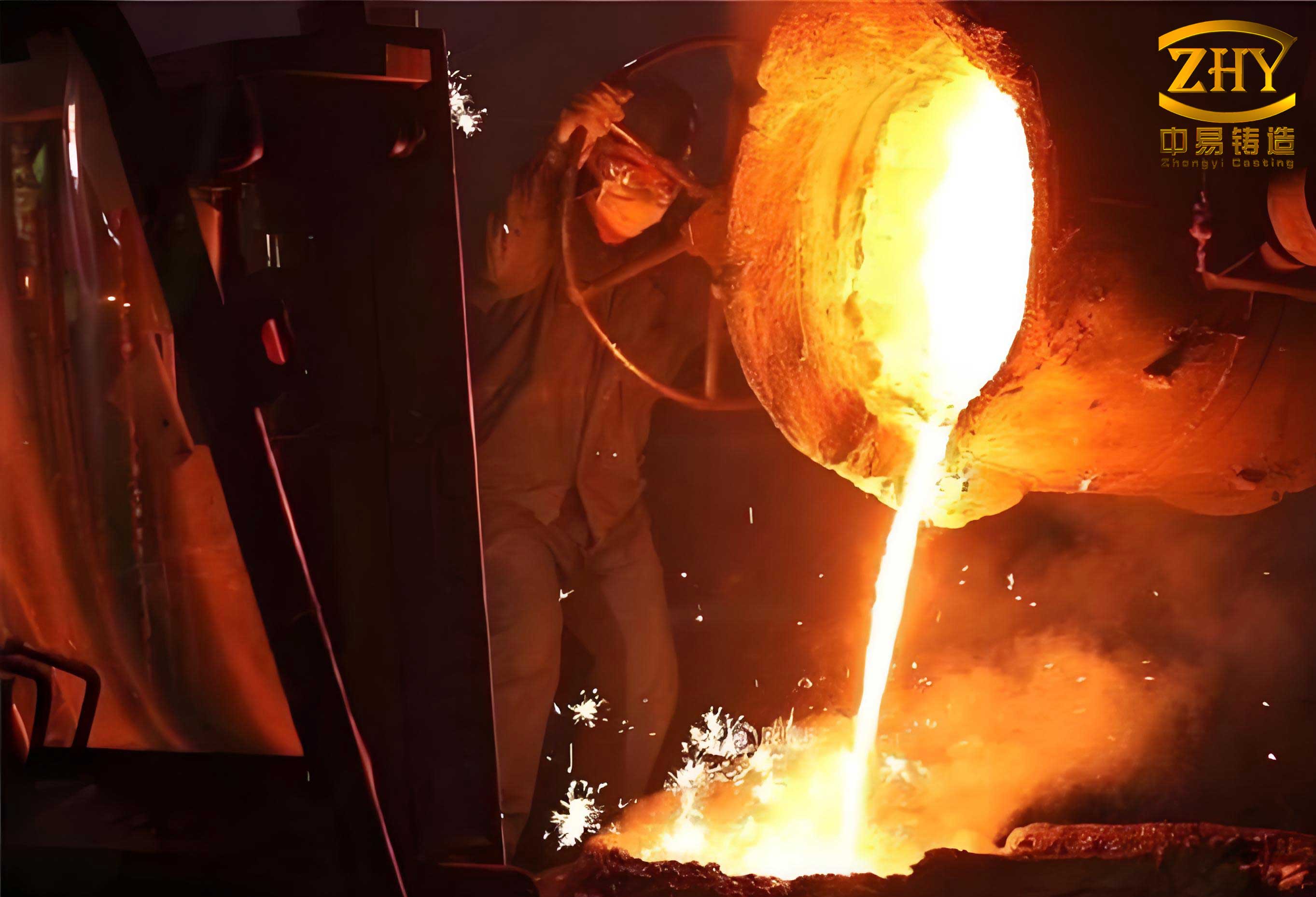
The gravity sand casting process involves pouring molten metal into a sand mold under natural gravitational force, which is a common method in industrial foundries. This technique is favored for its ability to produce large and intricate shapes with relatively low equipment costs. However, the slow cooling rates typical of sand casting can lead to coarse microstructures, necessitating alloy modifications to refine grains and improve performance. Our focus is on how Sb addition alters the solidification behavior and microstructure in such sand casting environments, which has been less documented compared to faster cooling methods like die casting.
We begin by detailing the experimental approach. The alloys were prepared using high-purity aluminum, Al-12Si master alloy, and Al-4Sb master alloy. Melting was conducted in a resistance furnace, with Mg added at 710–720°C, followed by stirring and refinement before pouring into sand molds. The chemical compositions were verified via optical emission spectroscopy, as summarized in Table 1. Two alloys were studied: a base Al-7Si alloy and one with 0.09 wt% Sb addition. Thermal analysis was performed using a data acquisition system with K-type thermocouples to record temperature-time curves during solidification, with each curve replicated three times for reliability. For microstructural examination, samples were prepared through anodizing for polarized light microscopy (PLM) to observe primary α-Al grains, and standard metallographic techniques were applied for scanning electron microscopy (SEM) to examine eutectic Si after NaOH etching to remove Al matrix. Electron backscatter diffraction (EBSD) and transmission electron microscopy (TEM) with energy-dispersive spectroscopy (EDS) were utilized to analyze nucleation cores and twins in eutectic Si, with samples thinned by ion milling. Grain sizes and eutectic Si dimensions were statistically evaluated using image analysis software, ensuring over 40 grains and 120 eutectic Si particles were measured for accuracy.
| Alloy Designation | Si | Mg | Ti | Fe | B | Sb | Al |
|---|---|---|---|---|---|---|---|
| Base Alloy | 6.80 | 0.48 | 0.12 | <0.05 | <0.05 | 0 | Balance |
| Sb-Modified Alloy | 6.90 | 0.50 | 0.14 | <0.05 | <0.05 | 0.09 | Balance |
The solidification curves, depicted in Figure 1, reveal critical temperatures: $T_{Al}^{N}$ for primary α-Al nucleation and $T_{Si}^{N}$ for eutectic reaction onset. For the base alloy, $T_{Al}^{N}$ was 619.5°C and $T_{Si}^{N}$ was 578.1°C. With Sb addition, these decreased to 611.8°C and 572.6°C, respectively. This reduction indicates increased undercooling required for nucleation, which can be expressed as:
$$\Delta T = T_{eq} – T_{act}$$
where $\Delta T$ is the undercooling, $T_{eq}$ is the equilibrium nucleation temperature, and $T_{act}$ is the actual nucleation temperature. In sand casting, the slower cooling exacerbates this effect, as thermal gradients are gentler. The decrease in $T_{Al}^{N}$ suggests that Sb makes nucleation of primary α-Al more difficult, a point we explore further through microstructural analysis.
| Alloy | $T_{Al}^{N}$ (°C) | $T_{Si}^{N}$ (°C) | Average Grain Size (μm) |
|---|---|---|---|
| Base | 619.5 | 578.1 | 319 |
| Sb-Modified | 611.8 | 572.6 | 353 |
Polarized light microscopy images show that the primary α-Al grains in the base alloy are predominantly dendritic with some equiaxed regions, averaging 319 μm in size. With Sb, the grain morphology remains similar, but the average size increases to 353 μm. This coarsening aligns with the lower $T_{Al}^{N}$, as reduced nucleation temperature under sand casting conditions means fewer nuclei form, leading to larger grains. The relationship between grain size $d$ and undercooling can be approximated by:
$$d \propto \frac{1}{\sqrt{\Delta T}}$$
where a smaller $\Delta T$ (due to lower $T_{act}$) results in larger $d$. In gravity sand casting, the thermal mass of the sand mold contributes to a prolonged solidification time, allowing grains to grow more freely, which Sb exacerbates by further depressing nucleation.
Turning to eutectic Si, SEM images reveal that in the base alloy, eutectic Si appears as plate-like structures with an average length of 19.7 μm and width of 8.1 μm. With Sb modification, these become shorter and narrower, averaging 13.3 μm in length and 5.4 μm in width. This refinement is a key benefit of Sb in sand casting, as it improves mechanical properties by reducing stress concentrations. The modification mechanism can be understood through thermodynamic considerations. According to the Al-Si phase diagram, the solid solubility of Si in α-Al, $C_{Si}$, decreases with temperature:
$$C_{Si}(T) = C_0 \exp\left(-\frac{Q}{RT}\right)$$
where $C_0$ is a constant, $Q$ is the activation energy, $R$ is the gas constant, and $T$ is temperature. With Sb lowering $T_{Si}^{N}$, $C_{Si}$ at the eutectic temperature is reduced. The chemical potential $\mu_{Si}$ of Si atoms in α-Al is given by:
$$\mu_{Si} = \mu^0 + RT \ln(a_{Si})$$
where $\mu^0$ is the standard chemical potential and $a_{Si}$ is the activity. As $C_{Si}$ decreases, the activity $a_{Si}$ increases if the actual Si content remains similar, raising $\mu_{Si}$. This enhanced chemical potential drives faster expulsion of Si atoms from the α-Al matrix to the solid-liquid interface during sand casting solidification, accelerating eutectic Si growth. The growth rate $v$ can be modeled as:
$$v = k \Delta \mu$$
with $k$ as a kinetic coefficient and $\Delta \mu$ as the chemical potential difference. Faster growth under sand casting conditions, coupled with concurrent Al phase advancement, leads to shorter and narrower eutectic Si. This contrasts with rapid cooling methods where kinetic limitations might dominate.
| Alloy | Average Length (μm) | Average Width (μm) | Aspect Ratio |
|---|---|---|---|
| Base | 19.7 ± 2.1 | 8.1 ± 0.9 | 2.43 |
| Sb-Modified | 13.3 ± 1.5 | 5.4 ± 0.6 | 2.46 |
To delve into the modification mechanism, we employed EBSD and TEM. EBSD maps show that the number of nucleation cores for eutectic Si, indicated by color variations, does not significantly change with Sb addition. This suggests that in gravity sand casting, Sb does not act by increasing nucleation sites. TEM observations confirm that twins are not prevalent in eutectic Si with Sb, and EDS analyses detect no Sb enrichment at twin boundaries or within Si particles. The atomic diameter ratio $r_{Sb}/r_{Si}$ is approximately 1.32, far from the ideal 1.65 required for twin induction. Thus, Sb’s role is not through influencing nucleation cores or twins, but rather through altering growth kinetics as described above.
The implications for sand casting are profound. In this process, the slow cooling allows diffusion-controlled phenomena to dominate, making Sb’s effect on chemical potential particularly impactful. Compared to chill casting or die casting, where rapid solidification might mask such effects, gravity sand casting provides an ideal environment for Sb to exert its modification by thermodynamic means. This is crucial for industries relying on sand casting for large components, as it enables better microstructure control without costly equipment changes.
Further analysis involves the role of impurities. In sand casting, sand mold interactions can introduce trace elements, but our alloys were controlled to minimize such effects. The presence of Mg and Ti in our compositions may interact with Sb, but EDS showed no compound formation like AlSb or Mg3Sb2 at eutectic Si interfaces. This supports the growth-based mechanism over nucleation-based ones. The solidification path in sand casting can be modeled using the Scheil equation for non-equilibrium conditions:
$$C_s = k C_0 (1 – f_s)^{k-1}$$
where $C_s$ is solid composition, $k$ is partition coefficient, $C_0$ is initial composition, and $f_s$ is solid fraction. Sb likely alters $k$ for Si, but further studies are needed to quantify this.
We also considered the effect of Sb on mechanical properties indirectly. In sand casting, refined eutectic Si improves ductility and toughness, which we infer from literature. The Hall-Petch relationship relates grain size to yield strength:
$$\sigma_y = \sigma_0 + k_y d^{-1/2}$$
where $\sigma_y$ is yield strength, $\sigma_0$ is friction stress, $k_y$ is a constant, and $d$ is grain size. With Sb increasing grain size, strength might decrease slightly, but the eutectic Si refinement likely compensates by reducing crack initiation sites. This trade-off is essential for optimizing sand casting alloys.
In summary, our investigation under gravity sand casting conditions reveals that Sb addition lowers the nucleation temperatures of both primary α-Al and eutectic Si. Primary α-Al grains become coarser due to increased nucleation difficulty, while eutectic Si is refined through a growth-acceleration mechanism driven by reduced Si solubility and heightened chemical potential. Sb does not modify eutectic Si by acting on nucleation cores or twins, distinguishing its behavior in sand casting from other processes. These insights can guide alloy design for sand casting applications, ensuring better performance through targeted modifications. Future work could explore combined modifiers or varying sand casting parameters to further optimize microstructure.
Expanding on the sand casting context, it’s important to note that this method’s versatility makes it suitable for a wide range of Al-Si alloys. The slow cooling in sand casting allows for more homogeneous microstructures but also necessitates additives like Sb to counteract coarsening. In industrial sand casting, factors such as mold design, sand type, and pouring temperature interact with modifiers. Our study focuses on standard conditions, but variations could influence Sb’s effectiveness. For instance, green sand casting versus resin-bonded sand might alter heat transfer, affecting undercooling. The chemical potential model we propose can be adapted to different sand casting scenarios by adjusting temperature parameters.
Additionally, the economic aspect of sand casting is relevant. Sb is a cost-effective modifier compared to alternatives like Sr or Na, making it attractive for high-volume sand casting production. However, its toxicity requires careful handling, especially in sand casting foundries where dust and fumes can be concerns. Environmental considerations in sand casting, such as sand reclamation, might also interact with Sb residues, warranting further study.
From a theoretical perspective, the modification mechanism can be framed using phase field models. In sand casting, the diffuse interface between phases allows Sb to influence diffusion profiles. A phase field equation for eutectic growth might incorporate Sb concentration $c_{Sb}$:
$$\frac{\partial \phi}{\partial t} = M \left[ \epsilon^2 \nabla^2 \phi – f'(\phi) + \lambda (c_{Si} – c_{eq}) \right]$$
where $\phi$ is the phase field variable, $M$ is mobility, $\epsilon$ is interface width, $f$ is free energy density, $\lambda$ is a coupling constant, $c_{Si}$ is Si concentration, and $c_{eq}$ is equilibrium concentration. Sb could modify $c_{eq}$ or mobility terms, aligning with our observations.
In conclusion, this work underscores the importance of process-specific studies in sand casting. By integrating thermal analysis, microscopy, and thermodynamic modeling, we elucidate how Sb modifies Al-Si alloys under gravity sand casting conditions. The findings provide a foundation for enhancing sand casting practices, ultimately leading to improved component reliability and performance in sectors like automotive and aerospace where sand casting is prevalent.