
As a foundational pillar of modern manufacturing, sand casting has long been the backbone of industries ranging from automotive to heavy machinery, accounting for approximately 80% to 90% of all casting production. However, traditional sand casting methods are often characterized by labor-intensive processes, high environmental pollution, significant energy consumption, and reliance on skilled labor, leading to the perception of the industry as “dirty, heavy, and crude.” In recent years, the advent of additive manufacturing, specifically 3D printing, has introduced a transformative approach to sand casting, promising to address these challenges and revolutionize the field. From my perspective as an innovator in this domain, I have witnessed firsthand how industrial-grade 3D printing for sand casting is reshaping production paradigms, enabling smarter, greener, and more efficient manufacturing systems. This article delves into the technical intricacies, benefits, and future trajectories of 3D printing in sand casting, supported by detailed analyses, formulas, and tables to encapsulate its profound impact.
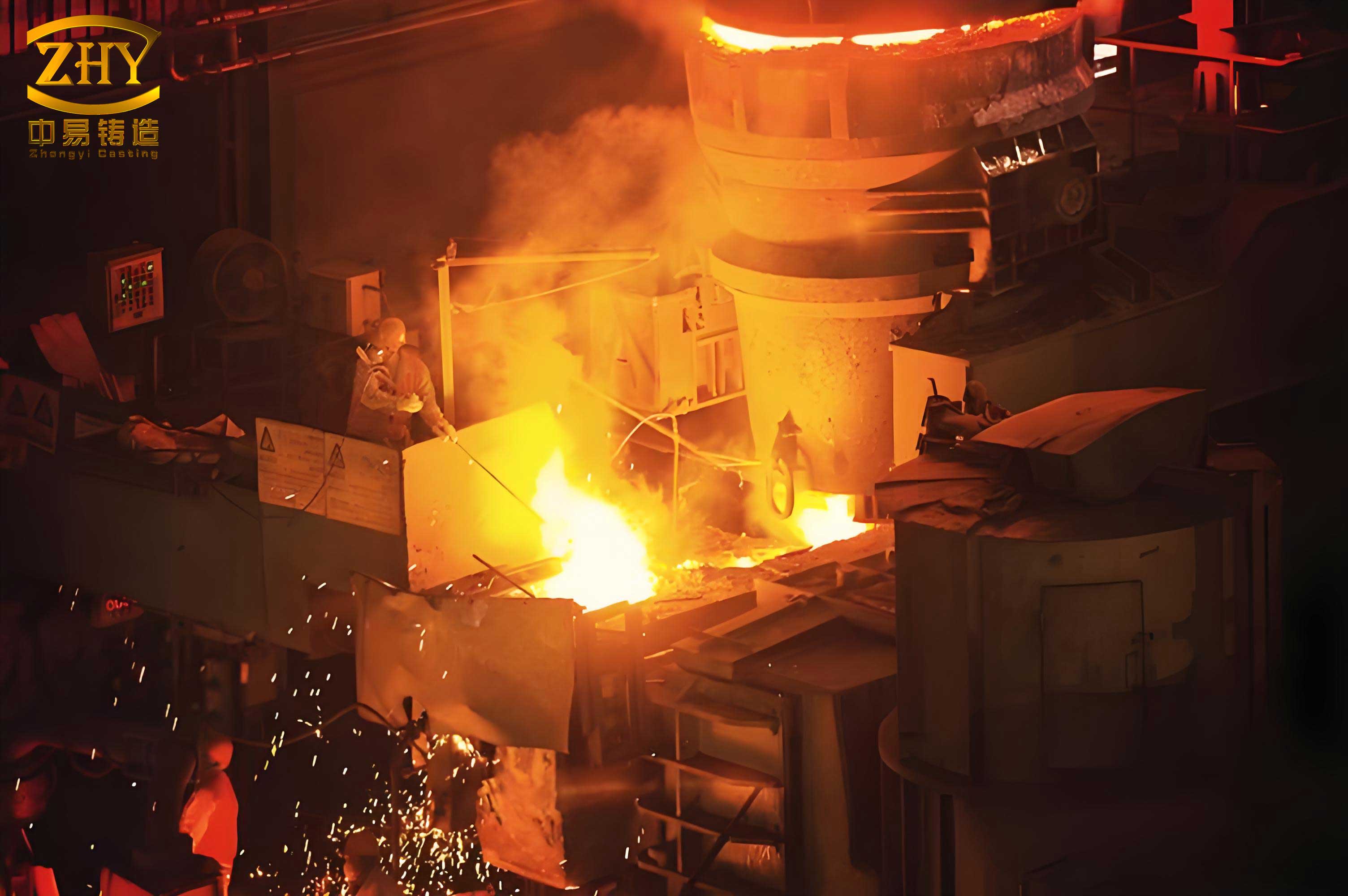
The core principle behind 3D printing in sand casting involves the layer-by-layer deposition of binder onto a evenly spread sand bed, utilizing technologies such as 3DP (Three-Dimensional Printing) to create complex sand molds and cores directly from digital models. This eliminates the need for traditional pattern-making, molding, and core-making steps, thereby streamlining the entire sand casting process. Industrial-grade sand casting 3D printers have evolved significantly, with advancements in print head design, build volume, and material properties. For instance, the printing efficiency has been enhanced to rates exceeding 350 molds per hour, with build volumes reaching up to 2500 mm × 1800 mm × 1000 mm, achieving dimensional accuracies of ±0.35 mm and compressive strengths above 6 MPa for the printed sand molds. These parameters are critical for meeting the demands of diverse materials and large-scale castings in sand casting applications.
To quantify the efficiency gains, we can express the printing rate in terms of layer formation. Let the total number of layers be \( L \), the time per layer be \( t_l \), and the overall printing time be \( T \). The printing speed \( v_p \) can be modeled as:
$$ v_p = \frac{L}{T} = \frac{1}{t_l} $$
where \( t_l \) depends on factors like binder jetting speed and sand recoating time. For industrial sand casting 3D printers, \( t_l \) is optimized to achieve high throughput, often through integrated array print heads and dual build chamber systems. The compressive strength \( \sigma_c \) of the printed sand molds is another key metric, derived from the binder-sand interaction:
$$ \sigma_c = \frac{F}{A} $$
where \( F \) is the maximum force applied before failure and \( A \) is the cross-sectional area. In sand casting, ensuring \( \sigma_c \geq 6 \, \text{MPa} \) is vital for withstanding the pressures of molten metal during pouring.
The advantages of integrating 3D printing into sand casting are multifaceted. Below, Table 1 summarizes a comparative analysis between traditional sand casting and 3D-printed sand casting, highlighting the transformative benefits.
| Aspect | Traditional Sand Casting | 3D-Printed Sand Casting |
|---|---|---|
| Process Flow | Pattern making, molding, core-making, assembly – multiple steps | Direct digital printing – single-step mold fabrication |
| Production Lead Time | Weeks to months for complex designs | Days to hours, reducing time by up to 70% |
| Design Flexibility | Limited by pattern geometry; high cost for changes | High; enables complex internal structures without additional tools |
| Environmental Impact | High waste, energy consumption, and emissions | Reduced waste via additive process; lower energy use |
| Labor Dependency | High skill requirement; labor-intensive | Automated; reduces manual labor and skill gaps |
| Cost for Small Batches | High due to tooling expenses | Low; economical for prototypes and small runs |
| Precision and Quality | ±1 mm or more; variability in manual processes | ±0.35 mm; consistent digital accuracy |
From my experience, the application of 3D printing in sand casting dramatically shortens the production cycle. By bypassing traditional tooling, we can directly convert CAD models into functional sand molds, which is particularly beneficial for prototyping and low-volume production. This flexibility allows for rapid design iterations, reducing development costs and enabling the creation of intricate geometries that were previously impossible or prohibitively expensive in sand casting. For example, internal cooling channels or lightweight lattice structures can be integrated into sand molds, enhancing the performance of the final cast components. The sand-to-metal ratio, a critical factor in sand casting efficiency, can be optimized through 3D printing, as shown in the formula:
$$ R_{sm} = \frac{V_s}{V_m} $$
where \( V_s \) is the volume of sand used and \( V_m \) is the volume of metal cast. 3D printing minimizes \( V_s \) by precisely depositing sand only where needed, thereby improving material utilization and reducing waste in sand casting processes.
Industrial-grade sand casting 3D printers employ advanced technologies to achieve these outcomes. Key parameters of such devices are outlined in Table 2, based on typical specifications from leading developments in the field.
| Parameter | Value or Description | Impact on Sand Casting |
|---|---|---|
| Printing Technology | Binder Jetting (3DP) | Enables layer-wise sand mold construction |
| Build Volume | 2500 mm × 1800 mm × 1000 mm | Accommodates large sand casting molds for big components |
| Printing Speed | >350 molds/hour | High throughput for mass customization in sand casting |
| Layer Thickness | 0.2 – 0.3 mm | Determines surface finish and detail resolution |
| Dimensional Accuracy | ±0.35 mm | Ensures precision in sand casting mold dimensions |
| Compressive Strength | ≥6 MPa | Provides durability for molten metal handling in sand casting |
| Binder System | Furan or phenolic resins | Affects sand mold strength and environmental footprint |
| Sand Type | Silica, zircon, or specialty sands | Tailored for different alloys and sand casting requirements |
The integration of 3D printing into sand casting not only enhances operational efficiency but also promotes sustainable practices. By reducing the reliance on physical patterns and cores, we cut down on material waste and energy consumption associated with traditional sand casting methods. The environmental benefits can be quantified through metrics like carbon footprint reduction. Let \( E_t \) represent the energy consumption of traditional sand casting per mold, and \( E_{3D} \) denote that of 3D-printed sand casting. The energy savings \( \Delta E \) is:
$$ \Delta E = E_t – E_{3D} $$
Studies suggest that \( \Delta E \) can be significant, often exceeding 30% for complex sand casting projects, due to eliminated machining and tooling processes. Moreover, the shift toward digital sand casting minimizes hazardous emissions, aligning with green manufacturing goals.
Looking ahead, the future of sand casting is inextricably linked with the evolution of 3D printing technology. The trend is moving toward even higher printing efficiencies, with targets of exceeding 500 molds per hour, and the development of multi-material sand casting capabilities. This progress will be driven by innovations in print head arrays, real-time process monitoring, and AI-driven optimization algorithms. For instance, the print quality \( Q_p \) can be modeled as a function of parameters like binder drop volume \( V_d \) and sand particle size \( d_s \):
$$ Q_p = f(V_d, d_s, \text{printing speed}) $$
Optimizing this function will lead to superior sand molds for critical sand casting applications. Additionally, the concept of smart foundries is emerging, where sand casting 3D printers are integrated with robotics, automated guided vehicles (AGVs), and warehouse systems to form fully automated production lines. This integration transforms sand casting from a manual craft into a digitally controlled process, enhancing consistency and scalability.
The economic implications are substantial. The global sand casting market, valued at trillions, stands to benefit immensely from 3D printing adoption. In regions where sand casting dominates, such as in automotive and aerospace sectors, the technology can reduce costs by up to 40% for low-volume runs, while improving quality control. Table 3 projects the potential market growth for 3D-printed sand casting over the next decade, based on current adoption rates and technological advancements.
| Year | Global Sand Casting Market Size (USD billions) | Share of 3D-Printed Sand Casting (%) | Estimated Cost Savings per Mold (%) |
|---|---|---|---|
| 2025 | 450 | 15 | 25 |
| 2030 | 520 | 30 | 35 |
| 2035 | 600 | 50 | 40 |
From my vantage point, the journey toward widespread adoption of 3D printing in sand casting involves overcoming barriers such as initial investment costs and material standardization. However, the long-term benefits—including reduced labor dependency, enhanced design freedom, and environmental sustainability—make it a compelling choice for modernizing sand casting industries. We are already seeing pilot projects where entire sand casting factories operate with minimal human intervention, leveraging 3D printing as the core technology. This shift not only addresses the “dirty, heavy, and crude” image but also positions sand casting as a cutting-edge, green manufacturing solution.
In conclusion, the fusion of 3D printing with sand casting represents a paradigm shift in manufacturing. By enabling direct digital fabrication of sand molds, this technology streamlines processes, boosts quality, and fosters innovation across sectors reliant on sand casting. As we continue to refine equipment and integrate smart systems, the vision of fully automated, eco-friendly sand casting foundries becomes increasingly attainable. The transformative potential of 3D printing in sand casting is not merely incremental; it is revolutionary, paving the way for a stronger, more sustainable industrial base. Through persistent innovation and collaboration, we can accelerate this transition, ensuring that sand casting remains a vital, forward-looking component of the global manufacturing landscape.