
In the realm of metal casting, green sand molding remains a cornerstone process, particularly for the mass production of automotive components. As a practitioner deeply involved in the production of high-quality sand castings, I have extensively studied the role of coal dust as an additive in green sand mixes. The primary function of coal dust is to enhance the surface finish of castings by preventing defects such as sand sticking, burns, and gas holes, which are critical in automotive applications where precision and aesthetics are paramount. This article delves into the technical specifications of coal dust, its measurement, and its pivotal application in manufacturing automotive sand castings, with a focus on achieving superior surface quality and reducing scrap rates.
The fundamental mechanism by which coal dust operates in green sand molds involves thermal decomposition during metal pouring. When molten iron contacts the mold, the coal dust volatilizes, releasing reducing gases that inhibit the formation of iron oxide (FeO). Simultaneously, it deposits a lustrous carbon film on the mold surface, which acts as a barrier against metal penetration. This process can be modeled using kinetic equations. For instance, the rate of gas evolution from coal dust can be expressed as:
$$ \frac{dG}{dt} = k \cdot C_c \cdot e^{-E_a/(RT)} $$
where \( G \) is the volume of gas generated, \( t \) is time, \( k \) is a rate constant, \( C_c \) is the concentration of coal dust in the sand, \( E_a \) is the activation energy, \( R \) is the gas constant, and \( T \) is the temperature. This gas formation directly impacts the quality of sand castings by reducing oxidative reactions at the metal-mold interface.
To ensure optimal performance, coal dust must meet specific technical indicators. In my practice, I have evaluated multiple coal dust varieties based on parameters such as moisture content, ash content, volatile matter, lustrous carbon content, sulfur content, and coking residue type. These indicators are critical because they influence the sand’s behavior during casting. For example, high lustrous carbon content (typically 12–16%) is essential for forming a continuous protective film, while low sulfur content (below 0.5%) minimizes the risk of sulfur-related defects in sand castings. The following table summarizes the technical standards and measured data for various coal dust types used in green sand casting for automotive parts:
| Brand | Moisture (%) | Ash Content (%) | Volatile Matter (%) | Lustrous Carbon (%) | Sulfur Content (%) | Coking Residue Type | Notes |
|---|---|---|---|---|---|---|---|
| SMF-1 (Standard) | ≤4.0 | ≤7.0 | ≥30 | ≥12 | ≤0.6 | 4–6 | Per JB/T9222-2008 |
| SMFZ-1 (Premium) | 3.6–4.0 | 5.7–6.5 | 34–36 | 14–16.6 | 0.42–0.48 | 4–5 | Measured in-house |
| Type A | 6.5–9.0 | 7.5–11.5 | 30–34 | 9–12 | 0.65–0.75 | 4–5 | Measured in-house |
| Type B | 5.5–8.5 | 7.2–10.5 | 32–35 | 9–12 | 0.60–0.70 | 4–5 | Measured in-house |
| Type C | 8–12 | 9–13 | 30–32 | 4.0–9.6 | 1.0–1.3 | 4–6 | Measured in-house |
From this data, it is evident that premium coal dust like SMFZ-1 exhibits “three highs and three lows”: high volatile matter, high lustrous carbon, high calorific value (approximately 6,500–7,200 kcal/kg), and low moisture, low ash, and low sulfur. These characteristics are vital for producing defect-free sand castings, especially in automotive applications where components like differential housings, brake discs, and pump covers require smooth surfaces with roughness values as low as 2.5–12.5 µm for non-machined areas.
The selection of coal dust directly affects the sand mix formulation and its properties. In our production line, which includes DISA molding machines and EIRICH sand mixers, we use bentonite as a binder and vary coal dust types to optimize performance. The sand mix ratios for different coal dusts are shown below:
| Component | Process Requirement (%) | Type A (%) | Type B (%) | Type C (%) | SMFZ-1 (%) |
|---|---|---|---|---|---|
| Used Sand | 97–99 | 97–99 | 97–99 | 97–99 | 97–99 |
| New Sand | 1–3 | 1–3 | 1–3 | 1–3 | 1–3 |
| Bentonite | 0.9–1.2 | 0.9–1.2 | 0.9–1.2 | 0.9–1.2 | 0.9–1.2 |
| Coal Dust | 0.4–0.6 | 0.46–0.6 | 0.46–0.6 | 0.5–0.65 | 0.3–0.5 |
| Starch | 0.01–0.07 | 0.01–0.07 | 0.01–0.07 | 0.01–0.07 | 0.01–0.07 |
Notably, with premium coal dust, the addition rate decreases by about 12% compared to process requirements and 15–25% relative to inferior types. This reduction is attributable to the higher efficiency of premium coal dust, which can be quantified using a performance index \( P_c \):
$$ P_c = \frac{L_c \times V_m}{A_s \times S_c} $$
where \( L_c \) is lustrous carbon content, \( V_m \) is volatile matter, \( A_s \) is ash content, and \( S_c \) is sulfur content. A higher \( P_c \) value indicates better coal dust quality, leading to lower usage rates in sand castings production.
The properties of the green sand mix are critical for molding consistency. We regularly test parameters such as moisture content, compactibility, green strength, permeability, effective clay, loss on ignition, total clay, and AFS fineness. The table below compares these properties when using different coal dusts:
| Property | Process Requirement | Type A | Type B | Type C | SMFZ-1 |
|---|---|---|---|---|---|
| Moisture (%) | 3.2–3.6 | 3.3–3.8 | 3.3–3.8 | 3.5–4.0 | 3.2–3.5 |
| Compactibility (%) | 34–39 | 33–35 | 32–35 | 32–36 | 34–36 |
| Green Strength (kPa) | 160–180 | 160–175 | 160–175 | 160–170 | 165–185 |
| Permeability (Pa) | 100–130 | 95–115 | 90–120 | 90–120 | 100–135 |
| Effective Clay (%) | 7.5–9.5 | 7.5–9.5 | 7.2–9.2 | 7.0–9.5 | 7.0–8.5 |
| Loss on Ignition (%) | 3.0–4.0 | 3.0–3.55 | 3.0–3.55 | 3.0–3.30 | 3.5–3.80 |
| Total Clay (%) | 10.5–12.5 | 11.0–13.0 | 11.0–12.5 | 11.5–14.0 | 10.5–12.0 |
| AFS Fineness | 58–63 | 58–63 | 58–63 | 58–63 | 58–63 |
The data reveals that premium coal dust maintains optimal sand properties, with improved green strength and permeability, which are essential for producing dense and precise sand castings. The loss on ignition is slightly higher due to the increased volatile matter, but this contributes positively to the lustrous carbon formation.
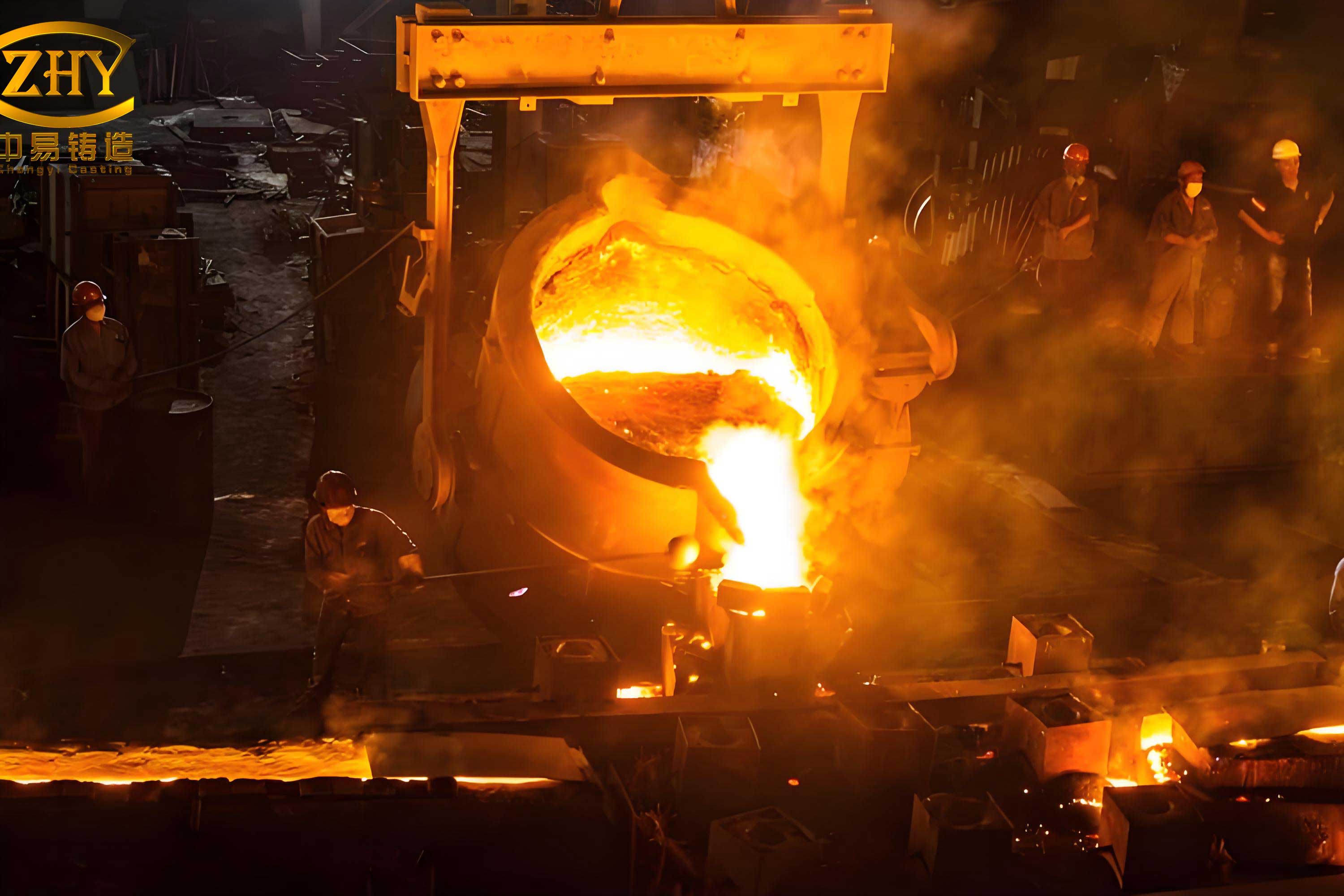
The application of premium coal dust has transformative effects on the production of automotive sand castings. One significant benefit is the enhancement of surface finish. For instance, components like differential housings and balance shafts, which are critical sand castings in vehicles, show remarkable improvement. Previously, with inferior coal dust, initial shot blasting times ranged from 10 to 20 minutes to achieve acceptable surface quality. With premium coal dust, this time is reduced to 5–15 minutes, and in some cases, secondary blasting can be eliminated, cutting energy consumption by 30–50%. This efficiency stems from the superior lustrous carbon film that minimizes sand adherence, as described by the equation for surface roughness reduction:
$$ R_a = R_0 \cdot e^{-k_s \cdot L_c} $$
where \( R_a \) is the final surface roughness, \( R_0 \) is the initial roughness, \( k_s \) is a constant dependent on sand properties, and \( L_c \) is lustrous carbon content. Higher \( L_c \) values lead to smoother sand castings, meeting automotive standards without additional processing.
Defect rates in sand castings have also plummeted with the adoption of premium coal dust. Common issues such as sand inclusion, gas holes, and burns are mitigated due to the reducing atmosphere and protective carbon layer. The table below outlines the annual distribution of defects in automotive sand castings before and after switching to premium coal dust:
| Year | Sand Inclusion (%) | Gas Holes (%) | Burns/Sand Sticking (%) |
|---|---|---|---|
| 2014 | 1.18 | 0.45 | 0.86 |
| 2015 | 0.76 | 0.29 | 0.07 |
| 2016 | 0.82 | 0.26 | 0.26 |
| 2017 (First Half) | 0.72 | 0.20 | 0.04 |
This drastic reduction, especially in burns and sand sticking, underscores the efficacy of premium coal dust in enhancing the integrity of sand castings. Moreover, internal quality improvements are observed, with fewer shrinkage porosities and subsurface gas holes in ductile iron and gray iron sand castings, as verified through non-destructive testing. The nodularity in ductile iron sand castings also sees a boost, attributed to the reduced sulfur interference from low-sulfur coal dust.
Another paramount advantage of premium coal dust is its non-self-igniting nature. Ordinary coal dust, including so-called “high-efficiency” varieties, often poses a fire hazard during storage and handling, particularly in hot and humid conditions. This is due to oxidative exothermic reactions, which can be modeled by the Frank-Kamenetskii equation for thermal ignition:
$$ \delta_c = \frac{r^2 \cdot Q \cdot A \cdot e^{-E_a/(RT)}}{\lambda \cdot T^2} $$
where \( \delta_c \) is a critical parameter for ignition, \( r \) is particle radius, \( Q \) is heat of reaction, \( A \) is pre-exponential factor, \( \lambda \) is thermal conductivity, and other terms as defined earlier. Premium coal dust mitigates this risk through low oxygen content (O/C ratio ≤ 0.1), low-temperature drying processes, and vacuum packaging, which collectively suppress oxidation. Since implementing premium coal dust, no spontaneous combustion incidents have occurred, even during extreme summer temperatures exceeding 40°C, ensuring safety and economic savings.
The environmental aspect cannot be overlooked. Premium coal dust is produced from high-quality natural coal without additives like tar or pitch, reducing emissions of harmful gases such as sulfur dioxide and benzene during casting. This aligns with green manufacturing principles for automotive sand castings. The overall impact on sand system health is positive, as lower coal dust addition rates decrease the accumulation of ash and carbonaceous residues, prolonging sand life. This can be expressed through a sand degradation model:
$$ S_d = S_0 + \alpha \cdot A_c \cdot t $$
where \( S_d \) is sand degradation index, \( S_0 \) is initial sand quality, \( \alpha \) is a degradation coefficient, \( A_c \) is ash content from coal dust, and \( t \) is time. Lower \( A_c \) values from premium coal dust slow degradation, maintaining consistent sand properties for longer periods.
In conclusion, the technical evaluation and application of premium coal dust in green sand casting for automotive components demonstrate profound benefits. Through rigorous measurement of indicators like lustrous carbon, volatile matter, and sulfur content, we can select coal dust that optimizes sand mix performance. The use of premium coal dust, characterized by high efficiency and low emissions, leads to reduced addition rates, enhanced surface finish, lower defect rates, and improved safety in storage. For manufacturers of high-precision sand castings, especially in the automotive sector, adopting such coal dust is not merely an option but a necessity for achieving competitiveness and sustainability. Future work may explore advanced additives, but for now, premium coal dust remains the cornerstone of quality in green sand casting processes.