
The pursuit of lightweight materials in modern manufacturing has positioned magnesium alloys at the forefront, particularly for structural components produced via sand casting processes. However, the inherent high reactivity of molten magnesium presents a significant challenge during conventional sand castings. The metal readily oxidizes and can even ignite when exposed to air at high temperatures, leading to poor surface quality, compromised mechanical integrity, and serious safety hazards. Traditionally, this issue is mitigated by incorporating protective fluxes or gaseous inhibitors into the molding sand of sand castings. These agents, while effective, often decompose to produce toxic fumes, posing environmental and health risks and potentially damaging foundry equipment. This environmental drawback has driven research into cleaner, more sustainable foundry practices for magnesium sand castings.
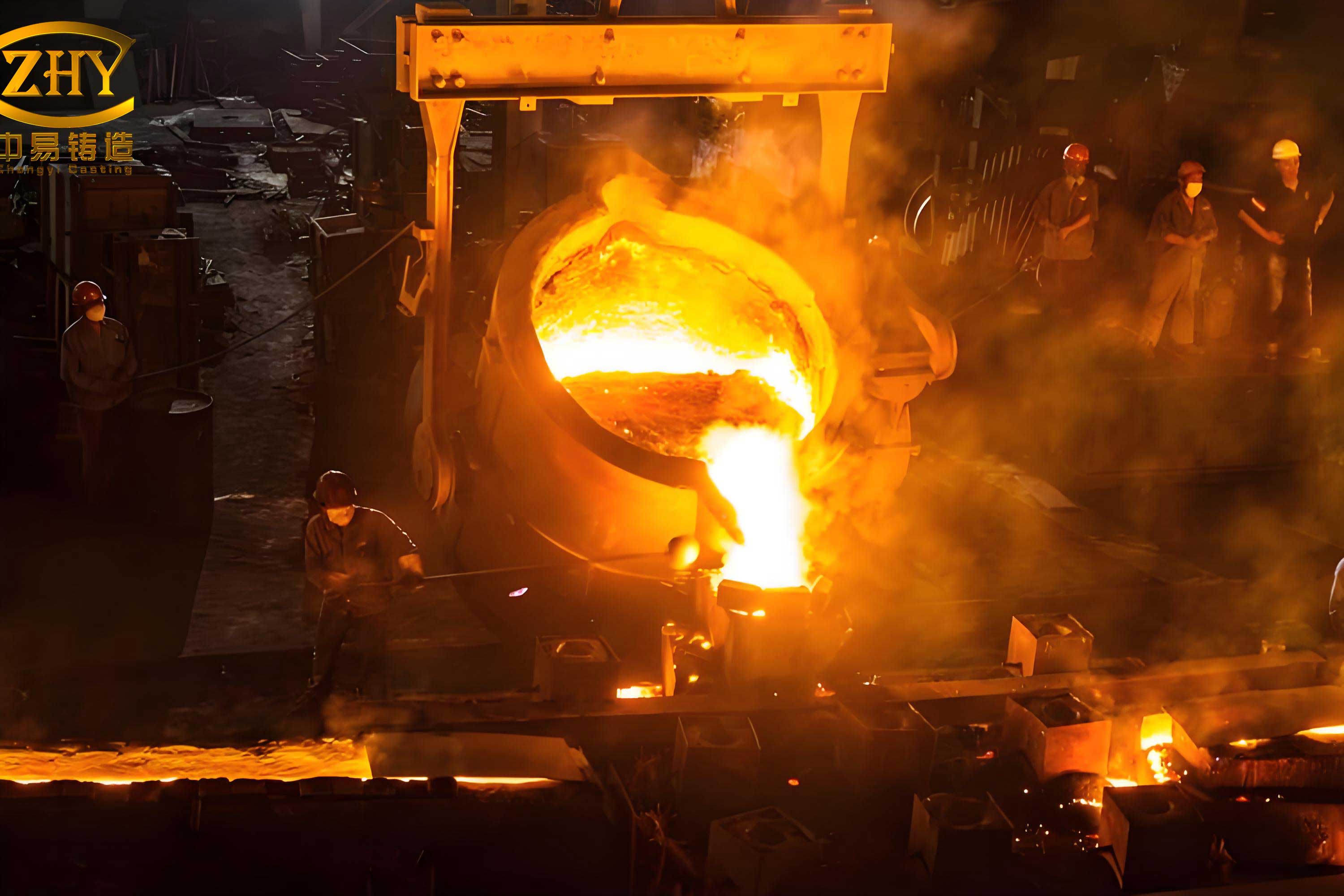
My research explores an alternative methodology: the use of graphite as a primary component in the sand mold for producing magnesium sand castings. Preliminary observations indicated that high-quality magnesium sand castings could be produced from graphite-sand molds without any additional protective fluxes, suggesting the in-situ formation of a stable, protective surface film. The central objective of this work was to characterize the composition, chemical state, and layered structure of this spontaneously formed surface film on magnesium alloy sand castings. Understanding this film’s nature is crucial for elucidating the underlying protection mechanism and for advancing the practical application of this environmentally friendly sand casting technique.
Experimental Methodology for Surface Film Analysis
The substrate material for this investigation was a ZM5-type magnesium alloy (nominal composition: 8.3 wt.% Al, balance Mg), commonly used in sand castings for its good castability and mechanical properties. The alloy was melted and poured into dry sand molds prepared with a high content of graphite, deliberately excluding any commercial anti-burning protective agents. Samples for analysis were meticulously sectioned from the as-cast surface of these sand castings, ensuring the native surface film remained intact. The samples were cut to dimensions of approximately 7 mm × 7 mm with a thickness of 0.5 mm.
The core analytical technique employed was X-ray Photoelectron Spectroscopy (XPS). This surface-sensitive technique provides quantitative information on the elemental composition and, more importantly, the chemical bonding states of elements within the top few nanometers (typically 1-10 nm) of a material. By combining XPS analysis with sequential ion beam sputtering (using Ar+ ions), it is possible to obtain a depth profile, effectively “peeling” the surface film layer by layer to study its structure in the z-direction. This is essential for understanding the stratified nature of corrosion or oxidation films on sand castings.
The analysis was conducted in an ultra-high vacuum chamber. The photoelectrons were excited using a standard Mg Kα X-ray source. To ensure accurate energy calibration, the binding energy scale was referenced to known peaks from standard samples. The ubiquitous carbon contamination present on all air-exposed samples (Adventitious Carbon, C 1s at ~284.8 eV) was used as an internal reference for charge correction. For depth profiling, a low-energy Ar+ ion gun was used to sputter the surface uniformly, with the sputtering rate calibrated against a standard SiO2 film to estimate depth scales. The key elements monitored throughout the depth profile were Magnesium (Mg 1s, Mg 2p), Oxygen (O 1s), and Carbon (C 1s).
Critical to the data interpretation was the spectral deconvolution of overlapping peaks. The Mg 2p spectrum, for instance, contains contributions from both metallic magnesium (Mg0) and oxidized magnesium (Mg2+). By using a reference spectrum for pure metallic Mg from the bulk of the sample (obtained at great depth), the individual contributions could be mathematically separated. Similarly, the O 1s spectrum was deconvoluted to distinguish between oxygen bound in oxide form (O2- in Mg-O, typically at lower binding energy ~530.1 eV) and oxygen bound in hydroxide or hydrated species (OH– or H2O, typically at higher binding energy ~531.5-532.5 eV).
Compositional and Chemical State Depth Profiling
The XPS survey scans confirmed the presence of Mg, O, and C as the major constituents of the surface film on these sand castings, with trace amounts of aluminum from the alloy. The high-resolution depth profiles revealed a dynamic and layered chemical landscape.
The evolution of the Mg 2p photoelectron peak with increasing sputtering time (i.e., depth) is particularly telling. At the immediate outermost surface, the Mg 2p peak appeared at a higher binding energy, characteristic of fully oxidized magnesium (Mg2+). As sputtering progressed inward, the peak systematically shifted toward lower binding energies. This shift signifies a gradual increase in the relative contribution from metallic magnesium (Mg0) atoms. The O 1s peak also showed a clear evolution in shape and position with depth, indicating changes in the local chemical environment of oxygen atoms. These observations provide the first direct evidence that the surface film is not a homogeneous scale but possesses a graded, layered architecture, which is a critical feature for its protective function in sand castings.
The quantitative atomic concentrations of Mg and O as a function of estimated depth are summarized in Table 1. The data shows a steep gradient in oxygen concentration from the surface inward, which eventually plateaus at a very low, constant level. This constant background level is attributed to oxygen adsorbed from the ultra-high vacuum environment of the analysis chamber and must be subtracted to reveal the true oxygen content originating from the native oxide film on the sand castings.
| Estimated Depth (nm) | Mg (at.%) | O (at.%) | C (at.%) | O/Mgox Ratio* |
|---|---|---|---|---|
| 0 (Surface) | 18.5 | 53.2 | 28.3 | ~1.95 |
| ~50 | 31.7 | 46.1 | 22.2 | ~1.45 |
| ~100 | 44.8 | 38.5 | 16.7 | ~1.05 |
| ~200 | 67.2 | 22.4 | 10.4 | ~0.65 |
| >500 (Bulk) | >95 | < 5 | < 1 | ~0 |
| * O/Mgox ratio calculated after subtracting the metallic Mg contribution and the oxygen background. | ||||
A more insightful parameter is the ratio of oxygen to oxidized magnesium, [O]/[Mgox]. This ratio, plotted against depth, serves as a key indicator of the local chemistry within the film. A ratio near 1.0 suggests a stoichiometric oxide (MgO), while a ratio approaching or exceeding 2.0 indicates the presence of hydroxide (Mg(OH)2) or hydrated phases. The profile of this ratio allows for a clear structural demarcation of the film on these sand castings.
The high-resolution C 1s spectra were equally revealing. While a component at ~284.8 eV from adventitious carbon was always present, a second, distinct component at a slightly lower binding energy (~283.5-284.0 eV) was consistently detected within the film, diminishing with depth. This lower binding energy is indicative of carbidic carbon or carbon in a reduced state, suggesting that carbon is not merely a surface contaminant but is chemically incorporated into the film matrix during the sand casting process, likely originating from the graphite mold.
The Layered Structure of the Protective Film
Based on the comprehensive XPS data, a detailed three-layer model for the surface film formed on magnesium alloy sand castings in graphite molds is proposed. Each layer has a distinct chemical composition and function.
1. The Surface Hydroxylated Layer
The outermost layer (approximately the first 20-50 nm) is characterized by an [O]/[Mgox] ratio significantly greater than 1. The deconvolution of the O 1s spectrum in this region unambiguously required two components. The dominant component, at a higher binding energy (~531.8 eV), is assigned to oxygen in hydroxide (OH–) groups. A smaller component at ~530.6 eV corresponds to oxide (O2-). The quantitative analysis indicates that magnesium hydroxide (Mg(OH)2) is the primary phase in this surface layer, with a minor presence of MgO. This layer forms through the reaction of the nascent oxide film with atmospheric moisture (H2O) after the sand castings are extracted from the mold and during subsequent handling and storage. The reaction can be described as:
$$ \text{MgO}_{(s)} + \text{H}_2\text{O}_{(g/v)} \rightarrow \text{Mg(OH)}_{2(s)} $$
This hydrated layer, while often porous in pure form, serves as the first interface with the environment.
2. The Dense Oxide Barrier Layer
Beneath the hydroxylated surface lies the core protective layer, extending roughly from 50 nm to 150-200 nm in depth. Here, the [O]/[Mgox] ratio stabilizes around 1.0. The O 1s spectrum in this region is predominantly a single, symmetric peak at a binding energy characteristic of lattice oxygen in MgO (~530.2 eV). This indicates that the middle layer is essentially a stoichiometric magnesium oxide (MgO) film. This layer is formed during the initial high-temperature oxidation of the molten magnesium upon contact with the mold and any residual gases during the sand casting solidification process:
$$ 2\text{Mg}_{(l)} + \text{O}_{2(g)} \rightarrow 2\text{MgO}_{(s)} $$
In conventional sand castings, a pure MgO layer is often described as having a Pilling-Bedworth Ratio (PBR) slightly less than 1 (approximately 0.81), which can theoretically lead to a porous, non-protective film due to tensile stresses. However, the critical finding from this study is the significant and depth-wise co-location of non-adventitious carbon within this very layer. The carbon appears to be integrated into the oxide matrix. This incorporation is hypothesized to modify the growth mechanics and defect structure of the MgO, significantly increasing its density and coherence. Thus, this layer is more accurately described as a MgO-C composite barrier layer. Its enhanced density is the principal reason for the improved oxidation resistance observed in graphite-mold sand castings.
3. The Metallic Transition Layer
The interface between the dense barrier layer and the underlying magnesium alloy substrate is not sharp but graded, forming a transition zone. This layer is identified where the [O]/[Mgox] ratio falls below 1 and the metallic Mg signal rises sharply. It consists of the magnesium alloy metal matrix containing a dispersion of fine MgO particles and likely some dissolved or precipitated carbon. This region represents the oxidation front where oxygen, having diffused through the barrier layer, reacts with magnesium from the substrate. The thickness and oxygen gradient (“oxygen tail”) in this layer are inversely related to the protectiveness of the overlying barrier; a shorter, steeper tail indicates a more effective diffusion barrier. In these sand castings, the tail was found to be relatively short, corroborating the effectiveness of the carbon-modified MgO layer.
The structure and proposed composition of the layered film are summarized in Table 2.
| Layer | Approx. Depth Range | Dominant Chemical Phases | Key Characteristics & Function |
|---|---|---|---|
| Surface Hydroxylated Layer | 0 – ~50 nm | Mg(OH)2, minor MgO | Forms post-casting; initial environmental interface; can be susceptible to dissolution in acidic environments. |
| Dense Oxide Barrier Layer (Composite) | ~50 – ~200 nm | MgO with incorporated C (MgO-C composite) | Forms during casting/solidification; carbon incorporation drastically increases density and coherency; acts as the primary barrier against Mg and O diffusion. |
| Metallic Transition Layer | ~200 nm – Substrate | Mg (metal) + dispersed MgO particles | Graded interface; short oxygen diffusion tail indicates good barrier layer protectiveness. |
Mechanism of Carbon Incorporation and Enhanced Protection
The pivotal factor distinguishing the oxide film on these sand castings from those formed in conventional silica sand molds is the pervasive incorporation of carbon. The source is unequivocally the graphite in the molding sand. Two primary mechanisms are proposed for its entry into the film:
1. Chemical Reaction Pathway: During the pouring of molten magnesium into the graphite-containing mold, the high temperature can facilitate reactions between the melt and any oxidizing gases (like CO2 or residual O2) present in the mold cavity. A thermodynamically favorable reaction is the reduction of carbon dioxide by magnesium:
$$ \text{CO}_{2(g)} + 2\text{Mg}_{(l)} \rightarrow 2\text{MgO}_{(s)} + \text{C}_{(s)} $$
The carbon produced by this in-situ reaction is in an active, amorphous or nanocrystalline state and is immediately available to be incorporated into the growing MgO film. This mechanism is particularly relevant in the initial moments of the sand casting process.
2. Direct Diffusion/Interaction Pathway: The intimate contact between the molten magnesium and the graphite grains of the mold surface at high temperature provides a direct route for carbon interaction. While bulk dissolution of carbon in molten magnesium is low, at the high-energy interface, carbon atoms or small clusters could diffuse into the very first layers of solidifying oxide or be physically entrapped during the rapid film growth. The reducing environment at the metal-film interface may also promote the stability of carbon within the oxide structure.
The incorporation of carbon atoms into the crystalline lattice of MgO or at its grain boundaries has profound effects. It can:
- Reduce Cation Diffusion: Carbon acting as a dopant or occupying interstitial sites can impede the outward diffusion of Mg2+ ions, which is the primary growth mechanism for MgO scales. Slowing this diffusion dramatically reduces the overall oxidation kinetics.
- Modify Defect Structure: It can alter the defect chemistry (vacancy concentrations) of the oxide, making it less prone to crack initiation and propagation under thermal stress, a common issue during the cooling of sand castings.
- Increase Film Density: By disrupting the regular growth pattern of columnar MgO grains, it can promote a finer, more equiaxed grain structure with fewer continuous pathways for rapid diffusion, leading to a denser, more protective barrier. The improvement in protective quality can be conceptually related to a modification of the effective Pilling-Bedworth Ratio. While the theoretical PBR for MgO is ~0.81, the incorporation of carbon (atomic radius ~0.077 nm) into interstitial sites or its segregation at grain boundaries can introduce compressive stresses and alter the effective volume ratio, moving it closer to the ideal value of 1.0 for a fully protective, non-porous film. The net protective effect, Peff, can be thought of as a function of the intrinsic oxide property and the carbon effect:
$$ P_{\text{eff}} \propto \frac{1}{k_p} \approx f(\text{PBR}_{\text{MgO}}, [C], D_{\text{Mg}^{2+}}) $$
where \( k_p \) is the parabolic oxidation rate constant (lower is better), \( [C] \) is the incorporated carbon concentration, and \( D_{\text{Mg}^{2+}} \) is the effective diffusivity of magnesium ions through the modified oxide. The presence of carbon reduces \( D_{\text{Mg}^{2+}} \), thereby reducing \( k_p \) and enhancing \( P_{\text{eff}} \).
Comparative Implications for Sand Casting Technology
The formation of this carbon-enhanced, layered oxide film has direct and significant implications for the sand casting of magnesium alloys. Table 3 contrasts the key aspects of conventional flux-protected sand castings with the graphite-mold approach.
| Aspect | Conventional Sand Castings (with Flux/Gas Protection) | Graphite-Mold Sand Castings (This Work) |
|---|---|---|
| Protection Method | External: Addition of sulfur, boron, or fluorine-based compounds to sand or as overlying gas. | Internal/In-situ: Self-formation of a carbon-modified oxide film from mold material. |
| Environmental Impact | High: Generation of toxic/corrosive gases (e.g., SO2, BF3, HF). | Low: Minimal fume generation; primarily CO/CO2 from mold decomposition. |
| Film Nature | Often a discontinuous, complex mix of MgO, MgS, MgF2 etc., reliant on continuous inhibitor supply. | A dense, coherent, layered film of Mg(OH)2/MgO-C with intrinsic barrier properties. |
| Post-Casting Cleanliness | Residues of flux can cause corrosion and require extensive cleaning. | Cleaner casting surface; no corrosive flux residues. |
| Process Robustness | Highly dependent on correct flux amount and distribution. | Reliant on consistent mold composition and pouring practice. |
The graphite-mold method shifts the paradigm from relying on environmentally hazardous chemical inhibitors to engineering the mold material itself to catalyze the formation of a benign, self-protecting film. This aligns perfectly with the industry’s drive towards greener foundry practices. For sand castings requiring high integrity, the dense barrier layer prevents not only catastrophic oxidation/burning but also minimizes the formation of subsurface micro-porosity often associated with reaction gases, potentially improving the mechanical properties of the final sand-cast component.
Conclusion
This detailed XPS investigation has successfully characterized the sophisticated surface film that spontaneously forms on magnesium alloy sand castings produced in graphite-based molds. The film is not a simple oxide but a meticulously structured, multi-layered entity. It comprises a surface layer of magnesium hydroxide, a central dense barrier layer of magnesium oxide intimately modified with carbon, and a graded transition layer into the metal substrate. The incorporation of carbon, derived from the graphite mold via chemical reaction and/or direct interaction during the sand casting process, is identified as the critical mechanism that transforms the normally porous MgO layer into a highly effective diffusion barrier. This enhancement is attributed to carbon’s role in reducing cation diffusivity and promoting a denser, more coherent oxide microstructure.
These findings provide a robust scientific foundation for the observed anti-oxidation and anti-burning performance of the graphite-mold sand casting process. They elucidate a clear path towards more environmentally sustainable production of magnesium alloy sand castings by replacing toxic external fluxes with an engineered mold-material interaction. This work underscores the importance of surface and interface science in solving practical foundry challenges and opens avenues for further optimization, such as controlling graphite particle size and distribution in the molding sand to tailor the properties of the protective film for specific sand casting applications.