
In my extensive experience within the foundry industry, I have observed a significant rise in the application of pure copper, often referred to as red copper or electrolytic copper, across critical sectors such as machinery, metallurgy, electronic instrumentation, power generation, military, and aerospace. This trend is driven by its exceptional electrical and thermal conductivity. Components like electrode clamps, electrode holders, contact balls, blast furnace tuyere sleeves, slag spouts, conductive wear plates, and collector rings increasingly rely on pure copper sand castings to meet stringent performance requirements. However, the widespread adoption is hampered by the notoriously poor casting characteristics of pure copper. Its substantial volumetric shrinkage of approximately 4.1% and linear shrinkage of about 1.42% predispose sand castings to a range of surface defects, including cold laps (flow marks), surface craters (concavities or convexities), burn-on (roughness), and slag conglomeration (rolling skin or scabs). These imperfections severely compromise the surface finish, dimensional accuracy, and aesthetic appeal of the final components, directly impacting their functionality and service life. Therefore, developing and implementing robust methodologies to reduce the surface roughness of pure copper sand castings has emerged as a paramount technical challenge in modern precision casting.
The pursuit of high-quality pure copper sand castings is a multifaceted endeavor. It demands a holistic approach that integrates meticulous control over every stage of the sand casting process. Through systematic analysis and process refinement, I have identified that surface quality is not governed by a single factor but is the result of complex interactions between mold material properties, metal treatment, and pouring dynamics. This article, drawn from practical foundry work and analysis, details the root causes of common surface defects in pure copper sand castings and presents a consolidated framework of preventive measures. The goal is to provide a practical guide for achieving consistently smooth, defect-free surfaces on these challenging components.
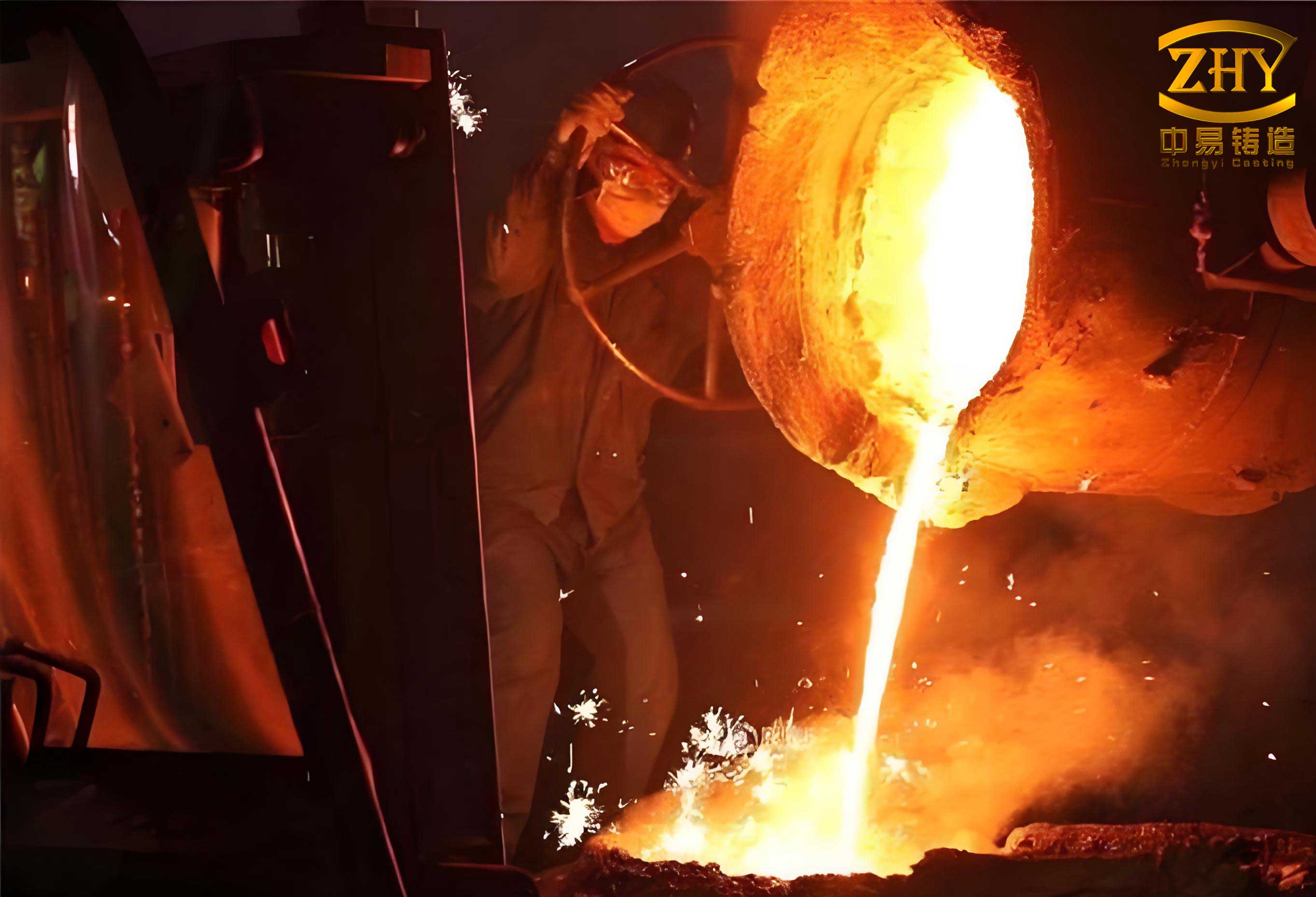
The foundational step in producing reliable sand castings lies in establishing controlled production conditions. The quality of input materials and equipment sets the stage for everything that follows.
Production Infrastructure and Material Specifications
My work typically involves several grades of pure copper as the primary charge material, including grades with minimum copper contents of 99.50%, 99.70%, and 99.90% to suit different conductivity needs. For effective deoxidation, high-purity magnesium (≥99.85% Mg) is employed. Covering and fluxing agents include calcined charcoal and zinc chloride, which are crucial for protecting the melt from excessive gas pickup and oxidation.
Melting is conducted in coreless medium-frequency induction furnaces with a power rating of 100 kW and a capacity of 150 kg, which provide excellent temperature control and melt homogeneity. For larger batches, coke-fired reverberatory furnaces with capacities up to 500 kg are utilized. The choice of furnace impacts melt quality; induction furnaces generally promote less gas dissolution compared to fuel-fired ones, but proper practice is key in both.
Process control hinges on reliable test samples. For gas content and chemical analysis, a truncated cone sample (top Φ50 mm, bottom Φ30 mm, height 50 mm) is poured into a dry sand mold or a preheated ceramic cup. The solidification pattern on this sample’s surface is a direct indicator of melt cleanliness. Mechanical properties are assessed using standard keel-block test castings poured in permanent metal molds, from which tensile specimens are machined. A fluidity test spiral or a simple wedge-shaped metal mold (e.g., 120x10x12 mm) is used to evaluate the metal’s filling capability under specific conditions.
The spectrum of components produced ranges from small electrode connectors (1-5 kg) to massive collector rings for submerged arc furnaces (100-800 kg), along with conductive plates (80-350 kg), tuyere sleeves (30-50 kg), and solid bars (5-20 kg). The variety in size and geometry necessitates adaptable gating and feeding system designs for sand castings.
Deep Dive into Surface Defect Mechanisms
Understanding the genesis of each defect is the first step toward its elimination. My analysis links these surface flaws directly to specific process shortcomings.
Cold Laps and Flow Marks
Cold laps, appearing as seams or folds on the casting surface, are primarily a consequence of poor metal fluidity and inadequate filling. Pure copper’s high thermal conductivity causes rapid heat loss, leading to premature solidification of the advancing metal stream. When two such semi-solid streams meet, they fail to fuse properly, forming a cold lap. The critical factors include:
- Low Pouring Temperature: This is the most common cause. Below approximately 1100°C, the fluidity of copper drops significantly. The relationship between fluidity length (FL) and superheat can be approximated for sand castings by:
$$ FL = k \cdot (T_{pour} – T_{liquidus})^n $$
where \( k \) and \( n \) are constants dependent on mold material and metal composition, \( T_{pour} \) is the pouring temperature, and \( T_{liquidus} \) is the liquidus temperature of pure copper (1083°C). - Inadequate Gating System: If the total cross-sectional area of the ingates is too small, the metal velocity becomes excessively high, causing turbulence, or too low, allowing the metal to cool before filling thin sections. An improperly designed system fails to deliver a smooth, progressive fill.
- Unstable Pouring: Interruptions in the pour or varying pour height lead to fluctuating metal pressure and flow rates, disrupting the steady advance of the metal front in the mold cavity.
- Mold-Related Issues: Insufficient or uneven mold drying creates local cold spots due to moisture evaporation, chilling the metal prematurely. Furthermore, a heavily oxidized melt forms a thick, viscous dross layer that gets entrapped on the surface of the sand castings.
Surface Craters and Convexities
These defects manifest as localized depressions or raised areas. Their origin is often gaseous. Pinhole-type craters are caused by gas bubbles trapped just beneath the casting skin, which collapse or remain as cavities. Convexities, on the other hand, are often due to mold wall movement.
- Gas Entrapment from the Melt: Pure copper readily dissolves hydrogen during melting, especially under a moist atmosphere or with damp charge materials. Upon solidification, the solubility drops dramatically, forcing gas out of solution. If the gas cannot escape through the mold or a riser, it forms subsurface bubbles that may collapse or leave a crater. The amount of gas absorbed follows Sieverts’ law:
$$ [H] = K_H \cdot \sqrt{P_{H_2}} $$
where \( [H] \) is the dissolved hydrogen concentration, \( K_H \) is the solubility constant for hydrogen in copper, and \( P_{H_2} \) is the partial pressure of hydrogen in the furnace atmosphere. - Mold Gas Evolution: Incompletely dried or cured sand molds release large volumes of steam and other gases when contacted by hot metal. If the mold permeability is insufficient or the venting inadequate, this gas presses against the solidifying skin, causing a depression or, if the skin is weak, a breakout.
- Low Mold Hardness: Non-uniform or insufficient mold compaction allows the metallostatic pressure to push the mold wall inward locally, creating a convex area on the final sand casting. The required mold hardness depends on the casting geometry and metallostatic head.
Burn-on and Surface Roughness
This defect involves the mechanical and chemical bonding of sand grains to the metal surface, resulting in a rough, gritty finish that is difficult to remove. The mechanisms are primarily thermal and mechanical.
- Mold Surface Failure: In green sand or inadequately dried molds, the intense heat creates a water condensation zone behind the mold surface. The differential expansion between the hot, dry surface layer and the cooler, moist inner layer generates high stress, causing the surface layer to spall off. This loose sand is then sintered onto the casting.
- Inadequate Sand Refractoriness: The use of sand with low silica content, coarse grain size, or high impurities lowers its fusion point. The metal or its oxides (mainly Cu2O) penetrate the intergranular spaces and fuse the sand together, creating a hard, adherent layer. The penetration depth \( P \) in sand castings can be related to several factors:
$$ P \propto \frac{\sqrt{\rho_m g H \cdot t}}{\eta} \cdot \frac{1}{d_{sand}} $$
where \( \rho_m \) is metal density, \( g \) is gravity, \( H \) is metallostatic head, \( t \) is time, \( \eta \) is metal viscosity, and \( d_{sand} \) is average sand grain diameter. - Excessive Pouring Temperature or Pressure: Very high superheat increases the thermal attack on the mold, while a high pouring height or a pressurized gating system increases the metal’s penetration force into the sand matrix.
Slag Conglomeration and Scabs
These appear as irregular crusts or inclusions on the surface, often containing sand, slag, and oxides. They result from the entrapment of non-metallic materials during mold filling.
- Dirty Melt: Inefficient slag removal, improper deoxidation, or the use of oxidized charge materials leads to a melt laden with Cu2O and other oxides. If not properly skimmed, this dross is carried into the mold cavity and gets trapped on the surface or at the flow fronts.
- Mold Erosion and Washing: A gating system that directs a high-velocity metal jet directly at a mold wall can erode loose sand or break off chunks from sharp corners. This dislodged sand is then carried into the cavity. The tendency for erosion in sand castings increases with the kinetic energy of the stream:
$$ E_{kinetic} \propto \frac{1}{2} \rho_m A v^3 $$
where \( A \) is the stream cross-section and \( v \) is the velocity at the point of impact. - Sand Expansion Defects: Certain sands, like silica sand, undergo a rapid phase transformation (α to β quartz) around 573°C, causing sudden expansion. If the mold surface is constrained, it can buckle and crack, allowing metal to penetrate the crack and form a scab or “expansion scab.”
| Defect Type | Visual Appearance | Primary Root Causes | Key Contributing Process Factors |
|---|---|---|---|
| Cold Lap / Flow Mark | Weld-like line or fold on surface | Premature metal solidification, poor fusion of streams | Low pouring temp, poor gating, unstable pour, oxidized melt |
| Surface Crater / Convexity | Localized depression or raised bump | Gas pressure (subsurface or mold), mold wall movement | Gassy melt, wet mold, low mold hardness, poor venting |
| Burn-on / Roughness | Gritty, sand-adhered surface | Metal/sand interpenetration and sintering | Low sand refractoriness, high pouring temp/pressure, mold spallation |
| Slag Conglomeration / Scab | Irregular crusty patch with inclusions | Entrapment of dross or eroded mold material | Dirty melt, erosive gating, sand expansion defects |
Integrated Preventive Measures for Flawless Surfaces
Based on the defect analysis, a successful strategy for producing high-surface-quality pure copper sand castings must be comprehensive. I implement a multi-barrier approach targeting each critical process variable.
Precision Control of Mold Sand Properties
The mold is the first interface with the molten metal. For pure copper sand castings, I specify a two-layer sand system: a facing sand and a backing sand. The facing sand, in direct contact with the metal, uses fine-grained, high-purity silica sand (AFS Grain Fineness Number 100-200) to provide a dense, smooth surface finish. The backing sand uses coarser grains (AFS 70-140) to ensure high permeability for gas escape. A high-quality bentonite clay (6-8% in facing sand) provides green strength and plasticity. The facing sand layer should be 15-25 mm thick, consistently rammed over the pattern. The moisture content is critical; too little reduces strength, too much increases gas generation. The following table outlines a typical sand formulation used in my work for dry sand molds.
| Sand Layer | New Sand (wt.%) | Recycled Sand (wt.%) | Bentonite (wt.%) | Moisture Content (wt.%) | Typical AFS GFN |
|---|---|---|---|---|---|
| Facing Sand | 30 – 40 | 60 – 70 | 6 – 8 | 4.5 – 5.5 | 100 – 150 |
| Backing Sand | 10 – 20 | 80 – 90 | 3 – 5 | 3.0 – 4.0 | 70 – 100 |
Molds must be thoroughly dried in an oven to remove both free and combined water. Drying schedules depend on mold size, but a core temperature of 250-350°C for several hours is typical. Incomplete drying is a major source of gas-related defects in sand castings.
Mold Compaction and Hardness Standards
Uniform and adequate mold hardness is non-negotiable. For dry sand molds used in pure copper casting, I aim for a surface hardness greater than 90 on the B-scale (or equivalent >85 on a Dietert scale) for the facing layer. This minimizes mold wall movement and metal penetration. The backing sand should have a lower, yet uniform, hardness in the range of 65-80 to maintain permeability and allow for pattern withdrawal and casting contraction. Hardness is checked at multiple points using a standard mold hardness tester. The compaction energy \( E_c \) required can be related to sand density \( \rho_s \) and desired hardness \( H \):
$$ E_c \propto \frac{H}{\rho_s \cdot (1 – \epsilon)} $$
where \( \epsilon \) is the sand porosity. Proper ramming technique, sometimes supplemented with molding machines for consistency, is essential for all sand castings.
Formulation and Application of Protective Coatings
A high-quality refractory coating applied to the dried mold cavity is perhaps the single most effective measure against burn-on and metal penetration. The coating acts as a thermal and physical barrier. I use a zircon-based or high-alumina coating for the most demanding pure copper sand castings, but a well-formulated graphite coating also performs excellently. The coating slurry must have good suspension properties, appropriate viscosity for spraying or brushing, and must adhere firmly after drying. A typical coating composition and properties are shown below.
| Component | Function | Weight Percentage (%) | Key Property Targets |
|---|---|---|---|
| Refractory Flour (e.g., Zircon, Graphite) | High-temperature barrier | 85 – 92 | Particle size: 5-20 μm, Purity >98% |
| Binder (e.g., Bentonite, Sodium Silicate) | Adhesion to mold | 3 – 6 | Provides dry strength |
| Suspension Agent (e.g., CMC, Attapulgite) | Prevents settling | 1 – 2 | Suspension >90% after 24h |
| Carrier Liquid (Water/IPA) | Medium for application | Balance to 100% solids | Adjusts density to 1.8-2.0 g/cm³ |
The coating is applied to achieve a dry film thickness of 0.5-1.2 mm. It is then dried or ignited to form a strong, coherent layer. This coating significantly increases the effective refractoriness of the mold surface for sand castings.
Melt Quality Management: Deoxidation and Degassing
The heart of quality for pure copper sand castings lies in melt treatment. My standard melting practice follows a strict sequence: charge preheating (to remove moisture), melting under a protective charcoal cover to minimize oxidation, superheating to 1200-1220°C for homogenization, followed by a two-stage treatment.
- Deoxidation: Phosphorus (as Cu-P alloy) or lithium are common deoxidizers, but for high conductivity requirements, I prefer magnesium. Magnesium has a high affinity for oxygen, forming MgO which rises to the surface. The reaction is:
$$ 2[Mg] + (Cu_2O) \rightarrow 2(MgO) + 2[Cu] $$
The addition is made at 1150-1180°C, stirred gently, and allowed to react for 2-3 minutes. - Degassing: Even after deoxidation, hydrogen may remain. Nitrogen bubbling or the use of solid degassing tablets (containing hexachloroethane or other chlorine compounds) is effective. The chloride reacts to form HCl gas bubbles which strip hydrogen from the melt as they rise. The efficiency of degassing can be modeled by the rate of hydrogen removal:
$$ -\frac{d[H]}{dt} = k \cdot A \cdot ([H] – [H]_{eq}) $$
where \( k \) is a mass transfer coefficient, \( A \) is the bubble surface area, and \( [H]_{eq} \) is the equilibrium concentration at the bubble surface (near zero for an inert gas).
After treatment, the melt is held for a brief period (5-10 minutes) to allow inclusions to float, then thoroughly skimmed. The temperature is then lowered to the target pouring range of 1100-1150°C. Crucially, a quick “button” or “pancake” test is performed before pouring any critical sand castings. A small amount of metal is poured into a dry, preheated test mold. A smooth, slightly concave surface with a silvery luster indicates good deoxidation and low gas. A convex, bubbly, or heavily oxidized surface mandates further treatment.
Optimized Gating System Design and Pouring Technique
The goal of the gating system is to deliver quiet, non-turbulent, and progressive filling. For pure copper, which loses heat rapidly, I predominantly use a bottom-gating system with possible step gates (choke-pour) for tall sand castings. For plate-like or bar-shaped components, “horizontal molding, vertical pouring” is highly effective. This method uses a sprue connected directly to multiple ingates at different heights along the casting’s vertical side. It combines the calm filling of bottom gating with the favorable temperature gradient of top feeding.
The gating ratio is carefully calculated. For horizontal pouring, a pressurized system often works well to ensure rapid filling: ∑Asprue : ∑Arunner : ∑Aingate = 1.1 : 1.3 : 1.0. For vertical pouring without a horizontal runner, the ratio is simpler: ∑Asprue : ∑Aingate = 1.2 : 1.0. The initial pour is done with a large stream to quickly fill the sprue base and establish a metal seal, followed by a controlled, steady pour to maintain a rising metal level without turbulence. The pouring time \( t_p \) for sand castings can be estimated using Bernoulli’s principle and continuity:
$$ t_p \approx \frac{V_{casting}}{C_d \cdot A_{choke} \cdot \sqrt{2gH}} $$
where \( V_{casting} \) is mold cavity volume, \( C_d \) is discharge coefficient (~0.8), \( A_{choke} \) is the smallest cross-section in the gating system, and \( H \) is the effective metallostatic head.
Proper venting at the highest points of the mold cavity is essential to allow displaced air to escape, preventing back-pressure and gas entrapment. All these elements—sand quality, coating, melt treatment, and gating—must work in concert to produce superior surface finish on pure copper sand castings.
Process Validation and Continuous Improvement
Implementing these measures is not a one-time event but requires ongoing monitoring and adjustment. I maintain detailed process logs for each batch of sand castings, recording variables such as sand properties, mold hardness, coating thickness, melt treatment parameters, pouring temperature and time, and the results of the pre-pour test sample. This data is correlated with the final casting quality, inspected visually and with profilometers for surface roughness (Ra).
A designed experiment might involve varying two key factors, like pouring temperature and mold coating type, to observe their interaction on surface defects. The results can be analyzed to find an optimal operating window. For instance, the relationship between surface roughness (Ra) and these factors for sand castings can be approximated by a response surface model:
$$ Ra = \beta_0 + \beta_1 T + \beta_2 C + \beta_{12} T C + \beta_{11} T^2 + \beta_{22} C^2 $$
where \( T \) is pouring temperature, \( C \) is a factor related to coating quality, and \( \beta \) are coefficients determined by regression.
By treating the production of pure copper sand castings as a controlled system with measurable inputs and outputs, consistent high quality becomes an achievable standard rather than an occasional success.
Conclusion
The journey to produce flawless pure copper sand castings with excellent surface finish is undoubtedly challenging due to the material’s inherent casting properties. However, my experience confirms that it is a surmountable challenge through a systematic and integrated approach. There is no single “silver bullet.” Success hinges on the simultaneous and stringent control of multiple interdependent factors: the selection and preparation of high-refractoriness molding sands with appropriate grain size and compaction; the application of a robust, well-adhered refractory coating; the meticulous deoxidation, degassing, and temperature management of the molten metal; and the design of gating systems that promote laminar, progressive filling tailored to the component’s geometry.
Each of these elements forms a critical link in the quality chain. A failure in any one—be it a slightly damp mold, an under-treated melt, or an erosive gate—can manifest as cold laps, craters, burn-on, or slag patches on the surface of the sand castings. Therefore, the foundry practice for pure copper must be rooted in discipline, precise measurement, and a deep understanding of the underlying physical and chemical principles. By adopting such a comprehensive framework, foundries can reliably transform the difficult casting behavior of pure copper into an opportunity to manufacture high-integrity, high-performance components that meet the demanding standards of modern advanced industries. The continuous refinement of these processes remains a vital area for development in the field of non-ferrous sand castings.