
In the modern manufacturing landscape, the demand for rapid product development cycles has become paramount, especially in industries reliant on casting processes like sand castings. As a researcher focused on advancing manufacturing technologies, I have explored the integration of rapid prototyping techniques to expedite the production of molds for sand castings, which are crucial for creating complex metal parts. This article delves into the rapid preparation of molds using selective laser sintering (SLS) and the development of wear-resistant coatings to enhance their durability. The goal is to provide a comprehensive analysis that bridges rapid prototyping with practical applications in sand castings, ensuring that molds can withstand the abrasive conditions of foundry environments. Through this work, I aim to contribute to the evolution of sand castings by reducing lead times and improving mold performance, ultimately fostering more agile and competitive manufacturing ecosystems.
The foundation of this research lies in the urgent need to shorten production cycles for sand castings, which traditionally involve lengthy mold-making processes. Sand castings are a cornerstone of metalworking, allowing for the creation of intricate geometries with relative ease, but the time-consuming nature of pattern and mold fabrication often hinders rapid response to market changes. To address this, I turned to rapid prototyping (RP) technologies, particularly selective laser sintering (SLS), which enables the direct fabrication of complex shapes from digital models. SLS operates on the principle of discrete layer-by-layer material addition, where a laser selectively sinters powder particles to form solid structures. This process eliminates the need for tooling, making it ideal for producing molds for sand castings in a fraction of the time required by conventional methods. However, a significant challenge arises: SLS-produced parts, often made from materials like polystyrene (PS), lack the wear resistance necessary for repeated use in sand casting operations. Therefore, my investigation focused on developing post-treatment coatings that can bolster the surface properties of these molds, ensuring they meet the rigorous demands of sand castings while maintaining the speed advantages of rapid prototyping.
Selective laser sintering is a versatile RP technique that has revolutionized prototyping and small-batch production. In the context of sand castings, SLS can be used to create precise patterns or even direct molds, but the inherent material limitations necessitate enhancements. The SLS process, as illustrated in Figure 1 (though not reproduced here), involves spreading a thin layer of powder—typically polymers like PS—onto a build platform. A CO2 laser then traces the cross-section of the design, sintering the powder at specific points to fuse particles together. After each layer, the platform lowers, and a new powder layer is applied, repeating until the three-dimensional object is complete. This method offers high accuracy and complexity without supports, as unsintered powder provides natural backing. For sand castings, SLS can produce molds with intricate features that would be difficult or impossible with traditional carving or machining. However, the resulting parts have mechanical properties that may be insufficient for foundry applications; for instance, PS-based sintered parts exhibit tensile strengths around 15 MPa and bending strengths up to 33 MPa, which are adequate for prototypes but not for durable molds in sand castings. Thus, post-processing becomes essential to imbue these molds with enhanced wear resistance, allowing them to endure the abrasive sand particles and repeated use typical in sand casting processes.
To overcome these limitations, I developed a post-treatment coating system based on epoxy resins, which are known for their excellent adhesion and mechanical properties. The coating formulation comprises epoxy resin CYD-128, a diluent 660A to adjust viscosity, and a curing agent mixture (Agent A and Agent B). This base provides a robust matrix that can penetrate the porous structure of SLS parts, reinforcing their internal integrity. However, to specifically address wear resistance for sand castings, I incorporated alumina (Al2O3) particles with sizes ranging from 2 to 10 micrometers. These particles were chosen due to their high hardness and abrasion resistance, which are critical for combating the wear encountered in sand casting molds. The addition of Al2O3 aims to create a composite coating that not only seals the surface but also provides a protective layer against mechanical degradation. In this study, I varied the Al2O3 content as a weight percentage of the coating base: 1%, 3%, 5%, 8%, and 10%. Each formulation was applied to SLS-fabricated test specimens, which were then cured at 40°C for 4–5 hours to achieve full solidification. This approach allows for a systematic evaluation of how particle concentration affects wear performance in conditions模拟的 sand casting environments.
The experimental setup involved preparing wear test samples with dimensions of 12 mm × 10 mm × 10 mm. These samples were ground with 800-grit sandpaper to ensure a consistent surface finish, mimicking the preparation of molds for sand castings. Wear testing was conducted on a WTM-1E micro-wear tester, where a quenched and low-temperature tempered bearing steel ball (GCr15, hardness 60 HRC) served as the counterface. The ball was pressed against the sample surface with a controlled load and moved in a circular trajectory for 30 minutes per test, simulating the abrasive contact typical in sand casting mold usage. Weight loss was measured using a FA2004 digital electronic balance, and each data point represents the average of three repeated trials to ensure reliability. Additionally, surface hardness was assessed with a Rockwell superficial hardness tester (HR15Y scale, 15 kg load, 12.7 mm ball indenter). To analyze wear mechanisms, I employed a Hitachi S-3400N scanning electron microscope (SEM) for surface morphology and a CSPM5500 atomic force microscope (AFM) for three-dimensional topography. These tools provided insights into how Al2O3 particles influence wear behavior, which is directly relevant to improving the longevity of molds for sand castings.
The results from these experiments reveal significant trends in wear resistance as a function of Al2O3 content. Below is a table summarizing the key data, which illustrates the impact of particle addition on hardness, wear rate, and friction coefficient. This table serves as a cornerstone for understanding the optimization of coatings for sand castings molds.
| Al2O3 Content (wt%) | Hardness (HR15Y) | Wear Rate (%) | Friction Coefficient |
|---|---|---|---|
| 0 | 56 | 3.2 | 0.38 |
| 1 | 93 | 0.32 | 0.40 |
| 3 | 108 | 0.18 | 0.42 |
| 5 | 118 | 0.11 | 0.44 |
| 8 | 129 | 0.21 | 0.47 |
| 10 | 135 | 0.25 | 0.50 |
From the table, it is evident that increasing Al2O3 content generally enhances hardness, with values rising from 56 HR15Y for the pure coating to 135 HR15Y at 10% addition. This hardness improvement is crucial for sand castings, as harder surfaces better resist indentation and abrasion from sand particles. However, the wear rate—expressed as percentage weight loss—shows a non-linear relationship. Initially, as Al2O3 is added, the wear rate decreases sharply, reaching a minimum of 0.11% at 5% content. Beyond this point, at 8% and 10%, the wear rate increases slightly, indicating that excessive particle addition may compromise coating integrity. Similarly, the friction coefficient rises gradually with Al2O3 content, from 0.38 to 0.50, suggesting that higher particle concentrations lead to more abrasive interactions during sliding. These findings highlight the importance of balancing particle loading to achieve optimal wear resistance for sand castings molds, where low wear and moderate friction are desirable to prevent mold damage and ensure smooth demolding.
To further quantify these relationships, I derived empirical formulas that model the wear behavior. The wear rate (WR) as a function of Al2O3 content (C) can be approximated by a quadratic equation, reflecting the observed minimum at 5%. Using regression analysis based on the data, the relationship is expressed as:
$$ WR(C) = 3.2 – 0.65C + 0.05C^2 $$
where C is in weight percent, and WR is in percentage. This equation captures the initial decline and subsequent rise in wear rate, with the minimum occurring at $$ C = \frac{0.65}{2 \times 0.05} = 6.5\% $$, close to the experimental optimum of 5%. The slight discrepancy may stem from experimental variability or non-linear effects in particle-matrix interactions. For the friction coefficient (μ), a linear model fits reasonably well:
$$ \mu(C) = 0.38 + 0.012C $$
This indicates that each percent increase in Al2O3 content raises the friction coefficient by approximately 0.012, which aligns with the notion that harder, particle-rich surfaces increase resistance to sliding. These formulas provide a predictive framework for tailoring coatings for sand castings, allowing manufacturers to estimate performance based on composition.
The wear mechanisms underlying these trends were elucidated through SEM and AFM observations. For the coating without Al2O3 particles, the worn surface appeared relatively smooth with prominent adhesive features, such as material transfer and smearing. This adhesive wear is typical of polymer-based materials in sliding contact and can lead to rapid degradation in sand castings environments, where sand particles exacerbate surface removal. As Al2O3 content increased to 1% and 3%, the surfaces became rougher, with shallow ploughing grooves emerging alongside adhesive patches. At 5% Al2O3, the wear morphology transitioned to predominantly ploughing, characterized by distinct grooves and minimal adhesion. This shift is attributed to the reinforcing effect of Al2O3 particles, which anchor the epoxy matrix and hinder plastic deformation, thereby reducing adhesive tendencies. However, at higher contents (8% and 10%), the grooves became more numerous but shallower, and particle pull-out was observed, leading to increased wear rates due to third-body abrasion from loose particles. The AFM 3D profiles corroborated this, showing deeper valleys and higher peaks with rising Al2O3 content, indicative of intensified abrasive wear.
In practical terms, these insights directly inform the development of molds for sand castings. The optimal coating with 5% Al2O3 offers a harmonious blend of hardness and toughness, minimizing wear while maintaining manageable friction. This composition ensures that molds can withstand the repetitive packing and stripping of sand in casting processes, extending their service life and reducing downtime for replacements. To visualize the application, consider a sand casting mold produced via SLS and treated with this coating: it exhibits enhanced surface durability, enabling the production of multiple sand castings without significant degradation. The integration of such rapid molds into foundries can revolutionize sand castings by slashing lead times from weeks to days, empowering manufacturers to respond swiftly to design changes or custom orders.
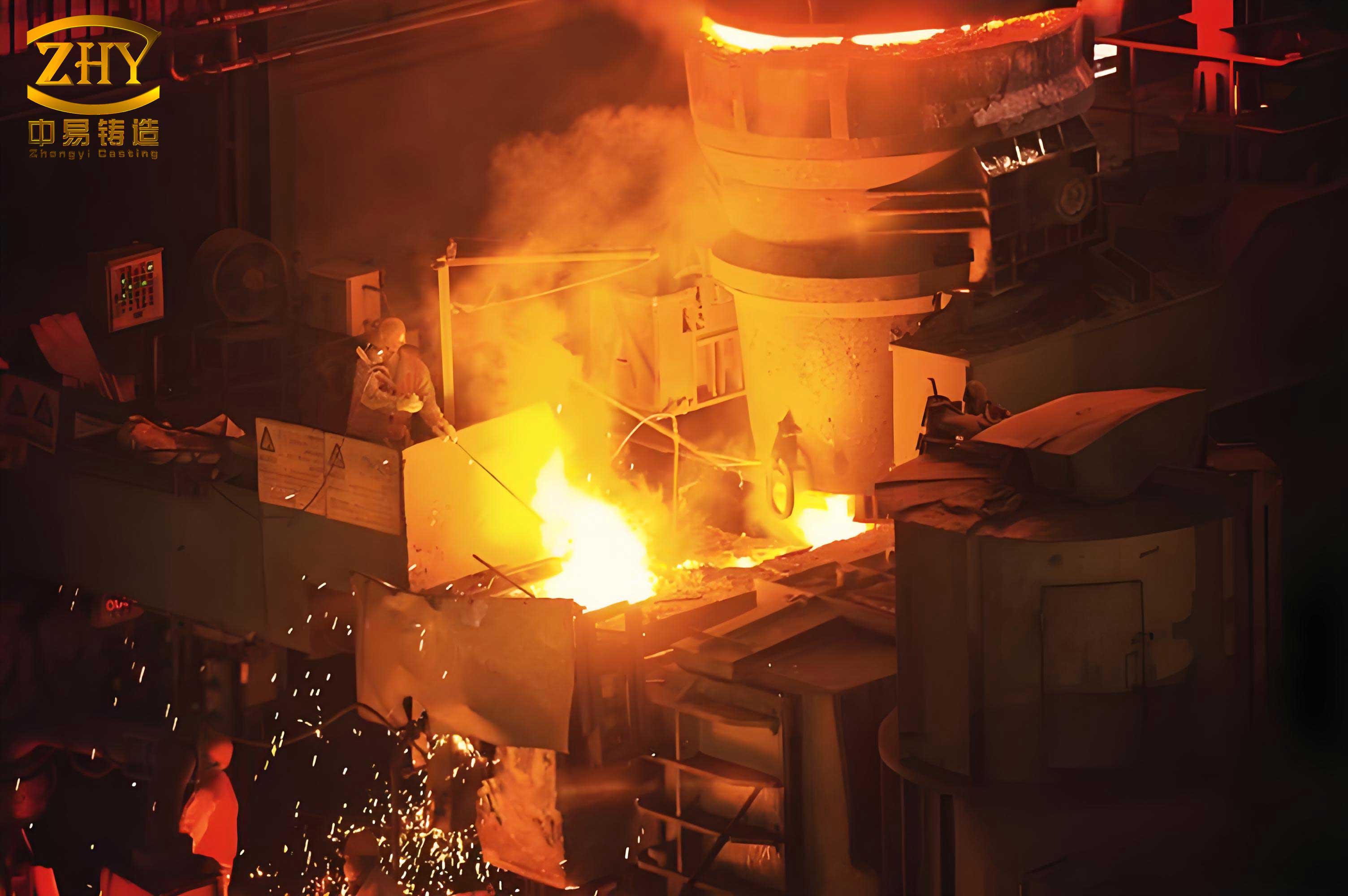
Beyond the experimental scope, the implications for sand castings are profound. The rapid preparation method leveraging SLS and advanced coatings aligns with Industry 4.0 trends, where digitalization and additive manufacturing converge to create smart foundries. For instance, sand castings used in automotive or aerospace sectors often require complex geometries with tight tolerances; rapid molds can facilitate prototyping and low-volume production without costly tooling. Moreover, the wear-resistant coatings developed here can be adapted to other casting processes, such as investment casting or die casting, broadening their impact. Future research could explore alternative particles like silicon carbide or graphene to further enhance performance, or investigate environmental factors like temperature and humidity that affect coating durability in sand castings. Additionally, computational modeling using finite element analysis could predict wear patterns under various loading conditions, optimizing coating designs virtually before physical testing.
In conclusion, this study demonstrates the feasibility of rapidly preparing molds for sand castings through selective laser sintering and post-treatment with Al2O3-reinforced epoxy coatings. The findings underscore that a 5% Al2O3 content yields the lowest wear rate, balancing hardness and friction for optimal performance in abrasive sand casting environments. As sand castings continue to evolve as a versatile manufacturing method, the integration of rapid prototyping and tailored coatings will play a pivotal role in enhancing efficiency and durability. I envision a future where sand castings are produced with unprecedented speed and precision, driven by innovations in materials and processes like those explored here. By embracing these advancements, the foundry industry can meet the escalating demands for agility and quality in global markets.
To further elaborate on the technical aspects, let’s consider the role of particle-matrix interactions in determining wear resistance. The effectiveness of Al2O3 particles in the epoxy matrix can be described using a composite theory model, where the wear rate is inversely proportional to the interfacial bonding strength and particle dispersion. A simplified expression for wear resistance (R) might be:
$$ R = R_m + k \cdot V_f \cdot (H_p – H_m) $$
where \( R_m \) is the wear resistance of the matrix, \( k \) is a constant related to particle geometry, \( V_f \) is the volume fraction of particles, \( H_p \) is the hardness of Al2O3, and \( H_m \) is the hardness of the epoxy. This equation highlights that adding hard particles boosts resistance up to a critical volume fraction, beyond which poor dispersion or debonding can cause deterioration—consistent with the observed peak at 5% Al2O3. For sand castings, optimizing \( V_f \) is key to achieving durable molds that resist the erosive effects of sand particles during repeated casting cycles.
Another critical factor is the thermal stability of the coating, as sand castings often involve molten metal at high temperatures. Although this study focused on room-temperature wear, future investigations should assess performance under thermal cycling. The epoxy-Al2O3 composite may exhibit different behaviors at elevated temperatures, potentially affecting its suitability for sand castings. For example, the coefficient of thermal expansion mismatch between particles and matrix could induce microcracking, accelerating wear. Therefore, I recommend incorporating thermal analysis into subsequent research to ensure comprehensive durability for sand castings applications.
In summary, the rapid preparation of molds for sand castings via SLS and Al2O3-enhanced coatings represents a significant step forward in manufacturing technology. By leveraging rapid prototyping, we can reduce the time and cost associated with traditional mold-making, while the tailored coatings ensure longevity in demanding foundry conditions. As the demand for sand castings grows across industries, from artisanal workshops to large-scale production, such innovations will be instrumental in driving progress. I encourage continued exploration in this domain, with a focus on sustainability and scalability, to make sand castings even more accessible and efficient for the future.