
In my extensive experience developing applied curricula, particularly within the context of evaluations and accreditation processes, a core principle has crystallized: effective education is fundamentally inclusive. It does not cater to a select few or even a majority, but must endeavor to address the personalized learning needs of every student. This imperative demands significant flexibility in pedagogical methods. A critical avenue for achieving this flexibility is through a well-structured, hierarchical, and categorized practice-oriented teaching system. Such a system moves beyond rigid, one-size-fits-all instruction, allowing for differentiated learning paths. The true test of this system lies in its practical implementation and the tangible tools that facilitate hands-on learning. In this article, I will synthesize insights from pedagogical framework construction with a detailed case study from foundry training: the design and implementation of a dedicated aluminum alloy molding box for sand castings instruction. This project exemplifies how concrete, cost-effective tooling can serve as the foundation for scalable, effective skills training.
The theoretical underpinning for a flexible practice system can be derived from systems engineering principles applied to education. The educational process can be modeled as a controlled system with inputs (students, resources, curriculum), processes (teaching methods, practice sessions), and outputs (student competencies, project outcomes). Optimization requires feedback loops for continuous improvement. A key variable in the process for technical disciplines is the specification of practical tasks and their required apparatus. For training in sand castings production, the molding box, or flask, is a primary apparatus. Its design directly influences learning outcomes, safety, and cost-effectiveness.
The fundamental process of creating sand castings involves compacting a refractory molding sand around a pattern, removing the pattern to leave a cavity, and then pouring molten metal into that cavity. The mold must withstand significant mechanical and thermal stresses. The primary forces acting on a mold during pouring include the static pressure from the molten metal and the dynamic pressure during filling. The metallostatic pressure at any point in the mold cavity is given by:
$$ P = \rho g h $$
Where \( P \) is the pressure (Pa), \( \rho \) is the density of the molten metal (kg/m³), \( g \) is acceleration due to gravity (9.81 m/s²), and \( h \) is the height of the metal head above the point of interest (m). For a typical aluminum alloy with \( \rho \approx 2700 \) kg/m³ and a sprue height of 0.15 m, the maximum pressure at the base of the mold is approximately:
$$ P_{max} = 2700 \times 9.81 \times 0.15 \approx 3970 \text{ Pa} $$
While this pressure is modest, the mold must also resist erosion from the flowing metal and the expansion of gases and sand during heating. The mechanical strength of the mold sand mixture is therefore critical, often characterized by its green compression strength, which for typical training sand might range from 15 to 30 kPa, significantly higher than the metallostatic pressure to provide a safety factor.
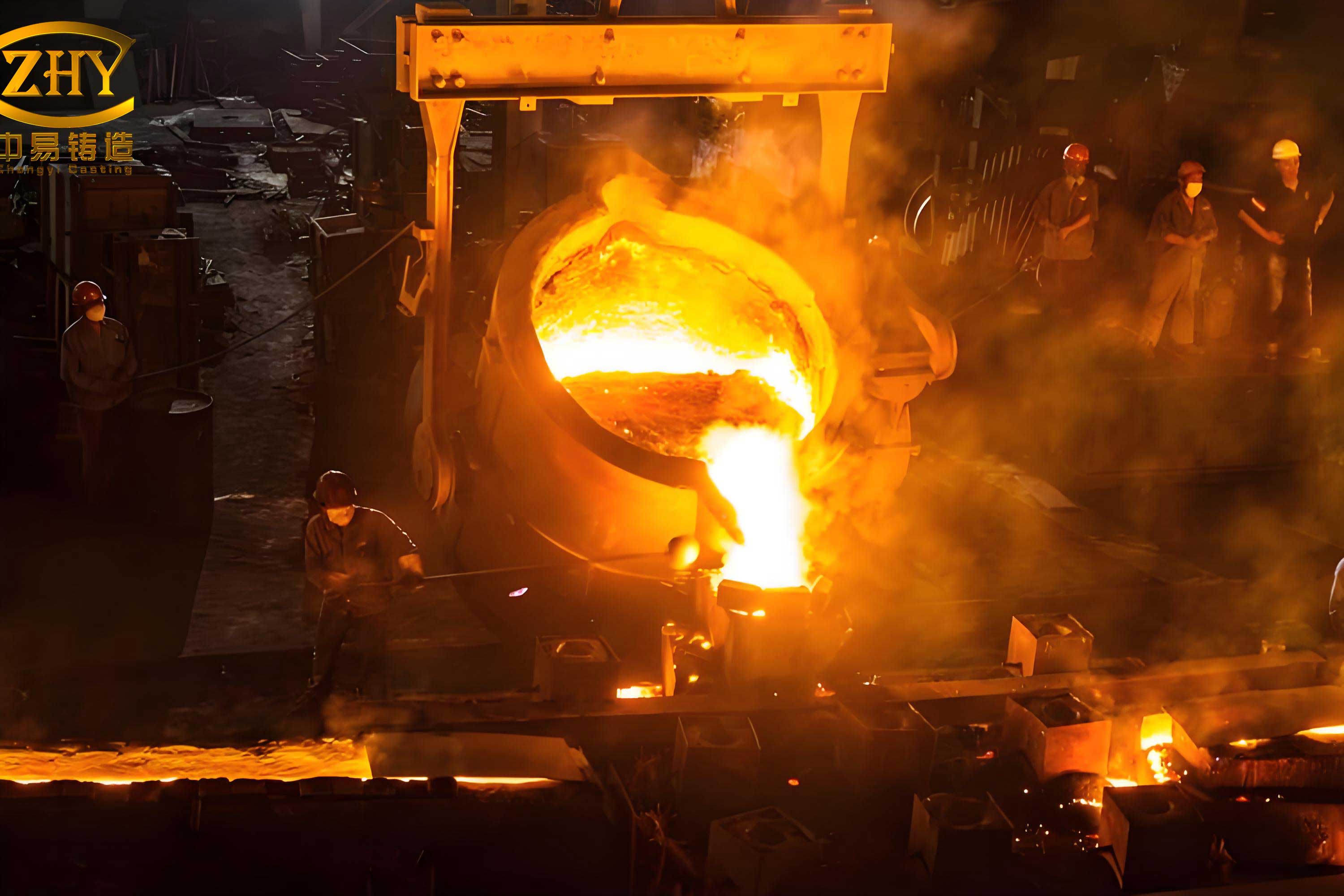
The design of the molding box must facilitate this process for learners. A training flask must be durable, lightweight for student handling, dimensionally standardized, and cost-effective to produce in quantity. After analyzing the requirements for a foundational sand castings module—encompassing basic green sand molding, gating system design, and core assembly—I led the specification of an aluminum alloy flask system. The primary design objectives were:
- Educational Suitability: Size appropriate for training patterns (max casting dimensions ~180×120 mm).
- Ergonomics & Safety: Lightweight for easy manipulation by students; smooth edges to prevent injury.
- Functional Robustness: Adequate wall thickness to resist distortion during ramming and clamping.
- Process Compatibility: Features for proper alignment (pin and bushing system) and venting.
- Economic Viability: Low material and manufacturing cost per unit to equip full workshops.
The finalized design consists of three main components: a drag (bottom box), a cope (top box), and a bottom board. The key specifications are summarized in the table below.
| Component | External Dimensions (L×W×H, mm) | Wall/Plate Thickness (mm) | Internal Cavity (L×W×H, mm) | Primary Function |
|---|---|---|---|---|
| Drag (Lower Flask) | 260 × 200 × 80 | 10 | 240 × 180 × 80 | Holds the main pattern body and runner system. |
| Cope (Upper Flask) | 260 × 200 × 80 | 10 | 240 × 180 × 80 | Forms the pouring basin and feeders. |
| Bottom Board | 350 × 250 × 15 (Edge: 25) | 15 (Plate), 25 (Edge) | N/A | Provides a stable base for molding and a surface for pattern ramming. |
Material selection was paramount. Cast aluminum alloy ZL101A (A356.0 equivalent) was chosen for its excellent combination of properties relevant to this application:
- Low Density (\( \rho \) ≈ 2.7 g/cm³): Ensures lightweight flasks, reducing student fatigue.
- Sufficient Strength (\( \sigma_b \) ≥ 195 MPa): Withstands repeated clamping forces and minor impacts.
- Good Castability: Allows for the production of the flasks themselves via sand castings or permanent mold casting, keeping manufacturing costs low.
- Corrosion Resistance: Withstands the humid environment often present in foundry training settings.
The weight of each component can be approximated by calculating the volume of aluminum and multiplying by density. For the drag or cope, the volume is the difference between the outer and inner rectangular prism volumes.
$$ V_{cope/drag} = (L_{out} \times W_{out} \times H_{out}) – (L_{in} \times W_{in} \times H_{in}) $$
$$ V_{cope/drag} = (0.260 \times 0.200 \times 0.080) – (0.240 \times 0.180 \times 0.080) = 0.00416 – 0.003456 = 0.000704 \text{ m}³ $$
$$ m_{cope/drag} = \rho \times V = 2700 \times 0.000704 \approx 1.90 \text{ kg} $$
Similarly, the bottom board weight can be calculated. Including gating/risering mass from the casting process, the final as-cast weights align closely with the target of ~2 kg for boxes and ~5 kg for the board. A complete set (cope, drag, board) thus weighs under 10 kg, ideal for training.
The economic analysis for equipping a classroom is crucial for scalability. The following table breaks down the cost structure for a batch of 40 sets, essential for a standard training cohort.
| Cost Factor | Calculation Basis | Cost per Set (Currency Units) | Cost for 40 Sets (Currency Units) | Notes |
|---|---|---|---|---|
| Raw Material (ZL101A) | ~10 kg/set @ 14/kg | 140 | 5,600 | Includes foundry yield loss. |
| Casting & Machining | Pattern amortization, pouring, shot blasting, machining alignment pins/bushings. | 50 | 2,000 | Batch production significantly reduces unit cost. |
| Total Direct Cost | Sum of above | 190 | 7,600 | One-time investment for multi-year use. |
Integrating this tooling into a structured pedagogical framework is where the concept of categorized, hierarchical practice takes form. The training progresses through distinct tiers:
- Tier 1 – Foundational Skills: Students use the standard flask to practice sand ramming uniformity, pattern drawing, and simple flat-back molding. The consistency of the tooling allows instructors to focus on core technique assessment.
- Tier 2 – Process Application: Learners design and cut gating systems (sprue, runner, gates) for specific training patterns. The flask dimensions constrain the problem, requiring practical calculation of pouring time and gating ratios. The pouring time \( t \) can be estimated using Bernoulli’s theorem, simplified for a freely falling stream:
$$ t \approx \frac{V_{casting}}{A_{sprue\_bottom} \cdot \sqrt{2gh}} $$
where \( V_{casting} \) is the casting volume, \( A_{sprue\_bottom} \) is the cross-sectional area at the sprue base, and \( h \) is the effective sprue height. - Tier 3 – Advanced Techniques: The system supports multi-part molds and core assembly practice. The standardized alignment system ensures that more complex molds, built over several sessions or by teams, fit together accurately, directly mirroring industry practice for sand castings.
This tiered approach, supported by reliable equipment, allows instructors to tailor tasks to individual student progress while maintaining a coherent, standards-based curriculum.
The pedagogical impact is measured through defined assessment rubrics linked to each tier. For example, a Tier 1 assessment might evaluate mold hardness (using a penetrometer) across a grid of points on the flask, teaching process control. A Tier 2 assessment would grade the functionality and soundness of the resulting sand castings training piece, linking design decisions to tangible outcomes. The formula for theoretical feeding demand, crucial for sound sand castings, can be introduced:
$$ V_{riser} \geq \frac{V_{casting} \cdot (\alpha_{metal} – \alpha_{mold})}{\alpha_{mold}} $$
Where \( V_{riser} \) and \( V_{casting} \) are volumes, and \( \alpha_{metal} \) and \( \alpha_{mold} \) are the volumetric shrinkage of the metal and the expansion of the mold, respectively. This moves learning from rote practice to applied engineering principles.
In conclusion, the construction of an effective practice teaching system for applied disciplines is a multifaceted endeavor. It requires a philosophical commitment to inclusive, flexible pedagogy and a practical commitment to providing the high-quality, accessible tools that make such pedagogy possible. The development and deployment of the dedicated aluminum alloy molding box system for sand castings training serves as a potent case study. It demonstrates how thoughtful design grounded in engineering fundamentals—material science, mechanics, and thermodynamics—can yield robust, low-cost training aids. These aids, in turn, become the physical platform upon which a hierarchical and categorized curriculum is built, enabling instructors to guide all students from foundational skills to integrated problem-solving. The ultimate success is observed not just in the quality of the training sand castings produced, but in the deepened competence and confidence of the learners, fully prepared to engage with the complexities of modern manufacturing.