
This paper presents a comprehensive framework for quality prediction in sand casting processes by integrating structured process parameters with 3D structural characterization. The proposed methodology addresses the critical challenge of quantifying complex geometric features and their relationship with casting defects through advanced deep learning architectures.
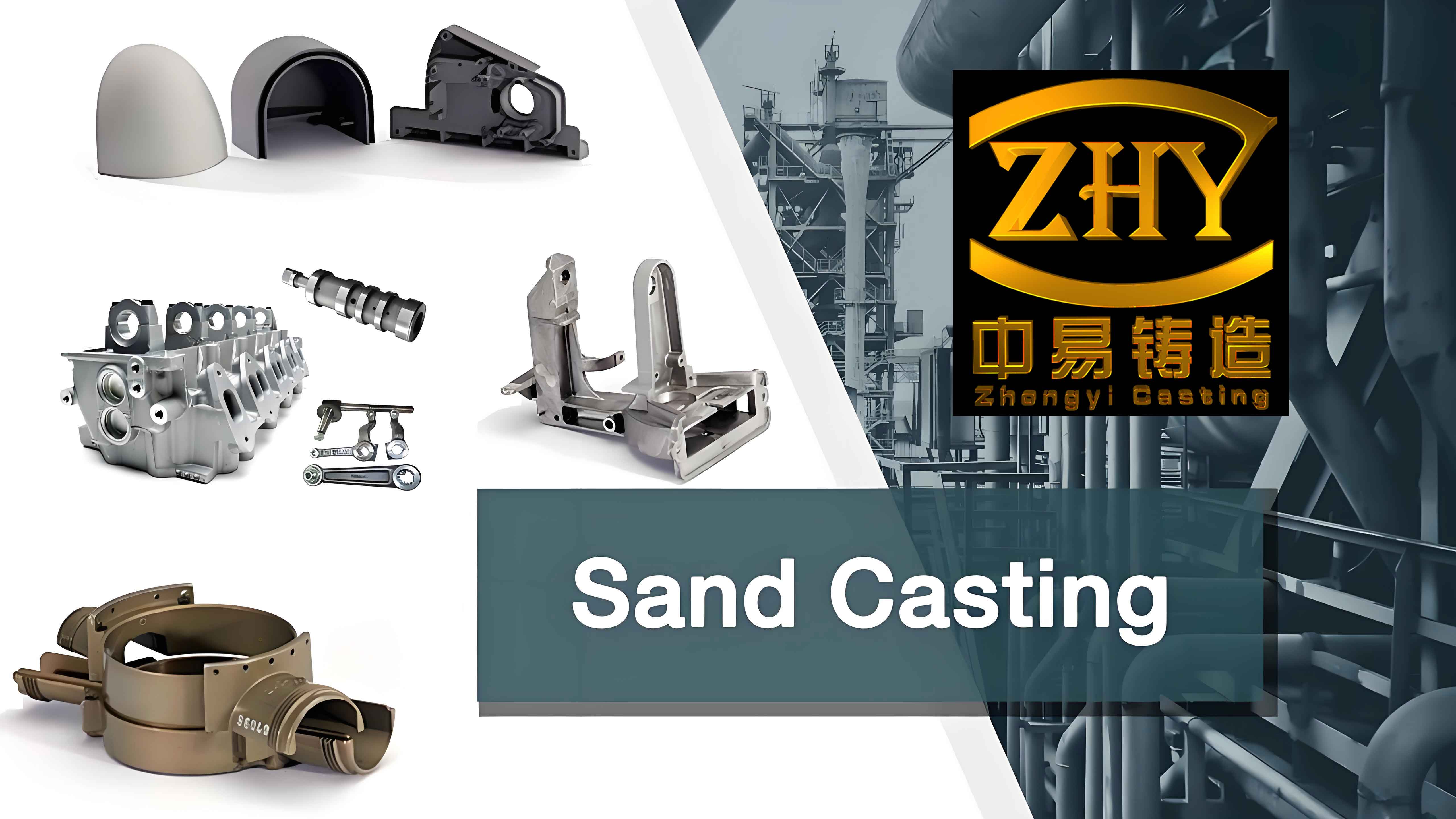
1. Sand Casting Process Analysis and Data Acquisition
Typical sand casting defects including cold shuts, porosity, sand inclusion, and shrinkage cavities were systematically investigated. The process data collection framework covers key parameters from:
| Process Stage | Key Parameters |
|---|---|
| Sand Preparation | Moisture content, compactability, permeability |
| Melting/Pouring | Metal temperature, chemical composition |
| Mold Making | Mold hardness, sand compression strength |
The casting geometry complexity is quantified through voxelization processing, converting 3D CAD models into 64×64×64 binary matrices. For a casting with dimensions $(L,W,H)$, the voxel resolution $r$ is calculated as:
$$
r = \frac{\min(L,W,H)}{64}
$$
2. 3D Convolutional Autoencoder for Geometric Feature Extraction
The proposed 3D Deep Convolutional Autoencoder (3D-DCAE) architecture enables unsupervised learning of geometric features through hierarchical dimension reduction:
| Layer | Operation | Output Shape |
|---|---|---|
| Input | – | 64×64×64×1 |
| Encoder | 3D Conv (16 filters) | 32×32×32×16 |
| 3D MaxPool | 16×16×16×16 | |
| Bottleneck | Flatten | 4096 |
| Decoder | 3D UpConv | 32×32×32×16 |
| 3D Conv (1 filter) | 64×64×64×1 |
The reconstruction loss function combines binary cross-entropy and structural similarity:
$$
\mathcal{L} = \alpha \cdot \text{BCE} + (1-\alpha) \cdot (1 – \text{SSIM})
$$
where $\alpha=0.7$ achieves optimal balance through experimental validation.
3. Heterogeneous Data Fusion for Defect Prediction
The quality prediction model integrates process parameters $\mathbf{P} \in \mathbb{R}^{n}$ with geometric features $\mathbf{G} \in \mathbb{R}^{128}$ through feature concatenation:
$$
\mathbf{X} = [\mathbf{P} \oplus \mathbf{G}] \in \mathbb{R}^{n+128}
$$
The hybrid CNN architecture processes fused features through:
- 1D convolution with kernel size $k=3$
- Max pooling with stride $s=2$
- Three fully-connected layers with dropout $p=0.5$
| Model | Training Accuracy | Test Accuracy |
|---|---|---|
| MLP | 86.1% | 82.3% |
| 2D-CNN | 90.7% | 87.6% |
| Proposed Model | 96.5% | 93.7% |
4. Industrial Validation and Implementation
The system was deployed in a sand casting production line for heavy machinery components, demonstrating significant quality improvement:
$$
\text{Defect Rate Reduction} = \frac{D_{\text{baseline}} – D_{\text{system}}}{D_{\text{baseline}}} \times 100\% = 41.2\%
$$
Key implementation considerations for sand casting applications include:
- Real-time synchronization of process data streams
- Adaptive voxel resolution based on casting size
- Continuous model updating with new defect patterns
This research establishes a robust framework for quality prediction in sand casting through effective integration of manufacturing process data and 3D geometric characterization. The proposed methods show particular promise for complex castings where traditional quality control methods prove inadequate.