
In the realm of metal casting, sand castings represent one of the most prevalent and versatile manufacturing processes, enabling the production of complex components across industries such as automotive, aerospace, and machinery. However, achieving high dimensional accuracy in sand castings remains a significant challenge, directly impacting product quality, material efficiency, and post-processing costs. As a practitioner deeply involved in casting technology, I have observed that while factors like material properties, process parameters, and operator skill contribute to variability, the design, manufacture, and management of casting patterns—the molds used in sand casting—are often underappreciated yet critical determinants of precision. This article delves into the multifaceted influence of sand casting patterns on casting accuracy, presenting a comprehensive analysis grounded in engineering principles and empirical data. By examining factors such as tolerance selection, manufacturing deviations, and operational practices, I aim to elucidate strategies for enhancing the dimensional fidelity of sand castings, thereby aligning with global quality standards and competitive demands in manufacturing.
The accuracy of sand castings is intrinsically linked to the precision of the patterns, which include models, templates, core boxes, and related equipment. These tools shape the sand molds into which molten metal is poured, and any imperfections in them propagate directly to the final castings. In many foundries, especially smaller-scale operations, patterns are treated as ancillary items rather than precision instruments, leading to inconsistencies that degrade casting quality. For instance, dimensional errors in patterns can cause mismatches, wall thickness variations, and geometric distortions in sand castings, resulting in increased scrap rates and machining allowances. This issue is exacerbated by the diverse backgrounds of personnel involved in pattern design—ranging from experienced patternmakers with limited formal training to engineers unfamiliar with casting nuances—leading to ad-hoc decisions that compromise accuracy. Moreover, the lack of standardized specifications for pattern components, such as alignment pins and bushes, fosters a chaotic environment where tolerances are either overly loose or inconsistently applied, further diminishing the precision of sand castings.
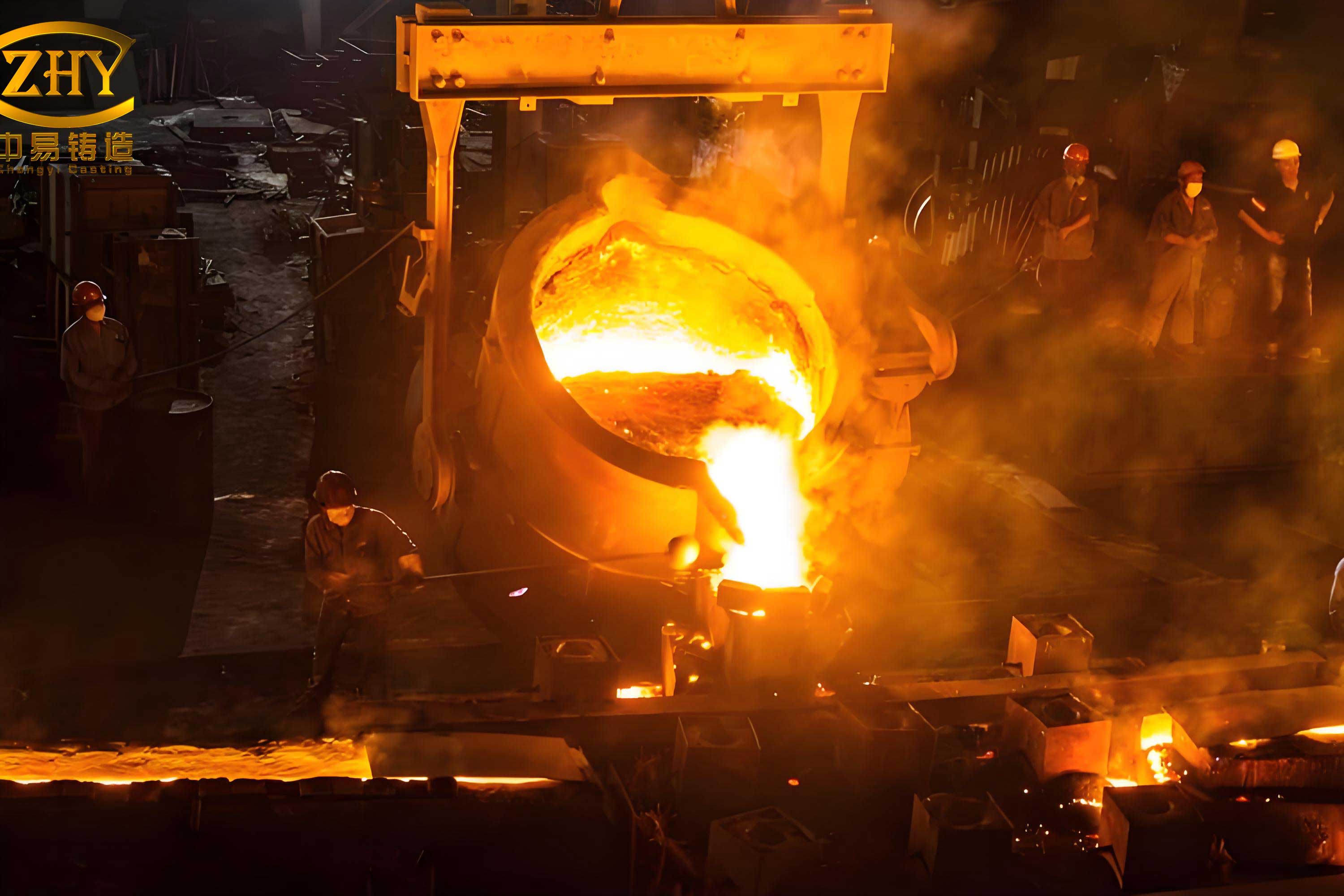
To quantify the impact of pattern-related factors on casting accuracy, it is essential to consider the cumulative errors arising from design, manufacturing, and usage. The total dimensional deviation in a sand casting can be modeled as a root-sum-square combination of individual error sources, expressed mathematically as:
$$ \Delta_{\text{casting}} = \sqrt{ \Delta_{\text{pattern design}}^2 + \Delta_{\text{pattern manufacturing}}^2 + \Delta_{\text{mold assembly}}^2 + \Delta_{\text{process}}^2 } $$
where \(\Delta_{\text{pattern design}}\) encompasses tolerance selections in pattern components, \(\Delta_{\text{pattern manufacturing}}\) refers to deviations during pattern fabrication, \(\Delta_{\text{mold assembly}}\) includes errors from mold and core assembly, and \(\Delta_{\text{process}}\) accounts for shrinkage, thermal expansion, and other casting phenomena. For sand castings, pattern-related errors often dominate, particularly when patterns are poorly designed or maintained. This underscores the necessity of a systematic approach to pattern engineering, which I will explore in detail through factors influencing accuracy and subsequent improvement methods.
Factors Affecting Casting Accuracy in Sand Castings
The dimensional precision of sand castings is influenced by a constellation of factors tied to patterns, each contributing to the overall error budget. Firstly, the design of pattern components—such as the selection of fit tolerances for alignment pins and bushes—plays a pivotal role. Inappropriate tolerances can lead to excessive clearances, causing mold misalignment and core shift, which manifest as dimensional inaccuracies in sand castings. For example, if the fit between a pattern plate pin and its bush is too loose, the resultant mold halves may shift during clamping, producing castings with mismatched features. Conversely, overly tight fits can hinder assembly, increasing wear and deformation. Historically, tolerance choices have been based on legacy practices rather than analytical reasoning, with variations across foundries leading to inconsistent outcomes for sand castings.
Secondly, the manufacturing precision of patterns dictates their ability to replicate intended geometries. Patterns are typically fabricated from materials like wood, metal, or plastic, each with distinct thermal and mechanical properties that affect dimensional stability. Metal patterns, often used for high-volume production of sand castings, require precise machining to achieve tight tolerances. However, limitations in machining capabilities, lack of specialized tooling, and inadequate quality control can result in patterns with deviations beyond acceptable limits. The manufacturing tolerance must be commensurate with the desired casting accuracy grade; otherwise, patterns become sources of systematic error. Additionally, wear and tear during pattern use gradually degrade their dimensions, especially in high-production environments for sand castings, where repeated molding cycles abrade pattern surfaces and alter critical features.
Thirdly, pattern management practices profoundly impact casting accuracy. Negligent handling, storage, and maintenance of patterns can introduce scratches, dents, or corrosion, altering their dimensions and surface finish. In many foundries, patterns are subjected to rough treatment—such as being dropped or improperly cleaned—which accelerates wear and reduces their service life. Furthermore, operational protocols, like the sequence of mold assembly (e.g., removing alignment pins before clamping), can induce errors that compromise the integrity of sand castings. Without regular inspection and calibration, patterns may continue in use despite being out-of-spec, perpetuating defects in sand castings. This is particularly critical for complex sand castings with intricate cores, where minor pattern inaccuracies amplify through the molding process.
To illustrate the interplay of these factors, consider the dimensional chain in sand casting production. The final casting dimension \(D_{\text{casting}}\) is derived from the pattern dimension \(D_{\text{pattern}}\), adjusted for shrinkage allowance \(S\), and affected by random errors \(\epsilon\):
$$ D_{\text{casting}} = D_{\text{pattern}} \times (1 + S) + \epsilon $$
where \(\epsilon\) aggregates errors from pattern manufacturing, mold assembly, and process variations. For sand castings, the shrinkage allowance \(S\) is material-dependent (e.g., around 1-2% for cast iron), but pattern inaccuracies can distort this relationship, leading to non-uniform shrinkage and dimensional outliers. Thus, controlling pattern-related variables is paramount for achieving consistent accuracy in sand castings.
Methods to Improve Casting Accuracy in Sand Castings
Enhancing the dimensional accuracy of sand castings necessitates a holistic strategy targeting pattern design, manufacturing, and management. Based on my experience and industry insights, I propose the following methods, supported by quantitative data and engineering principles.
Rational Selection of Pattern Fit Tolerances
The choice of fit tolerances for pattern components should be aligned with the production method and casting accuracy requirements. For sand castings, this involves specifying appropriate clearance fits for alignment pins and bushes to ensure precise mold registration without binding. I recommend categorizing tolerances based on production volume and automation level, as summarized in Table 1. This table extends typical industry practices by incorporating ISO tolerance grades tailored for sand castings.
| Production Method | Casting Accuracy Grade | Fit Tolerance (Pin/Bush) | Application Context |
|---|---|---|---|
| High-Pressure Molding, Mass Production | Grade I (High Precision) | H7/g6 (Sliding Fit) | For sand castings requiring tight dimensional control, such as automotive engine blocks. |
| Machine Molding, Batch Production | Grade II (Medium Precision) | H8/f7 (Close Running Fit) | Common for industrial machinery sand castings produced in batches. |
| Hand Molding, Low-Volume Production | Grade III (Standard Precision) | H9/e8 (Loose Running Fit) | Suitable for prototype or custom sand castings with relaxed tolerances. |
These tolerances ensure that the cumulative clearance between pins and bushes, combined with assembly gaps, remains within the casting’s accuracy band. For instance, the H7/g6 fit provides minimal play, reducing misalignment errors in high-precision sand castings. The tolerance values can be derived from standard tables, with the pin diameter \(d\) and bush bore \(D\) related by:
$$ \text{Clearance} = D_{\text{max}} – d_{\text{min}} $$
where \(D_{\text{max}}\) and \(d_{\text{min}}\) are the maximum bush bore and minimum pin diameter, respectively. By optimizing this clearance, foundries can mitigate core shift and mismatch in sand castings, enhancing dimensional consistency.
Optimization of Pattern Manufacturing Tolerances
Pattern manufacturing tolerances must be stringent enough to meet casting accuracy goals. I propose that these tolerances be defined based on the casting precision grade and pattern material, as detailed in Table 2. This table expands upon traditional guidelines by including metal and composite patterns for sand castings.
| Measured Dimension (mm) | Grade I (Metal Patterns for Shell Molding) | Grade II (Machine Molding, Batch Production) | Grade III (Hand Molding, Low Volume) |
|---|---|---|---|
| ≤ 50 | ±0.10 | ±0.16 | ±0.25 |
| > 50 to 120 | ±0.12 | ±0.19 | ±0.30 |
| > 120 to 260 | ±0.16 | ±0.25 | ±0.40 |
| > 260 to 500 | ±0.21 | ±0.32 | ±0.52 |
| > 500 to 800 | ±0.28 | ±0.44 | ±0.69 |
| > 800 to 1250 | ±0.35 | ±0.54 | ±0.89 |
| > 1250 to 2000 | ±0.50 | ±0.79 | ±1.25 |
| > 2000 to 3150 | ±0.70 | ±1.10 | ±1.75 |
For core prints and related features, which are critical for core positioning in sand castings, Table 3 provides recommended tolerances. These ensure proper core seating without excessive play, which could lead to dimensional drift in sand castings.
| Core Print Max Cross-Section (mm) | Core Box Print Deviation (mm) | Pattern Core Print Deviation (mm) for Casting Grade I/II/III |
|---|---|---|
| ≤ 15 | -0.10 | +0.15/+0.05 to +0.30/+0.20 |
| > 15 to 30 | -0.15 | +0.25/+0.10 to +0.45/+0.30 |
| > 30 to 80 | -0.20 | +0.30/+0.10 to +0.60/+0.40 |
| > 80 to 160 | -0.25 | +0.40/+0.15 to +0.75/+0.50 |
| > 160 to 260 | -0.30 | +0.45/+0.15 to +0.90/+0.60 |
| > 260 to 380 | -0.35 | +0.50/+0.20 to +1.05/+0.70 |
| > 380 to 500 | -0.40 | +0.60/+0.20 to +1.20/+0.80 |
| > 500 to 800 | -0.50 | +0.70/+0.25 to +1.35/+1.00 |
| > 800 to 1000 | -0.55 | +0.85/+0.30 to +1.65/+1.10 |
| > 1000 to 1250 | -0.60 | +0.90/+0.30 to +1.80/+1.20 |
| > 1250 to 1600 | -0.70 | +1.05/+0.35 to +2.10/+1.40 |
| > 1600 to 2000 | -0.80 | +1.20/+0.40 to +2.40/+1.60 |
| > 2000 to 2500 | -1.00 | +1.50/+0.50 to +3.00/+2.00 |
Adhering to these tolerances requires advanced manufacturing techniques, such as CNC machining for patterns used in sand castings, coupled with statistical process control (SPC) to monitor deviations. The relationship between pattern tolerance \(\delta_p\) and casting tolerance \(\delta_c\) can be approximated by:
$$ \delta_c = k \cdot \delta_p $$
where \(k\) is a process-dependent factor (typically >1 due to error amplification). For sand castings, maintaining \(\delta_p\) within tight limits reduces \(\delta_c\), improving overall accuracy.
Rigorous Pattern Management and Maintenance
Effective pattern management is indispensable for sustaining accuracy over the production lifecycle of sand castings. I advocate for implementing standardized protocols that encompass handling, storage, inspection, and refurbishment. Key measures include:
- Regular Dimensional Checks: Patterns should be inspected at predefined intervals using calibrated instruments like coordinate measuring machines (CMMs). Any wear exceeding allowable limits—say, beyond 0.1 mm for critical features—must trigger repair or replacement to prevent defects in sand castings.
- Proper Handling Procedures: Operators must be trained to avoid dropping or striking patterns, utilizing lifting equipment and protective coatings to minimize damage. For instance, patterns for large sand castings should be stored on dedicated racks to prevent warping.
- Documentation and Traceability: Each pattern should have a log recording its usage history, modifications, and inspection results. This facilitates predictive maintenance and ensures that only certified patterns are employed for producing sand castings.
Additionally, process discipline—such as ensuring mold clamping before pin removal—can eliminate assembly-induced errors. By integrating these practices, foundries can extend pattern life and uphold the dimensional integrity of sand castings.
Leveraging Advanced Technologies for Pattern Engineering
Modern tools like computer-aided design (CAD) and simulation software offer transformative potential for enhancing pattern accuracy in sand castings. CAD enables precise tolerance stacking analysis and virtual prototyping, reducing design flaws before physical pattern fabrication. Simulation tools can predict shrinkage and distortion in sand castings, allowing pattern dimensions to be compensated digitally. For example, the pattern enlargement factor \(F\) to account for shrinkage can be optimized using finite element analysis (FEA):
$$ F = 1 + S_{\text{effective}} $$
where \(S_{\text{effective}}\) is a corrected shrinkage value derived from simulation results, tailored for specific sand casting geometries. Furthermore, additive manufacturing (3D printing) of patterns allows rapid iteration and complex geometries, supporting high-accuracy sand castings for prototyping and low-volume runs.
Conclusion
In summary, the dimensional accuracy of sand castings is profoundly influenced by the precision of casting patterns, encompassing design tolerances, manufacturing deviations, and management practices. Through rational tolerance selection based on production methods, stringent manufacturing controls aligned with casting grades, and disciplined maintenance routines, foundries can significantly reduce pattern-related errors. The integration of advanced technologies further augments these efforts, enabling more predictable and precise outcomes for sand castings. As global competition intensifies, prioritizing pattern accuracy is not merely a technical necessity but a strategic imperative for producing high-quality sand castings that meet international standards. By embracing these methods, the industry can overcome historical limitations and achieve new levels of excellence in sand casting manufacturing.