
In the realm of advanced manufacturing, the integration of innovative technologies into traditional processes has revolutionized production efficiency and product quality. As a researcher deeply involved in foundry engineering, I have embarked on a comprehensive study to explore and optimize the casting process for complex components, specifically focusing on pulping rotors used in papermaking machinery. Traditional manufacturing methods for these rotors, such as wooden pattern-based sand casting, often face challenges like extended lead times, high costs, and difficulties in achieving precise geometries due to intricate designs. This has led me to investigate the potential of 3D printed sand molds as a transformative solution for sand castings. Through this research, I aim to demonstrate how 3D printing technology can streamline the production of sand castings, enhance process yield, and ensure superior mechanical properties, all while leveraging simulation tools for predictive analysis. The pulping rotor, with its demanding structural and performance requirements, serves as an ideal case study to highlight the advantages of modern sand castings in industrial applications.
The pulping rotor is a critical component in papermaking systems, where it operates at high speeds to disintegrate pulp fibers through centrifugal force and impact. Its functionality hinges on precise dimensional accuracy and robust mechanical integrity to maintain dynamic balance and longevity. Traditionally, these rotors are produced via gravity sand casting using wooden patterns, a method that involves cumbersome pattern-making, extended cycles, and inherent limitations in replicating complex features. In my work, I have shifted focus to 3D printed sand molds, which eliminate the need for physical patterns by directly fabricating molds from digital models. This approach not only accelerates prototyping but also reduces costs associated with tooling, making it particularly suitable for low-volume or custom sand castings. By adopting this technology, I seek to address common defects like shrinkage porosity and inclusions that plague conventional sand castings, thereby improving the overall quality and reliability of pulping rotor sand castings.
To contextualize this study, it is essential to understand the material specifications and structural nuances of the pulping rotor. The rotor is cast from ZG06Cr13Ni4Mo, a martensitic stainless steel renowned for its excellent corrosion resistance, wear resistance, and high tensile strength. These properties make it ideal for harsh environments, including pulp and paper processing. The chemical composition and mechanical requirements are stringent, as outlined in industry standards. For instance, the carbon content must be minimized to below 0.03% to enhance corrosion resistance, while elements like phosphorus and sulfur are controlled to prevent embrittlement. In terms of structure, the rotor features a disc-like body with eight radially arranged blades, each designed with streamlined profiles to optimize fluid dynamics during operation. The internal cavity is hollowed to reduce mass, which necessitates careful casting design to avoid defects in thin sections. This complexity underscores the challenges in traditional sand castings, where mold-making and core assembly can lead to dimensional inaccuracies. Through 3D printing, I have been able to bypass these hurdles, enabling direct fabrication of intricate mold cavities without draft angles, thus preserving design intent in the final sand castings.
My research methodology encompasses a holistic approach, beginning with process design and simulation, followed by actual production using 3D printed sand molds, and concluding with rigorous testing. The casting process was designed with a gravity pouring system, incorporating bottom gating to ensure smooth metal flow and minimize turbulence. The gating system includes a sprue, runners, and ingates sized to facilitate controlled filling, while risers are strategically placed to feed shrinkage during solidification. A key innovation lies in the use of 3D printed sand molds, which are fabricated layer by layer using silica sand bonded with specialized resins. This technique allows for high precision, with dimensional tolerances within 0.3 mm, and significantly reduces lead time from weeks to mere days. To validate the design, I employed Procast simulation software to model the filling and solidification processes, predicting temperature distributions and potential defect sites. This simulation-driven optimization enabled me to adjust riser dimensions and placement, enhancing the yield and quality of the sand castings. The entire process, from mold printing to heat treatment, was meticulously controlled to align with the material’s metallurgical requirements.
The simulation phase involved mathematical modeling of heat transfer and fluid dynamics during casting. For sand castings, the solidification process can be described using Fourier’s law of heat conduction and the enthalpy method to account for phase changes. The governing equation for transient heat conduction in the mold and casting system is given by:
$$ \rho c_p \frac{\partial T}{\partial t} = \nabla \cdot (k \nabla T) + Q $$
where \( \rho \) is the density, \( c_p \) is the specific heat capacity, \( T \) is the temperature, \( t \) is time, \( k \) is the thermal conductivity, and \( Q \) represents internal heat sources such as latent heat release during solidification. In the context of sand castings, the boundary conditions at the mold-casting interface are critical, often characterized by a heat transfer coefficient \( h \). For my simulation, I set \( h = 500 \, \text{W/(m}^2 \cdot \text{K)} \) to model the thermal interaction between the ZG06Cr13Ni4Mo steel and the 3D printed sand mold. The initial conditions included a pouring temperature of 1580°C and an ambient temperature of 25°C. The filling time was optimized to 6 seconds, with a pouring rate of 50 kg/s, to ensure complete mold filling without excessive turbulence. Through numerical solving of these equations, I visualized temperature gradients and identified regions prone to shrinkage defects, which guided the redesign of risers. This analytical approach is paramount for advancing sand castings, as it reduces trial-and-error and ensures robust process parameters.
To elaborate on the material properties, I have summarized the chemical composition and mechanical requirements for ZG06Cr13Ni4Mo in the following tables. These specifications are foundational for producing high-performance sand castings, as deviations can compromise corrosion resistance and strength.
| Element | Min (%) | Max (%) | Target Range (%) |
|---|---|---|---|
| Carbon (C) | — | 0.06 | ≤0.03 |
| Silicon (Si) | — | 0.8 | 0.4–0.8 |
| Manganese (Mn) | — | 1.0 | 0.5–1.0 |
| Sulfur (S) | — | 0.035 | ≤0.025 |
| Phosphorus (P) | — | 0.025 | ≤0.020 |
| Chromium (Cr) | 11.5 | 13.5 | 12.0–13.0 |
| Nickel (Ni) | 3.5 | 5.0 | 4.0–4.5 |
| Molybdenum (Mo) | 0.4 | 1.0 | 0.5–0.8 |
| Property | Symbol | Minimum Value | Typical Value |
|---|---|---|---|
| Yield Strength | Rp0.2 | 550 MPa | 600–700 MPa |
| Tensile Strength | Rm | 750 MPa | 800–900 MPa |
| Elongation | A5 | 15% | 18–22% |
| Reduction of Area | Z | 35% | 40–50% |
| Impact Energy | KV | 50 J | 60–80 J |
| Hardness | HBW | 221 | 250–280 |
The casting process design incorporated several key parameters to ensure quality sand castings. The linear shrinkage allowance was set at 2.0% to account for the contraction of ZG06Cr13Ni4Mo during cooling. Machining allowances were applied to critical surfaces: 8 mm on the top plane, 10 mm on the outer diameter, and 6 mm on the bottom face, allowing for post-casting finishing. The gating system was designed with a bottom ingate of 60 mm diameter to promote laminar flow, while the riser system included a central cylindrical riser (200 mm diameter × 280 mm height) and eight peripheral insulated risers (70 mm diameter × 100 mm height) at the blade roots. These risers were calculated based on modulus theory to ensure adequate feeding. The modulus \( M \) for a riser is given by:
$$ M = \frac{V}{A} $$
where \( V \) is the volume and \( A \) is the surface area. For the central riser, \( M \approx 4.5 \, \text{cm} \), which is sufficient to feed the thick section of the rotor hub. The peripheral risers have \( M \approx 1.8 \, \text{cm} \), tailored to the thinner blade regions. This design aims to achieve a high casting yield, targeting over 60% for economical sand castings. Additionally, vent risers of 20 mm diameter were placed at the blade tips to exhaust gases during pouring, a common practice in sand castings to prevent gas-related defects.
The 3D printing of sand molds was executed using a VX2000 printer, which employs binder jetting technology to deposit layers of GS15 silica sand with a thickness of 0.3 mm per layer. The binder system comprised a specialized resin (1.2% by weight) and a curing agent (0.3%), resulting in mold strengths exceeding 1.4 MPa. This process enabled the direct fabrication of complex mold halves without parting lines or draft angles, which is a significant advantage over conventional sand castings that rely on pattern withdrawal. The printing cycle for a complete mold set was completed within 24 hours, a stark contrast to the 20-day lead time typical of wooden pattern production. This efficiency is transformative for prototyping and small-batch production of sand castings, as it eliminates tooling costs and allows for rapid design iterations. The digital nature of 3D printing also ensures dimensional fidelity, with deviations held within ±0.3 mm, crucial for the aerodynamic profiles of the rotor blades.
Melting and pouring operations were conducted using a dual-process approach: an electric arc furnace for initial melting followed by an AOD (Argon Oxygen Decarburization) vessel for refining. This combination is essential for achieving low carbon levels and controlling impurity elements in stainless steel sand castings. The molten steel was held in a ladle for over 5 minutes to allow slag flotation, ensuring cleaner metal for casting. Pouring temperature was maintained between 1560°C and 1580°C, using a bottom-pour ladle with a 50 mm nozzle to minimize oxidation and turbulence. After solidification, the castings were subjected to a heat treatment regimen comprising normalization and tempering. The normalization was carried out at 1020°C ± 10°C for 2 hours, followed by air cooling, to homogenize the microstructure and dissolve carbides. Tempering at 600°C ± 10°C for 4 hours was then applied to relieve stresses and enhance toughness. Heating rates were controlled to avoid thermal shock, with limits of 100°C/h below 600°C and 80°C/h above 600°C. This thermal processing is vital for optimizing the mechanical properties of martensitic stainless steel sand castings.
The simulation results from Procast provided invaluable insights into the solidification behavior of the pulping rotor sand castings. The temperature distribution plots revealed gradual cooling from the thin blades toward the thick hub, with the risers remaining liquid longest to act as feeding sources. The fraction solid analysis indicated that shrinkage porosity was likely to occur at the blade-root junctions if risers were undersized. By iterating the simulation with adjusted riser dimensions, I optimized the design to minimize these defects. The final simulation predicted a sound casting with isolated microporosity only in non-critical areas, which is acceptable per industry standards for sand castings. The predicted shrinkage volume \( V_s \) can be estimated using the Chvorinov’s rule for solidification time \( t_s \):
$$ t_s = C \left( \frac{V}{A} \right)^2 $$
where \( C \) is a mold constant dependent on material and mold properties. For sand castings, \( C \) typically ranges from 0.5 to 2.0 min/cm². By calculating \( t_s \) for different sections, I ensured that risers solidified last, thereby promoting directional solidification and reducing shrinkage defects. This simulation-driven optimization underscores the power of computational tools in enhancing the reliability of sand castings, especially for complex geometries like the pulping rotor.
After casting and heat treatment, the pulping rotor sand castings underwent comprehensive quality assurance tests. Dimensional inspection was performed using 3D scanning, which confirmed that all blade profiles adhered to design specifications within a tolerance of ±0.5 mm. This level of accuracy is remarkable for sand castings and attests to the precision of 3D printed molds. Ultrasonic testing in accordance with ASTM A609-12 (2018) revealed no internal discontinuities exceeding the allowable limits for Grade 2, indicating that the casting was free from significant shrinkage cavities or inclusions. Chemical analysis via optical emission spectroscopy verified that the composition met the stringent requirements for ZG06Cr13Ni4Mo, with carbon content below 0.03% and balanced alloying elements. Mechanical tests on separately cast coupons yielded the following results: yield strength of 620 MPa, tensile strength of 850 MPa, elongation of 20%, reduction of area of 45%, impact energy of 65 J, and hardness of 260 HBW. These values surpass the minimum specifications, demonstrating the efficacy of the optimized process for producing high-integrity sand castings.
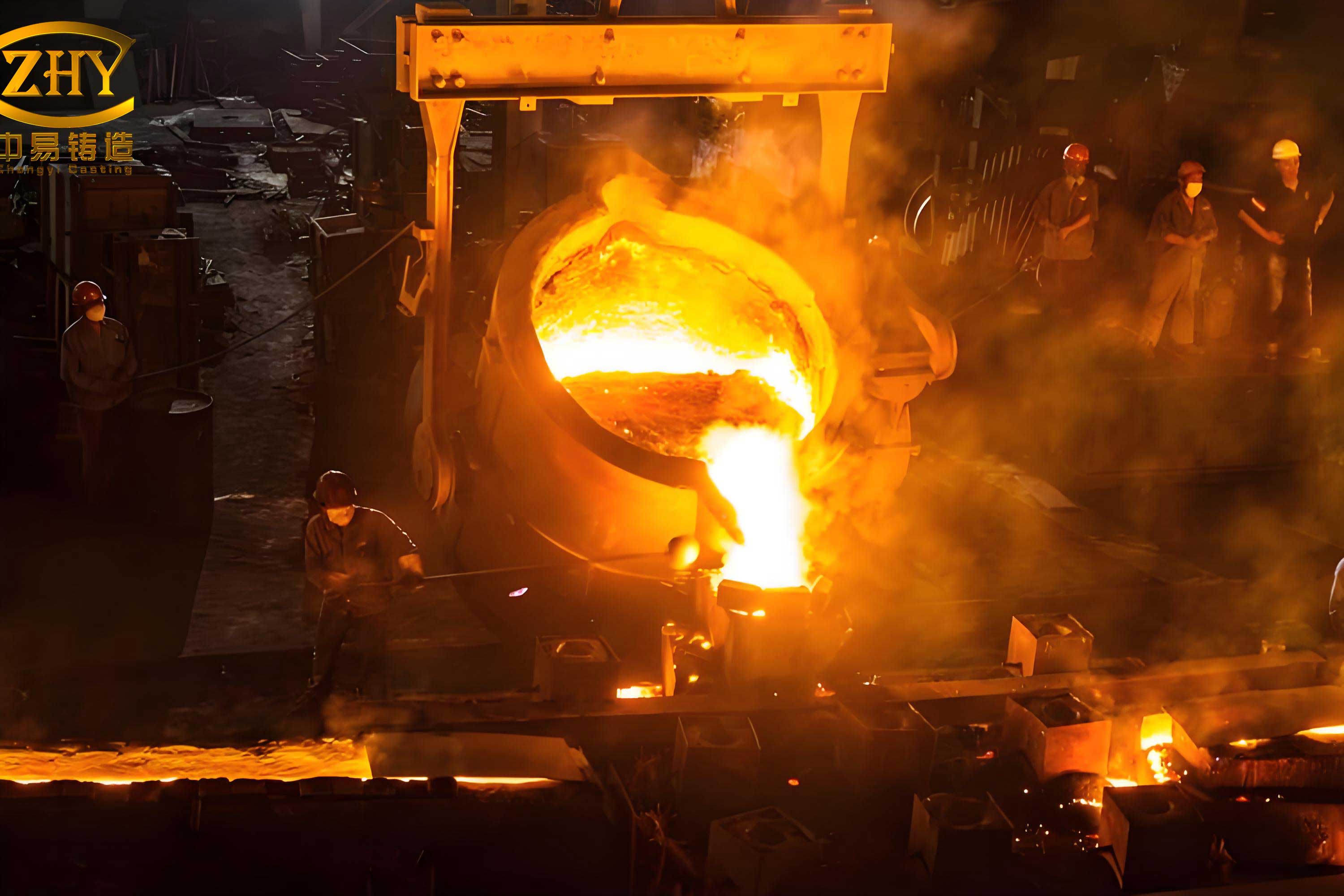
The economic analysis further highlights the benefits of 3D printed sand molds for sand castings. For a single pulping rotor, the traditional wooden pattern cost is estimated at several thousand dollars, whereas the 3D printed sand mold cost only $0.168 thousand, based on a material volume of 0.48 m³ and a unit cost of $0.35 thousand per m³. This represents a cost reduction of over 90% for mold-making, making it highly viable for custom or low-volume sand castings. Additionally, the lead time reduction from 20 days to 1 day accelerates time-to-market and allows for rapid response to design changes. These advantages are particularly pronounced in industries like papermaking, where equipment components often require customization and quick turnaround. The success of this project paves the way for broader adoption of 3D printing in sand castings, potentially transforming supply chains and production methodologies for complex metal parts.
In reflecting on this research, I have identified several key factors that contribute to the superiority of 3D printed sand castings. First, the elimination of pattern-making removes constraints on geometric complexity, enabling designs that are optimized for performance rather than manufacturability. Second, the digital workflow integrates seamlessly with simulation tools, allowing for virtual validation and optimization before physical production. Third, the environmental impact is reduced through less material waste and energy consumption compared to traditional pattern fabrication. However, challenges remain, such as the need for standardized post-processing techniques and the scalability of 3D printing for large-volume sand castings. Future work should focus on refining binder systems to improve mold strength and collapsibility, as well as exploring hybrid approaches that combine 3D printed cores with conventional molds for cost-effective mass production of sand castings.
To deepen the technical discourse, I have formulated additional equations relevant to sand castings. The fluid flow during mold filling can be modeled using the Navier-Stokes equations for incompressible flow:
$$ \rho \left( \frac{\partial \mathbf{u}}{\partial t} + \mathbf{u} \cdot \nabla \mathbf{u} \right) = -\nabla p + \mu \nabla^2 \mathbf{u} + \mathbf{f} $$
where \( \mathbf{u} \) is the velocity vector, \( p \) is pressure, \( \mu \) is dynamic viscosity, and \( \mathbf{f} \) represents body forces such as gravity. In sand castings, the permeability of the sand mold affects fluid penetration, which can be described by Darcy’s law for porous media:
$$ \mathbf{u} = -\frac{K}{\mu} \nabla p $$
with \( K \) being the permeability coefficient. These principles are integral to simulating mold filling and optimizing gating designs to prevent defects like mistruns or cold shuts in sand castings. Moreover, the solidification kinetics can be analyzed using the Scheil-Gulliver model for microsegregation, which predicts the distribution of alloying elements in the casting microstructure:
$$ C_s = k C_0 (1 – f_s)^{k-1} $$
where \( C_s \) is the solute concentration in the solid, \( C_0 \) is the initial concentration, \( k \) is the partition coefficient, and \( f_s \) is the fraction solid. Such models aid in understanding the formation of secondary phases and their impact on the mechanical properties of sand castings.
The integration of 3D printing with simulation has also spurred advancements in topology optimization for sand castings. By leveraging finite element analysis (FEA), components can be designed with material distributed only where needed for structural performance, reducing weight and material usage. The objective function in topology optimization often minimizes compliance while satisfying volume constraints:
$$ \min_{\rho} C(\rho) = \mathbf{U}^T \mathbf{K} \mathbf{U} $$
subject to \( V(\rho) \leq V_{\text{target}} \), where \( \rho \) is the material density distribution, \( C \) is compliance, \( \mathbf{U} \) is the displacement vector, and \( \mathbf{K} \) is the stiffness matrix. This approach, when applied to sand castings like the pulping rotor, can lead to lightweight designs that maintain strength and reduce casting defects by avoiding thick sections. As 3D printing enables the fabrication of such optimized geometries, it opens new frontiers for performance-driven sand castings in aerospace, automotive, and energy sectors.
In conclusion, my research on the pulping rotor has demonstrated that 3D printed sand molds offer a paradigm shift in the production of complex sand castings. The process combines rapid prototyping, cost efficiency, and high dimensional accuracy, addressing the limitations of traditional methods. Through simulation-guided design, I achieved a casting yield of 60% and produced rotors that meet stringent mechanical and non-destructive testing standards. The economic analysis confirms significant savings in both time and cost, making this approach highly attractive for small-batch manufacturing. As the foundry industry evolves, the adoption of additive manufacturing for sand castings will likely expand, driven by the need for customization, sustainability, and efficiency. This study serves as a testament to the potential of 3D printing to revolutionize sand castings, paving the way for innovative applications and enhanced competitiveness in global markets. Future endeavors will explore the integration of real-time monitoring and artificial intelligence to further optimize the casting process, ensuring that sand castings continue to meet the demands of advanced engineering.