
In the context of thermal power generation, coal pulverization is a critical process, and ball mills are widely employed as grinding equipment. Based on statistical data, numerous ball mills are operational across power plants. The grinding balls used in these mills are typically made from materials such as malleable cast iron, forged steel, medium manganese ductile iron, and ordinary cast iron. Depending on operational conditions, the ball consumption per ton of coal powder ranges significantly, leading to an annual national consumption of grinding balls reaching tens of thousands of tons. To reduce this consumption, international practices often involve alloying materials to enhance wear resistance. However, considering domestic resource availability and the wear mechanisms during coal grinding, we embarked on developing a novel material: low carbon wear-resistant white cast iron grinding balls. After nearly two years of practical testing in multiple power plants, these balls have demonstrated a doubling of service life compared to conventional materials, offering substantial economic benefits. This article delves into the performance outcomes and production processes of these innovative grinding balls from a first-person perspective, emphasizing the pivotal role of white cast iron in advancing grinding technology.
The wear mechanism in coal grinding involves abrasive and impact forces, where traditional materials like malleable cast iron balls exhibit high wear rates. Our research focused on modifying the microstructure of white cast iron to improve its toughness while retaining hardness. White cast iron, characterized by its carbide-rich structure, provides inherent wear resistance, but its brittleness often limits applications. By reducing carbon content and adjusting other elements, we developed a low-carbon variant that balances wear resistance and fracture toughness. The core innovation lies in the compositional design, which shifts from high-carbon white cast iron (typically above 2.5% C) to a range of 1.8% to 2.2% C, alongside controlled additions of silicon, manganese, and other elements. This adjustment reduces carbide network continuity, enhancing impact resistance without compromising abrasion resistance.
To quantify the wear behavior, we define the specific wear rate as mass loss per unit throughput. For a grinding ball, the wear rate \( W \) can be expressed as:
$$ W = \frac{\Delta m}{M_c} $$
where \( \Delta m \) is the mass loss of the grinding ball (in grams) and \( M_c \) is the mass of coal ground (in tons). In field tests, we measured \( W \) for various materials, revealing that low carbon wear-resistant white cast iron balls consistently exhibit lower values. For instance, in one power plant using malleable cast iron balls, \( W \) was approximately 500–600 g/ton, whereas our white cast iron balls reduced it to 200–300 g/ton. This reduction aligns with the enhanced microstructure, where fine carbides dispersed in a pearlitic matrix resist spalling and fragmentation.
The following table summarizes the chemical composition ranges for our low carbon wear-resistant white cast iron, compared to conventional white cast iron:
| Element | Low Carbon White Cast Iron (wt%) | Conventional White Cast Iron (wt%) |
|---|---|---|
| Carbon (C) | 1.8–2.2 | 2.5–3.5 |
| Silicon (Si) | 0.8–1.2 | 0.5–1.0 |
| Manganese (Mn) | 0.6–1.0 | 0.3–0.8 |
| Phosphorus (P) | < 0.1 | < 0.2 |
| Sulfur (S) | < 0.05 | < 0.1 |
| Chromium (Cr) | 0.5–1.5 | Optional |
This compositional shift is crucial for achieving the desired properties. The lower carbon content reduces the volume fraction of primary carbides, while silicon and manganese enhance hardenability and matrix strength. Chromium additions further improve carbide stability and wear resistance. We derived these ranges through iterative testing, using regression analysis to correlate composition with wear performance. A simplified model for wear resistance \( R_w \) can be expressed as:
$$ R_w = k_1 \cdot [C]^{-0.5} + k_2 \cdot [Si] + k_3 \cdot [Cr] $$
where \( [C] \), \( [Si] \), and \( [Cr] \) are weight percentages, and \( k_1 \), \( k_2 \), \( k_3 \) are material constants determined experimentally. This formula highlights that reducing carbon increases \( R_w \) when combined with synergistic elements, underscoring the efficacy of low-carbon white cast iron.
Field trials were conducted across several power plants, each with distinct coal types and operational parameters. In one plant, using a ball mill for grinding bituminous coal with a Hardgrove grindability index (HGI) of 60–70, the low carbon wear-resistant white cast iron balls demonstrated a ball consumption of 200–300 g/ton, compared to 500–600 g/ton for malleable cast iron balls. The fracture rate, defined as the percentage of balls breaking during service, dropped from 3–5% to below 1%. This reduction not only lowers direct material costs but also minimizes downtime for ball replacement and reduces auxiliary equipment wear, such as fan blades in exhaust systems. Another plant reported that the extended ball life halved the frequency of ball additions, from daily to every few days, improving operational efficiency.
The economic impact is substantial. Assuming an annual coal throughput of 1 million tons per mill, the switch to low carbon white cast iron balls can save over 300 tons of ball material yearly per mill. Nationally, with hundreds of ball mills in operation, the potential savings reach thousands of tons, aligning with resource conservation goals. Moreover, the reduced iron contamination in coal powder lowers erosion in downstream components, extending the lifespan of boilers and fans. We documented these benefits through systematic measurements, using electronic scales for mass tracking and periodic inspections for fracture assessment.
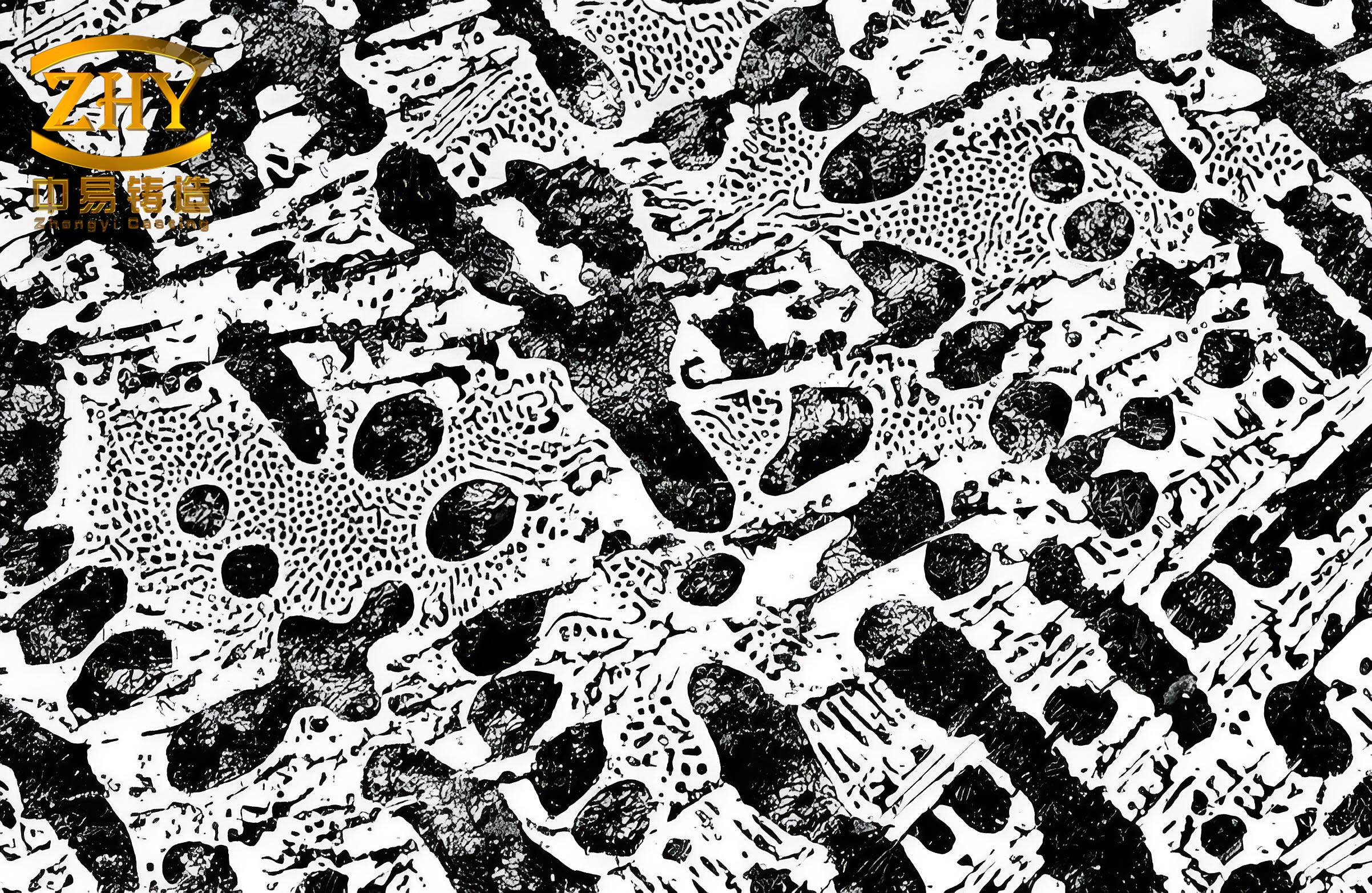
The production process for low carbon wear-resistant white cast iron balls involves meticulous control over melting, casting, and cooling. We adopted a medium-frequency induction furnace for melting, as it allows precise compositional adjustments and minimizes element losses. The furnace lining is acid-based, using quartz sand, which suits the low-phosphorus and low-sulfur requirements. Raw materials primarily consist of scrap steel (70–80%), supplemented with pig iron (15–20%) and carbon additives (5–10%) to achieve the target carbon content. This blend ensures low impurity levels and consistent chemistry. The melting sequence begins with charging the furnace, followed by gradual heating to 1500°C. During melting, natural slag forms from impurities, eliminating the need for additional fluxing agents.
To illustrate the melting dynamics, we consider the decarburization reaction that occurs at high temperatures:
$$ [C] + \frac{1}{2} O_2 \rightarrow CO \uparrow $$
This reaction is vigorous due to the low carbon content, requiring controlled conditions to prevent excessive boiling. Aluminum is added in small amounts (0.1–0.2% of melt weight) for final deoxidation, promoting a calm bath and reducing gas porosity. The tapping temperature is set at 1500–1550°C (uncorrected optical pyrometer reading), after which the molten white cast iron is poured into ladles. The fluidity of this low-carbon white cast iron lies between that of conventional cast iron and cast steel, facilitating smooth casting.
Casting is performed using green sand molds, with a molding sand mixture having moisture content of 4–6%, wet strength exceeding 0.5 MPa, and permeability above 80. The pattern design incorporates risers to feed shrinkage during solidification, achieving a yield of approximately 60%. For a 50 mm diameter ball, the casting layout includes a symmetrical gating system with multiple ingates to ensure uniform filling. The contraction allowance is set at 2%, accounting for the solidification characteristics of white cast iron. After pouring, molds are shaken out promptly, and balls are cleaned by shot blasting. Any residual gates are removed by cutting, though this is minimal due to optimized design.
The mechanical properties of as-cast low carbon wear-resistant white cast iron balls are summarized below:
| Property | Value | Test Method |
|---|---|---|
| Hardness (HB) | 450–550 | Brinell hardness test |
| Impact Toughness (J/cm²) | 8–12 | Charpy impact test |
| Compressive Strength (MPa) | 1500–1800 | Compression test |
| Fracture Toughness \( K_{IC} \) (MPa√m) | 15–20 | Estimated from impact data |
These properties eliminate the need for heat treatment, reducing production costs and energy consumption. The high hardness stems from the carbide network in white cast iron, while the improved toughness results from the refined microstructure. We verified these through metallographic analysis, revealing a matrix of pearlite with uniformly distributed eutectic carbides. The absence of massive carbides reduces stress concentration sites, enhancing fracture resistance. This balance is critical for grinding applications, where balls endure cyclic impacts.
To further analyze performance, we developed a wear model based on the Archard equation, adapted for abrasive conditions:
$$ V = K \cdot \frac{F_n \cdot s}{H} $$
where \( V \) is wear volume, \( K \) is a wear coefficient, \( F_n \) is normal load, \( s \) is sliding distance, and \( H \) is material hardness. For white cast iron, \( H \) is high due to carbides, but the low-carbon variant reduces \( K \) by improving toughness, leading to lower \( V \). In ball mills, the load \( F_n \) is derived from ball dynamics, approximated by:
$$ F_n = m \cdot g + \frac{m \cdot v^2}{r} $$
with \( m \) as ball mass, \( g \) as gravity, \( v \) as rotational speed, and \( r \) as mill radius. Our white cast iron balls, with optimized mass and strength, minimize \( V \) over time.
Comparative field data from multiple power plants are aggregated in the following table, highlighting the superiority of low carbon wear-resistant white cast iron:
| Power Plant | Coal Type (HGI) | Ball Material | Ball Consumption (g/ton) | Fracture Rate (%) |
|---|---|---|---|---|
| Plant A | Bituminous (65) | Malleable Cast Iron | 550 | 4.0 |
| Plant A | Bituminous (65) | Low Carbon White Cast Iron | 250 | 0.5 |
| Plant B | Sub-bituminous (70) | Forged Steel | 400 | 2.0 |
| Plant B | Sub-bituminous (70) | Low Carbon White Cast Iron | 180 | 0.3 |
| Plant C | Anthracite (55) | Medium Mn Ductile Iron | 600 | 5.0 |
| Plant C | Anthracite (55) | Low Carbon White Cast Iron | 300 | 1.0 |
The data consistently show at least a 50% reduction in ball consumption and fracture rates below 1% for our white cast iron balls, validating their wear resistance and durability. These outcomes are attributed to the unique microstructure of low-carbon white cast iron, which mitigates brittle failure while maintaining abrasion resistance. In addition, the use of white cast iron reduces dependency on alloying elements like nickel or molybdenum, leveraging domestic scrap steel resources for sustainability.
From a production standpoint, the process integrates elements from both cast iron and steelmaking. The melting approach resembles steel production due to the low carbon content, while the casting techniques align with iron foundry practices. This hybrid method ensures quality consistency and scalability. We optimized the gating design through simulation software, minimizing turbulence and shrinkage defects. The riser size is calculated based on the solidification modulus \( M \):
$$ M = \frac{V}{A} $$
where \( V \) is volume and \( A \) is cooling surface area. For a 50 mm ball, \( M \) is approximately 8.3 mm, guiding riser dimensions to achieve sound castings. The entire process, from raw material preparation to finished balls, takes less than 24 hours, enabling high throughput.
Looking ahead, the potential applications of low carbon wear-resistant white cast iron extend beyond grinding balls to other wear parts in mining, cement, and machinery industries. The material’s adaptability allows for compositional tweaks to suit specific wear environments, such as higher chromium for corrosive conditions. We are exploring additive manufacturing routes to produce near-net-shape components, further reducing waste. The key lies in harnessing the inherent properties of white cast iron through innovative alloy design.
In conclusion, our development of low carbon wear-resistant white cast iron grinding balls represents a significant advancement in wear-resistant materials. By reducing carbon content and optimizing other elements, we achieved a balance of hardness and toughness that doubles service life in coal grinding applications. The production process is straightforward, utilizing readily available materials and standard foundry equipment, making it economically viable for widespread adoption. Field tests confirm dramatic reductions in ball consumption and fracture rates, leading to operational cost savings and reduced environmental impact. As we continue to refine this white cast iron technology, its principles can inspire future materials for extreme wear scenarios, solidifying the role of white cast iron in industrial progress.