
In the realm of surface engineering, electrospark strengthening (ESS) stands out as a pivotal technique for enhancing the performance of metallic components. I have delved into the application of this technology specifically for white cast iron, a material known for its high hardness and wear resistance but often limited by brittleness. The core principle involves utilizing transient spark discharges to fuse electrode material into the substrate, forming an alloyed layer that improves physical and chemical properties. This article, from my perspective, comprehensively analyzes the effects of key process parameters on the electrospark strengthened layer of white cast iron, employing extensive data, tables, and mathematical models to elucidate the underlying mechanisms.
The fundamental mechanism of electrospark strengthening relies on pulsed electrical discharges. When a capacitor bank discharges across a gap between the electrode and the white cast iron workpiece, intense localized heating occurs. This process can be modeled by the discharge energy per pulse, often approximated for an RC circuit as: $$E_p = \frac{1}{2} C V^2$$ where \( E_p \) is the pulse energy (in Joules), \( C \) is the discharge capacitance (in Farads), and \( V \) is the discharge voltage. The rapid melting and subsequent rapid solidification of both the electrode material and a thin layer of the white cast iron substrate lead to the formation of a metallurgically bonded, refined microstructure on the surface.
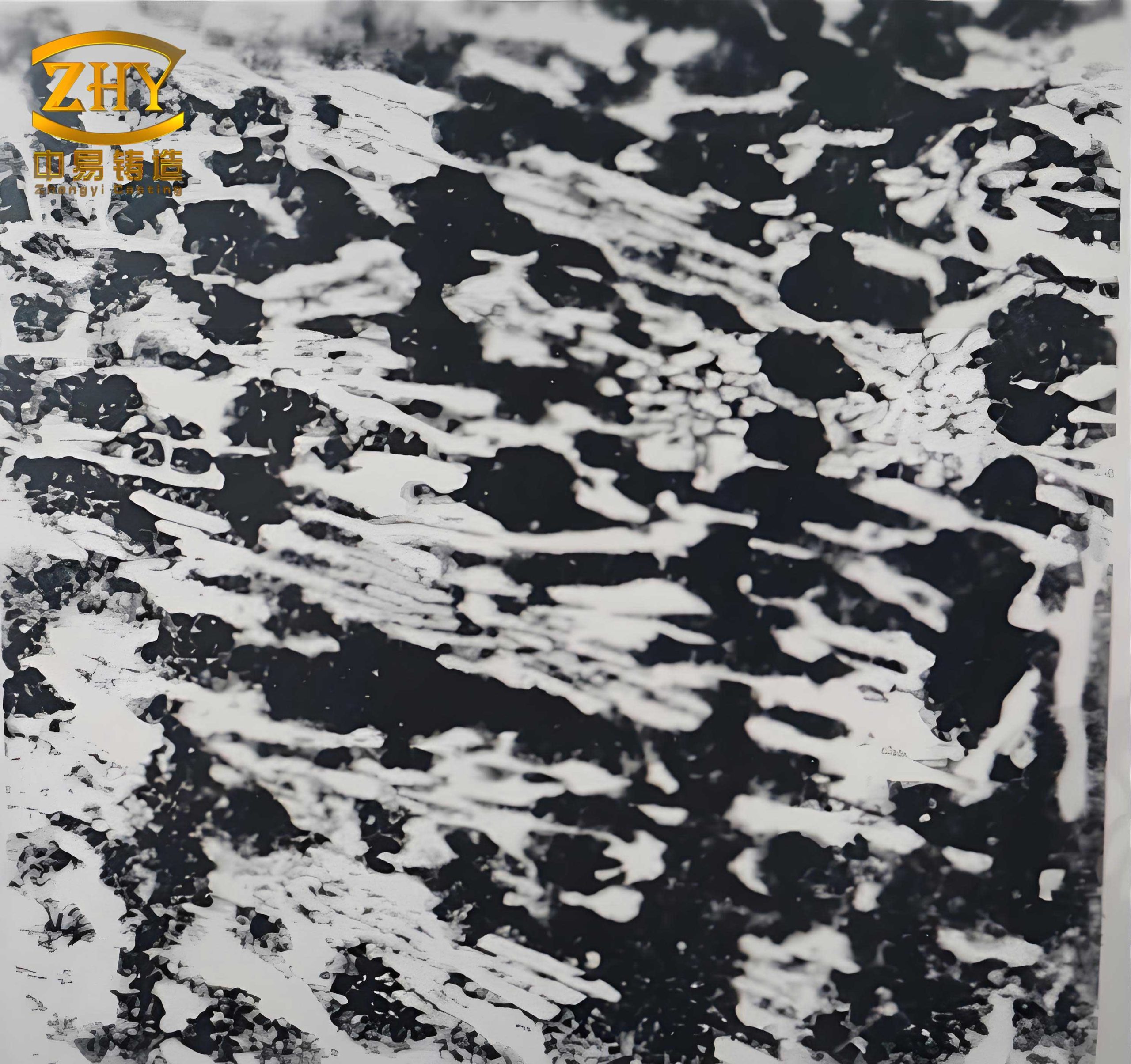
White cast iron, primarily composed of iron carbides in a pearlitic or martensitic matrix, presents a unique challenge and opportunity for surface modification. Its inherent abrasion resistance makes it suitable for demanding applications, but surface defects or insufficient toughness can limit its lifespan. The infusion of hard, wear-resistant materials like carbides via electrospark strengthening offers a route to mitigate these issues. In my investigation, the substrate was a NiCrMo alloyed white cast iron, whose typical composition is summarized in Table 1. The electrode material chosen was YG8 hard metal, consisting of 92% WC and 8% Co, selected for its exceptional hardness and compatibility with the iron carbide structure of white cast iron.
| C | Si | Ni | Mo | Cr | Mn | P | S | Fe |
|---|---|---|---|---|---|---|---|---|
| 3.4-3.5 | 0.5-0.7 | 3.9-4.0 | 0.3-0.4 | 1.2-1.3 | 0.6-0.7 | 0.1-0.2 | 0.1-0.2 | Bal. |
My experimental apparatus centered on a D9130A electrospark strengthening machine equipped with an RC pulsed power supply. The critical variable parameters were the discharge capacitance, adjustable from 30 to 300 µF in six steps, and the specific strengthening time (SST), defined as the treatment time per unit area, varied from 1 to 8 min/cm². The characterization of the resultant layers on white cast iron involved measuring surface roughness (\(R_a\)) using a profilometer, determining layer thickness via cross-sectional SEM analysis, and assessing microhardness (HV) with a diamond indenter under a 100g load. Each data point reported is an average of multiple measurements to ensure statistical reliability.
The influence of discharge capacitance on the electrospark strengthened layer of white cast iron is profound and multi-faceted. As I systematically increased the capacitance from 30 µF to 300 µF while maintaining a constant specific strengthening time, clear trends emerged. The surface roughness exhibited a consistent increase. This can be rationalized by considering the pulse energy equation. Higher capacitance leads to a larger \(E_p\), resulting in larger molten droplets of the YG8 electrode material being transferred and solidified on the white cast iron surface. The size and splatter of these droplets directly contribute to a rougher topography. A phenomenological model for the arithmetic average roughness might be expressed as: $$R_a \approx k_1 \cdot C^{\alpha}$$ where \(k_1\) is a process constant and \(\alpha\) is a positive exponent, likely between 0.5 and 1, reflecting the nonlinear relationship.
| Capacitance (µF) | Pulse Energy, \(E_p\) (Arb. Units) | Surface Roughness, \(R_a\) (µm) | Layer Thickness, \(h\) (µm) | Microhardness, HV |
|---|---|---|---|---|
| 30 | 1 | 4.2 ± 0.3 | 22 ± 3 | 850 ± 40 |
| 90 | 3 | 6.8 ± 0.4 | 48 ± 4 | 1120 ± 50 |
| 120 | 4 | 8.1 ± 0.5 | 59 ± 5 | 1250 ± 60 |
| 180 | 6 | 10.5 ± 0.6 | 68 ± 5 | 1380 ± 70 |
| 240 | 8 | 12.1 ± 0.7 | 73 ± 4 | 1450 ± 60 |
| 300 | 10 | 14.5 ± 0.8 | 75 ± 4 | 1480 ± 50 |
Conversely, the thickness and microhardness of the layer on white cast iron demonstrated a saturating behavior. Initially, both properties increased sharply with capacitance. The layer thickness is primarily governed by the melting depth and the amount of deposited material. A simplified growth model can be proposed: $$h \approx k_2 \cdot \sqrt{E_p \cdot t_{eff}} = k_2′ \cdot \sqrt{C \cdot t_{eff}}$$ where \(k_2\) and \(k_2’\) are constants, and \(t_{eff}\) represents the effective time of material transfer per pulse. At lower capacitances, the small, dispersed droplets form a thin and somewhat porous layer. As energy increases, the deposition becomes more vigorous and continuous, leading to a thicker, denser layer. However, beyond a certain point (around 180-240 µF for this white cast iron), the increase diminishes. This saturation occurs because the maximum melt depth per pulse is reached, and excess energy may cause more vaporization or sputtering rather than additional adhesion. The microhardness follows a similar trajectory, as shown in Table 2. The initial rise is due to the formation of a denser, more homogenized layer rich in hard WC carbides from the electrode, alloyed with the iron carbides of the white cast iron substrate. The saturation in hardness correlates with the microstructural stability of the layer; after a certain density and composition is achieved, further energy input does not significantly alter the phase distribution or grain refinement.
The relationship between specific strengthening time (SST) and the properties of the electrospark strengthened layer on white cast iron is more complex and non-monotonic. My experiments, conducted at a fixed high capacitance of 300 µF, revealed intriguing dynamics. The surface roughness did not increase indefinitely with SST. Initially, \(R_a\) increased as the layer built up unevenly, with peaks and valleys becoming more pronounced. However, after a certain duration (approximately 4-5 min/cm² for this white cast iron), the roughness began to decrease. This can be attributed to a “self-milling” or “re-melting” effect. Prolonged sparking re-melts the larger asperities, smoothing them out and filling voids, leading to a more uniform, albeit still rough, surface. This process might be described by a differential equation where the rate of roughness change is a balance between roughening from deposition and smoothing from re-melting: $$\frac{dR_a}{dt} = \beta D(E_p) – \gamma S(E_p, R_a)$$ where \(D\) is the deposition roughening term, \(S\) is the smoothing term, and \(\beta\), \(\gamma\) are coefficients.
| SST (min/cm²) | Surface Roughness, \(R_a\) (µm) | Layer Thickness, \(h\) (µm) | Microhardness, HV | Observations |
|---|---|---|---|---|
| 1 | 12.8 ± 0.7 | 38 ± 4 | 1420 ± 60 | Incomplete coverage |
| 2 | 14.5 ± 0.8 | 58 ± 5 | 1480 ± 50 | Continuous layer |
| 3 | 15.2 ± 0.9 | 72 ± 5 | 1520 ± 60 | Maximum thickness |
| 4 | 14.8 ± 0.8 | 65 ± 6 | 1490 ± 70 | Onset of spalling |
| 5 | 13.5 ± 0.7 | 70 ± 5 | 1510 ± 60 | Re-deposition |
| 6 | 12.1 ± 0.7 | 68 ± 5 | 1500 ± 50 | Smoothed surface |
| 7 | 11.3 ± 0.6 | 66 ± 4 | 1480 ± 60 | Stable layer |
| 8 | 10.9 ± 0.6 | 64 ± 5 | 1470 ± 50 | Potential over-treatment |
Similarly, the layer thickness on white cast iron exhibited a fluctuating pattern with increasing SST, as detailed in Table 3. The thickness initially increased, reached a maximum, then slightly decreased before showing minor increases again. This phenomenon is critically linked to the thermal fatigue and stress accumulation within the brittle white cast iron substrate and the layer itself. The repeated, rapid heating and cooling cycles induce significant thermal stresses. After a certain number of cycles (corresponding to a specific SST), micro-cracks initiate and propagate, leading to the spallation or delamination of small fragments of the strengthened layer. This removes material, causing an apparent decrease in thickness. Subsequently, the sparking process deposits new material onto the exposed surface, leading to a net increase again. This cyclical growth and spallation can be modeled as a competition between deposition rate \( \dot{d} \) and spallation rate \( \dot{s} \), both functions of time and accumulated damage: $$\frac{dh}{dt} = \dot{d}(E_p, t) – \dot{s}(\sigma_{th}(t), h)$$ where \(\sigma_{th}\) is the thermal stress. This explains why simply extending treatment time does not guarantee a thicker layer on white cast iron; optimization is essential.
To reconcile the trade-off between achieving a thick, hard layer and maintaining acceptable surface finish on white cast iron, I explored a two-step or re-strengthening process. The rationale is to first build a substantial layer using high-energy parameters and then refine the surface using lower-energy parameters. In one comparative study, Process A involved a single-step treatment at 300 µF and 1 min/cm². Process B involved a first step identical to A, followed immediately by a second step at a reduced capacitance of 120 µF for an additional 1 min/cm². The outcomes, summarized in Table 4, clearly demonstrate the advantage of this approach for treating white cast iron.
| Process | Step 1 (C, SST) | Step 2 (C, SST) | Final \(R_a\) (µm) | Final \(h\) (µm) | Final HV |
|---|---|---|---|---|---|
| A (Single-step) | 300 µF, 1 min/cm² | None | 12.8 ± 0.7 | 38 ± 4 | 1420 ± 60 |
| B (Two-step) | 300 µF, 1 min/cm² | 120 µF, 1 min/cm² | 9.1 ± 0.5 | 42 ± 4 | 1460 ± 50 |
The two-step process on white cast iron successfully decouples the layer growth from surface finishing. The initial high-energy step ensures sufficient material transfer and alloying to achieve a layer with good thickness and high hardness. The subsequent low-energy step acts as a finishing pass. The smaller pulse energy in this step (since \(E_p \propto C\)) produces finer molten droplets. These droplets effectively fill the microscopic valleys and remelt the peaks of the existing rough layer on the white cast iron, leading to a significant reduction in surface roughness (\(R_a\) decreased from 12.8 µm to 9.1 µm). Importantly, this second step does not significantly erode the underlying hard layer; in fact, it may contribute to a slight increase in both thickness and hardness by promoting further diffusion and densification without inducing spallation. This makes the two-step process a highly effective strategy for optimizing the electrospark strengthening of white cast iron components where both surface integrity and wear resistance are paramount.
From a microstructural perspective, the electrospark strengthened layer on white cast iron is a complex composite. It typically consists of a white etching layer (WEL) at the very top, which is a mixture of rapidly solidified phases from the electrode (WC, Co) and the substrate (Fe, C, Cr, Ni). Beneath this, a diffusion zone forms where elements from the electrode have interdiffused with the white cast iron matrix. The thickness of this diffusion zone, though difficult to measure precisely, contributes to the strong bonding. The high hardness stems from the dispersion of hard carbides and the formation of metastable phases like martensite within the iron matrix due to the extreme quenching rates. The specific morphology and phase composition are functions of the process parameters. Higher capacitance generally leads to a thicker WEL with coarser carbides, while optimal SST can produce a more homogeneous structure. The interaction between the YG8 electrode and the white cast iron substrate is crucial; the carbon from the WC and the iron carbides can lead to the in-situ formation of complex carbides, enhancing the layer’s stability.
The implications of successfully strengthening white cast iron via electrospark deposition are significant for industries relying on wear-resistant parts, such as mining, mineral processing, and agriculture. Traditional white cast iron components, while hard, are susceptible to crack propagation. A well-engineered electrospark strengthened layer can act as a tough, wear-resistant skin, potentially extending service life multiple times. Furthermore, the process is relatively low-cost, requires no bulk heating (minimizing distortion), and can be applied to complex geometries or for local repair. Future work should focus on optimizing the electrode material composition specifically for white cast iron, perhaps using complex carbides or adding elements that promote toughness. In-situ monitoring of the process and advanced characterization techniques like TEM and XRD would provide deeper insights into the nanoscale structure and bonding mechanisms of the layer on white cast iron. Mathematical modeling of the heat transfer, fluid flow of the molten pool, and stress evolution could lead to predictive tools for tailoring layer properties for specific applications involving white cast iron.
In conclusion, my extensive investigation into the electrospark surface strengthening of white cast iron reveals a process governed by intricate relationships between electrical parameters and material response. The discharge capacitance directly controls the pulse energy, which has a saturating effect on layer thickness and microhardness but a continuously increasing effect on surface roughness. The specific strengthening time introduces non-linear dynamics due to competing deposition, re-melting, and spallation mechanisms, making simple time extension ineffective. The innovative two-step strengthening process presents a practical solution, enabling the fabrication of electrospark strengthened layers on white cast iron that combine a dense, high-hardness bulk with a significantly improved surface finish. This body of work underscores the potential of electrospark technology as a versatile tool for enhancing the surface properties of challenging materials like white cast iron, paving the way for more durable and efficient components in severe service environments.