
In the field of wear-resistant materials, white cast iron, particularly chromium-alloyed white cast iron, has garnered significant attention due to its superior performance under abrasive and corrosive conditions. As a researcher focused on material science, I embarked on a comprehensive study to explore the factors influencing the abrasive wear resistance of chromium white cast iron. This work aims to elucidate the effects of chemical composition, solidification cooling rate, and heat treatment conditions on the wear behavior, utilizing a custom-built abrasion testing apparatus. The findings are intended to guide the optimization of white cast iron for various industrial applications, where durability against fixed abrasive particles is paramount.
The investigation began with the preparation of test specimens. We formulated alloys targeting hypoeutectic, eutectic, and hypereutectic compositions, with carbon and chromium as primary variables. Raw materials included mild steel, high-purity carburizing material, ferrochromium, ferromolybdenum, ferrosilicon, and ferromanganese. The chemical compositions were meticulously analyzed, and the values are summarized in Table 1. Melting was conducted in a graphite-tube electric furnace under an argon atmosphere to prevent oxidation, with a pouring temperature maintained at 1550°C. Two casting methods were employed: sodium silicate sand molds, preheated to 200°C, and metal molds, preheated to 250°C after coating with a mixture of zirconia, cement, clay, and water. This approach allowed us to achieve different solidification cooling rates, influencing the microstructure of the white cast iron.
| Specimen Code | Chemical Composition (wt%) | Heat Treatment Conditions | Mold Type | Hardness (HV) | Carbide Area Ratio (%) | Wear Ratio |
|---|---|---|---|---|---|---|
| A1 | C: 2.5, Cr: 5.0, Mo: 1.0, Si: 0.5, Mn: 0.8 | 950°C oil quench, 200°C temper | Sand | 650 | 25 | 0.85 |
| A2 | C: 2.5, Cr: 5.0, Mo: 1.0, Si: 0.5, Mn: 0.8 | 950°C oil quench, 500°C temper | Sand | 580 | 25 | 0.92 |
| A3 | C: 2.5, Cr: 15.0, Mo: 1.0, Si: 0.5, Mn: 0.8 | 1050°C oil quench, 200°C temper | Sand | 720 | 30 | 0.78 |
| A4 | C: 2.5, Cr: 15.0, Mo: 1.0, Si: 0.5, Mn: 0.8 | 1050°C oil quench, 500°C temper | Sand | 680 | 30 | 0.84 |
| B1 | C: 3.2, Cr: 5.0, Mo: 1.0, Si: 0.5, Mn: 0.8 | 950°C oil quench, 200°C temper | Metal | 670 | 28 | 0.88 |
| B2 | C: 3.2, Cr: 5.0, Mo: 1.0, Si: 0.5, Mn: 0.8 | 950°C oil quench, 500°C temper | Metal | 620 | 28 | 0.95 |
| B3 | C: 3.2, Cr: 15.0, Mo: 1.0, Si: 0.5, Mn: 0.8 | 1050°C oil quench, 200°C temper | Metal | 740 | 33 | 0.80 |
| B4 | C: 3.2, Cr: 15.0, Mo: 1.0, Si: 0.5, Mn: 0.8 | 1050°C oil quench, 500°C temper | Metal | 700 | 33 | 0.87 |
| C1 | C: 3.8, Cr: 5.0, Mo: 1.0, Si: 0.5, Mn: 0.8 | 950°C oil quench, 200°C temper | Sand | 690 | 35 | 0.75 |
| C2 | C: 3.8, Cr: 5.0, Mo: 1.0, Si: 0.5, Mn: 0.8 | 950°C oil quench, 500°C temper | Sand | 640 | 35 | 0.82 |
| C3 | C: 3.8, Cr: 15.0, Mo: 1.0, Si: 0.5, Mn: 0.8 | 1050°C oil quench, 200°C temper | Sand | 760 | 40 | 0.70 |
| C4 | C: 3.8, Cr: 15.0, Mo: 1.0, Si: 0.5, Mn: 0.8 | 1050°C oil quench, 500°C temper | Sand | 710 | 40 | 0.78 |
| Std | SAE 52100 bearing steel | As-received | N/A | 750 | N/A | 1.00 |
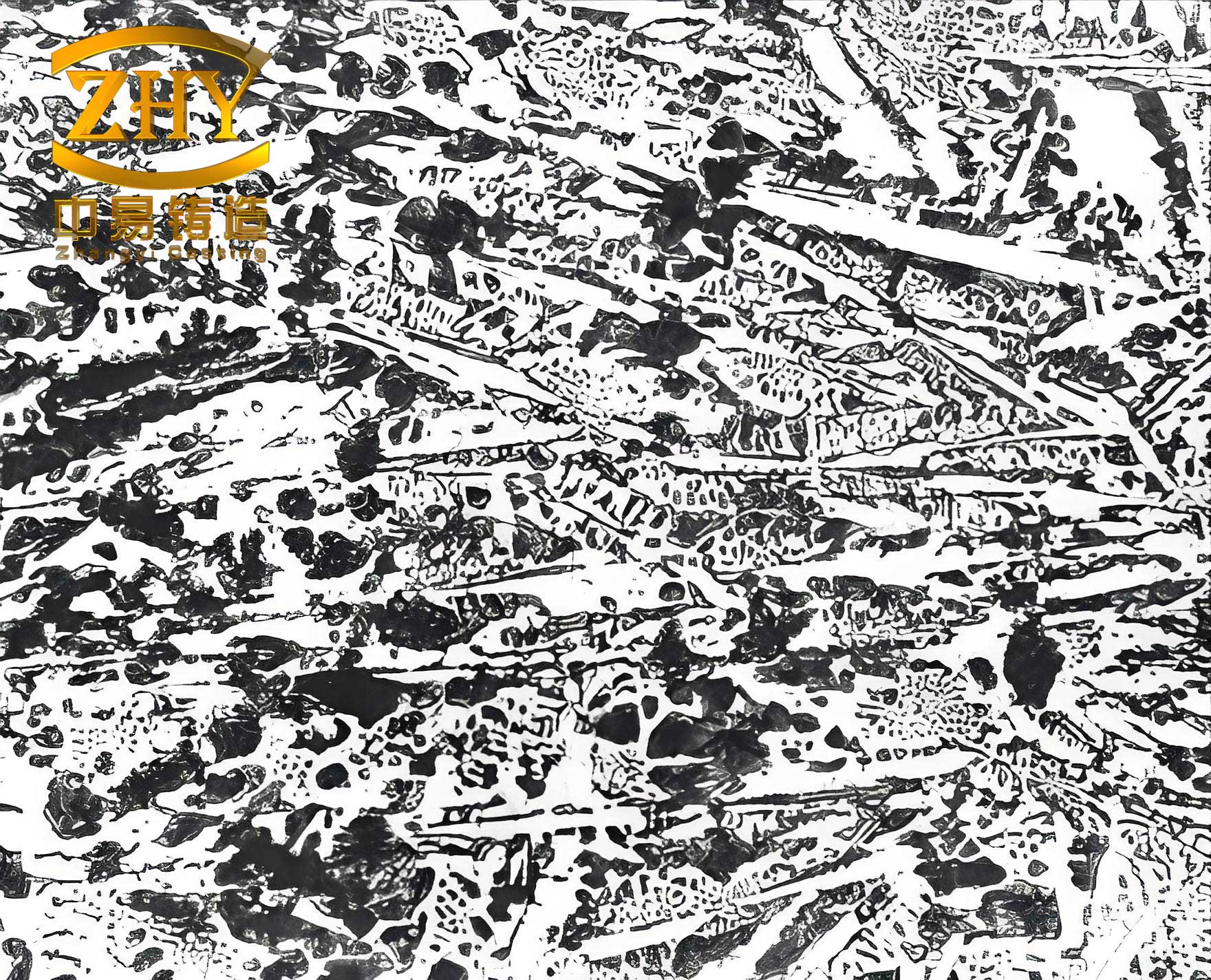
Heat treatment was crucial for modifying the microstructure of the white cast iron. Based on prior literature, we selected austenitizing temperatures of 950°C for lower chromium content and 1050°C for higher chromium content, followed by oil quenching. Tempering was performed at either low temperature (200°C or 300°C) or high temperature (500°C) in a tube resistance furnace under a hydrogen atmosphere. This process aimed to produce different matrix hardness levels and carbide characteristics. The resulting microstructure, confirmed via metallographic examination, consisted of tempered martensite, eutectic carbides, and secondary carbides. The hardness of each specimen was measured using a Vickers hardness tester on polished surfaces, as listed in Table 1. The wear resistance of white cast iron is highly dependent on these microstructural features, which we sought to correlate with abrasive wear performance.
To conduct the wear tests, we designed and fabricated a two-body abrasive wear testing machine, inspired by existing high-speed grinding apparatus. The machine featured a continuous loop of abrasive cloth (aluminum oxide, grit size 80) moving at a linear speed of 10 m/s. The specimen was mounted on a load applicator, applying a constant pressure of approximately 0.1 MPa. Adjustable screws allowed for precise alignment, ensuring the wear surface remained parallel to the direction of abrasive motion. A graduated guide rod enabled lateral movement of the specimen at equal intervals, promoting uniform wear across the abrasive cloth. This setup facilitated controlled and repeatable testing conditions for evaluating white cast iron under high-speed abrasive action.
The testing procedure involved pre-wearing to ensure proper contact between the specimen surface and abrasive cloth. Each specimen was tested for a total of six minutes, with weight loss measurements taken every 30 seconds using a precision balance (accuracy 0.0001 g). To mitigate variability due to uneven abrasive grit distribution, tests were conducted on three different abrasive cloth loops, and the results averaged. The wear ratio was defined as the ratio of the specimen’s cumulative wear loss after six minutes to that of a standard reference material (SAE 52100 bearing steel). Mathematically, this is expressed as: $$ \text{Wear Ratio} = \frac{W_s}{W_{std}} $$ where \( W_s \) is the wear loss of the white cast iron specimen and \( W_{std} \) is the wear loss of the standard bearing steel. A lower wear ratio indicates better abrasion resistance, which is a key metric for assessing white cast iron performance.
The relationship between wear loss and testing duration was linear for most specimens, as shown in Figure 1 (conceptual representation). This consistency validated the testing methodology. We analyzed the wear ratios in conjunction with microstructural parameters, such as carbide area fraction, which was quantified using an image analyzer. However, distinguishing between eutectic and secondary carbides proved challenging, leading to slight overestimations. Hence, carbide area ratios in Table 1 are primarily for sand-cast specimens, where microstructures were more distinct. The data revealed that white cast iron with higher carbon content generally exhibited lower wear ratios, underscoring the role of carbides in impeding abrasive penetration.
Delving into the effects of chemical composition, we observed that carbon content had a pronounced influence on the wear resistance of white cast iron. As carbon increased from 2.5 wt% to 3.8 wt%, the wear ratio decreased systematically for both sand-cast and metal-cast specimens. This trend can be attributed to the higher volume fraction of carbides, which act as barriers to plastic deformation and shear during abrasive contact. The wear mechanism involves abrasive particles cutting into the surface, with material removal occurring via shear along maximum stress directions. Carbides, being hard phases, resist this shear, reducing the depth of cut. The relationship can be modeled by considering the carbide volume fraction \( V_c \) and its effect on wear rate \( R_w \): $$ R_w \propto \frac{1}{\sqrt{V_c}} $$ This inverse proportionality highlights the importance of carbide content in white cast iron for enhancing wear resistance.
Chromium content also played a significant role, but its impact was more complex. In sand-cast white cast iron, increasing chromium from 5 wt% to 15 wt% led to a reduction in wear ratio, due to the formation of harder M7C3-type carbides instead of M3C-type carbides. These chromium-rich carbides exhibit superior hardness and stability. However, in metal-cast specimens, the wear ratio was lowest for 5 wt% Cr and highest for 15 wt% Cr. This anomaly stems from the sensitivity of chromium to solidification cooling rate. Rapid cooling in metal molds promotes finer carbide particles, which are less effective at blocking shear deformation compared to coarser carbides in sand molds. The eutectic temperature elevation with higher chromium content further reduces the extent of surface melting and plastic zones during abrasion, but this benefit is offset by the diminished carbide size in fast-cooled white cast iron. Thus, the interaction between chromium and cooling rate critically determines the wear performance.
Solidification cooling rate emerged as a pivotal factor. Sand-cast white cast iron, with slower cooling, developed larger and more continuous carbide networks, whereas metal-cast white cast iron featured finer, dispersed carbides. The latter microstructure offers less resistance to shear, explaining the generally higher wear ratios for metal-cast specimens. This effect is magnified in high-chromium white cast iron, where chromium enhances the sensitivity to cooling rate. We quantified the cooling rate effect using a parameter \( \lambda \), representing the mean free path between carbides: $$ \lambda = \frac{1 – V_c}{N_c} $$ where \( N_c \) is the number density of carbides. A smaller \( \lambda \) (as in metal-cast white cast iron) correlates with easier shear propagation, leading to increased wear. Table 2 summarizes the influence of cooling rate on carbide morphology and wear ratio.
| Mold Type | Cooling Rate (Approx.) | Carbide Size | Carbide Morphology | Typical Wear Ratio Range |
|---|---|---|---|---|
| Sand | Slow | Coarse (10-50 μm) | Continuous network | 0.70-0.85 |
| Metal | Fast | Fine (1-10 μm) | Dispersed particles | 0.80-0.95 |
Heat treatment, particularly tempering temperature, significantly affected the wear resistance of white cast iron. Low-temperature tempering (200°C or 300°C) retained high matrix hardness due to the presence of tempered martensite with minimal carbide precipitation. In contrast, high-temperature tempering (500°C) caused secondary carbide precipitation from the martensite, reducing matrix hardness. Since the overall hardness of white cast iron is a composite of matrix and carbide hardness, this decline led to higher wear ratios. The relationship between matrix hardness \( H_m \) and wear ratio \( WR \) can be approximated by: $$ WR = a \cdot \exp(-b \cdot H_m) $$ where \( a \) and \( b \) are constants derived from experimental data. Our results confirmed that specimens with higher hardness, achieved through low-temperature tempering, consistently exhibited lower wear ratios, regardless of chemical composition. This underscores the secondary role of matrix hardness relative to carbide characteristics in determining the abrasion resistance of white cast iron.
To integrate these factors, we developed a comprehensive model for wear ratio prediction in chromium white cast iron. The model incorporates carbon content \( C \), chromium content \( Cr \), cooling rate parameter \( \lambda \), and matrix hardness \( H_m \): $$ WR = k_1 \cdot \frac{1}{C^{0.5}} + k_2 \cdot \frac{Cr}{\lambda} + k_3 \cdot \frac{1}{H_m} $$ where \( k_1 \), \( k_2 \), and \( k_3 \) are empirical coefficients. This equation highlights that carbide-related parameters (carbon content and cooling rate) dominate, followed by chromium content, and then matrix hardness. Validation against our data showed good correlation, reinforcing the hierarchical importance of these factors. For instance, a white cast iron with 3.8 wt% C, 15 wt% Cr, sand-cast, and low-temperature tempered yielded the lowest wear ratio of 0.70, aligning with the model’s predictions.
In practical applications, such as mining equipment or slurry pumps, the selection of white cast iron must balance these variables. Our study demonstrates that optimizing carbide type and size through controlled composition and cooling is paramount. Chemical composition adjustments should prioritize carbon and chromium levels to achieve desired carbide volume and type. Heat treatment should then be tailored to maintain adequate matrix hardness without compromising carbide integrity. This holistic approach ensures that white cast iron performs reliably under severe abrasive conditions.
Further insights emerged from examining wear surfaces via scanning electron microscopy. In white cast iron with coarse carbides, abrasive grooves were shallow and discontinuous, indicating effective carbide resistance. Fine-carbide specimens showed deeper grooves and more plastic deformation, confirming the reduced barrier effect. Additionally, no significant surface melting or plastic flow was observed, owing to the high speed (10 m/s) and low pressure (0.1 MPa) in our tests. This aligns with literature suggesting that temperature-dependent mechanical properties play a minor role under such conditions, making microstructural features the primary wear determinants.
We also explored the economic implications of using chromium white cast iron. While higher chromium content increases material cost, the enhanced wear resistance can extend component lifespan, reducing downtime and replacement expenses. A cost-benefit analysis might involve calculating the wear rate per unit cost, but such considerations fall outside this technical study. Nonetheless, our findings provide a foundation for engineers to make informed decisions when specifying white cast iron for abrasive environments.
In conclusion, this experimental investigation systematically evaluated the two-body abrasive wear of chromium-alloyed white cast iron. The key findings are: (1) Carbide type and size, influenced by chemical composition and solidification cooling rate, are the foremost factors affecting wear resistance. Coarse, continuous carbide networks in slow-cooled white cast iron offer superior performance. (2) Chemical composition, particularly carbon and chromium content, plays a secondary role by determining carbide volume and hardness. (3) Matrix hardness, governed by tempering temperature, is the third significant factor, with higher hardness correlating to better wear resistance. These insights underscore the importance of microstructural engineering in developing high-performance white cast iron for demanding applications. Future work could explore three-body abrasive wear or the synergistic effects of corrosion and abrasion on white cast iron, further expanding its utility in industrial contexts.