
In my extensive engagement with advanced manufacturing and materials engineering, I have observed a pressing challenge: the efficient and economical processing of hard, brittle materials like advanced ceramics. Their widespread adoption across industries is often bottlenecked by high machining costs. While diamond grinding is a premier method, traditional bond materials for diamond wheels, such as bronze, frequently exhibit unsatisfactory performance—low grinding efficiency and rapid wheel wear, which directly escalates production costs. From my perspective, the development of a cast iron short fiber-bonded diamond wheel represents a significant leap forward, a next-generation solution born from this very challenge. This innovation, however, is deeply rooted in the sophisticated metallurgy of its primary constituent: high-chromium white cast iron. The journey from a耐磨合金 to a precision tool binder illustrates a remarkable synergy between material design and application.
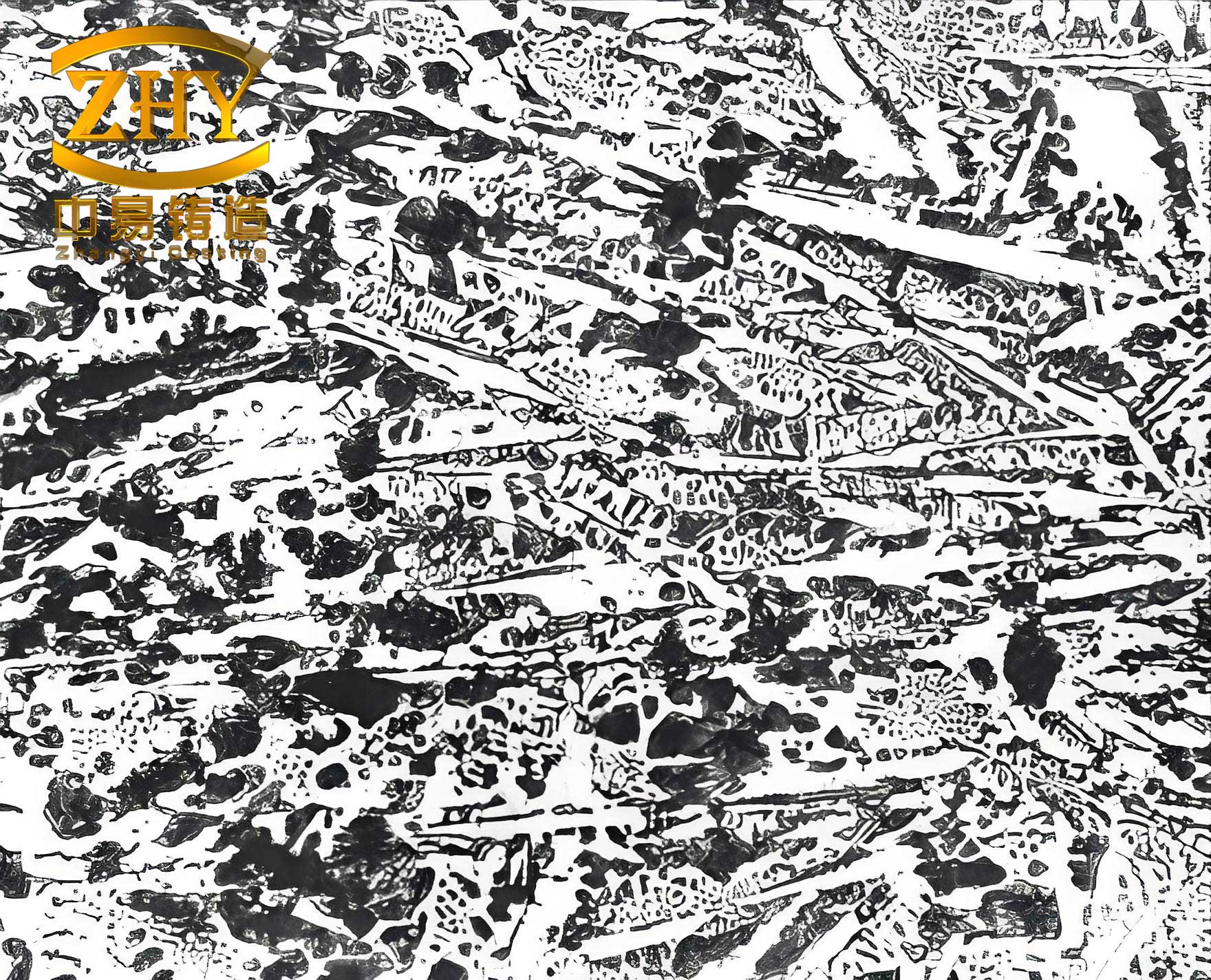
The superior abrasion resistance of high-chromium white cast iron is well-documented, yet its inherent brittleness has historically limited its scope. Through years of research and practical application, a fundamental understanding has been cemented. I have found that optimal wear resistance coupled with acceptable toughness is achieved when the microstructure consists of a martensitic matrix supporting dispersed, discontinuous eutectic carbides of the M7C3 type, complemented by secondary carbides. The type, volume fraction, and morphology of these carbides, alongside the matrix structure, are the levers controlled via alloy composition and heat treatment.
The carbide type is predominantly dictated by the chromium content. When Cr/C ratio is less than approximately 4, the carbide is the softer M3C type (cementite), characteristic of普通 white cast iron and undesirable for high-stress abrasion. At higher chromium levels (typically Cr > 10-12%), the hard (HV 1300-1800) M7C3 carbide forms. This is the desired phase in high-chromium white cast iron. The volume fraction of carbides directly influences hardness and brittleness. For high-stress abrasive wear with some impact, it is generally advised to keep the carbide volume below 30%. The eutectic carbon content, which influences this volume, can be estimated using an empirical formula I often employ:
$$C_e = 4.4 – 0.054 \times Cr$$
where $C_e$ is the eutectic carbon percentage. Furthermore, the volume percentage of carbides can be approximated by:
$$\%V_{carbide} = 12.33(C) + 0.55(Cr) – 15.2$$
where C and Cr are the weight percentages of carbon and chromium, respectively.
The matrix is equally critical. A martensitic base provides high hardness, firmly supporting the carbides and resisting cutting by abrasives, yielding the best anti-wear效果. For applications involving significant impact, a predominantly austenitic matrix, which can work-harden under冲击负荷, is often preferred. Achieving a martensitic matrix, especially in thick-section castings, requires precise chemical design and thermal processing.
The role of alloying elements in shaping this microstructure is complex and interdependent. My experience aligns with the following summary:
| Element | Primary Functions & Effects | Typical Control Range (wt.%) |
|---|---|---|
| Carbon (C) | Determines carbide volume fraction. Increases hardness but reduces toughness and淬透性. Key for balancing hardness and impact resistance. | 2.0 – 3.5 |
| Chromium (Cr) | Defines carbide type (M7C3). Enhances wear/heat resistance. Contributes to hardenability when in solution. Refines eutectic structure at high levels. | 12 – 28 |
| Molybdenum (Mo) | Powerful hardenability enhancer. Retards secondary carbide precipitation, stabilizing austenite. Often essential for thick sections. | 0.5 – 3.0 |
| Nickel (Ni) | Austenite stabilizer and hardenability agent. Often used with Mo. | 0 – 1.5 |
| Copper (Cu) | Cost-effective alternative to Ni for improving hardenability. Stabilizes austenite. | 0 – 1.2 |
| Manganese (Mn) | Moderate hardenability aid. Austinite stabilizer; high levels can lead to excessive retained austenite. | 0.5 – 1.5 |
| Silicon (Si) | Decreases hardenability. Raises Ac1 temperature. Often limited but difficult to remove完全 due to ferrochromium additions. | < 1.0 |
| Vanadium (V) | Forms very hard carbides. Can stabilize carbides and, with Mo, promote as-cast martensite. | 0 – 1.0 |
Controlling the as-cast structure is a strategic decision. For castings used in the as-cast or stress-relieved condition, the matrix must be martensitic or austenitic-martensitic, with no pearlite. This demands sufficient alloy content to suppress the pearlite transformation. If the component will be heat-treated (austenitized and quenched), a cheaper composition yielding an as-cast pearlitic structure is acceptable, provided it has enough hardenability to transform to martensite upon reheating and quenching. I have worked with compositions designed for both paths. For example, a high-chromium white cast iron intended for正火 of thick sections might have a leaner alloy (lower Mo, Cu) compared to one specified for direct as-cast use.
Heat treatment is the final, critical step in activating the potential of high-chromium white cast iron. The standard process involves austenitizing, quenching, and tempering. To avoid cracking, heating above 200°C must be gradual. Austenitizing is typically performed between 950-1050°C, which dissolves carbon and合金元素 into the austenite and conditions the carbides. The time at temperature depends on section size. Following this, air quenching is usually sufficient due to the alloy’s inherent hardenability. Finally, tempering at 200-550°C is conducted to relieve stresses, precipitate secondary carbides from any retained austenite (increasing its Ms temperature), and temper the martensite, improving toughness. For machinability, a subcritical anneal (e.g., 850-950°C followed by slow cooling) can produce a soft ferrite + carbide structure.
| Process | Typical Temperature Range (°C) | Key Objective | Resulting Matrix (Typical) |
|---|---|---|---|
| Austenitizing | 950 – 1050 | Dissolve carbon/alloy into austenite, condition primary carbides. | Austenite + Undissolved Carbides |
| Quenching (Air) | Room Temperature | Transform austenite to martensite. | Martensite + Retained Austenite + Carbides |
| Tempering | 200 – 550 | Relieve stress, precipitate secondary carbides, temper martensite. | Tempered Martensite + Carbides |
| Annealing (Soft) | 850 – 950 (slow cool) | Produce machinable structure. | Ferrite + Carbides |
This profound understanding of high-chromium white cast iron metallurgy is what enables its transformation into a novel engineering material:铸铁短纤维. These fibers are produced from a specific grade of white cast iron, engineered to be brittle so it can be easily fragmented into short, discrete fibers. The very properties that make the bulk material耐磨—the hard carbides in a strong matrix—now manifest at the fiber scale, providing high strength and thermal stability.
The manufacturing process for the cast iron short fiber-bonded diamond wheel is a fascinating example of powder metallurgy. The blend consists of铸铁短纤维, pure iron powder, diamond abrasive grains, and a temporary binder. This mixture is homogenized, compacted under pressure at room temperature, and then sintered in a protective atmosphere (e.g., dissociated ammonia) at a temperature around 1100°C. During sintering, the iron powder matrix consolidates, embedding and mechanically locking the diamond grits and the铸铁短纤维. The铸铁短纤维 act as the primary reinforcing phase, creating a three-dimensional network within the bond that significantly enhances its strength and fracture toughness compared to conventional bronze bonds. Furthermore, the presence of free graphite within the铸铁短纤维 provides a solid lubricant effect at the grinding interface, helping to maintain workpiece surface finish and reducing wheel loading.
The performance gains are substantial and quantifiable. In my evaluations, when grinding advanced ceramics like alumina, these wheels with a diamond concentration over 100% have demonstrated grinding ratios (volume of workpiece removed per volume of wheel wear) several times higher than equivalent青铜结合剂砂轮. Concurrently, the grinding efficiency is markedly improved, and the resulting workpiece surface roughness is lower. The ability to potentially tailor the bond’s properties through post-sintering heat treatment of the铸铁短纤维 adds another layer of process optimization.
| Performance Metric | Cast Iron Short Fiber Bond | Traditional Bronze Bond |
|---|---|---|
| Grinding Ratio (G-Ratio) | > 400 (e.g., 800) | ~ 200 |
| Relative Grinding Efficiency | High (基准的 2-3x) | Baseline |
| Workpiece Surface Roughness (Ra) | Lower (e.g., 0.15 µm) | Higher (e.g., 0.25 µm) |
| Bond Strength & Toughness | Superior | Good |
| Intrinsic Lubrication | Yes (from graphite) | No |
The utility of铸铁短纤维 extends beyond diamond工具. Another promising application is in the fabrication of self-lubricating composite materials. By blending铸铁短纤维 with graphite powder, compacting, and sintering, one creates a composite where the fibrous network provides high mechanical strength while the graphite ensures continuous lubrication. Bearings made from such composites can operate in vacuum, high-temperature, or oil-free environments, finding potential use in textile, light industrial, and specialized machinery. Additionally, the high temperature resistance and fibrous structure make铸铁短纤维 an excellent candidate for high-temperature acoustic damping panels, serving as a durable replacement for natural fibers in demanding thermal settings.
In conclusion, the narrative of high-chromium white cast iron and铸铁短纤维 is one of synergistic evolution. The deep metallurgical principles governing the abrasion resistance of the bulk alloy have been ingeniously harnessed to create a particulate reinforcement that revolutionizes the performance of superabrasive tools. This represents not just a new tool material, but a holistic materials paradigm where the design of a耐磨合金 directly enables breakthroughs in precision machining and other functional applications. The continuous refinement of both the base white cast iron chemistry and its derivative fiber-composite applications promises ongoing advancements in manufacturing efficiency and capability.