
In the industries of metallurgy, mining, power generation, building materials, chemicals, and coal, many wear-resistant parts in crushing equipment, such as hammer heads, jaw plates, and liners, require both high wear resistance and good toughness. However, single-metal materials often struggle to simultaneously possess these dual characteristics. Therefore, in recent years, the development of composite casting materials has gained attention as a pathway to enhance the performance of castings. Our research focuses on the process and material characteristics of bimetal composite casting, specifically combining high-chromium white cast iron with ordinary carbon cast steel. This approach aims to leverage the excellent wear resistance of white cast iron and the superior toughness of cast steel, thereby producing components that outperform traditional materials like high-manganese steel in service life by multiple times.
The core of this study revolves around two primary casting processes: the insert casting method and the double-pour bimetal composite casting method. Both techniques are designed to fabricate parts where the working surface is made of high-chromium white cast iron for abrasion resistance, while the backing or core is made of ductile cast steel to absorb impact loads and prevent catastrophic failure. A critical innovation in this work is the development of a specialized protective agent that effectively prevents high-temperature oxidation at the bimetal interface, ensuring a clean and metallurgically sound bond. Additionally, precise control of pouring timing and other process parameters is essential for achieving a defect-free composite structure.
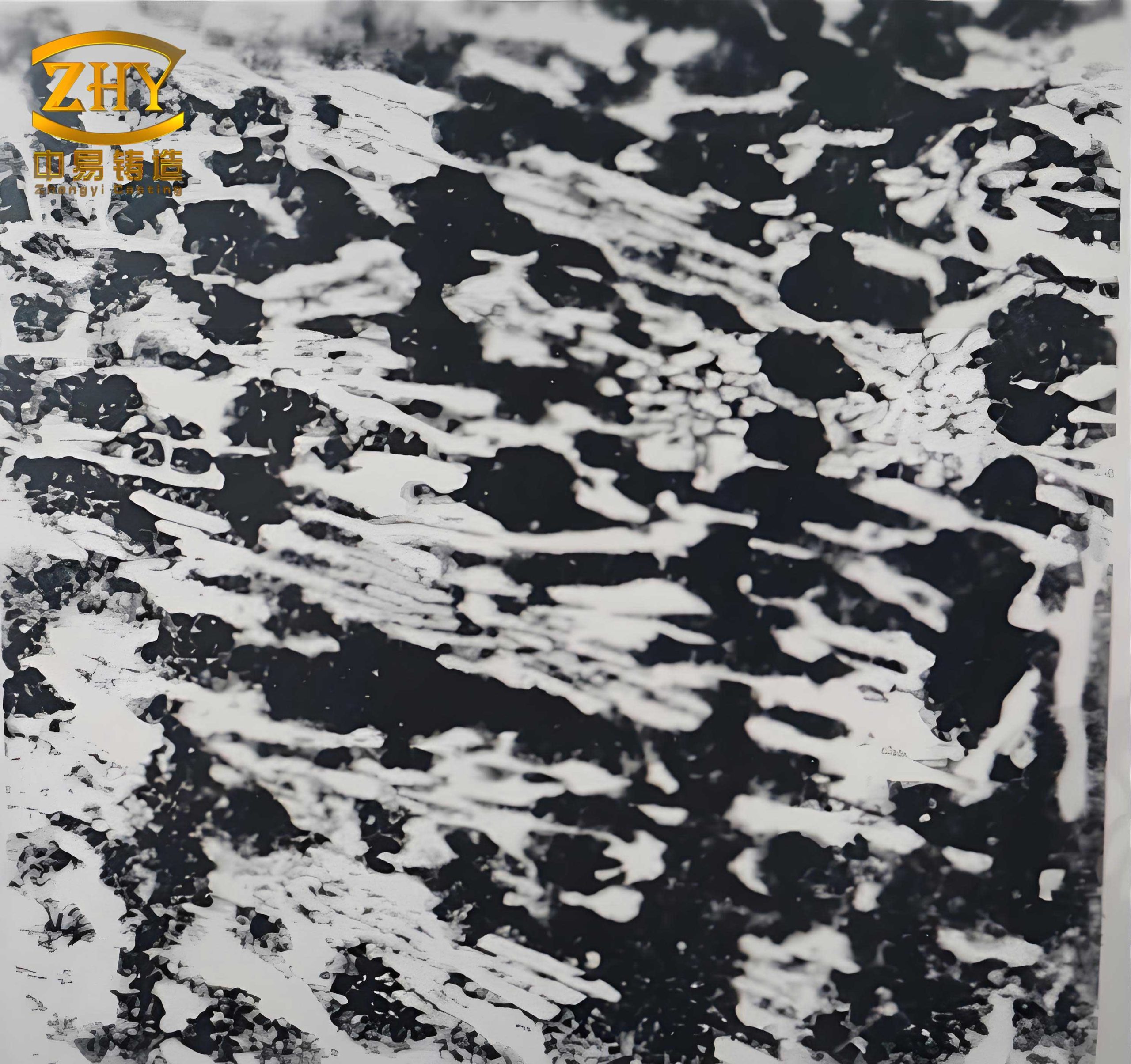
The choice of materials is fundamental. The high-chromium white cast iron used is characterized by its high carbon and chromium content, which promotes the formation of hard carbides (e.g., M7C3) within a martensitic or austenitic matrix, providing exceptional resistance to abrasive wear. The cast steel, typically a medium-carbon grade, offers the necessary toughness and strength. The chemical compositions of the materials employed in both processes are summarized in Table 1. It is important to note that variations exist depending on the specific wear mode—whether for high-stress grinding wear or chisel-type abrasive wear—which influences the exact alloying additions and heat treatments applied.
| Process | Material | C | Si | Mn | Cr | Mo | Ni | Other Elements/Treatment |
|---|---|---|---|---|---|---|---|---|
| Insert Casting | Cast Steel (Backing) | 0.35-0.45 | 0.30-0.60 | 0.70-1.00 | – | – | – | Inoculation with Al or Rare Earth |
| High-Cr White Cast Iron (Insert) | 2.8-3.2 | 0.4-0.8 | 0.5-1.0 | 14-18 | 1.5-2.5 | 0.8-1.2 | Inoculation or Modification with Ti, V, or B | |
| Double-Pour Casting | Cast Steel (First Layer) | 0.25-0.35 | 0.20-0.50 | 0.50-0.80 | – | – | – | Inoculation Treatment |
| High-Cr White Cast Iron (Second Layer) | 3.0-3.6 | 0.5-1.0 | 0.5-1.0 | 18-22 | 2.0-3.0 | 1.0-1.5 | Used for Chisel-type Abrasion; Alloying for High-Stress Abrasion |
Insert Casting Process
The insert casting process is generally employed for producing wear parts with complex geometries or those serving in particularly harsh environments. The principle involves placing pre-fabricated blocks of high-chromium white cast iron into the mold cavity beforehand. Subsequently, molten cast steel with good strength and toughness is poured into the mold, enveloping the inserts. Conversely, in some configurations, steel inserts can be placed into a mold for white cast iron. The key is to achieve a metallurgical bond at the interface.
The distribution density and orientation of the inserts must satisfy both the service requirements and the thermal conditions during casting. It is critical that the inserts do not shift during pouring. Prior to placement, the surfaces of the inserts require cleaning to remove oxides and contaminants. After pouring the cast steel, a strong bond without casting defects can only be achieved if the interface region remains in a liquid or semi-liquid state for a sufficient time to allow mutual diffusion and fusion.
The primary challenge is managing the heat balance. Numerous factors influence the temperature of the cast steel in the mold after filling, including the pouring temperature of the steel, the weight and geometry of the casting, the weight and surface area of the inserts, the gating system design, and the heat dissipation area of the mold cavity. For a specific casting and fixed process, factors like casting weight and mold geometry are relatively constant. Therefore, the pouring temperature and the characteristics of the inserts become the fundamental process parameters.
The necessary condition for a successful insert casting process can be expressed by a fundamental heat balance relationship. Let \( Q_s \) represent the heat content of the molten cast steel poured into the mold, \( Q_i \) the heat required to raise the surface layer of the insert to its melting point, \( Q_m \) the heat needed to raise the mold material around the insert to above the melting point of the cast steel, and \( Q_{sl} \) the heat content of the cast steel at its melting point within the mold. The condition is:
$$ Q_s \geq Q_i + Q_m + Q_{sl} $$
This inequality must serve as the basis for selecting the weight ratio between the insert and the cast steel, and for determining the appropriate pouring temperature. A simplified model for estimating the required pouring temperature \( T_p \) can be derived considering the masses and specific heats. If \( m_s \) is the mass of cast steel, \( c_s \) its specific heat, \( m_i \) the mass of the insert, \( c_i \) its specific heat, \( T_m \) the melting point of the insert surface material, \( T_0 \) the initial insert temperature, and \( L_s \) the latent heat of fusion of the cast steel, a simplified energy balance (neglecting mold heating for brevity) gives:
$$ m_s c_s (T_p – T_m) \geq m_i c_i (T_m – T_0) + m_s L_s $$
Rearranging to solve for the minimum pouring temperature:
$$ T_p \geq T_m + \frac{m_i c_i (T_m – T_0) + m_s L_s}{m_s c_s} $$
In practice, this is an oversimplification, and the design of the gating system is equally crucial to ensure proper thermal distribution. The gating must promote directional solidification towards the inserts and minimize premature chilling.
Double-Pour Bimetal Composite Casting Process
This process involves pouring two different liquid metals sequentially into the same mold through separate gating systems to obtain a bimetal composite casting. Our research employed the method of pouring the steel layer first, followed by the white cast iron layer. The interval time between the two pours is the most critical parameter in this process. Improper control can lead either to excessive mixing of the two metals, resulting in a diluted interface with compromised properties, or to insufficient bonding if the first layer has solidified too much.
Experimental results indicate that the optimal timing for pouring the white cast iron is when the steel layer has mostly solidified, but the surface in contact with the incoming iron is still at a temperature high enough to be remelted by the thermal energy of the iron pour. This creates a thin molten layer on the steel surface, while the white cast iron itself remains liquid for a period, facilitating interdiffusion and bonding.
The allowable range for the pouring interval time has a minimum \( \Delta t_{min} \) and a maximum \( \Delta t_{max} \). These can be estimated based on the solidification kinetics of the steel layer. Let \( \tau_{sol} \) be the solidification time of the steel layer. The minimum interval \( \Delta t_{min} \) must be sufficient for the steel surface to form a stable solid shell to prevent wash-away, while \( \Delta t_{max} \) must be before the steel surface temperature drops below the solidus of the white cast iron or becomes too oxidized.
A theoretical estimation for \( \Delta t_{min} \) and \( \Delta t_{max} \) can be derived from heat transfer principles. If we denote \( k \) as the heat transfer coefficient between the casting and the mold (in cal/(cm²·min·°C)), \( V \) as the volume of the steel layer (cm³), \( S \) as its surface area (cm²), and \( \tau_{sol} \) as its solidification time (min), we can use Chvorinov’s rule. The solidification time is proportional to the square of the modulus (volume-to-surface area ratio):
$$ \tau_{sol} = K \left( \frac{V}{S} \right)^2 $$
where \( K \) is the solidification constant for steel in a sand mold (typically around 0.8-1.2 cm²/min). For a steel layer of thickness \( d \) (cm), assuming a simple plate geometry, \( V/S \approx d/2 \), so:
$$ \tau_{sol} \approx K \left( \frac{d}{2} \right)^2 = \frac{K d^2}{4} $$
The minimum interval \( \Delta t_{min} \) should be a fraction of \( \tau_{sol} \), ensuring a solid skin, while \( \Delta t_{max} \) is related to the time for the surface temperature to drop to a critical value. An empirical relationship derived from experiments suggests:
$$ \Delta t_{min} \approx 0.3 \, \tau_{sol} $$
$$ \Delta t_{max} \approx 0.7 \, \tau_{sol} $$
Table 2 presents measured interval times for different steel layer thicknesses, showing good agreement with calculated values using the above approach with \( K = 1.0 \, \text{cm}^2/\text{min} \).
| Steel Layer Thickness, d (cm) | Calculated Solidification Time, \( \tau_{sol} \) (min) (K=1.0) | Measured \( \Delta t_{min} \) (min) | Measured \( \Delta t_{max} \) (min) | Recommended Interval Range (min) |
|---|---|---|---|---|
| 2.0 | 1.00 | 0.32 | 0.68 | 0.3 – 0.7 |
| 3.0 | 2.25 | 0.70 | 1.55 | 0.7 – 1.6 |
| 4.0 | 4.00 | 1.25 | 2.80 | 1.2 – 2.8 |
| 5.0 | 6.25 | 1.90 | 4.40 | 1.9 – 4.4 |
A paramount factor for the success of the double-pour process is preventing oxidation of the steel layer surface during the interval. Oxidation would form a barrier, preventing a clean metallurgical bond. We developed and successfully applied a specific protective agent. This agent possesses good fluidity, antioxidant and derusting capabilities, low density, small surface tension, low melting point, and generates a protective atmosphere or slag layer that shields the steel surface from air. The composition of this agent is proprietary, but its effectiveness was proven in trials, consistently yielding interfaces free from oxides and inclusions.
Microstructure and Interface Characterization
The quality of the bimetal composite is judged by the microstructure and integrity of the interfacial zone. In a well-produced composite, the interface shows a narrow diffusion zone where elements from the white cast iron (e.g., Cr, C) and the cast steel (e.g., Fe, C) interdiffuse. The transition should be gradual to avoid sharp property gradients that could act as stress concentrators.
Microstructural analysis typically reveals three distinct zones: the cast steel substrate, the interfacial diffusion zone, and the white cast iron overlay. The diffusion zone, often 100-500 µm wide, may contain mixed structures such as pearlite, bainite, or martensite, along with carbide particles. The absence of continuous oxide films or porosity is critical. The hardness profile across the interface should transition smoothly from the high hardness of the white cast iron (often 600-800 HV) to the lower hardness of the cast steel (200-300 HV). This gradient helps in absorbing impact energy.
The bonding mechanism is primarily metallurgical fusion aided by diffusion. The strength of the bond can be assessed via shear tests or bend tests. Successful composites exhibit bond strengths that often exceed the yield strength of the cast steel backing, indicating the interface is not the weak link. The performance of white cast iron in these composites is enhanced because the tough steel substrate constrains the brittle iron, allowing it to withstand higher impact loads without spalling.
Process Optimization and Mathematical Modeling
To achieve consistent results, process optimization is essential. This involves modeling the thermal history during casting. A simplified one-dimensional heat transfer model can be used to simulate the temperature field. Consider a coordinate system where x=0 is the interface, with the steel layer occupying -ds < x < 0 and the white cast iron layer occupying 0 < x < di. The heat conduction equation in each layer is:
$$ \frac{\partial T}{\partial t} = \alpha \frac{\partial^2 T}{\partial x^2} $$
where \( \alpha \) is the thermal diffusivity (\( \alpha = k/(\rho c_p) \), with k being thermal conductivity, ρ density, and c_p specific heat). Initial conditions are the pouring temperatures of each layer at their respective pour times. Boundary conditions include heat transfer to the mold at the outer surfaces and continuity of temperature and heat flux at the interface (assuming perfect contact after fusion).
An analytical solution for the temperature at the interface \( T_i(t) \) can be approximated for the critical period after the second pour. If we assume the white cast iron is poured at time t = τ (the interval), and its initial temperature is \( T_{p,i} \), while the steel surface temperature at that moment is \( T_{s}(\tau) \), the subsequent interface temperature can be estimated using heat balance across a thin control volume. Let \( h_{eff} \) be an effective heat transfer coefficient at the interface. The rate of temperature change can be proportional to the temperature difference:
$$ \frac{dT_i}{dt} \propto \left( T_{s}(\tau) – T_i \right) – \left( T_i – T_{p,i} \right) $$
This model helps in understanding how long the interface remains above the solidus temperatures of both materials. For a robust bond, \( T_i \) should remain above the solidus of the lower-melting-point material (usually the steel, ~1450°C) for a sufficient diffusion time \( t_{diff} \). Empirical data suggests \( t_{diff} \) should be at least 30-60 seconds for adequate interdiffusion.
The required diffusion time can be related to the desired diffusion depth δ of a key element, such as carbon, using Fick’s second law. For a semi-infinite couple, the penetration depth is roughly:
$$ \delta \approx \sqrt{D t_{diff}} $$
where D is the interdiffusion coefficient at the interface temperature. For carbon in austenite near 1500°C, D is on the order of 10⁻⁸ cm²/s. To achieve a diffusion zone of δ = 100 µm (0.01 cm), the required time is:
$$ t_{diff} \approx \frac{\delta^2}{D} = \frac{(0.01)^2}{10^{-8}} = 10^4 \, \text{s} \approx 2.8 \, \text{hours} $$
This is impractically long for a casting process, confirming that the bond formation relies primarily on convective mixing and rapid diffusion in the thin molten layer, not bulk solid-state diffusion. Therefore, maintaining a molten state at the interface for even a short time (e.g., 1-2 minutes) is sufficient for bond formation.
Application and Performance Evaluation
The developed bimetal composite castings have been applied to various wear parts in crushing and grinding equipment. Field tests and comparative studies demonstrate that components like composite hammer heads and liner plates exhibit service lives that are generally 3 to 5 times longer than those made of traditional high-manganese steel under similar operating conditions. This significant improvement is attributed to the synergistic combination of the extreme hardness and wear resistance of the high-chromium white cast iron working surface and the impact-absorbing capability of the cast steel backing.
In hammer crushers, for instance, the hammer head experiences severe impact and abrasion. A monolithic white cast iron hammer would be too brittle and could fracture. A monolithic steel hammer would wear too quickly. The composite design allows the white cast iron tip to handle abrasion while the steel body manages impact stresses, resulting in sustained performance and reduced downtime. The economic benefit from extended service life and reduced replacement frequency is substantial.
Table 3 summarizes the comparative performance data for different materials in specific applications. The data clearly shows the superiority of the white cast iron-steel composite over single-material solutions.
| Application (Part) | Material | Average Service Life (hours) | Relative Life (vs. High-Mn Steel) | Failure Mode |
|---|---|---|---|---|
| Limestone Hammer Crusher (Hammer Head) | High-Manganese Steel | 120 | 1.0x | Excessive wear, deformation |
| Limestone Hammer Crusher (Hammer Head) | High-Chromium White Cast Iron (Monolithic) | 80 | 0.67x | Catastrophic fracture |
| Limestone Hammer Crusher (Hammer Head) | Bimetal Composite (White Cast Iron / Steel) | 550 | 4.6x | Gradual wear of white iron layer |
| Coal Pulverizer (Liner Plate) | High-Manganese Steel | 800 | 1.0x | Thinning, perforation |
| Coal Pulverizer (Liner Plate) | Ni-Hard Cast Iron | 1000 | 1.25x | Cracking, spalling |
| Coal Pulverizer (Liner Plate) | Bimetal Composite (White Cast Iron / Steel) | 3500 | 4.4x | Uniform wear, no spalling |
The success of these composites hinges on the reliable production of the white cast iron layer with consistent properties. Factors such as the carbide morphology, matrix structure, and hardness of the white cast iron are critical. The high-chromium white cast iron used typically has a microstructure comprising primary carbides (e.g., (Cr,Fe)7C3) in a martensitic matrix, achieved through appropriate heat treatment like air quenching and tempering. The high chromium content not only forms hard carbides but also improves corrosion resistance, which is beneficial in wet or corrosive environments.
Challenges and Solutions in Manufacturing
Producing large or complex bimetal castings presents several challenges beyond controlling the pour interval and oxidation. These include mold design to accommodate two different gating systems, potential distortion due to different thermal contractions of the two metals, and residual stresses at the interface.
To address distortion, finite element analysis (FEA) can be employed to simulate the thermal stresses during solidification and cooling. The difference in coefficients of thermal expansion (CTE) between white cast iron (≈ 10-12 × 10⁻⁶ /°C) and cast steel (≈ 12-14 × 10⁻⁶ /°C) is relatively small, but the differential cooling can still induce stresses. Preheating the mold or using exothermic padding around the steel layer can help reduce thermal gradients.
Another challenge is ensuring the integrity of the interface in the presence of shrinkage. The white cast iron, having a higher carbon equivalent, tends to have greater solidification shrinkage than the steel. If the interface is not fed properly, shrinkage porosity can weaken the bond. This is mitigated by designing the gating and risering system to promote directional solidification from the interface towards the risers in the white cast iron layer. Chills may also be used strategically to control solidification sequence.
The protective agent mentioned earlier plays a dual role: it prevents oxidation and can also act as a flux, helping to dissolve any oxide films present and improve wettability between the two metals. The agent is typically applied to the surface of the first poured layer (steel) just before the second pour, or it can be introduced with the second stream of metal.
Economic and Environmental Considerations
From an economic standpoint, bimetal composite casting offers a cost-effective solution. Although the initial material and processing costs may be higher than for a single-material casting, the extended service life reduces the total cost per operating hour significantly. Additionally, it allows for the use of expensive alloying elements like chromium and molybdenum only where they are most needed—in the wear-facing white cast iron layer—while using cheaper low-alloy steel for the bulk of the component. This optimizes material usage.
Environmentally, longer-lasting parts mean less frequent replacement, reducing the raw material consumption, energy for production, and waste generation associated with manufacturing and disposing of worn parts. The ability to repair or refurbish some composite parts by reapplying a white cast iron layer onto the steel base is also an area of potential development, further enhancing sustainability.
Future Directions and Research Potential
While the current research has established reliable processes for producing white cast iron-steel bimetal composites, there is ample room for further investigation. Future work could focus on:
- Developing more accurate real-time monitoring and control systems for pour timing, perhaps using infrared thermography to measure the surface temperature of the first layer.
- Exploring other material combinations, such as using advanced high-entropy alloys or ceramic-reinforced composites as the wear-facing material paired with steel.
- Improving the toughness of the white cast iron itself through advanced inoculation, microalloying, or heat treatment to push the boundaries of allowable impact conditions.
- Numerical simulation of the entire process, including fluid flow, heat transfer, stress development, and microstructure prediction, to enable virtual prototyping and optimization.
- Studying the fatigue and fracture mechanics of the bimetal interface under cyclic loading conditions, which is crucial for dynamic applications like hammer mills.
The fundamental understanding of the solidification and bonding mechanisms in such composites contributes to the broader field of metallurgy and materials engineering. The principles learned here can be applied to other bimetal or multi-metal casting systems.
Conclusion
This comprehensive study on the bimetal composite casting of high-chromium white cast iron and cast steel has demonstrated the technical feasibility and practical advantages of this approach for producing high-performance wear-resistant components. Two primary processes—insert casting and double-pour casting—have been detailed, with emphasis on critical parameters such as heat balance, pouring interval control, and interface protection. The development of an effective protective agent is a key enabler for the double-pour process. Mathematical models and empirical data provide guidelines for process design. The resulting composites exhibit a superior combination of hardness, wear resistance, and toughness, leading to service lives that are multiple times longer than those of conventional high-manganese steel parts. The successful implementation of this technology in industrial settings validates its reliability and economic benefit. Continued research and development will further enhance the capabilities and applications of white cast iron-based bimetal composites, solidifying their role in advancing the durability and efficiency of machinery in demanding sectors.
Throughout this research, the term white cast iron has been central, referring specifically to the high-chromium variant that provides exceptional abrasion resistance. The properties of white cast iron, when judiciously combined with the toughness of steel, create a synergistic material system. The processes described ensure that the white cast iron layer is securely bonded to the steel substrate, overcoming the inherent brittleness of white cast iron when used alone. This integration of materials science and foundry engineering paves the way for more durable and cost-effective solutions for industrial wear problems. The versatility of white cast iron in composite structures highlights its continued importance in modern materials development.