
In my extensive work with wear-resistant materials, the quest to improve the fracture resistance of white cast iron has been a persistent challenge. White cast iron, characterized by its high volume of hard cementite (Fe3C) carbides, offers exceptional abrasion resistance. However, its application under impact or significant tensile stress is severely limited by its inherent brittleness. This brittleness is fundamentally tied to the microstructure. In its conventional form, particularly in hypoeutectic low-carbon white cast iron, the cementite phase forms a continuous, three-dimensional network during eutectic solidification. This network acts as a rigid, brittle skeleton that severely compromises the continuity of the metallic matrix. Cracks initiate and propagate readily along these interconnected carbide paths, leading to catastrophic failure with minimal plastic deformation. Therefore, my research and practical efforts have focused on a fundamental microstructural engineering goal: disrupting this continuous carbide network to isolate the cementite phases, thereby improving toughness without drastically sacrificing the premier wear characteristics of white cast iron.
The most economical and technically feasible approach to achieve this microstructural modification is through melt treatment, specifically inoculation or modification. The solidification path of hypoeutectic white cast iron involves the initial precipitation of austenite dendrites, followed by the eutectic reaction: L → γ + Fe3C. The morphology of the eutectic cementite is not arbitrary; it is governed by the relative growth kinetics of the two cooperating phases (austenite and cementite) under the given solidification conditions. The goal is to influence these kinetics to favor a “divorced” or “abnormal” eutectic structure, where the cementite grows in a more blocky, isolated form rather than as a continuous network. Among various potential modifiers, rare earth (RE) elements have proven to be exceptionally effective. Their high chemical affinity for oxygen and sulfur allows them to purify the melt, while their direct influence on the solid-liquid interface kinetics can alter the growth mode of the eutectic phases. Given the abundant domestic resources of rare earth elements, their application presents a strategically advantageous solution. This article details my systematic investigation and practical application of rare earth modification for low-carbon white cast iron, drawing from direct experimental and production experience.
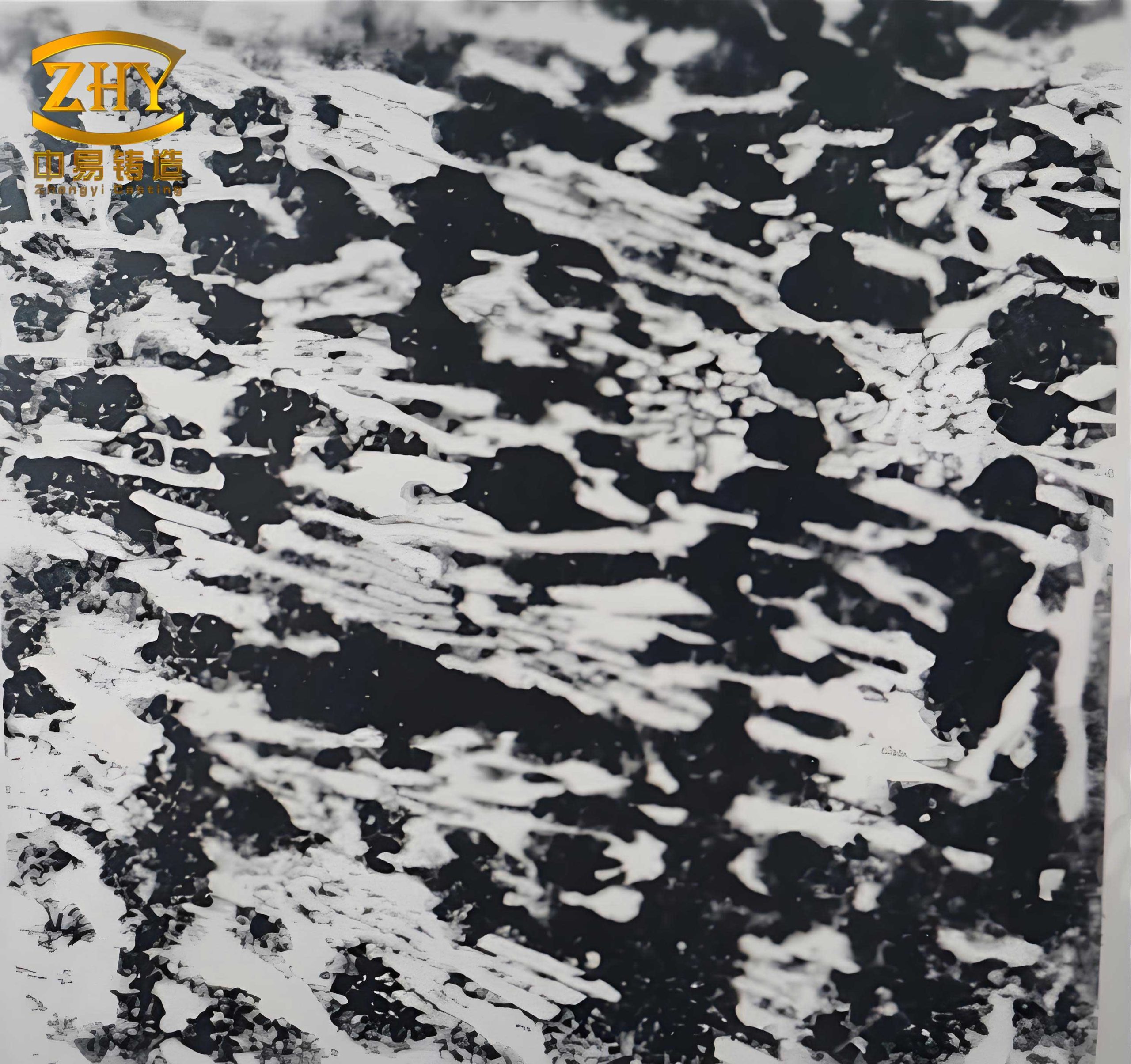
The foundational experiments were conducted using a core industrial product: grinding balls for milling applications. The molten white cast iron was prepared in a medium-frequency induction furnace with an acidic lining. The base chemical composition was meticulously controlled to ensure a consistent hypoeutectic starting point, crucial for studying the modification effect on the eutectic structure. The typical target composition range was as follows: Carbon (C) between 2.6-3.0%, Silicon (Si) between 0.8-1.2%, Manganese (Mn) between 0.6-1.0%, with Sulfur (S) and Phosphorus (P) kept as low as possible, typically below 0.05% each. The modifying agent was a commercial Rare Earth Silicon Iron alloy (RE-Si-Fe). The critical experimental variable was the method and quantity of rare earth addition. To assess the impact on both microstructure and mechanical properties, and to find a stable, production-viable method, several addition protocols were tested:
- Addition of 0.1% RE in the furnace.
- Addition of 0.2% RE in the furnace.
- Addition of 0.3% RE in the furnace.
- Addition of 0.2% RE in the furnace followed by a second addition of 0.1% in the ladle (total 0.3%).
- Addition of 0.3% RE in the furnace followed by a second addition of 0.1% in the ladle (total 0.4%).
The melt was subsequently poured into green sand molds to produce grinding balls of a standard diameter. Specimens for metallographic analysis and mechanical testing were extracted directly from these cast balls and from finished heat-treated balls. This sampling methodology is vital, as the solidification conditions (cooling rate, thermal gradient) for a spherical casting differ significantly from those of a standard keel block or Y-block specimen. Data from a simplified shape does not accurately predict the microstructure and performance of the actual product, especially considering the pronounced difference between the surface and center of a sphere.
The microstructural evolution was dramatic and directly correlated with the rare earth addition level. The as-cast structure of the unmodified low-carbon white cast iron exhibited the classic continuous network of cementite within a pearlitic matrix. With the introduction of rare earths, this network began to fragment. At an addition level of 0.2% RE in-furnace, the cementite network was effectively broken into a disconnected, semi-continuous, or “broken-network” morphology. At 0.3% RE addition, the cementite transformed further into isolated blocky and rod-like forms distributed in the matrix. This represents the ideal modified structure for toughness enhancement. However, rare earth elements are also potent graphitizers. When the addition exceeded a critical threshold (approximately 0.4% total), graphite nodules began to appear in the microstructure alongside the modified carbides. While this may be desirable for other cast iron types, for white cast iron intended for high-stress abrasion, the formation of soft graphite is generally detrimental to wear resistance and represents an inefficient use of the modifier.
The mechanical property data, particularly impact toughness, confirmed the microstructural observations. Impact specimens were machined from the cast balls, with the notch positioned to sample material from near the center of the sphere, where the cooling rate is slowest and the carbide network is typically most developed. The results are summarized comprehensively in the table below, which also includes hardness data from the surface of finished, heat-treated balls.
| Rare Earth Addition Protocol | Microstructure Description (As-Cast Core) | Average Impact Toughness aku (J/cm²) | Average Hardness of Heat-Treated Ball (HRC) | Remarks |
|---|---|---|---|---|
| Unmodified (Reference) | Continuous cementite network + Pearlite | 3 – 4 | 58 – 62 | Baseline brittle behavior. |
| 0.1% RE (Furnace) | Thinned, partially broken network | 5 – 6 | 59 – 62 | Modest improvement. |
| 0.2% RE (Furnace) | Broken-network cementite | 7 – 9 | 60 – 63 | Significant toughness gain; target structure. |
| 0.3% RE (Furnace) | Isolated blocky/rod-like cementite | 9 – 11 | 61 – 64 | Optimal isolated carbide morphology. |
| 0.2%F + 0.1%L (Total 0.3%) | Isolated blocky cementite | 9 – 10 | 60 – 63 | Similar to 0.3% furnace addition. |
| 0.3%F + 0.1%L (Total 0.4%) | Blocky cementite + Graphite nodules | 12 – 14 | 56 – 60 | Excessive RE; graphitization occurs, hardness drops. |
The data unequivocally shows that rare earth modification can more than double or even triple the impact toughness of low-carbon white cast iron when the cementite is fully isolated. It is crucial to note that the toughness values reported are from the slowest-cooling region (near the center). The toughness in the rapidly chilled outer layer of the ball, where the cementite is finer and likely even more fragmented, is expected to be substantially higher. The hardness remains high and even shows a slight increase with optimal modification, as the refined, blocky carbides continue to provide excellent wear resistance. The drop in hardness at the highest addition level correlates with the onset of graphitization.
Based on this experimental matrix and considering production stability, process simplicity, and cost-effectiveness, the in-furnace addition of 0.2% to 0.3% rare earth alloy was identified as the optimal practice. Ladle additions, while effective, introduce an extra process variable and potential temperature loss. The goal is to achieve the isolated carbide structure without inducing graphite formation. The effectiveness of this treatment is not merely empirical; it has a sound theoretical basis in solidification science.
The modification mechanism of rare earths in white cast iron is multifaceted. Primarily, rare earth elements are strong deoxidizers and desulfurizers. They form stable, high-melting-point compounds like RE2O3, RE2O2S, and RES. This cleansing action removes interfacial poisons like oxygen and sulfur from the melt, which can otherwise adsorb at the growing solid-liquid interface and hinder the lateral growth of phases, promoting a more planar or networked morphology. A cleaner interface allows for different growth kinetics.
Secondly, and more specifically for the eutectic reaction, rare earths are believed to alter the relative growth velocities (V) of the austenite (γ) and cementite (Fe3C) phases. In a normal Fe-Fe3C eutectic, the two phases grow cooperatively in a coupled zone, with the cementite often leading. The modification pushes the system towards an “abnormal” or “divorced” eutectic growth. One plausible theory is that the rare earths, either in solution or as micro-inclusions, preferentially segregate to or poison the growth tips of the cementite phase, reducing its axial growth rate (VFe3C). Meanwhile, the growth of the austenite phase (Vγ) is less affected or may even be enhanced due to interface purification. When the ratio of growth velocities changes such that Vγ > VFe3C, the austenite can envelop the cementite, leading to its isolation. This can be conceptually represented by a modified Jackson-Hunt type model for irregular eutectics, where the undercooling (ΔT) for each phase is a function of composition and interface kinetics, which are altered by the RE presence:
$$ \Delta T_{Fe_3C} = \frac{m_{Fe_3C} \cdot \Delta C_{Fe_3C}}{1 – (1-k_{Fe_3C}) \cdot Iv(P_{Fe_3C})} + \frac{V}{\mu_{Fe_3C}^{RE}} $$
$$ \Delta T_{\gamma} = \frac{m_{\gamma} \cdot \Delta C_{\gamma}}{1 – (1-k_{\gamma}) \cdot Iv(P_{\gamma})} + \frac{V}{\mu_{\gamma}^{RE}} $$
Here, \( m \) is the liquidus slope, \( \Delta C \) is the composition difference, \( k \) is the partition coefficient, \( Iv(P) \) is the Ivantsov function, \( V \) is the growth velocity, and \( \mu^{RE} \) is the kinetic coefficient which is modified by the presence of rare earths. The key point is that \( \mu_{Fe_3C}^{RE} \) likely decreases significantly, increasing the kinetic undercooling term for cementite and hindering its continuous growth, promoting a switch to a divorced growth mode where austenite is the leading phase.
Furthermore, the graphitizing effect at higher additions can be explained by the influence of rare earths on the metastable (Fe-Fe3C) vs. stable (Fe-Graphite) system equilibrium. Rare earths are known to increase the carbon activity and reduce the chilling tendency. When added in excess, they can shift the local solidification conditions sufficiently to allow graphite nucleation and growth, either as nodules or as undercooled graphite, instead of cementite. The transition can be related to the critical cooling rate for white solidification. The modified critical cooling rate \( R_c^{RE} \) is lowered by rare earths:
$$ R_c^{RE} = R_c^0 – \beta \cdot [RE] $$
where \( R_c^0 \) is the critical cooling rate for the unmodified iron, \( \beta \) is a positive constant, and [RE] is the dissolved rare earth concentration. At very high [RE], \( R_c^{RE} \) can become lower than the actual cooling rate in some regions, leading to graphite formation.
The practical application of this technology extends beyond grinding balls. Any component made from white cast iron that is subject to impact or bending stress can benefit. This includes slurry pump liners, crusher jaws and cones, rolling mill guides, and certain types of mill hammers. The design philosophy shifts from accepting extreme brittleness to engineering a material with a reliable toughness floor. The modified white cast iron retains its primary defense against wear—the hard carbides—but now presents them in a morphology that forces abrasive particles to cut or fracture individual carbide blocks rather than simply spalling out entire sections bounded by a continuous network.
The production process must be carefully controlled. The base composition, particularly the carbon equivalent (CE = C% + 0.33*(Si%)), must be in the hypoeutectic range to ensure that the primary phase is austenite, providing a ductile matrix framework. The melt temperature and holding time after rare earth addition are critical to ensure proper dissolution and distribution of the RE elements without excessive fade or oxidation. The casting design and molding practice also play a role. In my work, green sand molds were used. However, the thermal properties of the mold directly influence the solidification rate and gradient. The difference in carbide morphology between the surface (chill zone) and the center of a sand-cast ball is significant. Employing metallic molds (chill casting) or centrifugal casting can dramatically increase the cooling rate throughout the section, leading to a finer distribution of the already-modified carbides and potentially even better mechanical properties. This represents a clear path for further optimization. The relationship between cooling rate (ε), secondary dendrite arm spacing (λ2), and carbide size (dc) is well-established:
$$ \lambda_2 = A \cdot \epsilon^{-n} $$
$$ d_c = B \cdot \epsilon^{-m} $$
where A, B, n, and m are material constants. By increasing ε through mold design, both the matrix and carbide structures are refined synergistically with the modification effect.
Heat treatment is another powerful tool that complements rare earth modification. The as-cast matrix of low-carbon white cast iron is typically pearlitic. Through appropriate austenitizing and quenching, a martensitic or lower bainitic matrix can be achieved, providing much higher strength and support for the hard carbides. The modified, isolated carbides are less likely to act as stress concentrators for quench cracking compared to a continuous network, making heat treatment of the modified white cast iron more robust. The final product then possesses a composite-like structure: ultra-hard, isolated ceramic (cementite) particles embedded in a strong, tough metallic matrix (martensite/bainite). The synergistic effect on wear resistance is often greater than the sum of its parts, as the matrix now effectively holds the carbides in place under severe impact-abrasion conditions.
In conclusion, the rare earth modification of low-carbon white cast iron is a transformative and industrially viable technology. It directly addresses the Achilles’ heel of this class of materials—brittleness—by fundamentally redesigning the carbide architecture from a continuous, crack-friendly network into a population of isolated, blocky particles. From my experimental and production work, the process window is well-defined: an in-furnace addition of 0.2-0.3% RE-Si-Fe alloy to a hypoeutectic melt, followed by controlled solidification. This treatment reliably improves impact toughness by a factor of 2-3 while maintaining high hardness. The underlying mechanisms involve interface purification and kinetic alteration of eutectic growth velocities, pushing the system towards a divorced growth mode. When combined with optimized casting practices (like chills) and subsequent heat treatment, the potential for creating a new generation of high-toughness, high-wear-resistant white cast iron components is immense. This approach leverages a domestically abundant resource to solve a long-standing material limitation, opening doors for white cast iron in more demanding structural wear applications than ever before.
| White Cast Iron Type | Typical Microstructure | Key Properties | Limitations | Potential Applications for Modified Type |
|---|---|---|---|---|
| Conventional Low-Carbon (Hypoeutectic) | Continuous cementite network + Pearlite | High hardness, Good wear resistance in pure abrasion | Very low toughness, Susceptible to impact fracture | Not suitable for impact; baseline for modification. |
| High-Chromium White Iron | (Cr,Fe)7C3 carbides in Martensitic matrix | Excellent wear/abrasion resistance, Better corrosion resistance | Higher cost, Requires complex heat treatment, Moderate toughness | RE modification could further improve toughness of matrix-supported carbides. |
| RE-Modified Low-Carbon White Iron | Isolated blocky Fe3C in Martensitic/Bainitic matrix | High hardness, Good wear resistance, Significantly improved toughness | Requires precise process control, Over-modification causes graphitization | Grinding balls (medium impact), Crusher parts, Pump liners, Mill hammers, Agricultural tools. |
| Ni-Hard Type IV | Massive carbides in Austenitic/Martensitic matrix | Good combination of hardness and toughness | High alloy cost (Ni), Machinability issues | RE-modified low-carbon iron can be a cost-effective alternative for some duties. |
The journey with white cast iron modification is continuous. Future research directions are clear: quantifying the precise relationship between rare earth addition, cooling rate, and the resulting carbide size and distribution using advanced characterization techniques like EBSD and 3D tomography; developing computational models to predict the modified microstructure under varying process conditions; and exploring hybrid modification with other minor elements like titanium or boron to further refine the carbide morphology and stabilize the matrix. The goal remains to push the property envelope, making white cast iron not just a wear-resistant material, but a truly tough and reliable engineering material for the most severe industrial environments.