
The pursuit of enhanced performance in wear-resistant materials drives continuous research in ferrous metallurgy. Among these materials, low-chromium white cast iron holds a significant position due to its favorable combination of high hardness, good abrasion resistance, relatively straightforward production process, and cost-effectiveness. Its widespread application in demanding sectors such as mining, cement production, power generation, and metallurgy is a testament to its utility. The primary source of its wear resistance is the hard, continuous network of carbides embedded within its metallic matrix. However, this very microstructure is also the Achilles’ heel of conventional white cast iron, imparting severe brittleness and low impact toughness, which often leads to premature failure through catastrophic fracture under impact or high stress. This brittleness limits the service life and reliability of components made from this material.
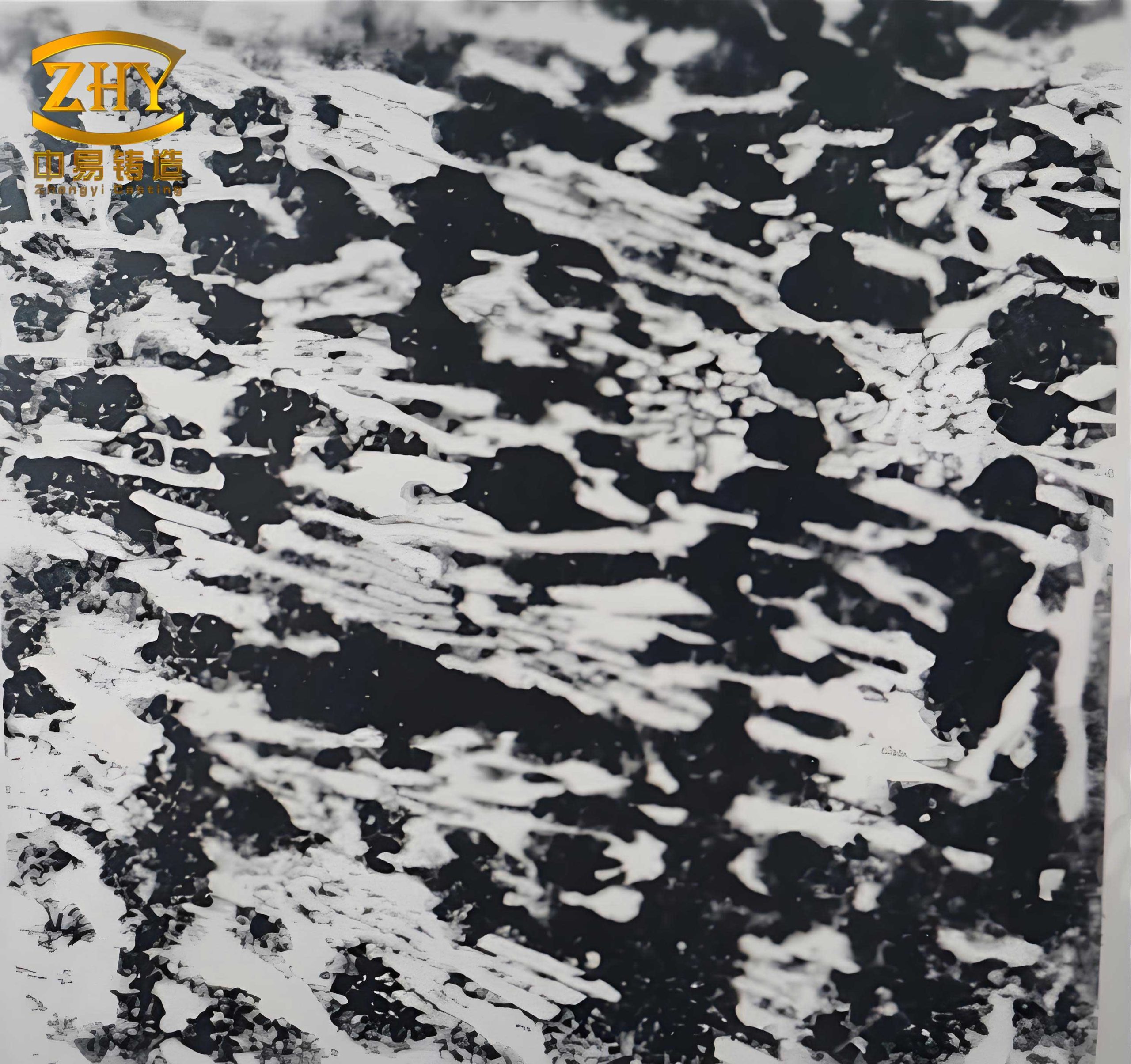
The mechanical behavior, particularly the toughness, of white cast iron is intrinsically linked to the morphology, size, distribution, and volume fraction of its carbide phase. In standard low-chromium white cast iron, the carbides are predominantly of the M3C type (cementite), which typically forms as a continuous, coarse, and interconnected network or large plates during eutectic solidification. This configuration provides an easy path for crack propagation. Research indicates that in high-chromium white cast irons, a significant percentage of cracks propagate along the eutectic carbides. It is reasonable to infer that in alloys with the more continuous M3C carbides, this percentage would be even higher, severely compromising fracture resistance. Therefore, the central challenge in improving low-chromium white cast iron lies not necessarily in increasing hardness further, but in modifying the carbide architecture to disrupt its continuity, thereby blunting crack paths and enhancing toughness without substantially sacrificing wear resistance. This study investigates the application of a combined modification and heat treatment process to achieve precisely this microstructural engineering in low-chromium white cast iron. The goal is to transform the carbide morphology from a continuous network to a dispersed, isolated, and refined state, ultimately leading to a superior combination of hardness and impact toughness.
1. Experimental Methodology
1.1 Melting, Alloy Composition, and Casting
The white cast iron was melted in a medium-frequency induction furnace with a basic lining. To ensure a consistent baseline for comparison regarding carbide volume fraction, the chemical composition of the iron was controlled within a specific range, representative of commonly used low-chromium white cast irons. The target composition is presented in Table 1.
| Element | C | Si | Mn | Cr | P | S | Fe |
|---|---|---|---|---|---|---|---|
| Content | 2.8 – 3.2 | 0.4 – 0.8 | 0.5 – 1.0 | 1.8 – 2.5 | < 0.1 | < 0.05 | Bal. |
The melt was superheated to approximately 1500°C before tapping. Prior to treatment, standard deoxidation practices were employed to cleanse the melt. The modification treatment was carried out using the “pour-over” method, where the modifying agent was placed in the ladle and the molten white cast iron was poured over it to initiate reaction. Sand molds were used for casting standard test specimens for mechanical and microstructural analysis.
1.2 Modification Treatment Strategy
The selection of modifying agents was based on principles aiming to achieve multiple synergistic effects: deoxidation, desulfurization, alteration of the solidification conditions for the eutectic phases, and influencing carbide nucleation and growth kinetics. Three primary modifying agents, based on elements known for their metallurgical effects in cast iron, were chosen for individual and combined trials. The nominal compositions and addition ranges for these modifiers are summarized in Table 2.
| Modifier Designation | Principal Active Elements | Addition Range (wt.% of Fe) |
|---|---|---|
| Modifier A | Rare Earth (RE, primarily Ce, La) | 0.2 – 0.6 |
| Modifier B | Magnesium (Mg) with inoculant carrier | 0.1 – 0.3 |
| Modifier C | Titanium (Ti) with inoculant carrier | 0.3 – 0.7 |
The experimental procedure was conducted in two main phases. First, individual modifiers (A, B, and C) were added separately at varying levels within their respective ranges to identify their isolated effects on the microstructure and properties of the white cast iron. Subsequently, based on the results from the single-addition tests, a composite modification treatment was designed using an orthogonal experimental array (L9) to optimize the combination and dosage of Modifiers A, B, and C for the best overall performance.
1.3 Heat Treatment Protocol
To evaluate the interaction between modification and subsequent thermal processing, both as-cast and heat-treated conditions were examined. The standardized heat treatment cycle applied was: Austenitizing at 950°C for 2 hours, followed by air cooling. This sub-critical treatment aims to induce slight dissolution and spheroidization of carbides without causing full austenitization of the matrix, thereby potentially further improving toughness.
1.4 Characterization Techniques
The effectiveness of the treatments was assessed through:
- Metallography: Standard preparation and etching (using 4% Nital) to reveal the microstructure, particularly focusing on carbide morphology and distribution.
- Mechanical Testing: Measurement of macro-hardness (Rockwell C scale) and unnotched Charpy impact toughness. Impact values are a critical indicator of the material’s resistance to brittle fracture.
- Micro-hardness: Vickers micro-hardness testing was performed separately on the carbide phase and the metallic matrix to understand phase-specific strengthening.
- Elemental Analysis: Energy Dispersive Spectroscopy (EDS) was used to detect the distribution of modifying elements between the carbides and the matrix.
2. Results and Analysis
2.1 Influence of Modification on Carbide Morphology
The microstructure of the unmodified low-chromium white cast iron, in both as-cast and heat-treated states, is characterized by a prominent, continuous network of coarse, plate-like M3C carbides. The ledeburitic eutectic structure is very distinct, with carbides forming a skeletal framework that embrittles the material. Heat treatment alone does little to alter this inherent coarse and connected morphology.
Modification treatment, even in the as-cast condition, initiates a noticeable change. The carbide network begins to fragment, showing signs of discontinuity and some refinement. However, the full potential of modification is realized after the subsequent heat treatment. The combined effect leads to a dramatic improvement in carbide morphology. The carbides are significantly refined, more uniformly distributed, and appear as isolated blocks, short rods, or fragmented particles rather than continuous plates. The inter-carbide spacing increases markedly, which is a crucial factor for improving toughness. This transition is schematically represented and can be described by a change in the carbide continuity index (CI), which decreases with effective modification.
$$ CI = \frac{\sum \text{Carbide Perimeter}}{\text{Unit Area}} $$
A lower CI indicates a more discontinuous and favorable carbide distribution for toughness in white cast iron.
2.2 Effect on Mechanical Properties
The changes in carbide morphology are directly reflected in the mechanical properties, as shown in the data summarized from the individual modifier tests (Figure 1 concept). Impact toughness shows a significant increase over the baseline unmodified white cast iron for all modifiers at their optimal addition levels.
| Condition | Optimal Modifier & Addition | Impact Toughness (J/cm²) | Increase vs. Unmodified | Hardness (HRC) |
|---|---|---|---|---|
| As-Cast + Mod A | 0.4% RE | ~5.8 | ~45% | 56-58 |
| As-Cast + Mod B | 0.2% Mg | ~6.5 | ~63% | 55-57 |
| As-Cast + Mod C | 0.5% Ti | ~5.0 | ~25% | 58-60 |
| Heat-Treated + Mod A | 0.4% RE | ~7.2 | ~80% | 52-54 |
| Heat-Treated + Mod B | 0.2% Mg | ~8.0 | ~100% | 50-52 |
| Heat-Treated + Mod C | 0.5% Ti | ~6.0 | ~50% | 54-56 |
| Unmodified Baseline | — | ~4.0 | — | 54-56 |
The correlation is clear: the peak in impact toughness for each modifier coincides with the most refined and isolated carbide morphology observed metallographically. According to fracture mechanics, brittle fracture involves both crack initiation and propagation. In white cast iron, propagation is heavily influenced by the carbide network. Modification disrupts this network, increasing the mean free path in the matrix and creating obstacles that force cracks to deviate or require more energy to propagate through the tougher matrix, thereby significantly enhancing the overall toughness of the white cast iron.
The modifiers also impart an alloying effect. EDS analysis confirmed that elements like RE, Mg, and Ti are present in small amounts in both the matrix and carbides. This leads to solid solution strengthening, increasing the micro-hardness of both phases, as measured and shown in Table 4. Consequently, the macro-hardness of the modified white cast iron is maintained or slightly improved in the as-cast state. The heat treatment generally causes a slight decrease in macro-hardness compared to the as-cast state due to the partial dissolution of carbides during austenitizing and their inability to fully re-precipitate during air cooling, which is corroborated by both hardness measurements and quantitative metallography showing a reduction in carbide area fraction.
| Condition | Matrix Micro-hardness | Carbide Micro-hardness |
|---|---|---|
| Unmodified, As-Cast | 420 – 450 | 1250 – 1350 |
| Modified (0.4% RE), As-Cast | 480 – 520 | 1350 – 1450 |
| Modified (0.4% RE), Heat-Treated | 450 – 480 | 1300 – 1400 |
2.3 Optimization via Composite Modification
While individual modifiers showed promise, the orthogonal experiment for composite modification aimed to find a synergistic combination. The factors and levels for the L9 array are shown in Table 5, and key results are summarized in Table 6.
| Factor | Level 1 | Level 2 | Level 3 |
|---|---|---|---|
| A: Modifier A (RE %) | 0.3 | 0.4 | 0.5 |
| B: Modifier B (Mg %) | 0.15 | 0.20 | 0.25 |
| C: Modifier C (Ti %) | 0.4 | 0.5 | 0.6 |
| Experiment # | A (RE%) | B (Mg%) | C (Ti%) | Impact Toughness (J/cm²) | Hardness (HRC) | Carbide Morphology Rating* |
|---|---|---|---|---|---|---|
| 4 | 0.3 | 0.20 | 0.6 | 7.8 | 53 | Good |
| 5 | 0.4 | 0.15 | 0.6 | 9.2 | 54 | Excellent |
| 6 | 0.5 | 0.25 | 0.6 | 8.5 | 55 | Very Good |
*Rating based on degree of refinement, isolation, and uniformity.
Experiment #5 (A2B1C3: 0.4% RE, 0.15% Mg, 0.6% Ti) yielded the most favorable combination of properties, with an impact toughness of approximately 9.2 J/cm², exceeding the best values from single modification, while maintaining a hardness of HRC 54. The carbide structure in this optimized white cast iron was notably refined, appearing as isolated, irregular blocks and rods. Range analysis (R) of the orthogonal results indicated that the amount of Modifier A (RE) had the most significant influence on impact toughness, followed by Modifier B (Mg), with Modifier C (Ti) having a relatively smaller effect within the tested ranges. This underscores the importance of precise control over the RE content during the modification of this white cast iron.
3. Discussion on Mechanisms
3.1 Role of Modifying Elements
The efficacy of the modifying agents can be explained through their distinct and complementary metallurgical actions in the white cast iron melt and during solidification.
Rare Earths (Modifier A): Elements like Cerium (Ce) and Lanthanum (La) are powerful deoxidizers and desulfurizers. They form stable, high-melting-point oxides and sulfides that are removed into the slag, purifying the melt. A cleaner melt with lower sulfur content improves the intrinsic bonding at the carbide/matrix interface, reducing the likelihood of interfacial decohesion. Furthermore, RE elements are strong surface-active elements with low melting points and large atomic radii. During solidification, they tend to segregate at the growing interface of the eutectic carbides, creating constitutional undercooling. This undercooling destabilizes the planar growth front, promoting branching, melt-off, and self-multiplication of the carbide crystals, leading to refinement and fragmentation. The measured reduction in sulfur content (e.g., ~25% with RE treatment) directly correlates with the observed toughness improvement.
Magnesium (Modifier B): Magnesium is an even more potent desulfurizer than RE. Its addition leads to a dramatic reduction in sulfur content (~40% in tests), which alone greatly benefits toughness by eliminating brittle sulfide inclusions. Like RE, Mg is a strong undercooling element. Its segregation at the solid-liquid interface alters the growth kinetics of the carbides in the white cast iron, favoring a more isotropic, divorced eutectic growth mode rather than the cooperative lamellar/plate-like growth. This results in a more granular, isolated carbide structure.
Titanium (Modifier C): Titanium acts through different mechanisms. Firstly, it is a strong carbide-forming element. It can dissolve into the M3C carbide, forming a (Fe,Cr,Ti)3C complex carbide, which may slightly modify its properties. More importantly, from a thermodynamic perspective, Ti can substitute for some Fe atoms in the carbide. The displaced Fe increases the local supersaturation of carbon and carbide-forming elements in the liquid ahead of the interface, thereby increasing the nucleation rate for new carbide particles according to classical nucleation theory:
$$ I = K \cdot \exp\left(-\frac{\Delta G^*}{kT}\right) $$
where $\Delta G^*$ is the activation energy for nucleation, which can be reduced by increased undercooling or solute concentration. A higher nucleation rate (I) leads to a finer carbide size distribution. Additionally, Ti-rich compounds (e.g., TiC, TiN) can act as heterogeneous nucleation sites for the eutectic carbides, further promoting refinement.
3.2 Synergy of Modification and Heat Treatment
The modification process lays the essential groundwork by refining the as-cast carbide structure and, crucially, by introducing segregating elements at the carbide boundaries. The subsequent heat treatment capitalizes on this preconditioned microstructure. During austenitizing at 950°C, diffusion processes are activated. The modifying elements concentrated at the carbide/matrix interfaces facilitate the partial dissolution and “pinching-off” of thin carbide connections. This thermal process further promotes the spheroidization and isolation of carbides, a phenomenon described by the Oswald ripening process but constrained by the interfacial segregation. The driving force is the reduction of total interfacial energy. The modification accelerates this process by potentially lowering the interfacial energy or altering diffusion paths. The result is that heat treatment does not merely temper the matrix but actively continues the microstructural optimization initiated during solidification, leading to the final superior microstructure observed in the modified and heat-treated white cast iron. This combined approach is far more effective than either modification or heat treatment alone for this class of white cast iron.
4. Conclusions
This comprehensive investigation into the modification and heat treatment of low-chromium white cast iron leads to the following conclusions:
- The application of a targeted modification treatment, followed by a sub-critical heat treatment, is a highly effective and practical method for significantly improving the mechanical properties of low-chromium white cast iron. The key achievement is the transformation of the carbide morphology from a continuous, brittle network to a refined, isolated, and uniformly distributed state.
- Composite modification using a combination of Rare Earth (0.4%), Magnesium (0.15%), and Titanium (0.6%) agents yields a synergistic effect, producing an optimized white cast iron with an impact toughness of approximately 9.2 J/cm² (an increase of about 130% over the unmodified baseline) while maintaining a high hardness of HRC 54. Range analysis identifies the Rare Earth content as the most critical factor controlling toughness enhancement.
- The mechanisms are multifactorial: RE and Mg primarily purify the melt and induce constitutional undercooling to refine and fragment carbides through growth modification. Ti contributes by increasing carbide nucleation rate and forming stable compounds. The combined modification preconditions the microstructure, enabling the subsequent heat treatment to further isolate and spheroidize the carbides through diffusion-controlled processes, resulting in the final superior microstructure-property relationship in the engineered white cast iron.
This research demonstrates that through intelligent microstructural design via integrated process control (casting modification + heat treatment), the inherent brittleness of low-chromium white cast iron can be successfully mitigated, paving the way for its use in more demanding applications requiring both high wear resistance and improved fracture toughness.