
In the industrial processing of wheat into flour, roller milling stands as the predominant method due to its efficiency and ability to preserve nutritional quality. The core components of roller mills are the grinding rolls, which are subjected to severe abrasive wear from wheat particles. Typically, the outer layer of these rolls is made from white cast iron, a material chosen for its inherent hardness and wear resistance. However, prolonged operation leads to wear and钝化, necessitating frequent maintenance and contributing to metallic contamination in flour. Enhancing the wear resistance of white cast iron through alloying, particularly with chromium, is a critical avenue for improving operational longevity and product purity. This study investigates the abrasive wear performance of white cast iron with different chromium contents against wheat powder, simulating real milling conditions. The focus is on understanding how chromium addition influences wear mass loss, surface morphology, hardness, and elemental composition, thereby providing insights into the wear mechanisms involved.
The wear of materials in agricultural and food processing contexts often involves soft abrasives, such as wheat powder. According to classical wear theory, when the hardness ratio of the material to the abrasive exceeds 1.3, the wear is classified as soft abrasive wear. For wheat powder, which has relatively low hardness, the wear on white cast iron rolls falls into this category. However, the behavior of soft abrasives can be complex due to factors like particle hardening during the wear process or the presence of harder contaminants. The wear resistance of white cast iron is highly dependent on its microstructure and composition. Chromium, as an alloying element, enhances hardness and toughness by forming hard carbides and refining the microstructure. This study systematically examines white cast iron samples with chromium contents of 0%, 1.2%, and 4.0% by mass, subjected to abrasive wear tests using wheat powder as the abrasive medium.
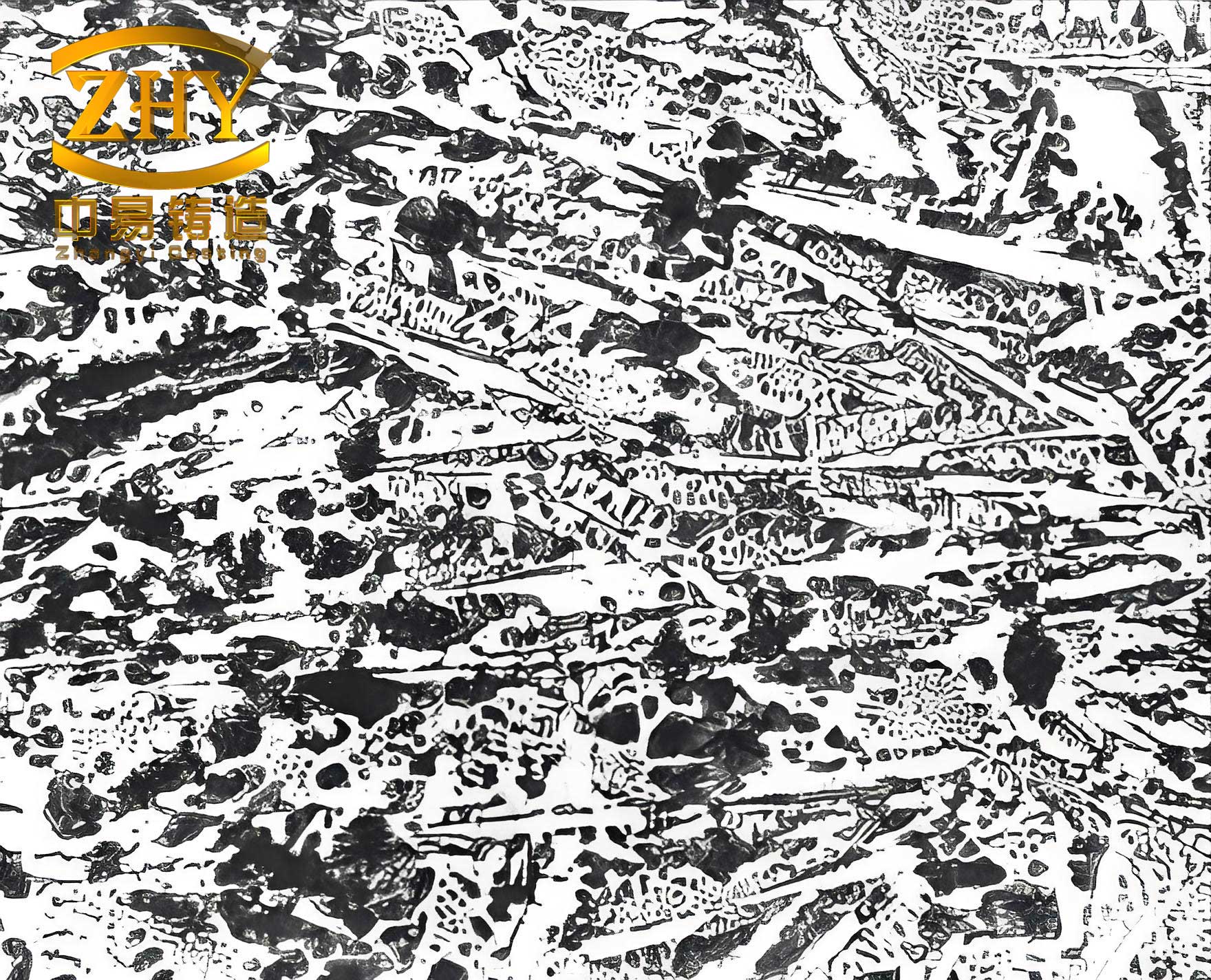
The preparation of white cast iron samples involved casting to specific dimensions, followed by surface polishing to ensure consistency. The wheat powder used as the abrasive was derived from a common wheat variety, processed to achieve a particle size range of 0.5 to 1.5 mm, representative of the granulometry encountered in milling operations. The abrasive wear tests were conducted on a modified wet sand rubber wheel abrasion testing machine, which mimics the rolling and sliding action of roller mills. Key parameters, including rotational speed, load, and gap distance, were set to replicate industrial conditions. The wear resistance was evaluated through mass loss measurements after varying durations, while surface analysis employed 3D profilometry, scanning electron microscopy (SEM), and energy-dispersive X-ray spectroscopy (EDS).
The mechanical properties of the white cast iron samples, as provided in Table 1, show a clear trend of increasing hardness and impact toughness with higher chromium content. This improvement is attributed to the formation of chromium carbides within the iron matrix, which enhance both strength and wear resistance. The hardness values are critical, as they directly influence the material’s ability to resist penetration by abrasive particles. The wheat powder, with its composition dominated by starch and protein, presents a relatively soft abrasive challenge, but the presence of harder components like minerals can induce localized wear.
| Chromium Content (mass %) | Impact Toughness (J/cm²) | Hardness (HRC) |
|---|---|---|
| 0 | 2.4 | 43.1 |
| 1.2 | 5.6 | 50.1 |
| 4.0 | 6.6 | 52.5 |
The wear tests revealed significant differences in mass loss among the white cast iron samples. Over a 16-hour wear period, the cumulative mass loss was highest for the chromium-free white cast iron and decreased progressively with increasing chromium content. The data, summarized in Table 2, indicate that the white cast iron with 4.0% chromium exhibited only about 32% of the mass loss compared to the chromium-free white cast iron. This dramatic improvement underscores the effectiveness of chromium in enhancing abrasion resistance. The wear process can be modeled using an abrasive wear rate equation, where the volume loss \( V \) is related to the applied load \( L \), sliding distance \( S \), and material hardness \( H \):
$$ V = k \frac{L S}{H} $$
Here, \( k \) is a wear coefficient that depends on the abrasive and material properties. For white cast iron, increasing hardness through chromium addition reduces \( V \), as observed. However, the relationship is not purely linear due to changes in toughness and microstructure. The wear mechanism involves both micro-cutting and plastic deformation, with the harder white cast iron resisting penetration more effectively.
| Chromium Content (mass %) | Average Mass Loss (mg) | Relative Mass Loss (%) |
|---|---|---|
| 0 | 7.30 | 100 |
| 1.2 | 3.61 | 49.5 |
| 4.0 | 2.36 | 32.3 |
Three-dimensional surface profilometry of the worn surfaces provided insights into the topographic changes induced by wheat powder abrasion. The chromium-free white cast iron displayed deep and wide grooves, along with prominent ridges, indicative of severe plastic deformation and material removal. In contrast, the white cast iron with 4.0% chromium showed shallower and narrower grooves, with reduced peak-to-valley heights. This suggests that the harder white cast iron surface resisted ploughing and cutting actions more effectively. The surface roughness parameters, such as \( R_a \) and \( R_z \), decreased with higher chromium content, correlating with improved wear resistance. The wear process can be described in terms of abrasive particle interactions: when hard particles slide under pressure, they cause plastic flow, forming grooves (ploughing) and ridges (pile-ups). The repeated deformation of these ridges leads to low-cycle fatigue and eventual material detachment.
Chemical analysis of the worn surfaces revealed interesting elemental changes. As shown in Table 3, the worn surfaces of all white cast iron samples exhibited a decrease in metallic elements (iron and chromium) and an increase in non-metallic elements (carbon and silicon) compared to the unworn surfaces. This is attributed to the transfer and embedding of wheat powder constituents, such as organic matter and minerals, into the white cast iron surface under frictional heating. The temperature during steady-state wear was measured at approximately 76°C, sufficient to promote some elemental diffusion. The extent of this change diminished with higher chromium content, indicating that the harder white cast iron surface was less susceptible to material transfer and adhesion.
| Chromium Content (mass %) | Surface Condition | C | Cr | Fe | Si |
|---|---|---|---|---|---|
| 0 | Unworn | 6.7 | – | 90.7 | 2.6 |
| Worn | 13.8 | – | 83.5 | 2.7 | |
| 1.2 | Unworn | 7.6 | 1.2 | 91.0 | 0.3 |
| Worn | 12.6 | 1.0 | 86.1 | 0.3 | |
| 4.0 | Unworn | 5.3 | 4.0 | 90.3 | 0.3 |
| Worn | 7.2 | 3.8 | 88.6 | 0.4 |
Hardness measurements before and after wear, presented in Table 4, show that the white cast iron with 4.0% chromium maintained its hardness post-wear, while the lower-chromium white cast iron experienced a slight decrease. Typically, abrasive wear can induce work hardening, but in soft abrasive wear, the effect may be minimal or offset by surface softening due to frictional heating. The hardness of white cast iron is a key factor in its wear resistance, as described by the Archard wear equation. The higher hardness of chromium-alloyed white cast iron reduces the penetration depth of abrasive particles, thereby decreasing the wear rate. The relationship between hardness \( H \) and wear resistance \( W_R \) can be expressed as:
$$ W_R \propto H^n $$
where \( n \) is an exponent typically between 1 and 2 for abrasive wear. For white cast iron, \( n \) may vary with chromium content due to microstructural changes.
| Chromium Content (mass %) | Hardness Before Wear | Hardness After Wear |
|---|---|---|
| 0 | 43.1 | 41.2 |
| 1.2 | 50.1 | 48.5 |
| 4.0 | 52.5 | 53.0 |
Scanning electron microscopy of the worn surfaces revealed distinct morphological features. The chromium-free white cast iron exhibited deep ploughing grooves with pronounced plastic deformation ridges, along with evidence of brittle flaking and material removal. This indicates a wear mechanism dominated by micro-cutting and fatigue-induced delamination. In contrast, the white cast iron with 4.0% chromium showed shallower grooves and less obvious ridges, suggesting that the material resisted plastic flow and cutting more effectively. The wear mechanism here involves limited ploughing and minimal fatigue damage. The presence of chromium carbides in the white cast iron matrix acts as hard barriers to abrasive penetration, reducing the severity of wear. The wear process can be further analyzed using the concept of abrasive particle size and hardness distribution. Wheat powder particles, though generally soft, may contain harder inclusions that act as localized stress concentrators. The resistance of white cast iron to such stresses is enhanced by chromium addition.
The role of chromium in white cast iron extends beyond mere hardness improvement. Chromium promotes the formation of eutectic carbides, such as \( M_7C_3 \) and \( M_3C \) (where M represents iron and chromium), which are dispersed in the ferrous matrix. These carbides increase the matrix’s strength and reduce the tendency for plastic deformation under abrasive loads. The wear resistance of white cast iron can be correlated with the volume fraction of carbides, which increases with chromium content. A simplified model for wear rate \( \dot{W} \) in terms of carbide volume fraction \( f_c \) and matrix hardness \( H_m \) is:
$$ \dot{W} = A \exp(-B f_c) + C H_m^{-1} $$
where \( A \), \( B \), and \( C \) are constants dependent on the abrasive conditions. For wheat powder abrasion, the constants would be calibrated based on experimental data from white cast iron samples.
In addition to carbide formation, chromium improves the toughness of white cast iron, as seen in the impact toughness values. This toughness helps prevent crack propagation under cyclic loading, reducing wear from fatigue mechanisms. The combination of high hardness and good toughness makes chromium-alloyed white cast iron ideal for applications involving soft abrasives like wheat powder. The wear behavior can also be influenced by the morphology of the carbides; finer and more uniformly distributed carbides, as often achieved with higher chromium content, provide better wear resistance.
The simulation of roller milling conditions in this study involved controlling parameters such as load, speed, and abrasive feed. The wear test machine used a rubber wheel to press the wheat powder against the white cast iron sample, creating a three-body abrasive wear scenario. This setup replicates the dynamic interaction in roller mills, where wheat particles are compressed and sheared between rotating rolls. The wear results are thus representative of industrial wear processes. The improvement in wear resistance with chromium addition suggests that using high-chromium white cast iron for mill rolls can significantly reduce maintenance costs and improve flour quality by minimizing metallic contamination.
Further analysis of the wear debris and embedded particles could provide additional insights. For instance, EDS analysis of the worn surfaces showed carbon enrichment, likely from organic matter in wheat powder. This carbon layer might act as a lubricant or protective film in some cases, but in abrasive wear, it is often removed quickly. The persistence of such layers on harder white cast iron surfaces could be studied to understand tribochemical interactions. The wear of white cast iron in food processing environments also involves considerations of corrosion and hygiene, but chromium addition generally enhances corrosion resistance as well.
To generalize the findings, the wear resistance of white cast iron against soft abrasives can be optimized by balancing hardness and toughness through alloy design. Chromium is a key element in this balance, and future work could explore synergies with other elements like nickel or molybdenum. The economic and environmental benefits of extending roll life in flour mills are substantial, making research on advanced white cast iron compositions highly valuable.
In summary, this study demonstrates that chromium addition significantly enhances the wheat powder abrasion resistance of white cast iron. The white cast iron with 4.0% chromium exhibited the lowest wear mass loss, minimal surface roughness changes, and maintained hardness after wear. The wear mechanisms shifted from severe ploughing and fatigue in chromium-free white cast iron to mild abrasion in high-chromium white cast iron. These results underscore the importance of chromium in developing durable white cast iron for agricultural and food processing applications. Future investigations could focus on long-term wear performance under variable conditions and the development of predictive models for white cast iron wear in specific abrasive environments.