
In my extensive research into wear-resistant materials, I have focused on improving the performance of white cast iron, a commonly used abrasion-resistant material. Traditional white cast iron, with its pearlitic matrix, often exhibits limited hardness and toughness, restricting its use in demanding applications. While high-chromium white cast iron offers superior hardness, its toughness remains relatively low, and its high production cost narrows its applicability. My investigations have revealed that by alloying ordinary white cast iron with specific elements and subjecting it to an austempering heat treatment, a significant enhancement in both toughness and hardness can be achieved. This process transforms the matrix into a multiphase structure of bainite and retained austenite, leading to markedly improved wear resistance. This approach presents a cost-effective method to develop a high-performance, economical alternative to more expensive alloys like high-chromium white cast iron. The core of my work revolves around optimizing this austempered alloyed white cast iron.
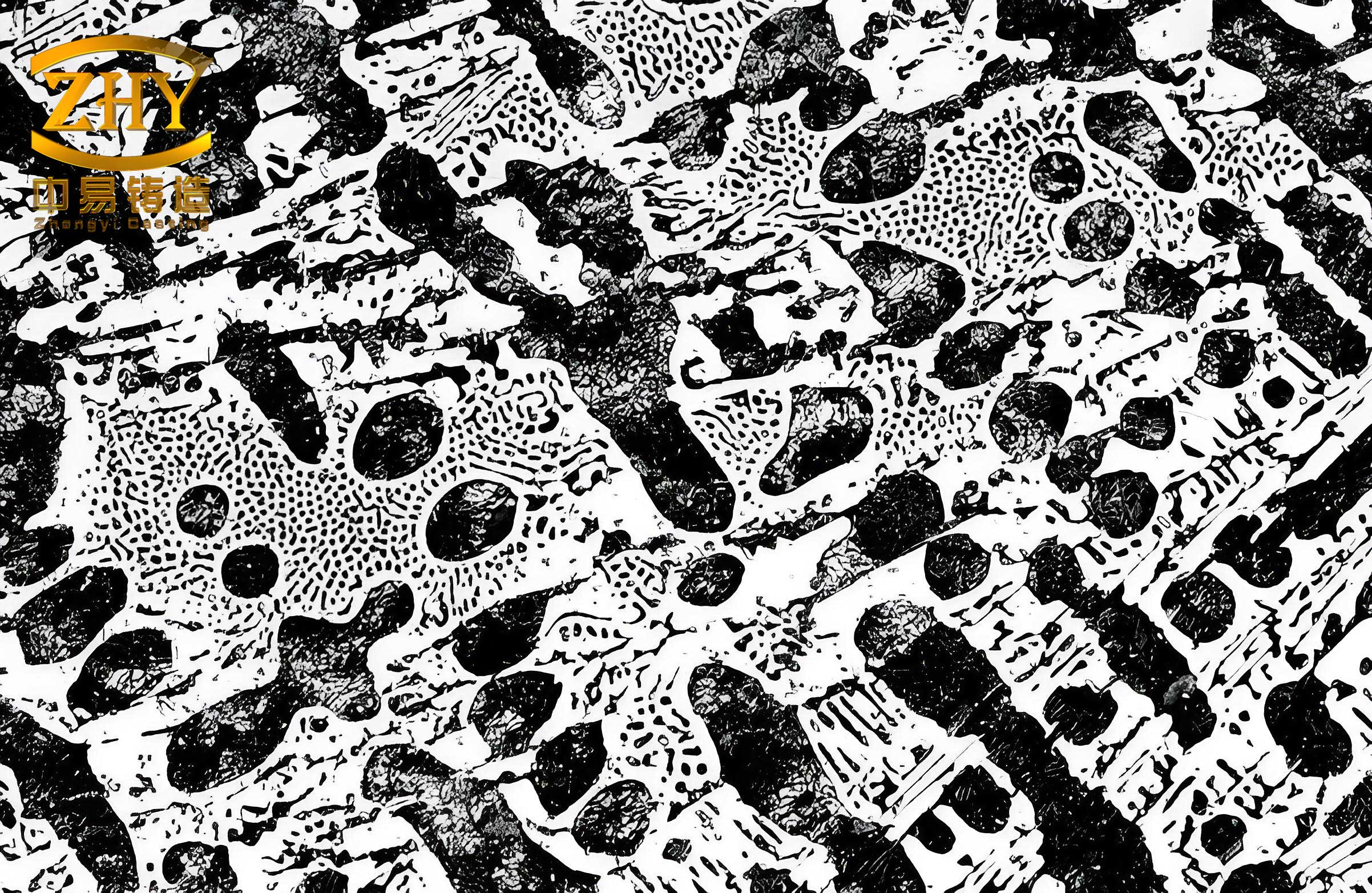
My experimental methodology was designed to systematically evaluate the effects of composition and heat treatment on this promising white cast iron variant. I prepared the alloyed white cast iron by melting a charge consisting of low-manganese Benxi pig iron, ferrosilicon (75SiFe), ferromanganese (65MnFe), ferromolybdenum (55MoFe), ferrochromium (58CrFe), Q235 steel, and pure bismuth in a medium-frequency induction furnace. The base composition was carefully selected to promote a fully white cast iron structure in the as-cast condition. For comparative analysis, I also prepared samples of high-chromium cast iron (nominal composition: 2.8%C, 0.5%Si, 0.7%Mn, 15%Cr, 3%Mo) and Hadfield high-manganese steel (1.2%C, 13%Mn). Standard specimens were cast for impact toughness (15mm x 15mm x 55mm) and wear testing (8mm diameter x 15mm).
The heat treatment cycle for the alloyed white cast iron was critical. Austenitization was conducted at (900 ± 10)°C for 2 hours, followed by rapid transfer to a salt bath for isothermal quenching (austempering). I selected four distinct austempering temperatures for detailed study: 235°C, 280°C, 325°C, and 370°C, each held for 2 hours. The high-chromium cast iron was heat treated by holding at 950°C for 2h, furnace cooling to 850°C for 1h, and then air cooling. The high-manganese steel underwent solution treatment at 1050°C for 5h followed by water quenching (water toughening). Mechanical properties were assessed using a small pendulum impact tester and a Rockwell/Brinell hardness tester. Abrasive wear resistance was evaluated on an ML-3 type rubber wheel abrasion tester under controlled conditions: rubber wheel hardness of 74 HS, rotational speed of 10 rpm, normal load of 50 N, with artificial quartz sand (1100 HV, 0.1 mm grain size) as the abrasive at a feed rate of 225 g/min. Weight loss was measured after every 2000 revolutions, with four cycles per sample. To facilitate comparison, I defined a relative wear resistance coefficient (ε):
$$ \epsilon = \frac{\Delta W_{standard}}{\Delta W_{sample}} $$
where $\Delta W_{standard}$ is the average mass loss of the standard sample (high-manganese steel) and $\Delta W_{sample}$ is the average mass loss of the test sample. This normalized metric allows for a direct performance comparison across different materials.
The influence of alloying elements, particularly manganese and chromium, on the properties of this white cast iron was profound and formed a major part of my analysis. Manganese, a common austenite stabilizer and carbide former, plays a dual role. In the as-cast white cast iron, increasing manganese content leads to a higher volume fraction of carbides, which increases hardness but reduces toughness. After austempering, the same trend is observed, but the absolute values of toughness are significantly improved due to the transformation of the matrix. More importantly, manganese enhances hardenability, shifting the isothermal transformation (C-curve) to longer times, which is crucial for preventing the formation of pearlite during quenching. My results for a white cast iron with a base composition of 2.4%C, 1.5%Si, 0.3%Cr, 0.01%Bi and variable Mn are summarized below.
| Manganese Content (wt.%) | As-Cast Hardness (HRC) | As-Cast Impact Toughness (J/cm²) | Austempered* Hardness (HRC) | Austempered* Impact Toughness (J/cm²) | Microstructural Note (Austempered) |
|---|---|---|---|---|---|
| 1.0 | 48 | 5.2 | 52 | 18.5 | Mixed Bainite + Pearlite |
| 1.5 | 51 | 4.8 | 55 | 22.1 | Full Bainite + Austenite |
| 2.0 | 53 | 4.1 | 57 | 20.3 | Full Bainite + Austenite |
| 2.5 | 55 | 3.5 | 59 | 18.0 | Full Bainite + Austenite |
The data clearly indicates that for this specific white cast iron system, a manganese content in the range of 1.5% to 2.0% provides an optimal balance, yielding a fully bainitic-austenitic matrix after austempering with high toughness. The hardenability can be modeled as a function of manganese content. A simplified empirical relationship for the critical cooling rate to avoid pearlite, $V_{crit}$, can be expressed as:
$$ V_{crit} (^{\circ}C/s) \approx \frac{K}{[Mn]^n} $$
where $K$ and $n$ are material constants, and $[Mn]$ is the weight percent of manganese. Higher manganese lowers $V_{crit}$, making the white cast iron more amenable to austempering.
Chromium, although added in smaller quantities compared to high-chromium white cast iron, serves a vital purpose. Its primary role is to increase the thermal stability of the carbides, preventing their dissolution or graphitization during the high-temperature austenitization stage. This ensures that the hard carbide network essential for wear resistance in white cast iron is preserved. My study on a white cast iron with 2.4%C, 1.5%Si, 2.0%Mn, 0.01%Bi and variable Cr content yielded the following trends.
| Chromium Content (wt.%) | As-Cast Hardness (HRC) | As-Cast Impact Toughness (J/cm²) | Austempered* Hardness (HRC) | Austempered* Impact Toughness (J/cm²) |
|---|---|---|---|---|
| 0.1 | 50 | 5.0 | 54 | 20.8 |
| 0.3 | 52 | 4.8 | 56 | 21.5 |
| 0.5 | 53 | 4.5 | 57 | 20.9 |
| 0.7 | 54 | 4.2 | 58 | 20.0 |
The increment in hardness with chromium is attributable to both increased carbide volume and solid solution strengthening. The slight decrease in toughness at higher Cr levels is linked to the increased carbide brittleness. Therefore, a modest addition of chromium (around 0.3-0.5%) is highly beneficial for this grade of austempered white cast iron.
The austempering temperature itself is arguably the most critical process parameter controlling the final microstructure and properties of this white cast iron. The transformation of austenite to bainite is highly temperature-sensitive. Lower temperatures favor the formation of fine, acicular lower bainite with high dislocation density, resulting in high hardness but lower toughness due to limited carbon diffusion and smaller amounts of retained austenite. Higher temperatures promote the formation of feathery upper bainite with coarser ferrite laths and larger, more stable pockets of carbon-enriched retained austenite, leading to higher toughness but reduced hardness. My experimental data for a white cast iron of composition 2.4C-1.5Si-2.0Mn-0.3Cr-0.01Bi austempered at different temperatures vividly illustrates this trade-off.
| Austempering Temperature (°C) | Hardness (HRC) | Impact Toughness (J/cm²) | Dominant Matrix Microstructure | Estimated Retained Austenite (%) |
|---|---|---|---|---|
| 235 | 62 | 14.5 | Fine Lower Bainite + Martensite* + RA | ~10-15 |
| 280 | 58 | 18.2 | Lower Bainite + RA | ~15-20 |
| 325 | 55 | 22.1 | Upper Bainite + RA | ~25-30 |
| 370 | 50 | 24.8 | Coarse Upper Bainite + RA | ~30-35 |
The transition in mechanical properties can be conceptually described by a model where hardness ($H$) and impact toughness ($K$) are functions of the austempering temperature ($T_a$). Over the studied range, these relationships can be approximated by linear fits for simplicity in discussion:
$$ H(HRC) \approx H_0 – \alpha T_a $$
$$ K(J/cm^2) \approx K_0 + \beta T_a $$
where $H_0$, $K_0$, $\alpha$, and $\beta$ are positive constants derived from the experimental data. For instance, from Table 3, $\alpha \approx 0.08$ HRC/°C and $\beta \approx 0.07$ (J/cm²)/°C in the 280-370°C range. The most significant finding is the existence of a plateau or optimal window around 325°C, where the combined metrics of hardness and toughness are maximized for practical applications. This temperature corresponds to the transition region between lower and upper bainite, yielding a favorable mix of strength and ductility from the white cast iron matrix.
The ultimate test for any white cast iron material is its performance under abrasive wear conditions. I compared the relative wear resistance of my austempered white cast iron samples against the as-cast alloyed white cast iron, high-chromium white cast iron, and high-manganese steel. The results, expressed as the relative wear resistance coefficient (ε), are compelling.
| Material Designation | Material Description / Condition | Average Hardness (HRC) | Relative Wear Resistance (ε) |
|---|---|---|---|
| 1# | High-Manganese Steel (Water-Toughened) | ~20 HB | 1.00 (Standard) |
| 2# | Alloyed White Cast Iron (As-Cast) | 52 | 1.05 |
| 3# | Alloyed White Cast Iron (Aust. 235°C) | 62 | 1.35 |
| 4# | Alloyed White Cast Iron (Aust. 280°C) | 58 | 1.48 |
| 5# | Alloyed White Cast Iron (Aust. 325°C) | 55 | 1.62 |
| 6# | Alloyed White Cast Iron (Aust. 370°C) | 50 | 1.52 |
| 7# | High-Chromium White Cast Iron (Heat Treated) | 62 | 4.00 |
The data underscores several key points. First, austempering drastically improves the wear resistance of the base alloyed white cast iron (compare 2# to 3#-6#). The improvement is not monotonic with hardness; the sample austempered at 325°C (5#), despite having lower hardness than those treated at 235°C or 280°C, exhibits the highest wear resistance among the austempered white cast iron series. This highlights the critical contribution of toughness and the multiphase microstructure to wear performance. The high-chromium white cast iron (7#) remains superior under these low-stress abrasion conditions due to its extremely hard and numerous (Cr,Fe)₇C₃ carbides. However, the performance gap must be evaluated alongside cost. The austempered white cast iron requires far less expensive alloying elements (notably, only 0.3% Cr vs. 15% Cr) and utilizes a simpler, potentially lower-energy heat treatment cycle compared to the high-temperature treatments for high-chromium white cast iron.
The wear mechanism in these white cast iron materials can be conceptualized. In the austempered white cast iron, the hard carbide network provides primary resistance to abrasion, while the tough, ductile bainitic-austenitic matrix supports these carbides, absorbing impact energy and preventing catastrophic spalling or fracture. The relationship between wear volume loss ($\Delta V$), hardness ($H$), and fracture toughness ($K_{IC}$) for abrasion-dominated wear can be loosely framed using an extended form of the Archard wear equation, considering material removal by both micro-cutting and fracture:
$$ \Delta V \propto \frac{k_1}{H} + \frac{k_2}{K_{IC}^m} $$
where $k_1$, $k_2$, and $m$ are constants dependent on abrasion conditions. For the austempered white cast iron, the austempering temperature optimizes the $H$ and $K_{IC}$ terms collectively, minimizing $\Delta V$. This explains why the 325°C-treated white cast iron outperforms the harder but more brittle 235°C-treated white cast iron.
In my broader analysis, I considered the economic and application-based implications. For components subjected to combined abrasion and moderate impact, such as pump liners, crusher parts, or agricultural tooling, the austempered white cast iron developed in this research offers a compelling proposition. Its production cost is significantly lower than that of high-chromium white cast iron, primarily due to the minimal use of strategic alloys like chromium and molybdenum. The use of manganese as the primary hardenability agent is a cost-effective strategy. Furthermore, the austempering process, while requiring precise control, is generally less prone to quench cracking compared to conventional martensitic quenching of white cast iron, potentially improving production yield.
To generalize the findings for different sections of white cast iron, one can propose a compositional window for developing such austempered grades. An optimal range, based on my study, might be: Carbon: 2.2-2.6%, Silicon: 1.2-1.8%, Manganese: 1.5-2.2%, Chromium: 0.2-0.5%, with trace additions of bismuth (0.005-0.02%) to ensure a fine, uniform white cast iron structure by inhibiting graphite formation. The austenitization temperature should be in the range of 880-920°C for 1-3 hours, followed by austempering between 300-350°C for 1-3 hours, depending on section size.
In conclusion, my research establishes that through careful alloy design and controlled austempering heat treatment, ordinary white cast iron can be transformed into a high-performance wear-resistant material. The synergistic effect of manganese and chromium in this white cast iron formulation, coupled with the isothermal transformation to a bainitic-austenitic matrix, unlocks a superior combination of hardness and toughness. Specifically, austempering at approximately 325°C yields an optimal microstructure that provides excellent abrasive wear resistance, surpassing that of as-cast alloyed white cast iron and high-manganese steel, while being produced at a fraction of the cost of high-chromium white cast iron. This austempered alloyed white cast iron represents a significant advancement in the field of economical wear-resistant materials, offering a viable and promising alternative for a wide range of industrial applications where both cost and performance are critical factors. The journey of optimizing this white cast iron continues, with future work potentially exploring the effects of other micro-alloying elements or different austempering cycles to further push the boundaries of its performance.