
In my extensive experience within the foundry and wear-resistant materials industry, the pursuit of optimal performance for grinding media represents a complex and fascinating challenge. Among the various candidate materials, high-chromium white cast iron stands out due to its exceptional abrasion resistance. This class of white cast iron is extensively utilized not only for grinding balls but also for critical components in coal mills, ore crushers, cement mill liners, shot blasting machines, and slurry pumps. The central dilemma in its application, however, has always been the inherent trade-off between hardness and toughness. While significant research has mitigated this issue, achieving the perfect synergy for components subjected to severe impact conditions remains a nuanced endeavor. The development of high-chromium white cast iron is fundamentally about optimizing this hardness-toughness combination. From my perspective, resolving this requires a holistic approach, meticulously controlling the volume fraction, morphology, and distribution of carbides; the matrix structure, particularly the volume fraction of retained austenite; and minimizing internal and external casting defects.
The wear resistance of a material is profoundly influenced by several interdependent factors. Primarily, a direct correlation exists between hardness and wear resistance, provided the material does not undergo catastrophic fracture. The relationship can be conceptually framed as:
$$ W_R \propto H \quad \text{for constant fracture resistance} $$
where \( W_R \) is wear resistance and \( H \) is hardness. However, practical observations reveal a more complex interaction. When the hardness of the grinding media surface becomes excessively high, abrasive gouging diminishes, but fatigue wear mechanisms—including crack initiation and spalling—become predominant. In impact-abrasion scenarios, the dominant wear mechanism shifts with the magnitude of the impact energy. For low-impact conditions, hardness is the primary governing factor. As the impact energy increases, the influence of material toughness on overall wear resistance grows significantly. Therefore, enhancing toughness while maintaining high hardness is paramount for improving impact-abrasion performance.
Toughness is a non-negotiable requirement for components like grinding balls, which endure repeated mechanical shocks. Failure analyses consistently point to inadequate toughness as the root cause for premature breakage of hammerheads, jaw plates, and grinding balls. Determining the precise toughness value needed for a specific application is difficult. Consequently, in practice, a slight compromise on hardness is often accepted to ensure a sufficient safety margin against fracture. The role of the microstructure—comprising the matrix and carbides—is critical. Research indicates that an austenitic matrix in high-chromium white cast iron generally offers better fracture toughness than a martensitic one, especially when the carbide volume fraction is low. At lower carbide levels, the matrix governs fracture behavior, so heat treatments that modify the matrix are effective. As the carbide content increases, the carbides themselves become the dominant factor influencing toughness. This is where alloying and inoculation treatments become crucial, as they can alter the carbide structure and distribution.
The morphology of the carbides is decisive. When carbides form a continuous, three-dimensional network, they provide a direct path for crack propagation. Cracks readily initiate and travel along these brittle carbide phases, with the matrix offering little resistance or crack-blunting effect. The strengthening of the matrix is therefore essential to better support the carbide skeleton. When the carbide network is broken into isolated or semi-isolated blocks, cracks must traverse the tougher metallic matrix to propagate. In this case, the strength and toughness of the matrix become the controlling factors for fracture resistance. Thus, for optimal performance, one must consider both strengthening the matrix and optimizing the carbide morphology. For soft abrasives and low-impact conditions, a martensitic matrix is preferable for its high hardness. Under high-impact conditions, an austenitic matrix is often the better choice due to its superior toughness and ability to absorb impact energy.
The matrix composition itself is vital. The wear resistance of white cast iron depends not only on the hard carbides but also on the matrix’s ability to resist deformation and firmly hold the carbides in place. If the matrix wears or deforms excessively, the carbides become exposed, prone to fracture, or may even be pulled out. Matrix strengthening can be achieved through: (1) alloying with elements like Molybdenum; (2) melt inoculation to refine grains, purify grain boundaries, and modify carbide shape; and (3) appropriate heat treatment.
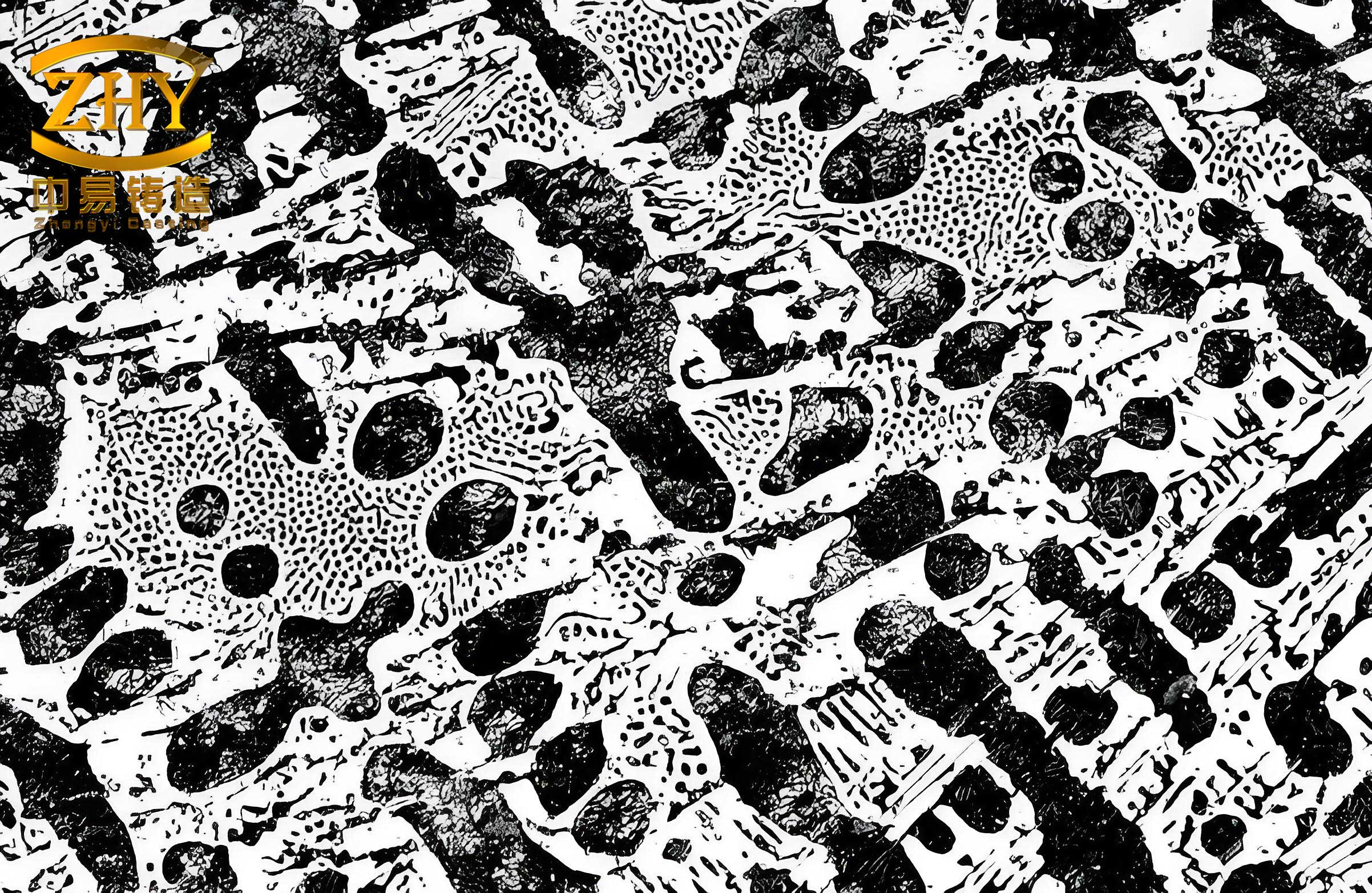
The role of retained austenite is particularly interesting and often misunderstood. In low-stress sliding wear, retained austenite typically reduces wear resistance due to its lower hardness. However, under high-stress impact-abrasion, a controlled amount of retained austenite can be beneficial. The reasons are threefold. First, it can hinder crack initiation. Metastable retained austenite can transform to martensite under mechanical strain (the TRIP effect). This transformation consumes energy from the impacting load, effectively raising the stress required to initiate a crack. Second, it can impede crack propagation. With a sufficient volume of tough austenite, a propagating crack is forced to take a more tortuous path through the matrix, encountering greater resistance compared to cleaving straight through interconnected carbides. The strong interfacial bond between austenite and carbide and the inherent ductility of austenite act as crack arresters. Third, optimal levels of retained austenite can enhance fatigue life. Studies have shown that a volume fraction exceeding 30-50% can dramatically increase the number of impact cycles to failure. However, excessive retained austenite that transforms in service can lead to undesirable volume expansion and increased internal stresses, potentially causing spalling. Therefore, precise control is essential.
The carbides are the primary wear-resistant phase. Their volume fraction, morphology, and distribution are inextricably linked to performance. Generally, a higher volume fraction of hard carbides equates to higher hardness and, within limits, better wear resistance. The key is to avoid morphologies that facilitate easy crack propagation, such as continuous networks or sharp, script-like formations. Ideal morphologies include isolated spheroids, blocky fragments, or a broken network. Achieving this requires careful control of composition, solidification conditions through foundry practice, and often, the use of effective inoculants.
Analyzing the working conditions of grinding balls reveals a demanding environment. Inside a rotating mill, balls are lifted and then cascade or cataract down, subjecting them to a combination of direct impact, crushing, and abrasive shear from the ore and other balls. They are under constant, complex, and cyclical loading. Therefore, the material must possess not only high hardness for abrasion resistance but also considerable toughness to withstand impact without shattering. In wet grinding, corrosion resistance adds another layer of requirement. The necessary mechanical properties depend largely on the mill size. Hardness should typically be between 48 and 60 HRC. The required impact toughness increases with mill diameter, as the potential impact energy is greater. For large-diameter mills (e.g., >4.5m), an impact energy (unnotched Charpy) in the range of 6-12 J is often targeted to ensure reliable service. It is also critical to recognize that high-chromium white cast iron generally has good crack initiation resistance but lower crack propagation resistance. This underscores the absolute necessity of minimizing casting defects like shrinkage, porosity, and inclusions, which act as pre-existing crack nuclei.
Based on these principles, the selection of chemical composition is the first critical step in designing a high-performance high-chromium white cast iron for grinding balls. The goal is to balance cost, hardenability, and the final microstructure. The table below summarizes the role and typical range for key alloying elements based on my production experience.
| Element | Primary Function | Typical Range (wt.%) | Key Considerations |
|---|---|---|---|
| Carbon (C) | Controls carbide volume fraction and hardness. | 2.4 – 2.8 | Higher C increases carbides and hardness but reduces toughness. A sub-eutectic composition is standard. |
| Chromium (Cr) | Determines carbide type (M7C3), improves corrosion/oxidation resistance. | 14 – 17 | Cr > 12% ensures (Cr,Fe)7C3 carbides. The Cr/C ratio (often ~7-10) is critical for balancing properties. |
| Manganese (Mn) | Promotes austenite stability, increases hardenability, neutralizes sulfur. | 0.5 – 1.0 | Higher levels (3-5%) can be used for as-cast austenitic matrix structures. |
| Silicon (Si) | Deoxidizer, but reduces hardenability. | 0.4 – 0.8 | Must be controlled; high Si promotes pearlite formation during quenching. |
| Molybdenum (Mo) | Powerfully increases hardenability (especially in thick sections), refines structure. | 0.5 – 1.5 | Dissolves in matrix and carbides. Essential for heavy-section castings to avoid pearlite. |
| Copper (Cu) | Enhances hardenability, improves corrosion resistance. | 0.4 – 0.8 | Low solubility in austenite; excess can lead to embrittlement due to Cu-rich precipitates. |
| Vanadium (V) | Forms hard, fine carbides; refines grains and carbides. | 0.07 – 0.15 | Very effective grain refiner. Increases hardness but can reduce toughness. Often used with Mo. |
| Titanium (Ti) | Powerful deoxidizer, forms TiC, refines microstructure. | 0.1 – 0.5 | TiC particles pin grain boundaries and hinder carbide growth, improving toughness. |
| Phosphorus (P) | Impurity – forms brittle phosphide eutectic at grain boundaries. | < 0.07 | Must be minimized as it severely reduces impact toughness. |
| Sulfur (S) | Impurity – forms low-melting point sulfides, promotes hot tearing. | < 0.05 | Must be minimized. |
The choice of carbon and chromium is paramount. Carbon directly dictates the volume fraction of carbides, \( V_c \), which can be approximated for white cast iron microstructures. Chromium, beyond determining the carbide type, significantly influences hardenability and corrosion resistance. The interplay between them is often summarized by the Chromium-to-Carbon ratio. A higher Cr/C ratio promotes the formation of the harder (Cr,Fe)7C3 carbide over (Fe,Cr)3C and generally improves both wear resistance and fracture toughness up to an optimal point, often cited near a ratio of 7.
Melting and melt treatment are where the theoretical composition is realized in practice. I typically employ medium-frequency induction furnaces. The charge consists of selected steel scrap, foundry returns (carefully controlled to limit copper buildup), ferroalloys, and carbon additives. A sequential charging and melting practice is followed to ensure proper dissolution of alloying elements and to minimize oxidation losses. For instance, a portion of the ferro-chromium is placed at the furnace bottom, with the remainder added after the base iron is molten. The goal is to achieve a clean, homogeneous melt. The final pouring temperature is critical and is usually maintained between 1350°C and 1400°C to ensure adequate fluidity while avoiding excessive gas pickup and metal degradation.
Inoculation, or modification treatment, is a pivotal step I use to directly influence the solidification structure. By adding small amounts of specific agents (containing elements like potassium, sodium, or rare earths) to the liquid metal just before pouring, I can achieve several benefits: effective deoxidation and desulfurization, grain refinement, and most importantly, modification of the carbide morphology. A well-inoculated high-chromium white cast iron will exhibit carbides that are more rounded, isolated, or in a broken network rather than a sharp, continuous web. This directly translates to improved toughness without sacrificing hardness. The reaction is rapid, so the inoculant must be added in a controlled manner to the stream during tapping or in the ladle, with immediate pouring to prevent fade. The amount is typically small, around 0.1-0.3% of the melt weight, but its effect on the microstructure and final properties of the white cast iron is profound.
Finally, heat treatment is the indispensable process that unlocks the full potential of the high-chromium white cast iron matrix. The as-cast structure usually contains a mixture of austenite, some transformation products (martensite/bainite), carbides, and occasionally pearlite—a structure not optimized for wear. The standard treatment involves an austenitization, quenching, and tempering cycle. The austenitization temperature, typically between 950°C and 1050°C, is carefully chosen based on the specific alloy composition. Higher temperatures dissolve more carbon and alloying elements into the austenite, increasing hardenability and the amount of retained austenite after quenching, but also coarsening the microstructure. The holding time, usually 2 to 6 hours depending on section size, ensures thermal equilibrium. Quenching, often in air for these alloyed irons (air-hardening), transforms the austenite to martensite. A subsequent tempering in the range of 200-450°C is performed to relieve quenching stresses, enhance toughness, and promote secondary hardening from the precipitation of fine alloy carbides from the martensite and any retained austenite.
The final matrix can be tailored. For maximum abrasion resistance under moderate impact, a mostly martensitic matrix with limited, stable retained austenite is desired. This is achieved with a lower austenitizing temperature. For high-impact conditions, a higher austenitizing temperature can be used to create a structure with a significant volume of metastable retained austenite (e.g., 30-50%), which provides superior toughness and the beneficial TRIP effect during service. Sometimes, for applications requiring maximum dimensional stability or where the as-cast austenite is sufficiently hardened by service conditions, only a stress-relief anneal is performed.
In conclusion, the production of high-performance grinding balls from high-chromium white cast iron is a multidisciplinary exercise in metallurgical control. It requires a deep understanding of the relationship between composition, solidification, transformation, and final properties. From my standpoint, success is guaranteed by a rigorous approach: selecting a balanced chemical composition that considers both performance and cost; employing careful melting and inoculation practices to achieve a sound casting with an optimized carbide structure; and applying a precisely defined heat treatment cycle to develop the required matrix properties. When these steps are diligently followed, high-chromium white cast iron proves to be an exceptionally reliable and cost-effective material for demanding grinding applications, masterfully balancing the age-old conflict between hardness and toughness.