
In modern manufacturing, the surface quality of mechanical components is critical for performance, especially in applications involving friction, wear, and assembly precision. Spheroidal graphite cast iron, commonly known as ductile iron, is widely used due to its excellent mechanical properties, such as high strength, toughness, and castability. However, achieving desired surface roughness after machining often requires additional processes like grinding, which increases cost and production time. Heat treatment methods, including carburizing, direct quenching, induction hardening, and nitriding, can influence surface roughness in various ways. In this article, we explore how plane induction hardening specifically affects the surface roughness of spheroidal graphite cast iron parts, based on experimental investigations. We aim to demonstrate that this thermal process can significantly improve surface roughness, potentially eliminating the need for grinding and reducing overall costs.
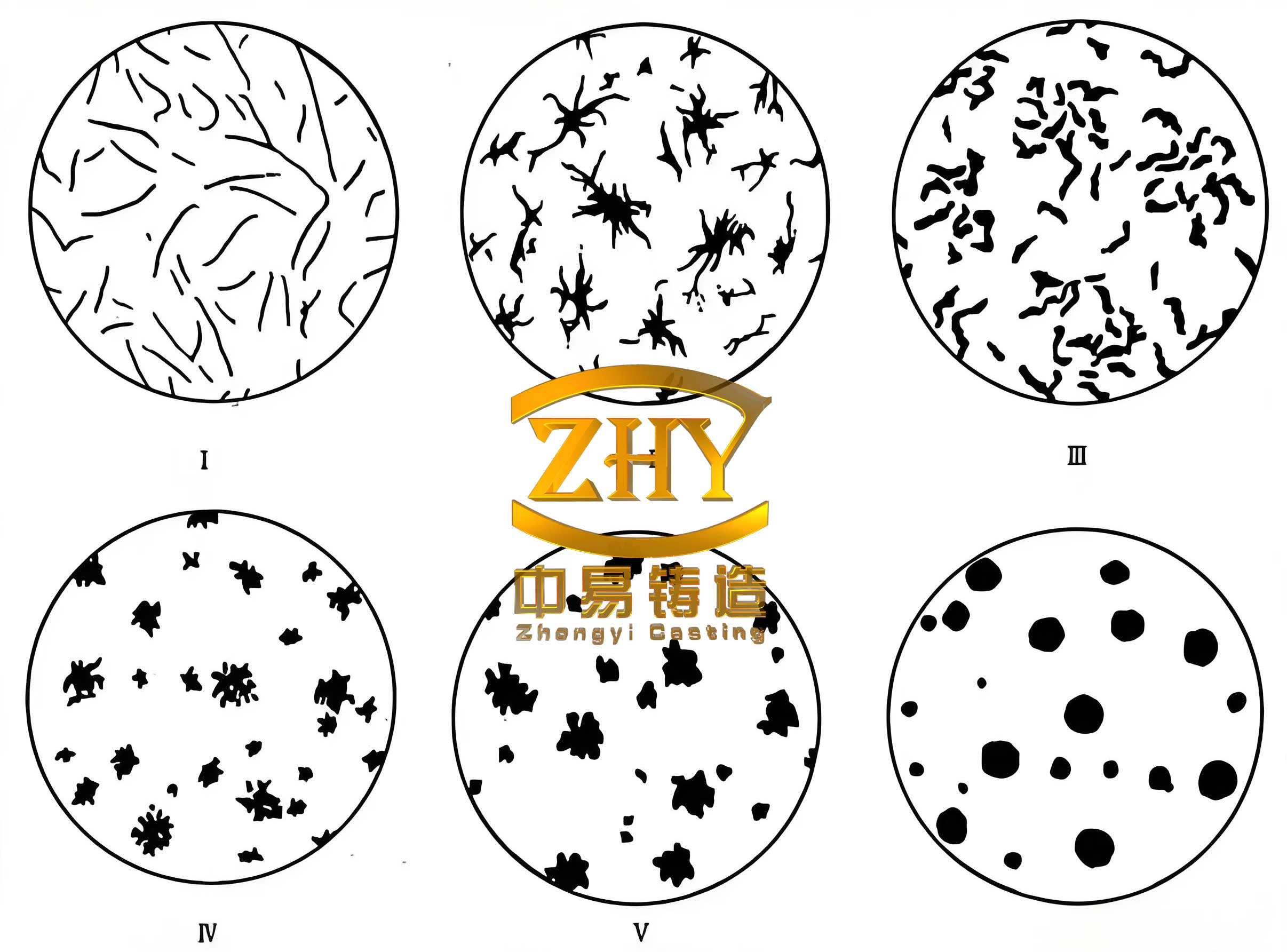
Spheroidal graphite cast iron, with its unique microstructure of graphite nodules in a ferritic or pearlitic matrix, offers a balance of durability and machinability. For components like gear hubs or other transmission parts, surface roughness requirements are stringent, often specified as Ra ≤ 0.8 μm for smooth operation with bearings or seals. Typically, after turning or milling, spheroidal graphite cast iron surfaces achieve roughness values around Ra = 1.6 μm, necessitating subsequent grinding to meet finer tolerances. This additional step not only adds expense but also introduces complexities in production scheduling. Induction hardening, a rapid heating and quenching process using electromagnetic induction, is known for enhancing surface hardness and wear resistance. However, its impact on surface roughness is less documented, particularly for plane surfaces on spheroidal graphite cast iron. We conducted a series of tests to quantify this effect and analyze the underlying mechanisms.
Our focus was on a specific gear hub component made of spheroidal graphite cast iron grade QT700-2. This material is characterized by a tensile strength of 700 MPa and elongation of 2%, making it suitable for high-stress applications. The component required plane induction hardening on both end faces, which would interface with plane bearings, hence the surface roughness specification of Ra = 0.8 μm. Initially, after precision turning, the surfaces exhibited roughness values of approximately Ra = 1.6 μm. To determine if grinding could be omitted post-hardening, we designed an experiment to measure surface roughness before and after induction hardening. This approach allowed us to evaluate whether the thermal process itself could refine the surface texture sufficiently.
The experimental procedure involved several systematic steps. First, we prepared ten identical spheroidal graphite cast iron samples, each machined to the same dimensional and surface finish standards. Using a precision roughness measuring instrument, we measured the surface roughness (Ra values) at both end faces, labeled A and B, prior to any heat treatment. The measurements were taken at multiple points to ensure accuracy, and the average values were recorded. This baseline data confirmed that the initial roughness was consistently below Ra = 1.6 μm, as expected from turning operations.
Next, we subjected the samples to plane induction hardening using a high-frequency induction power supply operating at 30–40 kHz. The process involved rapid heating of the end faces to above the austenitizing temperature, followed by immediate quenching with a spray cooling system. The hardening parameters were optimized to achieve a case depth of 2.2 mm and a surface hardness of 55–58 HRC, consistent with typical requirements for spheroidal graphite cast iron components. After hardening, the samples underwent a tempering treatment at 180°C for 2 hours to relieve stresses and improve toughness. This step ensured that the mechanical properties were balanced without compromising surface integrity.
Following heat treatment, we re-measured the surface roughness of the A and B faces using the same instrument and methodology. The data were compiled and compared to the pre-hardening values. To present the results clearly, we organized the measurements into a table that highlights the changes in roughness. The table below summarizes the Ra values for each sample, along with the differences induced by induction hardening.
| Sample Number | Ra Before Hardening (A face) / μm | Ra After Hardening (A face) / μm | Difference (A face) / μm | Ra Before Hardening (B face) / μm | Ra After Hardening (B face) / μm | Difference (B face) / μm |
|---|---|---|---|---|---|---|
| 1 | 1.211 | 0.360 | -0.851 | 1.216 | 0.427 | -0.789 |
| 2 | 1.280 | 0.679 | -0.641 | 1.256 | 0.516 | -0.740 |
| 3 | 1.242 | 0.485 | -0.757 | 1.236 | 0.476 | -0.760 |
| 4 | 1.201 | 0.406 | -0.795 | 1.219 | 0.423 | -0.796 |
| 5 | 1.235 | 0.456 | -0.779 | 1.227 | 0.446 | -0.781 |
| 6 | 1.226 | 0.424 | -0.802 | 1.246 | 0.431 | -0.815 |
| 7 | 1.218 | 0.419 | -0.799 | 1.233 | 0.428 | -0.805 |
| 8 | 1.263 | 0.532 | -0.731 | 1.252 | 0.493 | -0.759 |
| 9 | 1.251 | 0.492 | -0.759 | 1.231 | 0.467 | -0.764 |
| 10 | 1.257 | 0.509 | -0.748 | 1.235 | 0.473 | -0.762 |
| Average | 1.242 | 0.476 | -0.766 | 1.235 | 0.458 | -0.777 |
From the table, it is evident that induction hardening consistently reduced the surface roughness on both faces. The average Ra value decreased from 1.242 μm to 0.476 μm for face A, and from 1.235 μm to 0.458 μm for face B. This improvement signifies that the process can enhance surface finish beyond the initial machined state, meeting the Ra = 0.8 μm requirement without additional grinding. The negative differences indicate a reduction in roughness, with an average drop of approximately 0.77 μm. Such a change is substantial in precision engineering contexts, where even micron-level alterations can impact performance.
To delve deeper into the mechanisms behind this phenomenon, we consider the fundamentals of surface roughness and induction heating. Surface roughness is typically characterized by parameters like Ra, which is the arithmetic average of absolute deviations from the mean line over a sampling length. Mathematically, it can be expressed as:
$$R_a = \frac{1}{l} \int_0^l |y(x)| dx$$
where \( l \) is the evaluation length and \( y(x) \) is the profile height function. In spheroidal graphite cast iron, the surface after turning consists of peaks and valleys resulting from tool interaction and material deformation. During induction hardening, rapid heating occurs due to eddy currents generated in the material. The localized temperature rise can exceed the melting point at microscopic peaks, causing them to soften or melt, thereby reducing peak heights. This effect can be modeled using heat conduction equations. For instance, the temperature distribution \( T(x,t) \) in a semi-infinite solid subjected to surface heating can be approximated by:
$$T(x,t) = T_0 + \frac{Q}{\sqrt{\pi \alpha t}} e^{-\frac{x^2}{4\alpha t}}$$
where \( T_0 \) is initial temperature, \( Q \) is heat flux, \( \alpha \) is thermal diffusivity, and \( x \) is depth from the surface. For spheroidal graphite cast iron, the thermal diffusivity is influenced by its microstructure, including graphite nodules that affect heat transfer. At peak locations, the curvature enhances heat concentration, leading to higher temperatures that can cause ablation or smoothing.
Furthermore, the quenching phase introduces rapid cooling, which generates compressive residual stresses in the surface layer. This stress can relieve the tensile stresses induced during machining, particularly in the valleys of the roughness profile. The release of compressive stress allows the valleys to rise slightly, effectively reducing the peak-to-valley height. The relationship between stress and deformation can be described by Hooke’s law for elastic materials:
$$\sigma = E \epsilon$$
where \( \sigma \) is stress, \( E \) is Young’s modulus, and \( \epsilon \) is strain. In spheroidal graphite cast iron, the presence of graphite nodules can modify the stress distribution, but overall, the quenching process promotes a more uniform surface. Additionally, the phase transformation from austenite to martensite during quenching results in grain refinement. The fine martensitic structure increases the surface hardness and can fill in microscopic voids, contributing to smoother topography. The volume change associated with martensitic transformation, given by:
$$\Delta V \approx 0.04 \times \text{carbon content}$$
can induce micro-strains that help elevate valley regions. Combined, these factors—peak reduction, stress relief, and grain refinement—explain the observed improvement in surface roughness after induction hardening of spheroidal graphite cast iron.
To quantify the overall effect, we can define an improvement factor \( \eta \) for surface roughness reduction:
$$\eta = \frac{R_{a,\text{before}} – R_{a,\text{after}}}{R_{a,\text{before}}} \times 100\%$$
Using the average values from our experiment, for face A, \( \eta_A = \frac{1.242 – 0.476}{1.242} \times 100\% \approx 61.7\% \), and for face B, \( \eta_B = \frac{1.235 – 0.458}{1.235} \times 100\% \approx 62.9\% \). This indicates a significant enhancement, making the process highly effective for spheroidal graphite cast iron components. Moreover, the consistency across samples suggests reliability in industrial applications.
Beyond surface roughness, induction hardening offers other advantages for spheroidal graphite cast iron. The process is energy-efficient compared to conventional furnace heating, as it directly heats the surface layer with minimal heat loss. The thermal efficiency \( \epsilon_{\text{th}} \) can be expressed as:
$$\epsilon_{\text{th}} = \frac{\text{Useful heat for transformation}}{\text{Input electrical energy}}$$
For induction hardening, typical values range from 60% to 80%, whereas for resistive furnace heating, it may be as low as 40%. This efficiency translates to faster processing times and lower energy consumption. Additionally, the selective heating minimizes distortion and oxidation, preserving dimensional accuracy. For spheroidal graphite cast iron, which is sensitive to thermal gradients due to its heterogeneous microstructure, controlled induction hardening can prevent cracking and ensure uniform hardness.
In terms of production economics, eliminating the grinding step reduces direct costs associated with abrasives, machine maintenance, and labor. It also shortens the production cycle, allowing for higher throughput. For instance, if we consider a batch of spheroidal graphite cast iron parts, the savings per part \( S \) can be estimated as:
$$S = C_{\text{grinding}} – C_{\text{hardening\_extra}}$$
where \( C_{\text{grinding}} \) is the cost of grinding per part, and \( C_{\text{hardening\_extra}} \) is any additional cost from optimizing induction hardening. Given that induction hardening is often already required for wear resistance, the incremental cost for roughness improvement may be negligible, leading to net savings. Furthermore, the enhanced surface finish can improve component lifespan and reduce wear in service, providing long-term benefits.
To further validate our findings, we compared induction hardening with other heat treatment methods for spheroidal graphite cast iron. For example, nitriding can improve surface hardness but may not significantly alter roughness, as it is a diffusion-based process that primarily affects subsurface layers. Carburizing, followed by quenching, might increase roughness due to carbon ingress and subsequent phase changes. The table below summarizes typical effects on surface roughness for various treatments applied to spheroidal graphite cast iron.
| Heat Treatment Method | Typical Change in Surface Roughness (Ra) | Key Mechanism |
|---|---|---|
| Induction Hardening | Decrease by 0.5–1.0 μm | Peak melting, stress relief, grain refinement |
| Carburizing and Quenching | Increase or variable | Carbon diffusion, volume expansion |
| Nitriding | Minimal change | Surface compound layer formation |
| Direct Quenching | Possible increase | Thermal distortion, scaling |
This comparison underscores the unique benefits of induction hardening for surface finish enhancement in spheroidal graphite cast iron. It is worth noting that the specific results may vary with material grade, initial roughness, and process parameters. Therefore, optimization through experimentation is recommended for each application.
In conclusion, our experimental study demonstrates that plane induction hardening effectively improves the surface roughness of spheroidal graphite cast iron components. The process reduces Ra values from approximately 1.6 μm to below 0.8 μm, meeting precision requirements without necessitating grinding. This improvement stems from a combination of factors: the ablation of microscopic peaks during heating, the relief of compressive stresses in valleys, and the grain refinement from martensitic transformation. For industries utilizing spheroidal graphite cast iron, such as automotive or machinery manufacturing, adopting induction hardening can lead to significant cost savings and production efficiency gains. Future work could explore the effects on other roughness parameters, such as Rz or Rq, and investigate the long-term wear performance of hardened surfaces. Ultimately, understanding and leveraging these thermal processes can enhance the quality and sustainability of spheroidal graphite cast iron products in demanding applications.