
The pursuit of power, efficiency, and durability in modern marine and heavy-duty engines has driven the adoption of increasingly complex component designs. A critical example is the cylinder head, which has evolved from a relatively simple structure to a highly integrated one, often incorporating intake manifolds and rocker arm bosses into a single casting. To meet the severe mechanical and thermal stresses in these applications, the material of choice has shifted towards high-toughness spheroidal graphite iron (SGI), also known as ductile iron. This material offers an excellent combination of strength, ductility, and thermal conductivity. However, the transition from traditional compacted graphite iron (CGI) to spheroidal graphite iron for such intricate parts introduces a significant set of foundry challenges that demand a profound understanding and meticulous control of the solidification process.
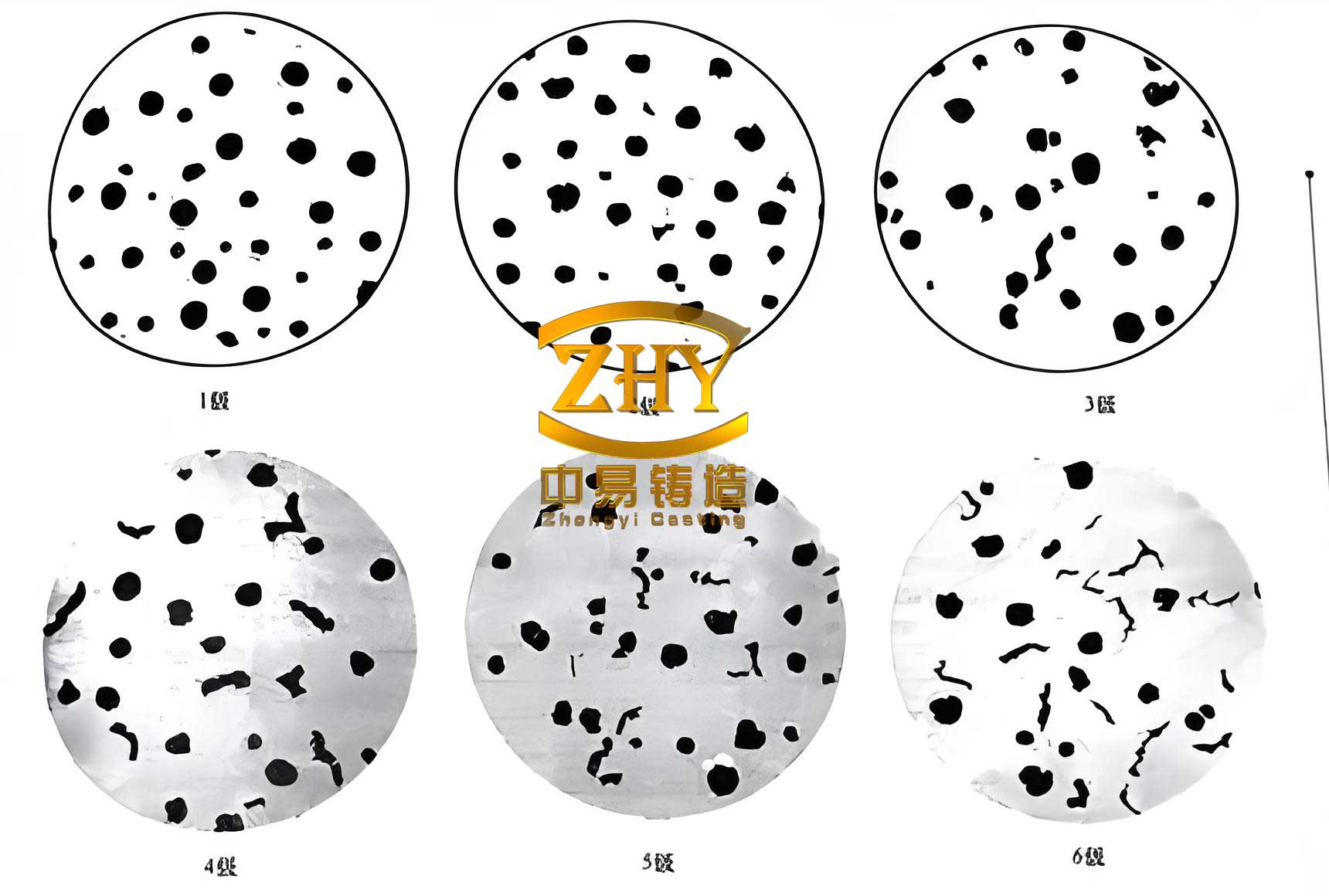
My experience in the development and mass production of these high-toughness spheroidal graphite iron cylinder heads revealed a critical bottleneck: inconsistent quality and a scrap rate exceeding 20%. The predominant defects jeopardizing structural integrity and pressure-tightness were shrinkage porosity in valve guide and bolt holes, gas holes around fuel injector bores, and shrinkage/gas defects near ingate areas on the exhaust manifold side. This article details the systematic analysis and engineering solutions implemented to overcome these hurdles, transforming the process into a reliable and high-yield operation.
The Core Challenge: Inherent Solidification Characteristics of Spheroidal Graphite Iron
The fundamental issue stems from the very nature of how spheroidal graphite iron solidifies. Unlike pure metals or some alloys that solidify with a distinct moving solidus front (directional solidification), spheroidal graphite iron undergoes a mushy solidification. In this mode, a vast, sponge-like network of solid dendrites forms throughout the liquid metal long before the entire volume is solid. The remaining liquid is trapped within this network. This behavior can be conceptually described by considering the fraction solid, $f_s$, as a function of temperature between the liquidus, $T_l$, and solidus, $T_s$:
$$T_{mushy} = T_l – (T_l – T_s) \cdot f_s$$
where $T_{mushy}$ is the temperature within the mushy zone. During this prolonged mushy stage, the expansion associated with graphite nodule formation (graphitization expansion) occurs. If this expansion is not properly harnessed to compensate for the liquid-to-solid contraction, it can instead lead to micro-porosity or even push remaining liquid away from isolated hot spots, resulting in macro shrinkage. The goal is to control cooling rates to time the graphitization expansion to act as an internal, self-feeding mechanism.
Structural Complexity and Defect Genesis
The cylinder head’s design, featuring numerous thin walls intersecting with thick sections like valve guides, bolt bosses, and injector sleeves, creates multiple isolated thermal nodes or hot spots. These are regions that remain liquid longest, surrounded by already solid material that cuts off any possibility of liquid metal feeding from the risers. The traditional foundry approach of using large risers for feeding is often geometrically impossible in such complex, cored castings.
| Defect Location | Type | Root Cause | Consequence |
|---|---|---|---|
| Valve Guide Hole | Shrinkage Cavity | Isolated thermal node, no feeding path | Machining reveals porosity, pressure leakage |
| Bolt Hole | Shrinkage Porosity | Similar isolated hot spot | Loss of clamping force, potential fatigue failure |
| Fuel Injector Bore | Gas Holes / Shrinkage | Combination of hot spot and high gas evolution from core | Fuel leakage, compromised injector seat integrity |
| Exhaust Manifold Ingate Area | Shrinkage & Gas Porosity | Premature solidification of ingate, gas entrapment from core decomposition | Surface or subsurface defects leading to exhaust gas leakage |
Strategic Solution: Controlling Solidification through Advanced Chilling
Since direct feeding via risers was not feasible for the internal hot spots, the strategy pivoted to aggressively controlling the local solidification rate. The objective was to convert these last-to-freeze zones from isolated hot spots into first-to-freeze zones, or at least synchronize their solidification with the broader casting section. This was achieved by deploying a combination of internal and external chills, alongside strategic use of special molding aggregates with high thermal conductivity (chill sands).
The effectiveness of a chill is governed by its ability to extract heat rapidly, which is a function of its thermal diffusivity, $\alpha$:
$$\alpha = \frac{k}{\rho c_p}$$
where $k$ is thermal conductivity, $\rho$ is density, and $c_p$ is specific heat capacity. Materials like steel (for chills) and chromium-rich sands (like chromite) have high $\alpha$ values, making them ideal for this purpose.
1. Targeted Chill Design and Implementation:
- Valve Guide Holes: For the intake side, external cylindrical chills ($\varnothing 25mm \times 60mm$) were placed in the mold cavity adjacent to the guide bosses. For the exhaust side, which often runs hotter, pre-placed internal steel wires ($\varnothing 8mm$) were embedded within the core defining the guide hole. This internal chill acts as a massive heat sink from within.
- Fuel Injector Bore: The core defining this critical bore was switched from standard resin-coated sand to chromite sand. Chromite sand has a significantly higher “heat accumulation coefficient” (a foundry term related to thermal conductivity and capacity), rapidly absorbing heat from the molten spheroidal graphite iron. Furthermore, the chill for the injector hole itself was changed from graphite to a chromite-coated steel chill, with a controlled coating thickness of 6-8mm to prevent chilling too severely and causing carbides or casting cracks.
- Bolt Holes: Similar to the injector bore, chromite-coated chills were specified for the $\varnothing 25mm$ bolt hole bosses, with the same precise coating thickness control.
- Ingate Areas: External chills were strategically placed near the ingates on the intake manifold flange to accelerate solidification in these regions, preventing the formation of shrinkage where the feeding metal first enters and potentially prematurely seals off.
| Location | Chill Type | Material / Specification | Key Parameter | Primary Function |
|---|---|---|---|---|
| Valve Guide (Intake) | External Chill | Steel, $\varnothing 25mm \times 60mm$ | Surface contact area | Accelerate solidification of boss |
| Valve Guide (Exhaust) | Internal Chill | Steel wire, $\varnothing 8mm$ | Embedded within core | Direct internal heat extraction from the hole |
| Fuel Injector Bore Core | Specialty Sand Core | Chromite Sand | High thermal conductivity | Rapid heat dissipation from the bore wall |
| Fuel Injector Hole Chill | Coated Chill | Steel with Chromite Coating | Coating thickness: 6-8mm | Controlled chilling to prevent defects |
| Bolt Hole | Coated Chill | Steel with Chromite Coating | Coating thickness: 6-8mm | Eliminate hot spot in bolt boss |
| Ingate Flange | External Chill | Steel Plates | Position adjacent to ingate | Prevent shrinkage at feeder neck region |
Combating Gas Defects: A Multi-Pronged Approach
The complex internal geometry necessitated the use of over 27 individual sand cores, predominantly made from hot-box cured resin-coated sand. Upon contact with the molten spheroidal graphite iron (typically poured above 1350°C), these cores undergo rapid thermal degradation, releasing large volumes of gas. If this gas cannot escape the mold cavity, it becomes trapped, forming blows or pinholes.
The gas generation rate, $\dot{G}$, from a core is a function of temperature, $T$, core volume, $V_c$, and binder composition. While a precise formula is complex, the mitigation strategy focuses on reducing the initial gas potential and ensuring unimpeded venting:
$$\dot{G} = f(T, V_c, \text{binder type})$$
Implemented Solutions:
- Core Pre-Treatment: The fuel injector bore core, being a critical and large mass, was subjected to an additional low-temperature baking cycle after the standard coating and drying. This was done at 180°C for 4 hours. This prolonged thermal treatment drives off low-temperature volatiles and further cures the resin, significantly reducing its gas evolution during the brief, high-temperature exposure to the metal.
- Comprehensive Venting System: Prior to mold assembly, ventilation holes were drilled into the core prints (the extensions of the core that sit in the mold) of every single resin core. These channels were then meticulously connected and led out to the exterior of the mold assembly. This created a low-resistance escape path for the generated gases, effectively piping them away from the solidifying spheroidal graphite iron casting.
Process Implementation and Validation
Implementing this strategy required precise engineering. Chills, especially those embedded in cores like the injector bore chill, had to be designed with mechanical features (e.g., grooves, undercuts) to ensure they remained firmly anchored during the core shooting process. Dedicated tooling and fixtures were created for consistent placement.
An initial pilot batch of 20 cylinder heads was produced following the optimized parameters. Visual inspection after cleaning showed no surface gas defects. A random sample was selected for destructive analysis via sectioning. The results were conclusive: the previously problematic areas—valve guide bosses, bolt holes, and injector bores—were now sound, dense, and free from shrinkage cavities or significant porosity. The metallurgical structure of the spheroidal graphite iron showed a uniform, fine distribution of graphite nodules, indicative of proper inoculation and controlled solidification.
| Process Parameter / Checkpoint | Original Method | Optimized Method | Purpose of Change |
|---|---|---|---|
| Injector Bore Core Material | Standard Resin-Coated Silica Sand | Chromite Sand | Increase heat extraction rate |
| Core Post-Processing | Standard Drying | Low-Temp Bake (180°C/4h) | Reduce volatile content and gas evolution |
| Local Chill for Hot Spots | Graphite or None | Steel with Chromite Coating (6-8mm) | Provide controlled, intense chilling |
| Core Venting | Minimal or reliance on core permeability | Active drilling of vent channels in all core prints | Create positive gas evacuation path |
| Mold Assembly Inspection | General check | Specific verification of chill placement and vent line continuity | Ensure process fidelity |
The success of the pilot batch led to full-scale production. To date, over 400 castings have been produced using this methodology. The scrap rate has plummeted from over 20% to approximately 5%, corresponding to a yield of 95%. The dominant cause of scrap is no longer internal shrinkage or gas, but minor, unrelated issues, demonstrating the robustness of the implemented solution for the spheroidal graphite iron castings.
Conclusion and Foundry Principles
The successful production of high-integrity, complex spheroidal graphite iron castings, such as modern cylinder heads, hinges on the precise control of solidification dynamics. When component geometry prohibits conventional feeding techniques, the foundry engineer must adopt a strategy of directed solidification control. The synergistic use of high-thermal-diffusivity materials—specifically designed chills and specialty sands like chromite—provides the necessary toolset to manipulate local cooling rates. This transforms problematic isolated hot spots into controlled solidification fronts, effectively harnessing the graphitization expansion inherent to spheroidal graphite iron for self-compensation of shrinkage.
Furthermore, a holistic view must be taken where thermal management is coupled with aggressive gas evacuation strategies for cores. Reducing the gas load through pre-treatment and ensuring its escape via engineered vents are non-negotiable steps for achieving pressure-tight castings. The formula for success in casting advanced spheroidal graphite iron components can thus be summarized as a balance:
$$\text{Sound Casting} = \text{Controlled Solidification} + \text{Effective Venting} + \text{Process Consistency}$$
This case study underscores that overcoming the challenges of mushy-solidifying alloys like spheroidal graphite iron in complex geometries is not merely about applying standard practices, but about innovating and rigorously applying fundamental principles of heat and mass transfer to the foundry floor.