
The production of high-integrity, defect-free castings for critical applications in sectors such as heavy machinery, hydropower, and maritime engineering presents a persistent challenge. Among ferrous alloys, spheroidal graphite iron offers an exceptional combination of castability, strength, and damping capacity, making it indispensable for large structural components. However, the very mechanism that grants spheroidal graphite iron its desirable properties—graphitization expansion during solidification—also complicates feeding. While this expansion can lead to self-feeding, large and medium-sized castings are prone to shrinkage porosity and cavities if not properly managed with risers and auxiliary feeding aids. This article details my research and development of a novel exothermic insulating covering agent specifically designed for risers of large spheroidal graphite iron castings. It introduces a more accurate metric for assessing riser performance and presents comprehensive comparative field trials against established commercial products.
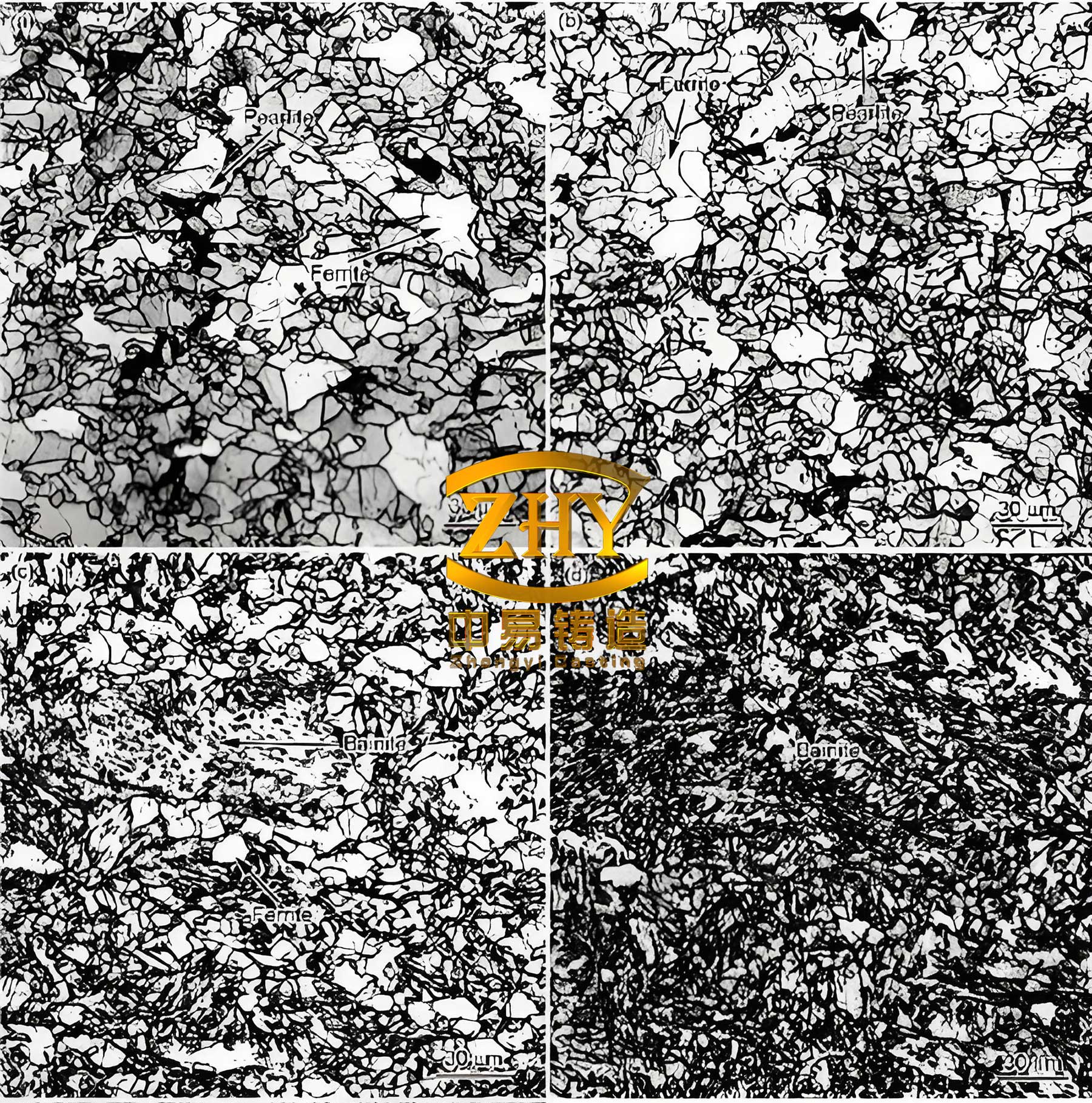
Solidification Characteristics of Spheroidal Graphite Iron and Riser Demands
The feeding difficulty in spheroidal graphite iron stems from its unique solidification morphology. Unlike steels or gray irons that solidify in a well-defined directional (skin-forming) manner, spheroidal graphite iron undergoes a pasty or mushy mode of solidification. A coherent solid shell forms slowly, while a vast network of dendrites and graphite nodules develops throughout the interior volume. This structure severely restricts the channels available for liquid metal to flow from the riser into the casting to compensate for shrinkage. Furthermore, the graphite expansion, while beneficial for reducing net shrinkage, can exert substantial pressure on the mold walls. If the mold strength is insufficient—a common issue with large sand molds—it may yield, negating the self-feeding effect and potentially causing metal penetration or dimensional inaccuracies. Consequently, effective riser systems are non-negotiable for sound large castings.
While small spheroidal graphite iron castings can often utilize blind risers, large and medium-sized sections invariably require open risers coupled with high-performance covering agents. The primary function of these agents is twofold: to provide exothermic heat to delay solidification of the riser metal and to provide insulation to minimize radiant and convective heat loss from the riser’s top surface. For spheroidal graphite iron, the performance requirements are particularly stringent due to lower pouring temperatures (typically 1,350–1,400°C) compared to steel, and the relatively smaller riser sizes often employed. The covering agent must react promptly to generate heat during the critical early stages of riser cooling, maintain a sustained heat release, and form an effective insulating slag layer.
Limitations of Conventional Covering Agents for Spheroidal Graphite Iron
Traditional exothermic covering agents often rely on formulations optimized for steel casting, which can introduce significant drawbacks when used for spheroidal graphite iron.
1. The Fluoride Problem: Cryolite (Na3AlF6) is a common additive. It acts as an effective flux to promote slag formation and, more critically, as a potent catalyst for the aluminothermic reaction (the reaction between aluminum and metal oxides that provides the primary heat). However, residual fluorine from the reaction can have a deleterious effect on the surface microstructure of the adjacent spheroidal graphite iron. It has been documented that excessive fluorine can lead to graphite degeneration—causing nodules to become coarse, irregular, or even degenerate into flake or vermicular forms near the riser contact zone, severely compromising mechanical properties in that region.
2. The Carbon Problem: Many commercial agents incorporate significant amounts of carbonaceous materials (e.g., carbon black, coke breeze) as supplemental exothermic fuels and insulation aids. While effective functionally, this practice complicates foundry logistics. When the riser is removed and recycled into the melt charge, this high-carbon material from the covering agent dissolves into the metal, artificially and unpredictably raising the carbon equivalent of the subsequent heat. For precise-grade spheroidal graphite iron production where chemistry control is paramount, this introduces an unwanted variable and can lead to off-specification melts.
These challenges have driven the development of next-generation covering agents with “low/no-fluorine” and “low-carbon” characteristics specifically for spheroidal graphite iron applications.
Development Philosophy and Composition of the Novel Covering Agent
My development goal was to engineer a covering agent that balances ignition temperature, reaction rate, total heat output, duration of heat release, environmental impact, and cost. The formulation is grounded in aluminothermic principles and silicate phase diagram theory, utilizing cost-effective and often recycled materials.
The key components and their functions are detailed in the table below:
| Component Category | Specific Materials | Primary Function | Design Rationale for Spheroidal Graphite Iron |
|---|---|---|---|
| Exothermic Base | Aluminum powder, Industrial-grade iron oxide (Fe2O3) | Primary heat generation via the aluminothermic reaction: $$2Al + Fe_2O_3 \rightarrow Al_2O_3 + 2Fe + \Delta H$$ | Fe2O3 is a low-cost, effective oxidizer that also contributes to slag formation. |
| Oxidation Promoter | Nitrate-based mixtures (e.g., KNO3, NaNO3) | Provides oxygen for early, low-temperature ignition and sustains the reaction. | Ensures rapid ignition crucial for the faster cooling of spheroidal graphite iron risers. |
| Insulating Materials | Fly ash cenospheres, Expanded perlite | Provide long-term thermal insulation after the exothermic reaction subsides. | Cenospheres (a waste product) and perlite are excellent, low-cost insulators with low density. |
| Exothermic/Insulating Aid | Carbonized rice hull (limited quantity) | Provides secondary, slower combustion and enhances insulation. | Use of an agricultural by-product is economical. Quantity is strictly controlled to minimize carbon pickup in recycled spheroidal graphite iron. |
| Flux/Catalyst (Minimal) | Fluoride salt mixtures (e.g., Cryolite) | Promotes slag fluidity and catalyzes the aluminothermic reaction. | Addition is drastically restricted to ≤1.0 wt.% to eliminate negative effects on graphite morphology in spheroidal graphite iron. |
The resulting proprietary formulation for spheroidal graphite iron meets the following key specifications: Moisture ≤ 1.0%, Fluoride content ≤ 1.0%, Carbon content ≤ 5.5%, Ignition temperature ~300°C, Useful exothermic range up to ~1100°C, Total heat release ≥ 170 J/g.
Rethinking Riser Performance: From Feeding Efficiency to Relative Feeding Efficiency
Evaluating the effectiveness of a riser covering agent has traditionally relied on the metric of Feeding Efficiency (η). It is defined as the volume of metal fed into the casting (manifested as the sink volume in the riser) divided by the total original volume of the riser, expressed as a percentage:
$$ \eta = \frac{V_{feed}}{V_{riser}} \times 100\% = \frac{V_{sink}}{V_{riser}} \times 100\% $$
where \( V_{feed} \) or \( V_{sink} \) is the volume of the shrinkage cavity and \( V_{riser} \) is the total geometric volume of the riser.
However, this metric has a critical shortcoming. It considers only the total volume of the sink but ignores its shape. Two risers with identical feeding efficiencies could have vastly different operational safety. Consider Riser A, which forms a deep, narrow pipe, and Riser B, which forms a wide, shallow dish. While both fed the same volume, Riser B leaves a greater volume of sound metal—known as the Safety Height (Hs)—above the highest point of the casting. This safety height is a buffer against miscalculation, variation in pouring level, or unforeseen shrinkage in the casting. A larger safety height allows the designer to potentially reduce the initial riser height, saving metal and improving yield.
To capture this crucial aspect, I propose and employ the metric of Relative Feeding Efficiency (ηrelative). It is defined as the sink volume divided by the volume of the upper portion of the riser that corresponds to the sink depth.
$$ \eta_{relative} = \frac{V_{sink}}{V_{upper}} \times 100\% $$
Where \( V_{upper} \) is the geometric volume of the riser from its top surface down to the depth equal to the sink depth. It can be calculated as:
$$ V_{upper} = V_{riser} – V_{lower} $$
where \( V_{lower} \) is the volume of the cylindrical (or other shape) portion representing the safety height \( H_s \).
This metric inherently rewards a sink profile that is wider and shallower (higher safety height), as it results in a larger \( V_{upper} \) denominator for a given \( V_{sink} \), yielding a more realistic measure of how effectively the riser volume was utilized for safe feeding. Therefore, ηrelative provides a more comprehensive and accurate characterization of a covering agent’s performance than the traditional η.
Field Trial Methodology and Comparative Analysis
The performance of the novel covering agent was evaluated through direct production trials at multiple foundries, comparing it against leading domestic and international products used for spheroidal graphite iron. Identical risers on the same casting were used for a direct comparison. The test procedure was:
- Prepare a mold with multiple identical open risers.
- During pouring, when the metal reaches approximately half the riser height, apply equal masses of the different covering agents to their respective risers.
- After complete cooling, sever the risers from the casting.
- Measure the sink volume (\(V_{sink}\)) by filling the cavity with fine sand of known density and weighing it.
- Section the riser longitudinally. Measure the maximum sink depth (\(D_{sink}\)) and the remaining safety height (\(H_s\)).
- Calculate \(V_{upper}\) based on the riser geometry and \(D_{sink}\).
- Calculate both the traditional Feeding Efficiency (η) and the new Relative Feeding Efficiency (ηrelative).
Trial 1: Large Rail Casting (Material: QT400-15)
The casting weighed ~980 kg. Each had two identical elliptical risers (230mm x 330mm x 400mm high) with insulating sleeves. The tops were treated with 1.0 kg of the novel agent and a leading domestic agent, respectively.
| Parameter | Novel Covering Agent | Domestic Benchmark Agent |
|---|---|---|
| Total Riser Height (mm) | 270 | 270 |
| Safety Height, Hs (mm) | 160 | 175 |
| Max. Sink Depth (mm) | 110 | 95 |
| Sink Volume, Vsink (dm³) | 3.55 | 2.96 |
| Upper Volume, Vupper (dm³) | 7.10 | 6.13 |
| Feeding Efficiency, η (%) | 20.4 | 17.0 |
| Relative Feeding Efficiency, ηrelative (%) | 50.0 | 48.3 |
Analysis: The novel agent produced a larger sink volume, leading to a higher traditional efficiency (20.4% vs. 17.0%). More importantly, its ηrelative was 50.0%, outperforming the benchmark’s 48.3%. Observationally, the novel agent ignited faster, expanded more, and spread more evenly, forming a uniform insulating layer. Both agents performed without emitting pungent fumes.
Trial 2: Pad Iron Casting (Material: QT500-7)
This 730 kg casting used cylindrical risers (~100mm diameter). The novel agent was compared against a premium international product. While precise volumetric measurement was complicated by subsurface shrinkage in the benchmark riser, qualitative analysis was conclusive.
The riser with the novel agent exhibited a sink depth of 55 mm with a relatively flat bottom. The riser with the international agent had a sink depth of 45 mm (excluding subsurface shrinkage) with an irregular, conical bottom profile. Consequently, the safety height was significantly greater for the riser using the novel agent, indicating a superior ηrelative. Metallographic examination of the riser neck area for both showed no graphite degeneration. Graphite nodularity was 80-90%, with nodule size rating of 6, confirming the low-fluorine formulation of the novel agent does not harm the spheroidal graphite iron microstructure.
Trial 3: Pump Cover Casting (Material: QT600-3)
This ~1 tonne casting again utilized cylindrical risers. A key observation was the thermal performance difference. The novel agent ignited and reached peak combustion about 1 minute earlier than the international agent, providing critical early-stage heat for the spheroidal graphite iron riser. Both had similar total reaction durations (~3.5 min). Post-reaction, the slag layer from the novel agent was thicker and more insulating, with only a small central area glowing, whereas the international agent’s layer was thinner, exposing more hot metal surface and leading to greater heat loss.
Upon sectioning, the novel agent’s riser showed a sink with a flat bottom and a safety height (\(H_s\)) of 82 mm. The international agent’s riser had an irregular sink shape with a safety height of only 58 mm. This clear difference underscores the advantage of the novel agent in creating a safer, more efficient feeding profile, resulting in a higher ηrelative.
Thermal Analysis and Mechanistic Discussion
To understand the superior performance, Differential Scanning Calorimetry (DSC) was performed on the novel agent and the domestic benchmark. The DSC curve for the novel agent reveals its engineered thermal signature:
| Reaction Phase | Temperature Range (°C) | Peak Temp. (°C) | Enthalpy (J/g) | Interpretation |
|---|---|---|---|---|
| Early-Stage | 245 – 385 | 280 | 21.57 | Ignition and combustion of nitrates and readily available fuels. Crucial for initial heat spike. |
| Mid-Stage | 385 – 545 | 475 | 25.77 | Primary aluminothermic reaction catalyzed by minimal fluoride. |
| Late-Stage | 545 – 1100 | 690 | 122.72 | Continued oxidation of carbonaceous material and sustained reaction. |
| Total | 245 – 1100 | – | 170.06 | Cumulative heat output. |
The novel agent’s DSC profile shows three distinct, well-separated exothermic peaks. This indicates a staged, controlled release of heat spanning from low to high temperature, ensuring coverage throughout the riser’s solidification. In contrast, the domestic benchmark’s DSC curve showed less distinct, more clustered peaks concentrated in a narrower mid-to-late temperature band. This delayed heat release is less optimal for spheroidal graphite iron, where the critical feeding window is earlier. Furthermore, the total integrated heat release (area under the DSC curve) was greater for the novel agent, corroborating the field observations of larger sink volumes and better insulation.
The synergy of components is key: The early nitrate-driven ignition ensures prompt action. The controlled aluminothermic reaction, aided by minimal fluoride, delivers intense heat. The limited carbonized rice hull provides prolonged, gentle heating and contributes to the integrity of the insulating slag layer formed by the melted fluxes and Al2O3 from the reaction. This staged, balanced approach is why the novel agent promotes the desirable wide-and-shallow sink profile, maximizing the ηrelative.
Conclusion
This investigation successfully developed and validated a novel exothermic insulating covering agent tailored for the demands of large and medium-sized spheroidal graphite iron castings. The key outcomes are:
- Optimized, Sustainable Formulation: By utilizing industrial by-products (cenospheres) and natural minerals, and strictly limiting fluorine (≤1.0%) and controlled-carbon additives, the agent achieves an excellent balance of performance, cost-effectiveness, and environmental friendliness, eliminating risks of graphite degeneration in spheroidal graphite iron.
- Superior Feeding Performance: Production trials demonstrated that the novel agent consistently achieves high relative feeding efficiency (up to 50%), outperforming established commercial products. It promotes a desirable sink morphology with greater safety height, enhancing feeding reliability and potential yield improvement.
- A More Meaningful Performance Metric: The newly defined Relative Feeding Efficiency (ηrelative) is proven to be a more accurate and comprehensive indicator of riser performance than traditional feeding efficiency, as it incorporates both the volume and shape of the shrinkage cavity.
- Validated Thermal Behavior: DSC analysis confirms the agent’s designed, multi-stage exothermic profile, providing timely and sustained heat release that aligns perfectly with the solidification characteristics of spheroidal graphite iron.
This covering agent represents a significant step forward in foundry technology for high-quality spheroidal graphite iron production, directly contributing to improved casting soundness, increased yield, and more sustainable manufacturing practices for critical components in heavy industry.