
In the modern manufacturing landscape, the production of high-quality cast iron parts through metal mold casting has gained significant attention due to its efficiency and environmental benefits. As a researcher in this field, I have explored the challenges and solutions associated with preventing chilled edges, commonly known as white iron formation, in metal mold casting. This article delves into the principles and methods for achieving sound cast iron parts without chilled edges, emphasizing the interplay of chemical composition, inoculation, cooling rate control, and thermal management of metal molds. The goal is to provide a comprehensive guide for practitioners aiming to optimize the production of cast iron parts using metal mold technology.
Metal mold casting of cast iron parts offers advantages such as energy savings, resource efficiency, and reduced pollution, aligning with sustainable industrial practices. However, the rapid cooling inherent to metal molds often leads to the formation of chilled edges, which are undesirable hard and brittle phases that compromise the mechanical properties of cast iron parts. This phenomenon occurs because the high thermal conductivity of metal molds, typically ranging from 30 to 50 W/m·K compared to 0.5 to 1.0 W/m·K for sand molds, accelerates solidification, promoting metastable cementite formation instead of graphite. Over the past decades, advancements in metallurgy and process control have enabled effective prevention of chilled edges, making metal mold casting a viable method for producing diverse cast iron parts. In this discussion, we will systematically address the key factors influencing chilled edge formation and outline practical strategies to mitigate it, ensuring the production of durable and reliable cast iron parts.
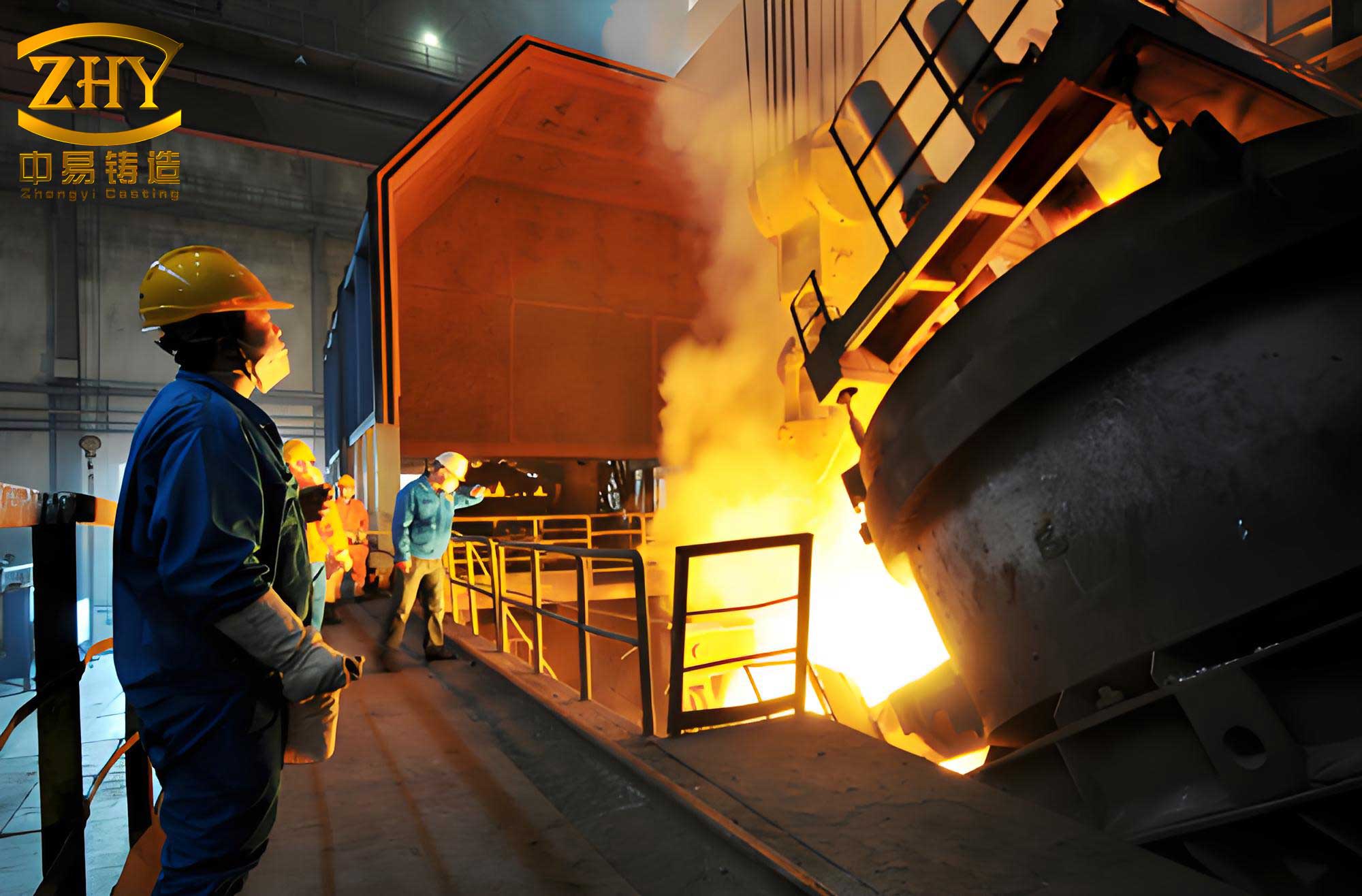
The formation of chilled edges in cast iron parts is primarily governed by the cooling rate and chemical composition during solidification. In metal mold casting, the cooling rate can be several orders of magnitude higher than in sand molding, often exceeding 100°C/s, which shortens the eutectic reaction time and favors the cementite phase. To counteract this, we must optimize multiple parameters simultaneously. The fundamental equation describing the cooling rate in a metal mold can be expressed as: $$ \frac{dT}{dt} = \frac{k_m (T_m – T_c)}{V \rho C_p} $$ where \( \frac{dT}{dt} \) is the cooling rate, \( k_m \) is the thermal conductivity of the metal mold, \( T_m \) is the mold temperature, \( T_c \) is the casting temperature, \( V \) is the volume of the cast iron part, \( \rho \) is the density, and \( C_p \) is the specific heat capacity. By manipulating these variables, we can control the solidification kinetics to prevent chilled edges in cast iron parts.
Chemical composition plays a pivotal role in determining the susceptibility of cast iron parts to chilled edges. The five primary elements—carbon (C), silicon (Si), manganese (Mn), phosphorus (P), and sulfur (S)—along with trace elements, significantly influence graphite formation and matrix structure. For metal mold casting, the composition must be tailored to balance chill resistance and mechanical properties. Below is a summary table of typical chemical compositions used in metal mold casting of cast iron parts across various regions, highlighting the ranges that minimize chilled edge formation:
| Region/Standard | Carbon (C, %) | Silicon (Si, %) | Manganese (Mn, %) | Phosphorus (P, %) | Sulfur (S, %) | Carbon Saturation (Sc) |
|---|---|---|---|---|---|---|
| Eastern Europe (e.g., GOST) | 3.2–3.8 | 2.0–2.8 | 0.5–0.8 | 0.1–0.3 | ≤0.12 | 0.85–0.95 |
| Western Europe | 3.3–3.6 | 2.2–2.6 | 0.6–0.9 | 0.1–0.2 | ≤0.1 | 0.88–0.92 |
| Japan | 2.8–3.2 | 2.5–3.0 | 0.5–0.7 | ≤0.15 | ≤0.08 | 0.75–0.85 |
| United States | 3.4–3.7 | 2.0–2.4 | 0.7–1.0 | 0.1–0.25 | ≤0.1 | 0.90–0.95 |
Carbon and silicon are the most effective elements in reducing chilled edges in cast iron parts. Carbon increases graphite nucleation, while silicon enhances carbon activity and raises the eutectic temperature, promoting stable graphite formation. Empirical relationships show that each 0.1% increase in carbon reduces chill depth by approximately 1–2 mm, and each 0.1% increase in silicon reduces it by 1.5–2 mm. The combined effect can be modeled as: $$ D_c = D_0 – \alpha C – \beta Si $$ where \( D_c \) is the chill depth, \( D_0 \) is the baseline chill depth, and \( \alpha \) and \( \beta \) are coefficients dependent on cooling conditions. For optimal results in cast iron parts, the carbon saturation index \( Sc = \frac{C}{4.26 – 0.31 Si – 0.33 P} \) should be maintained between 0.85 and 0.95 to prevent chilled edges while ensuring adequate strength.
Manganese and sulfur have complex interactions in cast iron parts. Manganese stabilizes carbides and increases chill tendency, with each 0.1% addition raising chill depth by about 0.5 mm. Sulfur, although it enhances carbon activity, generally promotes chill formation and degrades fluidity. To neutralize their effects, the manganese-to-sulfur ratio should be controlled: $$ Mn = 1.7 S + 0.3 $$ This balance ensures that manganese forms MnS inclusions, reducing sulfur’s harmful impact on chilled edges in cast iron parts. Phosphorus, in moderation (0.1–0.3%), can reduce chill depth by lowering carbon solubility, but excessive amounts lead to embrittlement and coarse graphite, compromising the integrity of cast iron parts.
Trace elements, such as titanium (Ti), chromium (Cr), tin (Sn), and antimony (Sb), are often added to refine graphite and modify the matrix in cast iron parts. Titanium, at 0.05–0.15%, acts as a potent inoculant by forming TiC or TiN nuclei, promoting type A graphite and reducing chill sensitivity. Chromium, above 0.2%, strongly promotes pearlite but increases chill risk, so it is limited to below 0.1% for chill-prone applications. Tin and antimony, at 0.05–0.1%, stabilize pearlite and refine graphite, but must be carefully dosed to avoid excessive chill. The influence of trace elements on chill depth can be summarized with the formula: $$ \Delta D_c = \sum_i \gamma_i X_i $$ where \( \Delta D_c \) is the change in chill depth, \( \gamma_i \) is the chill coefficient for element i, and \( X_i \) is its concentration. This highlights the need for precise control in producing high-quality cast iron parts.
Inoculation treatment is a critical step in preventing chilled edges in metal mold casting of cast iron parts. By adding inoculants to the molten iron, we enhance graphite nucleation, reduce undercooling, and improve microstructure uniformity. Common inoculants include ferrosilicon (FeSi), calcium silicide (CaSi), and aluminum-based compounds, with optimal addition rates of 0.2–0.5% by weight. The effectiveness of inoculants depends on cooling rate and base composition; for instance, FeSi with 75% Si is widely used for its rapid action. The chill reduction due to inoculation can be expressed as: $$ D_{c,\text{inoc}} = D_c \cdot e^{-k I} $$ where \( D_{c,\text{inoc}} \) is the chill depth after inoculation, \( I \) is the inoculant addition amount, and \( k \) is a constant related to inoculant potency. A comparison of inoculant effects on chill depth in cast iron parts is shown in the table below:
| Inoculant Type | Typical Composition | Addition Rate (%) | Chill Depth Reduction (%) | Remarks |
|---|---|---|---|---|
| FeSi (75% Si) | Fe, 75% Si, 1% Ca | 0.2–0.4 | 40–60 | Fast-acting, suitable for high cooling rates |
| CaSi | Ca, Si, Al | 0.1–0.3 | 30–50 | Improves graphite morphology, slow衰退 |
| FeTi | Fe, 30% Ti | 0.05–0.15 | 20–40 | Enhances type A graphite, reduces wall thickness sensitivity |
| Complex Inoculant | FeSi, Ca, Al, Ti | 0.3–0.5 | 50–70 | Combined benefits, minimal衰退 |
Inoculation should be performed at temperatures below 1400°C to maximize effectiveness, and for metal mold casting, late inoculation within the mold cavity can mitigate衰退, ensuring consistent quality in cast iron parts. Additionally, inoculants containing rare earth elements have shown promise in further reducing chilled edges and enhancing mechanical properties.
The cooling rate in metal mold casting is a decisive factor for the microstructure of cast iron parts. It is influenced by the geometry of the cast iron part, metal mold thickness, pouring temperature, and interfacial conditions. We often use the modulus concept to correlate cooling rate with cast iron part design: $$ M = \frac{V}{A} $$ where \( M \) is the modulus (volume-to-surface area ratio), \( V \) is the volume of the cast iron part, and \( A \) is its surface area. Experimental data reveal a relationship between modulus and average cooling rate: $$ \frac{dT}{dt} = \frac{C}{M^n} $$ with \( C \) and \( n \) as constants typically around 500°C·cm/s and 1.5, respectively. Higher cooling rates, above 50°C/s, favor type D graphite (fine, undercooled), while rates below 10°C/s promote type A graphite (coarse). To prevent chilled edges, we aim for cooling rates between 20°C/s and 40°C/s, which yield a mixed graphite structure with minimal cementite. The table below illustrates the effect of cooling rate on graphite type and matrix in cast iron parts:
| Cooling Rate (°C/s) | Graphite Type | Graphite Size (μm) | Matrix Structure | Chill Risk |
|---|---|---|---|---|
| > 50 | D (undercooled) | < 20 | Ferrite-dominated | High |
| 20–50 | D + A | 20–50 | Pearlite + Ferrite | Low |
| 10–20 | A (flake) | 50–100 | Pearlite | Very Low |
| < 10 | A + B (rosette) | > 100 | Pearlite + Carbides | Low (but coarse graphite) |
For pearlitic cast iron parts, which require higher strength, alloying elements like copper or tin are added to offset the ferrite-promoting effect of rapid cooling. By integrating cooling rate control with composition optimization, we can achieve chill-free cast iron parts with tailored properties.
Metal mold heat exchange control is essential for managing the solidification of cast iron parts. Techniques include applying thermal coatings, using linings or interlays, and creating artificial gaps to modulate heat transfer. Thermal coatings, such as zirconia or graphite-based materials, reduce the effective thermal conductivity at the mold-casting interface. The heat flux \( q \) through a coating layer can be calculated as: $$ q = \frac{k_c (T_h – T_c)}{d_c} $$ where \( k_c \) is the thermal conductivity of the coating, \( T_h \) and \( T_c \) are the hot and cold side temperatures, and \( d_c \) is the coating thickness. By selecting coatings with low \( k_c \) (e.g., 0.5–2 W/m·K), we slow down cooling and prevent chilled edges in cast iron parts. Common coating materials and their properties are listed below:
| Coating Material | Thermal Conductivity (W/m·K) | Typical Thickness (mm) | Effect on Chill Depth | Application Method |
|---|---|---|---|---|
| Zirconia (ZrO₂) | 1.0–1.5 | 0.1–0.3 | Reduces by 30–50% | Spraying |
| Graphite | 5–10 | 0.2–0.5 | Reduces by 20–40% | Brushing |
| Alumina (Al₂O₃) | 2–3 | 0.1–0.2 | Reduces by 25–45% | Dipping |
| Silica-based | 0.5–1.0 | 0.3–0.6 | Reduces by 40–60% | Spraying |
Linings and interlays, such as sand or resin-bonded layers, provide additional insulation. For instance, a 5–10 mm thick sand lining can reduce cooling rates to near-sand mold levels, eliminating chilled edges in complex cast iron parts. Conversely, to accelerate cooling for thin sections, aluminum interlays with high thermal conductivity (≈200 W/m·K) are used; they melt away after solidification, creating gaps for venting and mold protection. Artificial gaps, designed by partially opening the mold after pouring, allow self-annealing of the cast iron part using its residual heat, effectively removing any surface chill. This method is energy-efficient and simplifies the production of chill-free cast iron parts.
Furthermore, metal mold design parameters, such as wall thickness and the use of inserts, can be optimized to control heat extraction. The thermal response of a metal mold can be modeled using the Fourier equation: $$ \frac{\partial T}{\partial t} = \alpha \nabla^2 T $$ where \( \alpha \) is the thermal diffusivity. By solving this numerically for specific cast iron part geometries, we can predict chill formation and adjust mold parameters accordingly. For example, increasing mold preheat temperature from 100°C to 300°C can reduce cooling rate by up to 20%, mitigating chilled edges in cast iron parts. Integrating these thermal management strategies ensures robust process control for diverse cast iron parts.
In conclusion, preventing chilled edges in metal mold casting of cast iron parts requires a holistic approach that combines chemical composition tailoring, effective inoculation, cooling rate modulation, and precise thermal exchange control. From my perspective, the key lies in maintaining a high carbon equivalent while leveraging inoculation to enhance graphite nucleation, coupled with adaptive mold techniques to balance cooling. The trend toward low-carbon, high-silicon compositions offers a promising direction for improving strength without sacrificing chill resistance in cast iron parts. Methods like self-annealing through artificial gaps and the use of insulating linings are not only effective but also sustainable, reducing energy consumption and waste. As technology advances, we anticipate further innovations, such as smart coatings with phase-change materials or real-time cooling control via sensors, which will streamline the production of high-integrity cast iron parts. By embracing these principles, manufacturers can consistently achieve chill-free cast iron parts that meet stringent performance standards, driving the adoption of metal mold casting in industries ranging from automotive to machinery. Ultimately, the ongoing development of anti-chill technologies will continue to enhance the efficiency and quality of cast iron parts, solidifying metal mold casting as a cornerstone of modern foundry practice.