
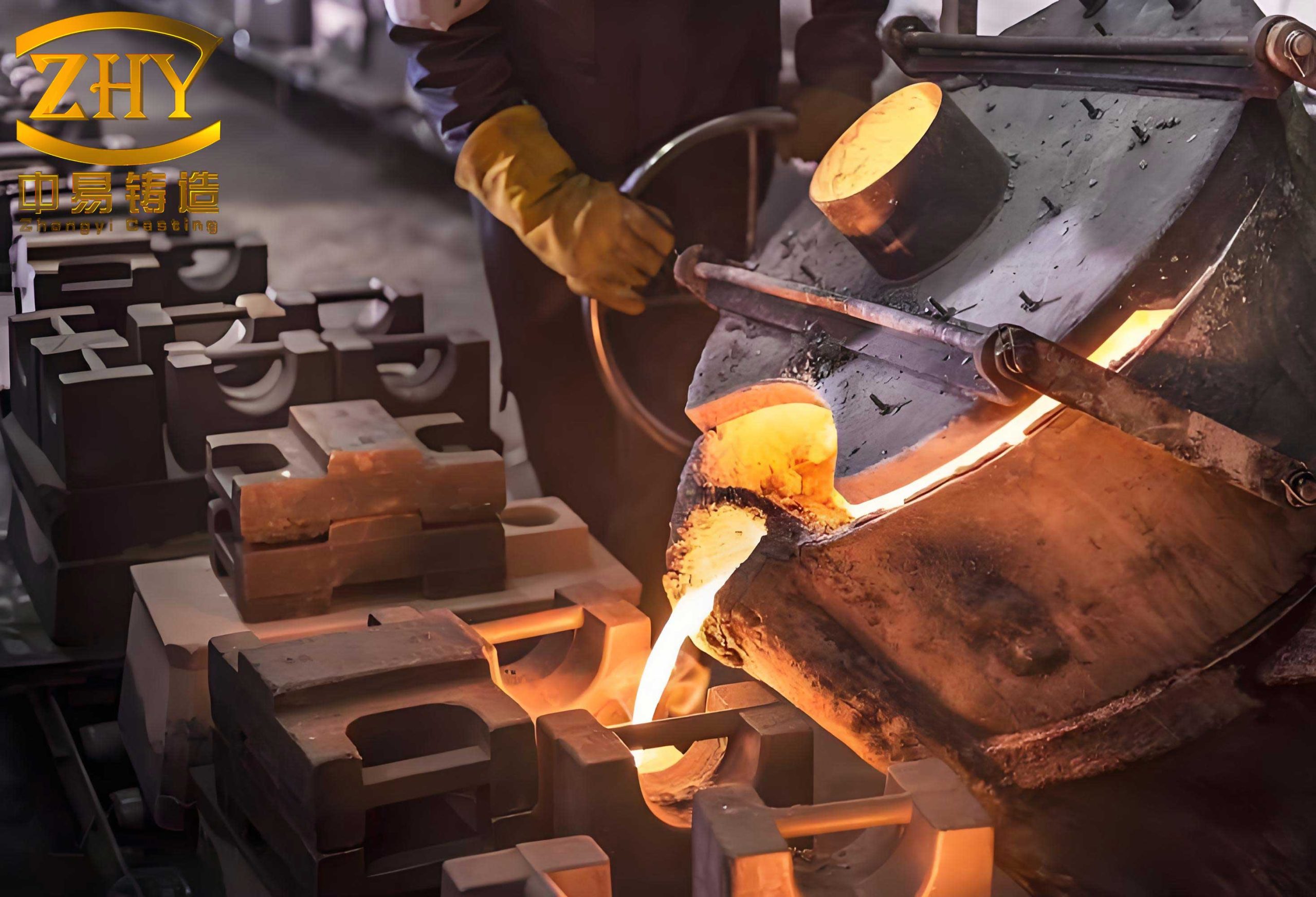
The manufacturing of modern automobiles relies heavily on the use of cast iron parts. These components, prized for their good castability, damping capacity, and favorable strength-to-cost ratio, form the structural backbone of critical assemblies. From engine blocks and cylinder heads that contain combustion forces to crankshafts that translate linear motion, from steering knuckles that guide direction to numerous brackets and supports, cast iron parts are indispensable. It is estimated that the annual consumption of cast iron parts for automotive applications reaches many millions of tons globally. The industry’s drive towards lightweighting and efficiency has further pushed the development of thin-walled, high-strength, and high-ductility castings produced in high-volume, single-shot molding processes. However, this very need for mass production, often across varying foundry environments and parameters, inherently increases the statistical probability of introducing internal flaws into the components. Defects such as shrinkage porosity, gas porosity, inclusions, and slag entrapment become significant concerns, as they can act as stress concentrators, severely compromising the fatigue life and structural integrity of safety-critical parts. Consequently, rigorous and efficient quality inspection is not merely a production step but a fundamental safety requirement.
Non-destructive testing (NDT) methods are the cornerstone of evaluating the internal quality of these safety-critical cast iron parts without causing damage. Among these, ultrasonic testing (UT) has emerged as a particularly powerful tool. The principle relies on the interaction of high-frequency sound waves with the internal microstructure of the material. When an ultrasonic pulse transmitted by a probe encounters an interface with different acoustic impedance—such as the boundary between sound metal and a defect like a pore or inclusion—a portion of the energy is reflected back as an echo. By analyzing the time-of-flight (TOF), amplitude, and shape of these echoes, inspectors can infer the presence, location, and to some extent, the nature of internal discontinuities. Standards like GB/T 7233 and ASTM A609/A609M provide guidelines for the ultrasonic inspection of steel and iron castings, primarily focusing on qualitative assessment and comparison against reference blocks. The traditional approach often involves a skilled technician manually scanning the part, interpreting the A-scan waveform on a screen, and making judgments based on experience and reference to known defect samples. While effective for small batches or critical single-piece inspection, this method becomes a significant bottleneck in the high-throughput environment of automotive component manufacturing. The process is time-consuming, subject to human variability, and the quantitative analysis of defect severity remains challenging, especially for the complex, non-planar flaws typical in castings.
This article explores a methodological framework aimed at enhancing the efficiency and consistency of defect detection in high-volume production of automotive cast iron parts. The core proposal is to transition from a purely qualitative, experience-based ultrasonic evaluation to a more automated, data-driven recognition system. This is achieved by integrating the physical principles of ultrasonic testing with algorithmic techniques from computer vision and pattern recognition, specifically through a multi-feature matching approach. The fundamental premise is that different types of flaws inherent to cast iron parts generate distinct and characteristic “fingerprints” in the ultrasonic signal. By systematically defining a feature set derived from these acoustic signatures and employing robust matching algorithms, the system can rapidly classify defects, thereby streamlining the quality control pipeline for large quantities of cast iron parts.
Ultrasonic Signatures of Typical Defects in Cast Iron Parts
The success of any automated recognition system hinges on a well-defined feature space. For ultrasonic inspection of cast iron parts, this translates to a deep understanding of how specific defect types modulate the ultrasonic signal. The following sections detail the acoustic characteristics of three prevalent defects in automotive cast iron parts: porosity (microshrinkage), macroshrinkage cavities, and non-metallic inclusions (slag).
1. Porosity and Microshrinkage
Porosity in cast iron parts typically appears as a dispersion of small, often interconnected voids caused by gas evolution or insufficient feeding during solidification. Its primary effect on an ultrasonic pulse is scattering. As the sound wave propagates through a region of porosity, it encounters numerous tiny interfaces. This leads to a significant attenuation of the beam energy, as the sound is scattered in multiple directions rather than propagating coherently forward and backward. In a standard A-scan presentation, this manifests as:
- Severe Reduction or Elimination of Backwall Echoes: In a sound section of a cast iron part, multiple backwall echoes (B1, B2, B3…) are typically visible, with each subsequent echo decaying in amplitude due to material attenuation. In a porous region, these backwall echoes diminish rapidly or disappear entirely after the first or second echo.
- Increased Noise Floor (“Grass”): The scattered energy from the myriad pores appears as a raised noise level between the initial pulse and the first backwall echo, often described as a “grassy” signal.
- Lower Signal-to-Noise Ratio (SNR): The useful signal (e.g., from a discrete flaw) becomes harder to distinguish from the general background noise caused by porosity.
The waveform can be conceptually modeled as a highly damped signal. If the signal from a sound area decays exponentially as $$B_n = A_0 \cdot e^{-\alpha n d}$$, where $A_0$ is the initial amplitude, $\alpha$ is the attenuation coefficient, $n$ is the echo number, and $d$ is the path length, then in a porous zone, the effective attenuation coefficient $\alpha_{eff}$ is much larger, causing $B_n$ to approach zero rapidly.
2. Shrinkage Cavities
Macroshrinkage cavities are larger, localized voids that usually occur in thermal centers or hot spots of a casting (e.g., near junctions or under risers) where liquid metal supply is cut off during solidification. These defects present a large, coherent interface to the ultrasonic beam, behaving primarily as a specular reflector. Their acoustic signature is markedly different from dispersed porosity:
- Prominent, Well-Defined Flaw Echo (F): A shrinkage cavity typically produces a single, high-amplitude echo that appears between the initial pulse (T) and the backwall echo (B1).
- Fixed Time-of-Flight Relationship: The position of the flaw echo is stable and correlates directly with the depth of the cavity within the casting section.
- Characteristic Waveform Shape: The echo from a smooth shrinkage cavity often has a sharp rise time and a relatively wide pulse width. In some cases, if the cavity is irregular, multiple closely-spaced echoes may be seen.
- Effect on Backwall Echo: Depending on its size and orientation, a large shrinkage cavity may partially or completely block the sound path, leading to a reduction in the amplitude of the backwall echo. The relationship is often quantified by the $FB$ ratio or the loss of backwall echo height.
3. Non-Metallic Inclusions (Slag/Dross)
Inclusions such as slag, dross, or sand in cast iron parts are foreign materials with acoustic impedance vastly different from the base metal. Their reflection characteristics are less predictable than shrinkage cavities because their morphology, orientation, and acoustic coupling with the matrix can vary widely. Common waveform features include:
- Irregular, Often “Dull” Echoes: Inclusions tend to produce echoes with more rounded peaks and lower sharpness compared to clean shrinkage cavities.
- Inconsistent Echo Dynamics: The amplitude of the echo from an inclusion might vary significantly with small changes in probe angle, indicating a non-specular, diffusive reflection behavior.
- Potential for Multiple, Low-Amplitude Signals: A cluster of small inclusions may generate a train of several smaller, closely-spaced echoes rather than one dominant signal.
- Relatively Lesser Impact on Backwall Echo: Unless the inclusion is very large or dense, it may not cause a complete loss of the backwall echo, though some attenuation is common.
The table below summarizes the key ultrasonic features for these common defects in cast iron parts:
| Defect Type | Primary Reflection Mechanism | Key A-Scan Features | Effect on Backwall Echo (BWE) |
|---|---|---|---|
| Porosity/Microshrinkage | Scattering | High attenuation, raised noise floor (“grass”), rapid decay/loss of BWEs. | Severe reduction or loss after 1st/2nd BWE. |
| Shrinkage Cavity | Specular Reflection | Single, high-amplitude flaw echo (F) at fixed depth; sharp rise, possibly wide width. | Significant reduction or loss, depending on size. |
| Non-Metallic Inclusion | Diffuse/Complex Reflection | Rounded, lower-amplitude echoes; signal may vary with angle; possible cluster of echoes. | Moderate reduction; often still present. |
The Multi-Feature Matching Framework for Ultrasonic Waveforms
The concept of multi-feature matching, successfully applied in fields like computer vision for object tracking and recognition, provides a robust framework for classifying the complex signals from ultrasonic inspection of cast iron parts. Instead of relying on a single parameter (e.g., peak amplitude), this approach considers a weighted combination of several distinctive features extracted from the A-scan waveform, leading to more reliable and discrimination. The process can be formalized into a sequential algorithmic workflow.
First, we represent the digitized ultrasonic A-scan signal as a discrete-time series. Let the acquired signal be a sequence of $N$ data points: $S = \{s[0], s[1], s[2], …, s[N-1]\}$, where each $s[i]$ corresponds to the signal amplitude (voltage) at time index $i$, proportional to the acoustic pressure at the receiving transducer. The time step between indices is determined by the sampling rate of the ultrasonic flaw detector’s analog-to-digital converter (ADC).
The multi-feature matching and classification workflow involves the following steps:
- Signal Pre-processing and Feature Extraction: The raw signal $S$ is processed to extract a feature vector $\mathbf{F}$. For ultrasonic waveforms from cast iron parts, relevant features can include:
- Temporal Features: Time-of-flight of the first significant echo after the initial pulse ($TOF_F$), time difference between flaw echo and backwall echo.
- Amplitude Features: Peak amplitude of the flaw echo ($A_F$), amplitude of the first backwall echo ($A_{B1}$), and their ratio ($A_F / A_{B1}$).
- Morphological/Shape Features: Pulse width at a certain percentage of peak amplitude (e.g., -6 dB width), rise time (10% to 90% of peak), signal energy in a time-gated region $E_{gate} = \sum_{i=i_1}^{i_2} |s[i]|^2$.
- Spectral Features: Frequency spectrum obtained via Fast Fourier Transform (FFT); features like centroid frequency or bandwidth can indicate scattering vs. specular reflection behavior, crucial for distinguishing porosity from shrinkage in cast iron parts.
Thus, for each inspected location on a cast iron part, we generate a feature vector: $$\mathbf{F} = [TOF_F, A_F, A_{B1}, (A_F/A_{B1}), Width_{-6dB}, RiseTime, E_{gate}, CentroidFreq, …]^T$$
- Definition of Reference Feature Clusters (The “Feature Set”): Based on empirical data from known defects in sample cast iron parts (or from physics-based models), we establish reference clusters in the multi-dimensional feature space. Each cluster $C_k$ represents a class: $C_{Sound}$, $C_{Porosity}$, $C_{Shrinkage}$, $C_{Inclusion}$. A cluster is characterized by its mean (centroid) vector $\mathbf{\mu}_k$ and a covariance matrix $\mathbf{\Sigma}_k$ describing the spread of its member points.
- Similarity Measurement and Classification: For a newly acquired feature vector $\mathbf{F}_{new}$ from an unknown region in a production cast iron part, the system computes a similarity or distance measure to each reference cluster $C_k$. A common metric is the Mahalanobis distance, which accounts for correlations between features and different variances:
$$D_k(\mathbf{F}_{new}) = \sqrt{(\mathbf{F}_{new} – \mathbf{\mu}_k)^T \mathbf{\Sigma}_k^{-1} (\mathbf{F}_{new} – \mathbf{\mu}_k)}$$
The defect class is then assigned by finding the cluster with the minimum distance: $$\hat{k} = \arg\min_k D_k(\mathbf{F}_{new})$$
Alternatively, a k-Nearest Neighbors (k-NN) algorithm can be used directly on the stored library of known defect waveforms from cast iron parts. - Decision Fusion and Output: In a more advanced setup, multiple probes or inspection angles could be used on the same suspect area of the cast iron part. The classification results from each independent channel can be fused using rules (e.g., majority voting) or probabilistic frameworks (e.g., Bayesian fusion) to yield a final, more confident defect call.
This algorithmic approach effectively automates the core task described in standards like GB/T 7233—comparing the signal from the test casting to those from reference samples—but does so quantitatively, rapidly, and consistently across thousands of cast iron parts.
Implementation Strategy for High-Volume Inspection of Cast Iron Parts
Integrating the multi-feature matching framework into a production environment for automotive cast iron parts requires a cohesive system encompassing hardware, software, and process flow. The implementation can be broken down into two main, often sequential, stages: Defect Detection and Defect Recognition/Classification.
Stage 1: Automated Defect Detection
This stage answers the binary question: “Is there a potential flaw at this location?” Its goal is speed and reliability in scanning large volumes of cast iron parts.
- Hardware Setup: The system is built around a robotic or programmable multi-axis scanner. The cast iron part is fixtured on a staging area. One or more ultrasonic transducers (probes) are mounted on the scanner’s end-effector. The choice of probe (frequency, type, angle) is optimized for the typical wall thicknesses and geometries of the specific cast iron parts being inspected. An encoder-integrated motion control system precisely logs the X-Y-Z coordinates of the probe relative to the part.
- Data Acquisition Workflow:
- The system controller commands the scanner to move the probe to a pre-programmed start position on the cast iron part’s surface.
- The ultrasonic pulser/receiver unit fires a pulse, and the returning A-scan signal is digitized by a high-speed ADC.
- The raw waveform, along with its associated spatial coordinates, is streamed to a central processing computer.
- The scanner moves to the next point in the raster pattern, and the process repeats until the entire inspection volume is covered.
- Detection Logic: At this stage, simple, fast algorithms are used to flag potential flaws. This could be a simple threshold gate: if any signal amplitude within a time gate (corresponding to the material volume of interest) exceeds a preset threshold level (e.g., 50% of the first backwall echo amplitude), the location is flagged as containing a “discontinuity” and its waveform is passed to Stage 2 for detailed analysis. More sophisticated detection might use signal energy in the gate.
Stage 2: Defect Recognition via Multi-Feature Matching
This stage answers the question: “What type of defect is most likely present at this flagged location?” It focuses on analysis rather than scanning.
- Processing Pipeline: For each flagged A-scan waveform $S_{flag}$ and its coordinates:
- Waveform Conditioning: Apply digital filters (bandpass, noise reduction) to improve the signal quality.
- Feature Extraction: Execute the feature extraction algorithms on $S_{flag}$ to compute its feature vector $\mathbf{F}_{flag}$.
- Classification: Input $\mathbf{F}_{flag}$ into the multi-feature matching classifier (e.g., compute Mahalanobis distances to all reference clusters $C_k$).
- Decision & Output: The classifier outputs the predicted defect class $\hat{k}$ (e.g., “Shrinkage,” “Porosity,” “Inclusion,” or “Sound”). This result, along with the defect’s spatial coordinates and severity indicators (e.g., equivalent reflector size), is logged into a database and can be visualized on a 3D map of the cast iron part.
- System Integration: The entire process, from motion control to signal acquisition, processing, and final report generation, is managed by a unified software suite. This allows for traceability, statistical process control (SPC) charting of defect rates over time for batches of cast iron parts, and seamless integration with the factory’s Manufacturing Execution System (MES).
The following table outlines the core components and data flow of the integrated defect recognition system for cast iron parts:
| System Module | Primary Function | Key Inputs | Key Outputs |
|---|---|---|---|
| Robotic Scanner & Motion Control | Precisely positions ultrasonic probe over the cast iron part surface. | CAD-based inspection path program. | Real-time probe coordinates (X, Y, Z, angles). |
| Ultrasonic Instrumentation | Generates ultrasonic pulses, receives/amplifies echoes. | Trigger from controller; analog signal from probe. | Amplified RF analog signal. |
| High-Speed Data Acquisition (DAQ) | Digitizes the analog ultrasonic A-scan signal. | Analog signal from UT instrument; sync from motion controller. | Digital waveform array $S[i]$ synchronized with coordinates. |
| Detection & Feature Extraction Software | Applies detection gates and computes feature vector $\mathbf{F}$. | Digital waveform $S[i]$. | Flag status; feature vector $\mathbf{F}_{flag}$ for flagged locations. |
| Multi-Feature Classifier | Compares $\mathbf{F}_{flag}$ to reference libraries; assigns defect class. | Feature vector $\mathbf{F}_{flag}$; reference cluster data ($\mathbf{\mu}_k$, $\mathbf{\Sigma}_k$). | Defect type classification $\hat{k}$; confidence metric. |
| Reporting & Visualization | Generates inspection reports and 3D defect maps. | All coordinates, classifications, and waveforms. | Pass/Fail results; SPC data; 3D maps for engineering review. |
Discussion: Advantages, Challenges, and Future Directions
The proposed integration of multi-feature matching with automated ultrasonic testing presents a compelling pathway for modernizing the quality assurance of high-volume automotive cast iron parts. The primary advantage lies in objectivity and consistency. Once trained, the algorithmic classifier applies the same criteria to every single waveform, eliminating the variability inherent in human interpretation. This leads to more reliable and repeatable inspection outcomes across different shifts and operators. Secondly, the system offers significant gains in throughput. Automated scanning is faster than manual scanning, and the computerized classification of flagged defects is nearly instantaneous, enabling 100% inspection of safety-critical cast iron parts without creating a production bottleneck. Furthermore, the digital nature of the process enables advanced data analytics and traceability. Every tested component has a digital record, allowing for deep analysis of defect trends, correlation with process parameters (e.g., pouring temperature, mold type), and proactive quality management.
However, the practical implementation of this sophisticated approach for cast iron parts is not without its challenges. The most significant is the dependence on a comprehensive and representative feature library. The classifier’s accuracy is directly tied to the quality and breadth of the reference data used to train it. Building this library requires extensive collaboration with foundry metallurgists and NDT experts to acquire and correctly label ultrasonic data from cast iron parts containing a wide range of known, naturally occurring defects under various conditions. The system’s performance can degrade when encountering defect types or morphologies not well-represented in the training set. Another challenge is the sensitivity to inspection parameters and noise. Variations in surface finish, couplant condition, probe wear, or electrical noise can alter the acquired waveform, potentially leading to feature drift and misclassification. Robust signal processing and regular system calibration against master reference blocks are essential countermeasures. Finally, there is the challenge of justifying the initial capital investment in robotics, high-speed DAQ systems, and software development, which must be balanced against the long-term savings from reduced scrap, lower warranty claims, and improved process efficiency.
The future evolution of this technology for inspecting cast iron parts is likely to be driven by advances in artificial intelligence. While the multi-feature matching described here often relies on classical statistical pattern recognition or supervised learning models like Support Vector Machines (SVMs), deep learning approaches, particularly Convolutional Neural Networks (CNNs), offer a powerful alternative. CNNs can automatically learn hierarchical feature representations directly from the raw or minimally processed A-scan data (or even 2D B-scan or 3D C-scan images), potentially discovering discriminative patterns too subtle for manual feature engineering. This could further improve classification accuracy for complex defects in cast iron parts. Additionally, the integration of multi-modal NDT data fusion holds great promise. Combining ultrasonic data with complementary information from other NDT methods—such as X-ray computed tomography (CT) for precise 3D morphology, eddy current for near-surface flaws, or acoustic emission for in-situ monitoring—within a unified AI-based fusion model could provide an unprecedented level of defect characterization certainty. This would move the inspection of automotive cast iron parts from simple detection and basic classification towards comprehensive, quantitative defect characterization, enabling true fitness-for-service assessments.
Conclusion
The relentless pursuit of safety, performance, and efficiency in the automotive industry demands continuous improvement in the manufacturing and validation of critical components. For the vast array of cast iron parts that form the durable core of vehicles, ensuring internal soundness is paramount. Traditional manual ultrasonic inspection, while effective, struggles to meet the dual demands of high throughput and consistent, quantitative analysis required by modern mass production. The methodology explored in this article presents a viable solution by bridging the gap between physical NDT principles and advanced data science techniques. By meticulously characterizing the acoustic signatures of typical defects in cast iron parts—porosity, shrinkage, and inclusions—and employing a multi-feature matching framework to automatically classify these signatures, the inspection process can be dramatically accelerated and standardized. The proposed system, integrating robotic scanning, high-speed data acquisition, and intelligent software analysis, transforms ultrasonic testing from a skilled craft into a robust, data-driven industrial metrology tool. While challenges remain in system training, robustness, and implementation cost, the trajectory is clear. The future of quality control for high-volume automotive cast iron parts lies in the intelligent synthesis of sensor data, where algorithms augment human expertise to deliver faster, more objective, and more insightful assessments of component integrity, ultimately contributing to the production of safer and more reliable vehicles.