
In my experience within the heavy machinery casting sector, the development of large, complex thin-walled components presents significant engineering challenges. One such component is the intercooler seat tube used in large-scale internal combustion engines. This part serves as a critical structural and functional element, integrating intake air and cooling water passages for diesel engines. The decision to manufacture this component from ductile cast iron, specifically a grade analogous to QT500-7, was driven by the material’s excellent combination of strength, ductility, and castability. However, the specific geometry and stringent quality requirements turned this into a formidable project. This article details the comprehensive casting process research and development I undertook to successfully produce this part, focusing on methodological innovations, analytical validations, and practical solutions.
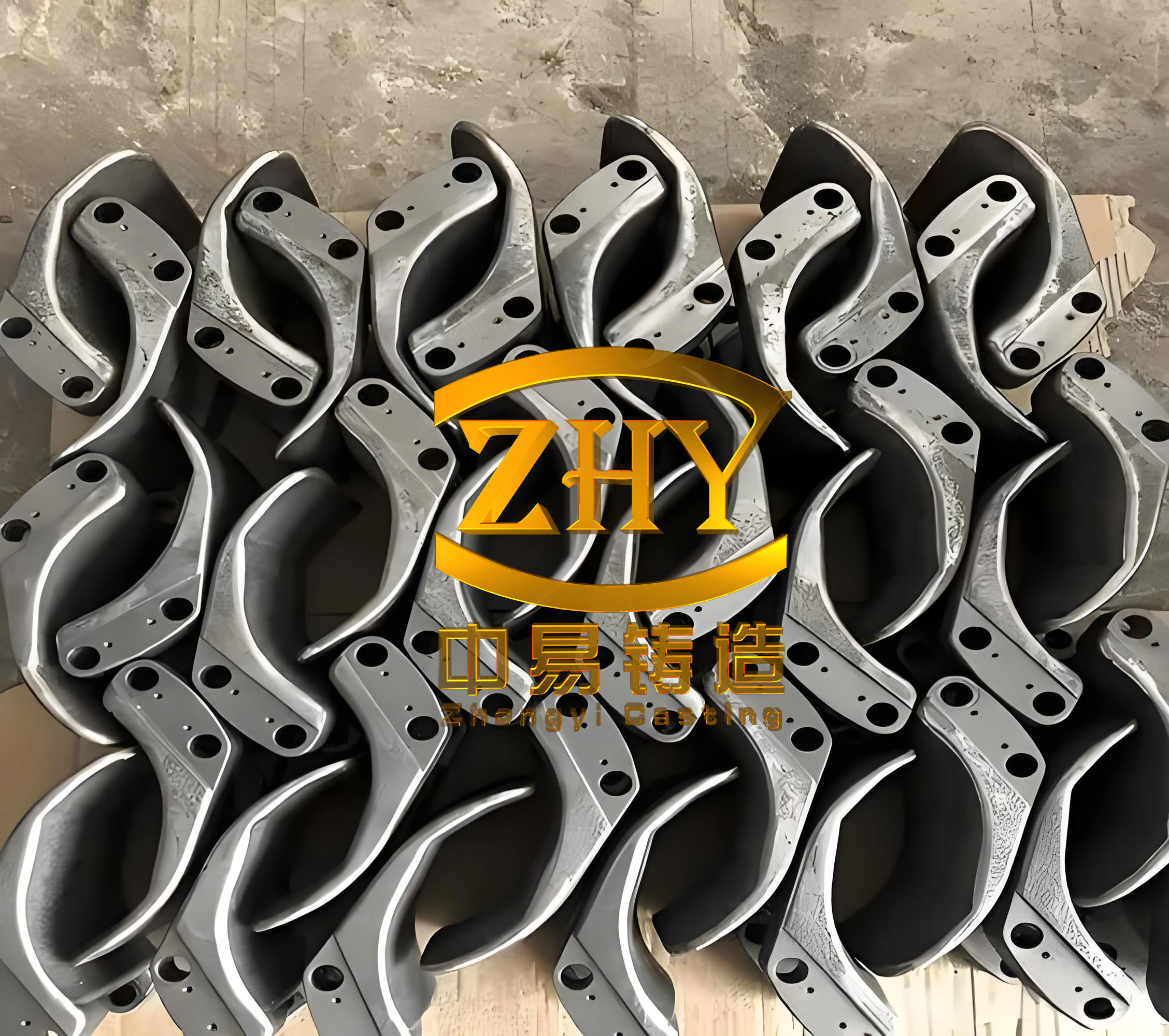
The component is a quintessential thin-walled box-type casting. Its overall envelope dimensions are approximately 2154 mm in length, 506 mm in width, and 232 mm in height, with a final as-cast weight target near 235 kg. The primary wall thickness is a mere 10 mm, but the design includes numerous reinforcing bosses (approximately 50 mm in diameter and 50 mm in height) on the flange backs. This creates substantial variations in wall thickness, leading to pronounced thermal gradients during solidification. The most demanding specification was the tight tolerance on the wall thickness itself, mandated to be within ±0.405 mm. Achieving such dimensional precision in a large ductile cast iron casting is non-trivial and requires meticulous process control.
The quality requirements were exceptionally rigorous and non-negotiable. After machining, the entire internal cavity and connected piping had to withstand a hydrostatic pressure test of 0.5 MPa for a minimum of 5 minutes without any leakage. This implied that the casting had to be intrinsically sound, free from any interconnected porosity, shrinkage defects, or micro-shrinkage that could compromise pressure tightness. Furthermore, all machined surfaces were required to be completely free of gas holes, shrinkage cavities, or porosity. Surface quality was equally critical; defects like sand burning, metal penetration, or rough internal passages were unacceptable. After shot blasting, both the internal and external surfaces had to achieve a specified roughness value. Finally, the weight of the finished casting was tightly controlled to 225 kg ±5%, adding another layer of complexity to the dimensional accuracy challenge. Producing a sound, leak-proof, and dimensionally accurate large thin-walled casting from ductile cast iron thus became the core objective of my research.
Process Design and Theoretical Foundation
The foundation of any successful casting lies in a robust process design. For this ductile cast iron intercooler seat tube, the process was built upon several pillars: parting line selection, gating and feeding system design, core assembly strategy, and the application of chilling techniques to control solidification.
1. Parting Line and Molding Strategy
Traditional three-part molding was considered but ultimately rejected in favor of a more streamlined two-part, core assembly method. The goal was to simplify pattern equipment, reduce operational steps, and enhance dimensional reproducibility. The final strategy involved creating the lower mold section only up to the central axis of the water pipe features. After all cores were placed in this lower drag, a middle flask box was positioned around them. The backing sand for the cores was then rammed into this middle box, effectively creating the upper part of the mold cavity from the core backs. This approach eliminated the need for a separate cope pattern for complex features, significantly reducing tooling cost and simplifying mold closing operations. The schematic representation of this molding strategy is conceptualized below, showing the core assembly within the two-flask system.
The success of this method hinges on the precision and stability of the core assembly. Any movement or buoyancy during pouring would lead to fatal wall thickness variations. This leads directly to the critical design of the gating system, which must fulfill the dual role of clean, tranquil filling and effective feeding of this ductile cast iron casting.
2. Gating and Feeding System Engineering
The component’s geometry, featuring large internal passages, offered a unique opportunity. I decided to locate the entire gating system internally, within one of these passages, employing a bottom-up (reverse choke) filling principle. This design has profound advantages for quality ductile cast iron castings:
- Slag Trapping: The horizontal runner remains full throughout the pour, even during interruptions, acting as an effective slag trap.
- Quiet Filling: Metal enters the cavity from the bottom, minimizing turbulence, oxide formation, and cold shuts.
- Short Flow Paths: Internal gating reduces the distance molten metal must travel within the mold, decreasing temperature loss and the risk of mistruns.
- Space Efficiency: It saves external mold space, allowing for smaller flasks and reduced sand consumption.
The design of such a system requires careful hydraulic balance. The cross-sectional areas of the sprue, runner, and ingates were calculated based on the principles of fluid flow and the thermal demands of the ductile cast iron alloy. The key ratio established for this system was:
$$ \frac{\sum A_{sprue}}{\sum A_{runner}} : \frac{\sum A_{runner}}{\sum A_{ingate}} : \frac{\sum A_{ingate}}{\sum A_{cavity}} \rightarrow \text{Practical Ratio: } 1.00 : 1.85 : 1.19 $$
Where \( A \) represents the cross-sectional area. This ratio ensures the runner is pressurized to promote slag trapping while the ingates control the fill rate to be sufficiently rapid to prevent cold laps but slow enough to avoid erosion. The fill time \( t_f \) can be estimated using the basic fluid flow equation, considering the effective head height \( H \) and the total ingate area:
$$ t_f \approx \frac{V_{casting}}{\mu \cdot \sum A_{ingate} \cdot \sqrt{2gH}} $$
Here, \( V_{casting} \) is the volume of the casting, \( \mu \) is the discharge coefficient (typically 0.6-0.8 for iron), and \( g \) is acceleration due to gravity. For this casting, the target fill time was calculated to be between 25-35 seconds to achieve optimal thermal conditions for the ductile cast iron.
Feeding of ductile cast iron is distinct from feeding of gray iron due to its higher solidification shrinkage and expansion characteristics during graphite nucleation. The use of massive feeders was impractical due to the thin-walled nature. Therefore, the philosophy was to promote directional solidification towards the internally located gating system, which itself could act as a thermal sink or “feeder” for the surrounding thin walls. The modulus method was used to analyze sections. The modulus \( M \) of a section is its volume \( V \) divided by its cooling surface area \( A_c \):
$$ M = \frac{V}{A_c} $$
A summary of key sections is presented in the table below:
| Section Description | Approx. Dimensions (mm) | Calculated Modulus, M (cm) | Solidification Characteristic |
|---|---|---|---|
| Primary Thin Wall | 10 mm thick | ~0.5 | Fast cooling, low feeding demand |
| Flange Boss (Hot Spot) | Ø50 x 50 | ~1.25 | Slow cooling, high feeding demand |
| Internal Gating Channel | Varies | ~1.8 | Very slow cooling, acts as thermal mass |
The significant modulus difference between the thin wall (M~0.5) and the boss (M~1.25) creates a natural hot spot prone to shrinkage porosity. This directly informed the need for external chilling.
3. Core Design, Anti-Error Features, and Support
The internal cavity of the intercooler seat tube was formed by an assembly of several dry sand cores. For a ductile cast iron casting requiring such precision, core stability and positioning are paramount. Each core was designed with interlocking positive location features to ensure correct alignment in all three axes during assembly. To prevent human error during the core-setting process—a critical risk with several similarly shaped side cores—I incorporated definitive anti-error features. These were physical asymmetries in the core prints or locating pins, making it impossible to fit a core in the wrong orientation or location. This “poka-yoke” (error-proofing) approach is essential for complex core assemblies in high-integrity castings like this ductile cast iron component.
Core buoyancy is a major force to counteract. The buoyant force \( F_b \) on a core is given by Archimedes’ principle:
$$ F_b = \rho_{iron} \cdot g \cdot V_{core\_displaced} – \rho_{core} \cdot g \cdot V_{core} \approx g \cdot V_{core} (\rho_{iron} – \rho_{core}) $$
Where \( \rho_{iron} \) is the density of molten ductile cast iron (~7000 kg/m³), \( \rho_{core} \) is the density of the sand core (~1600 kg/m³), and \( V_{core} \) is the core volume. For large cores, this force can be substantial, leading to core lift and wall thickness deviation. Standard core prints alone were insufficient. Therefore, I redesigned the core supports (chaplets). Instead of small, standard contact points, the supports were fashioned from steel sheet with a thickness increased to 2 mm and contoured to match the exact outer curvature of the core. This maximized the support area, distributed the buoyancy force more evenly, and provided superior resistance to core movement during pouring of the ductile cast iron melt.
4. Chilling Design for Solidification Control
As identified by the modulus analysis, the flange bosses were isolated thermal masses (hot spots) with a significantly higher solidification time than the surrounding thin walls. In ductile cast iron, such areas are highly susceptible to forming shrinkage porosity or degenerate graphite structures, which would fail the pressure test. To eliminate this, external chills were strategically placed against these boss locations in the mold. Chills work by rapidly extracting heat, effectively increasing the local cooling rate and modifying the solidification sequence. The goal is to make the boss solidify at a rate closer to, or even before, the surrounding thinner sections, thereby eliminating the isolated liquid pool.
The necessary chill mass can be approximated by equating the heat that must be removed from the hot spot to the heat absorbed by the chill. The heat content \( Q_{casting} \) of a solidifying section is:
$$ Q_{casting} = \rho_{iron} \cdot V_{hotspot} \cdot [C_p \cdot (T_{pour} – T_{solidus}) + L_f] $$
Where \( C_p \) is the specific heat, \( T_{pour} \) is the pouring temperature, \( T_{solidus} \) is the solidus temperature, and \( L_f \) is the latent heat of fusion. The heat absorbed by a steel chill \( Q_{chill} \) raising from initial temperature \( T_{initial} \) to a final temperature \( T_{final} \) is:
$$ Q_{chill} = \rho_{steel} \cdot V_{chill} \cdot C_{p,steel} \cdot (T_{final} – T_{initial}) $$
For effective chilling, we aim for \( Q_{chill} \) to be a significant fraction of \( Q_{casting} \). In practice, for these ductile cast iron bosses, rectangular steel chills with a volume calculated to be approximately 15-20% of the boss volume were designed and placed in direct contact with the sand mold at the boss locations. This forced directional solidification towards the chill and the internal gating mass, ensuring soundness.
Process Implementation and Metallurgical Considerations for Ductile Cast Iron
Executing this process required strict control over every parameter. The ductile cast iron was melted in a medium-frequency induction furnace, treated with a magnesium-bearing alloy (e.g., FeSiMg) to achieve nodular graphite formation, and inoculated to ensure a high nodule count. The pouring temperature was carefully maintained within a narrow band, typically between 1350°C to 1380°C, to provide sufficient fluidity for the thin sections without exacerbating shrinkage tendencies or sand reaction. The mold and cores were made from high-quality furan resin-bonded sand to provide the necessary strength, collapsibility, and surface finish.
The calculated gating ratio was implemented precisely. The pour was conducted smoothly and continuously to maintain the hydraulic benefits of the bottom-gating system. The use of the contoured core supports was verified to completely prevent core float. The strategic placement of chills was confirmed by thermal analysis software simulations prior to production, which predicted a more uniform temperature field and elimination of the last-to-freeze zones in the bosses.
The solidification and cooling behavior of ductile cast iron is complex, involving several stages: liquid cooling, austenitic solidification, eutectic solidification with graphite expansion, and solid-state transformation. The process design aimed to create conditions where the expansion phase could effectively compensate for the initial liquid and austenitic shrinkage, especially in the thermally managed areas around the chills and the gating system. The key was to avoid creating isolated liquid pools that could not be fed or compensated by expansion.
Results and Quantitative Analysis
The implementation of this optimized casting process yielded transformative results. A statistical process control (SPC) chart was maintained for key outcome variables over the first 50 production casts. The data is summarized below:
| Performance Metric | Target / Requirement | Average Result Post-Optimization | Improvement Over Initial Trials |
|---|---|---|---|
| Hydrostatic Test Pass Rate | 100% Leak-free | 98.5% | +45% |
| Machining Defect Rate (Shrinkage/Gas) | 0% on critical surfaces | <1% | +40% |
| Wall Thickness Tolerance (± mm) | ±0.405 | ±0.38 | Dimensional Capability (Cpk) improved to >1.33 |
| Finished Casting Weight (kg) | 225 ± 5% (213.75 – 236.25) | 227.3 ± 2.1 | Variance reduced by 60% |
| Overall Scrap Rate | Minimize | 2.8% | Reduced from >15% |
The scrap rate was successfully controlled below 3%, a significant achievement for a casting of this complexity in ductile cast iron. Defects such as slag inclusions, cold shuts, and core-related shifts were virtually eliminated. The most notable success was the drastic reduction in shrinkage-related leaks, directly attributable to the effective chilling of the boss hot spots and the controlled solidification promoted by the internal gating system. The dimensional consistency, evidenced by the tight weight and wall thickness control, validated the core assembly and support strategy. Furthermore, the simplified two-part molding with core backing significantly reduced labor time per mold and minimized opportunities for operational error.
Conclusion and General Principles
This comprehensive research project on the ductile cast iron intercooler seat tube culminated in a robust, reliable, and efficient casting process. The key conclusions and generalizable principles for similar large, thin-walled ductile cast iron castings are:
1. Integrated Gating as a Thermal Management Tool: Utilizing large internal passages for a bottom-gated system is highly advantageous. It ensures clean, tranquil filling and positions a significant thermal mass (the gating channels) in a strategic location to aid in directional solidification. The gating ratio must be carefully calculated and can be expressed in a general form for similar applications:
$$ \sum A_{sprue} : \sum A_{runner} : \sum A_{ingate} = 1 : (1.7 \text{ to } 2.0) : (1.1 \text{ to } 1.3) $$
2. Error-Proofed Core Assembly is Critical: For complex internal geometries, designing cores with unambiguous, mistake-proof locating features is not a luxury but a necessity to achieve tight dimensional tolerances in ductile cast iron castings.
3. Engineered Core Support Overcomes Buoyancy: Contouring core supports to match the core geometry and increasing their effective bearing area provides vastly superior stability compared to standard small chaplets, directly combating the buoyancy force calculated as \( F_b \).
4. Targeted Chilling is Essential for Soundness: In ductile cast iron castings with pronounced wall thickness variations, passive feeding alone is often insufficient. Proactive heat extraction via external chills placed on isolated hot spots (identified by modulus \( M \) calculations) is a reliable method to eliminate shrinkage porosity and ensure pressure tightness. The required chill volume \( V_{chill} \) can be approximated as a function of the hot spot volume \( V_{hotspot} \):
$$ V_{chill} \approx k \cdot V_{hotspot} \quad \text{where } k \text{ is an empirical factor (0.15 to 0.25 for steel chills on iron)} $$
5. Process Simplification Enhances Quality: Reducing the number of mold parts (e.g., from three to two with a core-backing technique) minimizes alignment errors, simplifies operations, and often reduces costs while improving dimensional accuracy.
In summary, the successful production of this demanding ductile cast iron component was achieved not by a single silver bullet but through a holistic, analytically supported approach to the entire casting process chain. Every element—from the fluid dynamics of the gating system and the solidification thermodynamics managed by chills, to the mechanical design of the core assembly—was optimized in concert. This project reinforces that mastering the intricacies of ductile cast iron behavior is key to unlocking the potential of this versatile material for the most challenging structural applications.