
In my extensive experience in foundry operations, particularly in the production of critical components for railway applications, I have dedicated significant efforts to mastering the batch production of brake discs. These discs are subjected to extreme thermal and mechanical stresses during braking, requiring materials with exceptional thermal fatigue resistance, high strength, and superior thermal conductivity. While vermicular graphite cast iron is often highlighted for these applications due to its unique graphite morphology, our process control methodologies are deeply intertwined with principles also applied in nodular cast iron production. In fact, many of the control strategies we employ for achieving consistent vermicular graphite structures are derived from or parallel to those used in high-quality nodular cast iron manufacturing. This article details our comprehensive approach, emphasizing how precise control over every stage—from melting to pouring—ensures reliable, high-performance brake discs. Throughout this discussion, the term ‘nodular cast iron’ will be frequently referenced, as the foundational metallurgical concepts and process rigor are largely shared, even as we target the specific vermicular graphite structure.
The heart of our production lies in the melting and treatment process. Achieving the desired microstructure—a stable vermicular graphite matrix with controlled pearlite content—demands an unwavering focus on raw material selection, chemical composition, and treatment parameters. Our goal is to produce a material that exhibits the strength and toughness approaching that of nodular cast iron, while retaining the damping capacity and thermal conductivity closer to gray iron. The narrow processing window for vermicular graphite formation makes this endeavor particularly challenging, requiring a level of control even more stringent than that often applied in standard nodular cast iron production.
Raw Material Selection and Charge Calculation
We begin with meticulously sourced raw materials. The base charge consists of pig iron, steel scrap, and returns. For pig iron, we specify grades like Q10 or Q15, with strict limits on detrimental elements: Sulfur (S) ≤ 0.03% and Phosphorus (P) ≤ 0.05%. The combined total of trace elements (Cr, Mo, Sn, Sb, Pb, Bi, Te, As, B, Al) must not exceed 1%, and anti-nodularizing elements like Titanium (Ti) are kept below 0.05%. Steel scrap must be clean, free from heavy rust or coatings. Returns are carefully segregated by grade to prevent contamination and are shot-blasted before use to remove sand and oxides. This rigorous pre-treatment of returns is a cost-saving measure we have optimized, increasing their usage to up to 55% of the charge without compromising quality—a practice also common in economical nodular cast iron production.
The target chemical composition is the blueprint for the desired properties. We maintain the composition within the ranges specified in the table below. The carbon equivalent (CE) is crucial; we aim for a value near the eutectic point to ensure good fluidity, feeding characteristics, and to minimize shrinkage porosity. The CE is calculated using a standard formula for cast iron:
$$ CE = \%C + \frac{1}{3}\%Si $$
Our target CE range typically falls between 4.0 and 4.3. Alloying elements like Manganese (Mn), Copper (Cu), Molybdenum (Mo), and Nickel (Ni) are added to enhance strength, hardenability, thermal strength, and matrix uniformity. Their synergistic effects are critical for the final performance, much like in alloyed nodular cast iron grades.
| Element | Target Range | Primary Function |
|---|---|---|
| Carbon (C) | 3.3 – 3.8 | Controls graphite formation, fluidity |
| Silicon (Si) | 2.2 – 2.8 | Graphitizer, influences CE and matrix |
| Manganese (Mn) | 0.4 – 0.9 | Pearlite stabilizer, strengthens matrix |
| Phosphorus (P) | ≤ 0.07 | Impurity, kept low to avoid brittleness |
| Sulfur (S) | ≤ 0.05 | Impurity, crucial for treatment control |
| Molybdenum (Mo) | 0.2 – 0.4 | Increases thermal strength and yield ratio |
| Copper (Cu) | 0.4 – 0.8 | Strengthens matrix, improves wear resistance |
| Nickel (Ni) | 0.5 – 1.0 | Promotes matrix uniformity and toughness |
The Melting and Inoculation Sequence: A Ballet of Precision
We utilize a 5-ton medium-frequency induction furnace for melting. The charge is loaded and melted under controlled power input. Once the bath is fully liquid, slag is removed using a fluxing agent. A sample is taken for quick optical emission spectroscopy (OES) analysis. Upon confirmation of the correct base composition, the crucial treatment phase begins. The treatment process to achieve vermicular graphite is the most sensitive step, with a narrower operational window compared to typical nodular cast iron treatment.
The treatment is performed in a dedicated 2-ton ladle, often referred to as a vermicularizing or treatment ladle. We employ a sandwich method. The well of the ladle is prepared with precisely weighed amounts of vermicularizing agent (containing Mg and rare earth elements), primary inoculant, and a covering flux. The key to consistent treatment is the controlled transfer of molten iron from the furnace to this ladle. The amount of iron tapped is critical; it must be within ±5 kg of the target weight of 1500 kg for our standard batch size. This precision is vital because the vermicularizing agent is designed for a specific iron weight. An excess of iron leads to under-treatment, resulting in flake graphite (gray iron structure), while insufficient iron causes over-treatment, producing a high nodularity structure akin to nodular cast iron. The tapping temperature is equally controlled within ±10°C of 1500°C.
The treatment reaction is vigorous but must be controlled to be平稳 (steady). After the iron is poured into the treatment ladle, the reaction is allowed to proceed for a set time before thorough stirring and slag removal. We then perform a second-stage, or post-inoculation. Initially, this was done manually, but we have since implemented a semi-automatic stream inoculator for more accurate and consistent addition of inoculant into the metal stream during transfer to the pouring ladle or during casting. This instantaneous inoculation significantly improves graphite nucleation, refines the matrix, and reduces the risk of chilling, a practice also highly beneficial in nodular cast iron production to ensure a high nodule count.
The treated iron must be poured within a short time, typically under 10 minutes, to avoid fading of the inoculation and treatment effects. After pouring, the castings are allowed to cool in the molds until their temperature drops below 300°C before shakeout.
Microstructural Control: The Hallmark of Quality
The success of our process is judged by the consistent achievement of the target microstructure. For our brake discs, we aim for a vermicular graphite content (vermicularity) between 70% and 90%, with the balance being spheroidal graphite nodules and a minimal amount of unacceptable flake graphite. The matrix should consist of 35% to 55% pearlite, with the remainder being ferrite, and absolutely no free cementite. This balance provides the optimal combination of strength, ductility, thermal conductivity, and thermal fatigue resistance.
Controlling this microstructure is the core challenge. The relationship between treatment parameters and final structure can be conceptualized. The degree of treatment, often related to residual magnesium content, dictates graphite morphology. Let us define a treatment efficiency parameter, η, which is a function of the amount of treatment agent (A), iron weight (W), and base sulfur content (S0). An idealized relationship for target vermicularity (Vt) might be expressed as:
$$ V_t \propto \frac{\eta \cdot A}{W \cdot S_0} $$
In practice, this is managed through rigorous standardization rather than calculation. We perform daily checks using thermal analysis cups and quick chill wedge tests (similar to those used for nodular cast iron) to get an immediate indication of treatment success before casting. Final confirmation is done through metallographic examination of samples from each heat.
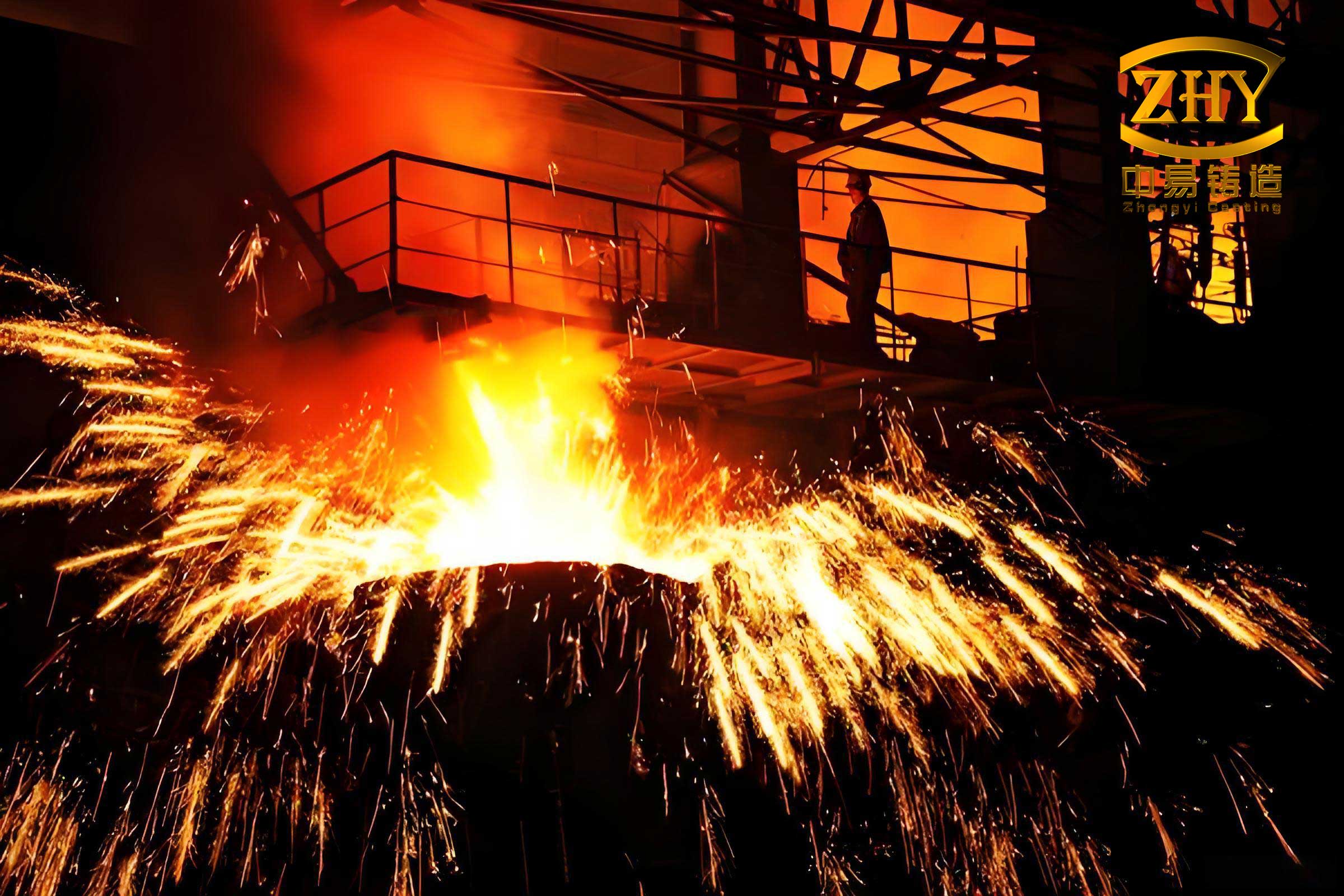
The image above exemplifies the high-quality microstructure we strive for, showcasing a well-formed graphite structure in a cast iron component. In our case, for vermicular iron, the graphite appears as interconnected, blunt-ended蠕虫状 particles under the microscope, distinct from the perfect spheres of nodular cast iron or the sharp flakes of gray iron. Achieving this consistently requires not only precise treatment but also optimal inoculation to ensure a high number of graphite initiation sites, which refines both the graphite and the metallic matrix.
Key Production Challenges and Our Mitigation Strategies
Batch production of such a demanding material presents several persistent challenges. First and foremost is the control of vermicularity itself. The window for achieving 70-90% vermicular graphite is narrow. Any deviation in charge makeup, temperature, or treatment agent efficiency can push the structure towards gray or nodular cast iron. Our strategy hinges on extreme consistency: stable raw material suppliers, calibrated weighing systems, and regular calibration of treatment alloys.
Secondly, the brake discs are machined on all critical surfaces and must be free from internal and external defects. They undergo 100% non-destructive testing including ultrasonic testing for internal shrinkage or inclusions and magnetic particle inspection for surface cracks. To prevent shrinkage, we carefully design the feeding systems and maintain the correct carbon equivalent. To minimize slag inclusions, we improved our ladle lining practice. We transitioned from brick-lined ladles to monolithic refractory-lined ladles using a ramming mix. This not only increased ladle life from 80 to over 400 pours but also provided a smoother, more consistent lining that reduces slag adhesion and erosion, a common source of inclusions. This practice, while developed for our process, offers clear benefits for any high-quality iron foundry, including those producing nodular cast iron.
Thirdly, controlling the interplay of alloying elements to avoid undesirable phases is critical. For instance, excessive manganese or inadequate inoculation can lead to cementite formation. High nickel can promote the formation of acicular structures or upper transformation products. We rely on our OES system for rapid feedback and have trained our metallurgists and furnace operators to understand these interactions deeply.
Finally, the human factor in process execution is vital. We have invested in training our team to develop “feel” for the process. While we have instruments like spectrometers, pyrometers, and thermal analysis devices, we also train operators to judge iron temperature by its color and fluidity, and to assess treatment success by the fracture appearance of a quick chill sample. This dual approach of technology and skill ensures robustness against instrument failure and fosters a deeper process understanding.
Process Optimization and Validation Initiatives
Continuous improvement is embedded in our operations. Several key initiatives have yielded significant benefits:
1. Maximizing Returns Usage: As mentioned, we systematically increased the proportion of in-house returns (including gates, risers, and approved scrap castings) in the charge from 20% to 55%. This required enhanced sorting and pre-cleaning but resulted in substantial cost savings on pig iron and steel scrap, a principle equally applicable to nodular cast iron foundries.
2. Refractory and Ladle Technology: Beyond ladle lining, we optimized our furnace lining practices. We adopted automated ramming and vibration equipment for building induction furnace linings, followed by strict controlled drying and sintering schedules. This increased average furnace campaign life to over 300 melts, reducing downtime and refractory cost per ton.
3. Ergonomics and Environmental Control: To improve working conditions and safety, we installed extraction systems at the furnace charging station and along the pouring line. Initially, this caused some congestion during pouring. By re-analyzing the workflow and optimizing crew placement and movement, we eliminated the congestion, ensuring both operator safety and adherence to the critical pouring time window.
4. Enhanced Process Judgement Capability: We conduct regular training and skill competitions for our melting team. The focus is on developing the ability to make rapid, accurate assessments of iron condition using empirical methods, complementing the electronic instrumentation. This builds a resilient and knowledgeable workforce capable of handling process upsets.
5. Refined Inoculation Practice: The move from manual ladle inoculation to automated stream inoculation for post-inoculation has been a game-changer. It ensures a more consistent and effective inoculation with less agent, reduces variability, and improves the overall graphite structure. The importance of effective inoculation for achieving a uniform, fine matrix in high-integrity castings cannot be overstated, whether the target is vermicular or nodular cast iron.
Essential Control Points for Consistent Production
Based on our journey, I can distill the production of high-performance vermicular graphite iron brake discs—a process with parallels to demanding nodular cast iron production—into several non-negotiable control points:
1. Metal Charge Purity and Consistency: The foundation is clean, well-characterized raw materials. Variability in charge materials introduces variability in final composition and treatment response.
2. Precise Treatment Control: The treatment operation is the pivot. A stable, low base sulfur content is a prerequisite for predictable treatment. The weight of metal tapped for treatment must be controlled with exceptional accuracy. The treatment alloy must be of consistent composition and activity.
3. Rational Chemistry Design: The chemical composition is not just a list of ranges but a balanced recipe. The carbon equivalent must promote good castability. Alloying elements must be balanced to achieve the desired matrix without promoting harmful phases. We monitor for tramp elements rigorously; their sudden appearance can derail an entire production run.
4. Temperature Management: From tapping to pouring, temperature control is critical. It affects treatment kinetics, slag formation, fluidity, and solidification pattern.
5. Effective Inoculation: A strong, fade-resistant inoculation practice is essential to refine the graphite structure, prevent chilling, and ensure a desirable matrix. Stream inoculation has proven superior for our process.
These control points form an interconnected web. A failure at any point can compromise the final casting quality. Our control system is designed to monitor each point, with clear response protocols for any deviation.
Concluding Perspectives
Through years of dedicated process development, refinement, and strict adherence to these control principles, we have achieved a stable batch production process for vermicular graphite cast iron brake discs. Our scrap rate for these critical components is consistently below 1% for melting-related defects, with an overall yield exceeding 95%. The process stability allows us to reliably meet stringent customer specifications for mechanical properties, dimensional accuracy, and internal soundness.
The knowledge and techniques honed in this endeavor—precision weighing, advanced refractory management, sophisticated inoculation strategies, and deep operator metallurgical understanding—are directly transferable and highly valuable to any foundry specializing in high-grade cast irons. While our focus is on vermicular iron for its specific thermal performance, the relentless pursuit of process control it demands is fundamentally the same spirit required to excel in producing premium nodular cast iron, another material where consistency is paramount. The lessons learned in controlling the delicate balance of graphite morphology in vermicular iron only serve to deepen our appreciation for the metallurgical art and science underlying all high-quality iron castings, particularly nodular cast iron. Ultimately, whether the graphite is spheroidal or vermicular, success in batch production hinges on transforming empirical knowledge into a robust, controlled, and repeatable industrial process.