
As a researcher deeply involved in the simulation and optimization of casting processes, I have focused extensively on understanding the solidification behavior of critical industrial components. High furnace cooling staves, essential for lining longevity, present a significant challenge due to the demanding thermal cycles they endure. The shift from cast iron or steel to pure copper for these staves has marked a substantial advancement, owing to copper’s superior thermal conductivity. This very property, however, complicates its casting. Ensuring sound metallurgical quality, particularly on the high-temperature “hot face,” while achieving effective bonding with embedded cooling channels is paramount. Among various production routes, the combined permanent mold and sand casting process offers a compelling balance of thermal control and geometric flexibility. In this article, I will detail a comprehensive finite element analysis of a pure copper cooling stave cast using this hybrid method, exploring the intricacies of its temperature field, solidification progression, and thermal gradients. This simulation-driven insight is crucial for advancing sand casting services, providing a predictive tool to enhance yield, component reliability, and ultimately, the economic viability of producing such high-integrity castings. The ability to virtually prototype and optimize these processes before any metal is poured represents a significant value addition to modern sand casting services.
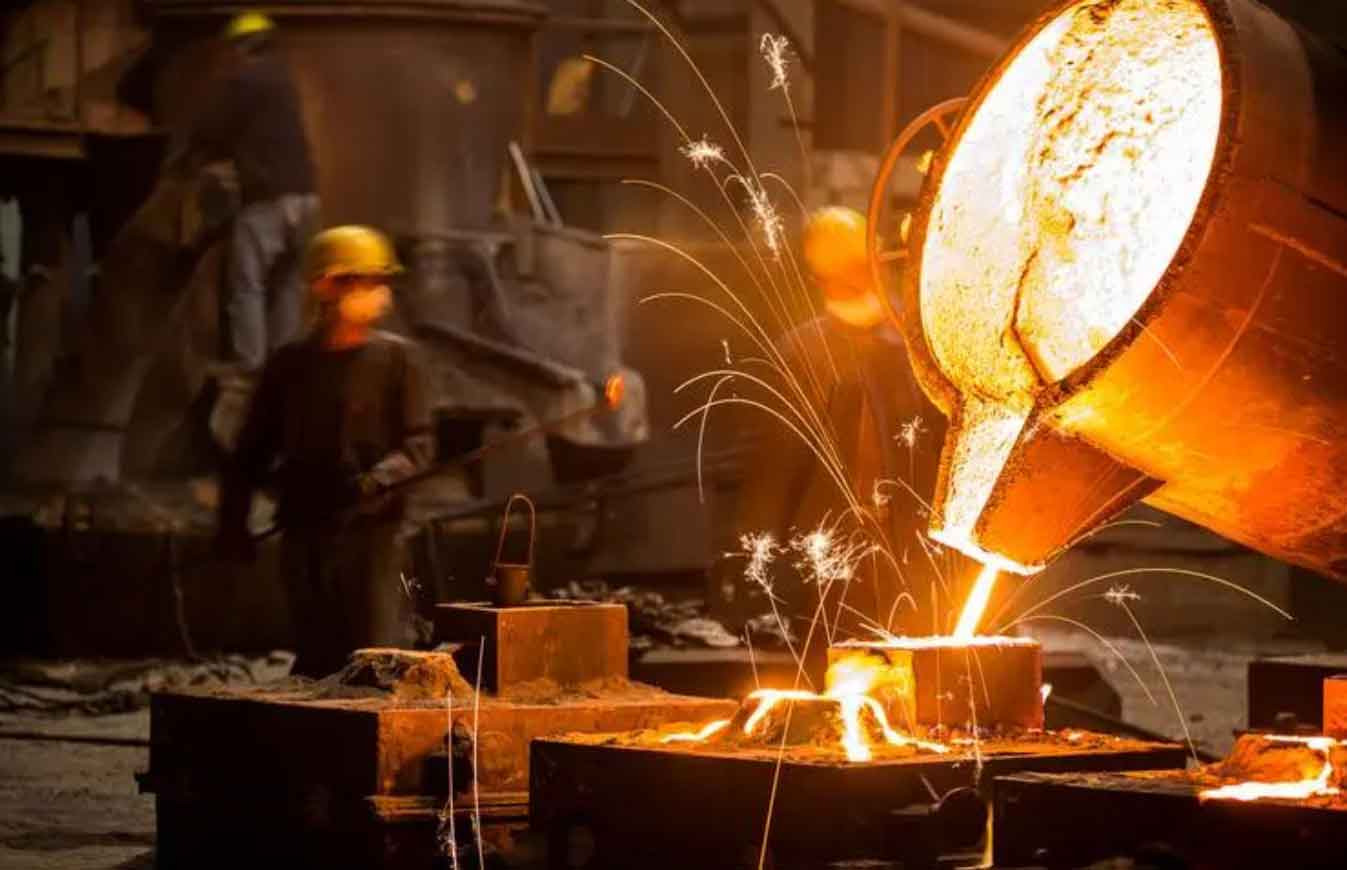
The manufacturing of copper cooling staves has evolved through several methods, each with inherent trade-offs. While fabrication from wrought plates offers consistency, it introduces stress concentration points at welded coolant channel joints. Continuous casting can produce elongated sections but may face limitations in achieving complex internal geometries. The direct casting of staves with embedded tubes—often via sand casting services—addresses the geometry issue but historically struggled with achieving a perfect metallurgical bond between the copper matrix and the tube, and with controlling the microstructure on the working face. The hybrid approach investigated here employs a sand mold for the top and non-critical sides, accommodating complexity, and a water-cooled or high-thermal-conductivity permanent metal mold (like ductile iron) for the critical hot face. This setup aims to enforce directional solidification from the hot face towards the sand side, promoting densification and a sound microstructure where it matters most. Validating and quantifying this solidification sequence is key. This is where computational modeling becomes an indispensable partner to physical sand casting services, allowing for the exploration of thermal profiles without the cost and delay of multiple experimental trials.
Methodology: Finite Element Model Setup
The core of this investigation lies in a transient thermal finite element simulation. The objective was to create a virtual replica of the casting process to capture the evolution of temperature over time throughout the system—copper casting, permanent mold, sand mold, and cores.
Geometric Model and Assumptions
The studied component is a large, plate-like pure copper (99.999%) casting with dimensions 2.0 m in length, 1.0 m in width, and 0.12 m in thickness. Four elliptical cooling water channels run longitudinally through the casting, formed by sand cores. The mold assembly consists of a ductile iron permanent mold at the bottom (forming the hot face) and a sand mold at the top. A bottom-gating system is used, and after pouring, the entire mold is tilted by 30° to enhance the feeding efficiency of the gating system, which acts as a riser. To render the complex 3D problem computationally manageable within a detailed transient analysis, several rational assumptions were made:
- Instantaneous Fill: The mold cavity is assumed to be filled with molten copper at the pouring temperature instantaneously at time t=0. This neglects the fluid flow during filling, focusing the analysis solely on solidification and cooling.
- No Convective Transport: Heat transfer within the molten metal is governed solely by conduction. Macro-scale convection currents, which could redistribute heat and species, are not considered.
- Homogeneous Materials: All materials (copper in liquid and solid states, ductile iron, sand) are treated as isotropic and homogeneous with temperature-dependent properties where significant.
- Simplified Gating: The gating system itself is omitted from the computational domain for mesh efficiency, but its thermal effect as a thermal mass and feed path is implicitly considered in the boundary conditions and the tilt.
Material Properties and Latent Heat
Accurate thermophysical data is the foundation of a reliable simulation. The properties of pure copper vary considerably with temperature, especially around its freezing point (1083°C).
Copper Properties: The density (ρ) and specific heat (cp) were defined as linear functions of temperature (T in °C):
$$ \rho_{Cu}(T) = 8900 – 0.2667 \times (T – 25) \quad \text{kg/m}^3 $$
$$ c_{p,Cu}(T) = 385 + 0.0998 \times T \quad \text{J/(kg·°C)} $$
The thermal conductivity (k) was implemented as a piecewise linear function based on empirical data, as summarized in Table 1.
| Temperature (°C) | 20 | 100 | 200 | 400 | 600 | 800 | 1083 |
|---|---|---|---|---|---|---|---|
| Thermal Conductivity, k (W/(m·°C)) | 399 | 387 | 379 | 374 | 363 | 353 | 321 |
The release of latent heat (L) during the liquid-to-solid phase change is critical. This was handled via the enthalpy method. The total enthalpy (H) is integrated from the specific heat:
$$ H(T) = \int_{0}^{T} \rho(T) \cdot c_{p}(T) \, dT $$
The latent heat is effectively accounted for as a sharp increase in enthalpy over a very narrow temperature range around the melting point, which the solver interprets as a large amount of energy that must be removed without a corresponding temperature drop.
Mold Material Properties: The ductile iron permanent mold also exhibits temperature-dependent conductivity. The silica sand mold properties were taken as constant due to their relatively weaker temperature dependence in the range encountered. Key properties are listed in Table 2.
| Material | Property | Value / Function |
|---|---|---|
| Ductile Iron | Thermal Conductivity, k (W/(m·°C)) | 42.3 @20°C, 36.5 @200°C, 30.0 @400°C, 21.2 @800°C, 17.0 @1000°C |
| Density, ρ (kg/m³) | 7100 | |
| Specific Heat, cp (J/(kg·°C)) | 500 | |
| Silica Sand | Thermal Conductivity, k (W/(m·°C)) | 0.58 |
| Density, ρ (kg/m³) | 1700 | |
| Specific Heat, cp (J/(kg·°C)) | 1220 |
Initial and Boundary Conditions
The simulation starts from a pre-heat condition. The permanent and sand molds are preheated to a uniform temperature between 200-300°C by hot air before pouring, representing a common practice in sand casting services to reduce thermal shock and improve metal flow. The molten copper is introduced at an initial temperature of 1150°C.
The boundary conditions encapsulate all heat transfer mechanisms:
1. Interface Conditions: Perfect thermal contact is assumed at the casting/mold interfaces. The heat transfer is governed by conduction across these interfaces.
2. External Mold Surfaces: All outer surfaces of the mold assembly lose heat to the ambient environment (assumed at 25°C) via combined natural convection and radiation. A combined heat transfer coefficient (hconv+rad) is applied. For the sand mold exterior, a typical value might range from 10-15 W/(m²·°C), while for the metal mold, it could be higher due to possible radiation effects.
3. Cooling Channel Surfaces: The surfaces of the sand cores defining the water channels are subject to convection. Although the channels are empty during solidification, a low heat transfer coefficient accounting for air conduction and natural convection within the cavity is applied.
4. Tilted Configuration: The 30° tilt is modeled by reorienting the entire assembly with respect to the gravity vector. This affects the simulated thermal field by creating a consistent temperature gradient along the length, favoring feeding from the elevated gating end.
Meshing and Solver Details
A 3D finite element mesh was generated, with finer elements in the casting and near the interfaces to resolve steep temperature gradients, and coarser elements in the bulk of the molds. The analysis was performed using a transient thermal solver with an implicit time integration scheme. The total simulated time was 1200 seconds, with automatic time stepping controlled to ensure numerical stability and accuracy during the rapid phase change period.
Simulation Results and In-Depth Analysis
Temperature Field Evolution and Solidification Sequence
The transient temperature contours reveal the dynamic solidification process. The key observation is the establishment of a clear directional, or progressive, solidification pattern. Solidification initiates almost immediately at the interface with the ductile iron permanent mold due to its high chilling power. The solidification front then progresses in two primary directions: (1) from the permanent mold (hot face) towards the sand mold (cold face) through the thickness of the casting, and (2) from the far end of the casting (farthest from the tilted gating system) back towards the feeder/gate.
This pattern is highly desirable. The rapid solidification at the hot face creates a fine-grained, sound microstructure on the surface that will contact the furnace environment. The slower solidifying copper on the sand side remains liquid for a longer duration, effectively acting as a reservoir to feed the shrinkage occurring in the already solidifying hot face region. The 30° tilt further enhances this feeding effect by utilizing gravity, ensuring the hottest metal is always at the gate, creating a positive temperature gradient for feeding along the length. This virtual demonstration validates the fundamental design principle of this hybrid process for critical components like cooling staves, a principle that can be leveraged by sand casting services to tackle other challenging geometries requiring directional solidification.
Solidification Curve Analysis Using the Schwarz Model
To quantitatively analyze the cooling behavior, temperature-time curves (solidification curves) were extracted at strategic points. Three transverse cross-sections along the casting length (near the far end, middle, and near the gate) were analyzed. For each section, curves were taken at three depths: at the permanent mold interface, at the mid-plane near the cooling channels, and at the sand mold interface.
The curves exhibit distinct characteristics:
- Permanent Mold Interface: Extremely rapid cooling with no discernible “thermal arrest” plateau at the melting point (1083°C). The high heat extraction rate dissipates the latent heat too quickly for a temperature hold to be noticeable at the recorded time resolution.
- Sand Mold Interface: Significantly slower cooling, with a clear, extended plateau at 1083°C as the latent heat is released against the insulating barrier of the sand.
- Mid-Plane: Behavior intermediate between the two extremes, with a shorter arrest period visible in some sections.
Furthermore, the cooling curves shift systematically: at any given depth, the section near the gate is hotter than the section at the far end at all times, visually confirming the longitudinal thermal gradient.
To model this behavior, the analytical Schwarz solution for heat conduction in a semi-infinite medium was applied. The temperature field is described by:
$$ T(x,t) = A + B \cdot \text{erf}\left( \frac{x}{2\sqrt{\alpha t}} \right) $$
where \( T \) is temperature, \( x \) is distance from the interface, \( t \) is time, \( \alpha \) is thermal diffusivity, and \( A \), \( B \) are constants determined by boundary conditions. For analysis of a point on the casting surface (x=0), this simplifies to \( T(0,t) = A = \text{constant} \).
The solidification process can be divided into two stages for modeling purposes:
1. Liquid Undercooling Stage: From pouring until the onset of solidification at the point. Here, \( A_1 \) represents the initial temperature (pouring temperature).
2. Solid Cooling Stage: After the solid shell has formed and is cooling. Here, \( A_2 \) represents the effective average interface temperature between the solidifying casting and the mold.
Fitting the simulated cooling curves to this two-stage model yielded excellent agreement. The fitted value \( A_1 \) corresponded closely to the set pouring temperature of 1150°C. The fitted \( A_2 \) values showed clear physical trends: they were consistently lower at the permanent mold interface than at the sand mold interface, and decreased along the length from the gate to the far end. This successful application of the Schwarz model confirms the conductive-dominated nature of the heat transfer in the simulation and provides a simplified analytical framework for interpreting cooling curve data from actual sand casting services.
Computation and Significance of Temperature Gradients
The magnitude and direction of thermal gradients (∇T) are the driving force for directional solidification and directly influence defect formation. The gradients were calculated from the simulated temperature field in both the longitudinal (along the casting length) and transverse (through the casting thickness) directions.
Longitudinal Gradient (GL): Along the centerline of the casting, a positive gradient is established from the far end (cooler) towards the gate (hotter). This gradient increases over time as the far end cools more rapidly. At the moment of solidification at a mid-point, the gradient was calculated to be approximately 12°C/m. During the post-solidification cooling, this longitudinal gradient reached a maximum of about 73°C/m. This positive gradient is sufficient to ensure sequential freezing along the length, directing shrinkage porosity, if any, towards the ultimate hotspot at the gate/feeder, which is a fundamental goal in riser design for sand casting services.
Transverse Gradient (GT): The gradient through the thickness, from the permanent mold side to the sand side, is far more dramatic. Its evolution is complex:
- Initial Spike: Immediately after mold filling, a very high positive gradient is established, peaking around 74 seconds. Maximum values ranged from 272°C/m to 369°C/m from the gate-end to the far-end sections, respectively. This intense chilling is ideal for initiating a stable solidification front at the hot face.
- Latent Heat Release: As solidification proceeds and latent heat is released into the solidifying shell and the mold, the cooling rate slows, causing a temporary reduction in the transverse gradient. Minimum values during this phase were around 142°C/m to 238°C/m.
- Final Cooling: After complete solidification, the high thermal conductivity of copper acts to equalize temperature through the thickness, causing the transverse gradient to gradually decay.
The fact that the transverse gradient is an order of magnitude larger than the longitudinal gradient confirms that the dominant solidification direction is through the thickness, from the chilled face inward. This is precisely the mechanism that ensures the hot face solidifies first with a sound structure. The use of a ductile iron permanent mold, as opposed to a lower-conductivity material, was shown to amplify these beneficial transverse gradients, highlighting how simulation can guide material selection within sand casting services.
Discussion: Implications for Process Optimization and Defect Prediction
The insights gained from this detailed simulation extend beyond academic understanding and have direct implications for foundry practice, particularly for specialized sand casting services involved in large, high-performance components.
1. Validating the Hybrid Mold Strategy: The simulation provides quantitative proof that the permanent-sand mold combination successfully creates the intended bidirectional (longitudinal and transverse) progressive solidification. This validation can reduce the trial-and-error cost in process development. Foundries offering sand casting services can use such models to determine the necessary chill power (via mold material or active cooling), the optimal degree of mold tilt, and the required pre-heat temperatures to achieve a target gradient.
2. Predicting Shrinkage and Porosity Location: The final regions to solidify are unequivocally identified as the junction near the gate and the central regions adjacent to the sand mold. These are the potential “hot spots.” The simulation confirms that the gating system, properly tilted, becomes the ultimate hotspot, making it an effective sacrificial riser. Any shrinkage porosity should be concentrated there and not in the critical hot face or the body of the stave. This predictive capability allows sand casting services to optimize feeder size and placement virtually, improving yield and quality assurance.
3. Interfacial Bonding with Embedded Features: For cooling staves with cast-in tubes, the thermal history at the tube-copper interface is critical for bonding. The simulation can track the thermal profile around these tubes, indicating whether the copper solidifies directionally towards the tube (promoting a good bond) or creates an isolated shrinkage zone around it. This analysis can inform decisions on tube pre-heat temperature or tube coating to manage interfacial heat transfer.
4. Residual Stress and Distortion Analysis: While this study focused on thermal analysis, the accurate temperature vs. time history for every node in the model serves as the direct input for a subsequent mechanical stress analysis. The large transverse thermal gradients, in particular, will induce significant stresses during cooling. Coupling the thermal model with a structural analysis allows sand casting services to predict warpage and residual stress patterns, which can guide the design of reinforcing ribs or the development of a proper stress-relief heat treatment cycle.
5. Extension to Other Alloys and Processes: The methodology is not limited to pure copper. It can be readily adapted to copper alloys (like chromium copper or aluminum bronze used for similar applications) by updating material properties and incorporating a mushy zone for the solidification range. Furthermore, the principles can be applied to other hybrid casting scenarios common in sand casting services, such as using chills in specific locations of a sand mold to control local solidification in complex steel or iron castings.
Conclusion
This comprehensive finite element simulation of a pure copper cooling stave produced via a combined permanent mold and sand casting process has yielded critical insights into its solidification behavior. The model successfully captured the establishment of a strong bidirectional progressive solidification pattern. The analysis of cooling curves using the Schwarz analytical model confirmed the conductive heat transfer regime and provided physically meaningful parameters. Most importantly, the calculation of spatial and temporal thermal gradients quantified the process dynamics: a dominant transverse gradient (up to 369°C/m) ensuring solidification initiates and progresses robustly from the critical hot face, and a supportive longitudinal gradient (up to 73°C/m) ensuring effective feeding towards the gating system.
The findings underscore the power of simulation as an integral part of modern sand casting services. It moves the process from empirical art towards predictive engineering. By enabling virtual experiments, it allows for the optimization of mold design, chill placement, pouring parameters, and feeding systems to achieve sound castings with high yield. For components as demanding as high furnace cooling staves, where internal quality directly translates to service life and safety, this capability is invaluable. The demonstrated approach provides a robust framework that can be adapted and scaled to enhance the reliability, efficiency, and technological sophistication of sand casting services for a wide array of high-integrity industrial castings.