
In the field of industrial manufacturing, producing large and complex components like stainless steel impellers poses significant challenges. These impellers are critical parts in equipment such as pharmaceutical machinery, where they operate in highly corrosive environments. The requirements include high dimensional accuracy, excellent surface finish, and robust mechanical properties to withstand超速 testing and dynamic balance checks. Traditional casting methods, such as sand casting services or investment casting alone, often fall short due to the impeller’s intricate blade design and large size. Through my research and experience, I have developed a hybrid approach that combines investment casting and sand casting services to address these challenges effectively. This compound casting technology leverages the strengths of both methods: investment casting for the complex blade sections and sand casting services for the simpler hub and spoke parts. In this article, I will detail the entire process, from design to quality verification, emphasizing the role of sand casting services in achieving cost-effective and high-quality production.
The impeller in question has an outer diameter of 700 mm, a height of 130 mm, and a net weight of 202 kg. It features 54 thin blades with a wall thickness of only 5 mm, arranged in a layered, overlapping pattern. The blades have a streamlined shape with tight spacing, making molding difficult. Additionally, the hub and spoke sections are thicker, at 30 mm, creating hot spots that require substantial feeding. The material is ZG1Cr18Ni9Ti, an austenitic stainless steel with high chromium content, leading to significant solidification shrinkage and potential defects like oxides and cold shuts. Based on my analysis, using a single casting method is impractical. Investment casting alone would be costly for such a large part and challenging for feeding the thick sections, while sand casting services alone cannot achieve the precise blade geometry and surface finish. Therefore, I proposed a compound casting process where the blade section is made via investment casting to ensure accuracy, and the hub-spoke section is produced using sand casting services to facilitate feeding and reduce costs. This approach integrates the precision of investment casting with the flexibility and economy of sand casting services, enabling the localization of production for进口 equipment.
To implement this, I divided the impeller at an inner diameter of 416 mm, separating the complex blades from the simpler hub-spoke region. The blade section was fabricated using investment casting with a silicone-water glass composite shell, while the hub-spoke section was molded via sand casting services with CO2-hardened sodium silicate sand. The two were then combined to form a complete compound mold. This method required careful design of gating and risering to ensure proper feeding and minimize defects. I adopted a horizontal parting plane with two-flask molding for simplicity and accuracy. The gating system involved top pouring with risers placed on the rim and hub to compensate for shrinkage. The design calculations were based on modulus methods, considering the material’s properties. For instance, the solidification shrinkage of ZG1Cr18Ni9Ti can be expressed as: $$ \epsilon = \frac{V_{liquid} – V_{solid}}{V_{liquid}} \times 100\% $$ where typical values range from 5% to 7%. The modulus for risers was calculated using: $$ M = \frac{V}{A} $$ where V is volume and A is cooling surface area. For the hub riser, I derived a modulus of 2.48 cm, leading to a standard oval riser with dimensions of 120 mm width, 180 mm length, and 150 mm height. Similarly, for the rim risers, a modulus of 2.27 cm resulted in three risers of 110 mm width, 165 mm length, and 150 mm height. These risers ensure adequate feeding length and volume, critical for avoiding shrinkage porosity in the hot spots.
| Section | Modulus (cm) | Riser Dimensions (mm) | Number of Risers | Weight (kg) |
|---|---|---|---|---|
| Hub | 2.48 | 120×180×150 | 1 | 25 |
| Rim | 2.27 | 110×165×150 | 3 | 21 each |
The investment casting process for the blades began with pattern making. I used a rosin-wax pattern material with a shrinkage rate of 0.75%, and the die was machined from 45# steel with a surface roughness of Ra0.8-0.2. The overall casting shrinkage was set at 2.6%. To ensure precise assembly of the 54 blade patterns, I designed a welding fixture consisting of upper and lower cover plates, a positioning ring, and a fastening shaft. This fixture allowed for accurate alignment using arcs on the blades, verified with templates. The patterns were then coated with a silicone-water glass composite shell through dipping and stuccoing processes. The shell consisted of alternating layers of ethyl silicate and water glass binders with refractory materials like zircon flour. The coating process parameters are summarized below:
| Layer | Binder Type | Refractory Material | Drying Time | Thickness (mm) |
|---|---|---|---|---|
| 1-2 | Ethyl Silicate | Zircon Flour | 4-6 hours | 0.2-0.3 |
| 3-5 | Water Glass | Silica Sand | 2-4 hours | 0.5-1.0 |
After coating, the shell was reinforced with a sodium silicate sand jacket containing cast iron stiffeners and lifting rings for handling. This step is crucial to prevent deformation during subsequent processes. Dewaxing was done using high-pressure steam at 0.6-1.0 MPa for 6-10 minutes, and firing was conducted in an electric furnace at 850±30°C for 1.5-2.0 hours. The fired shell exhibited good strength and dimensional stability, ready for assembly with the sand casting part.
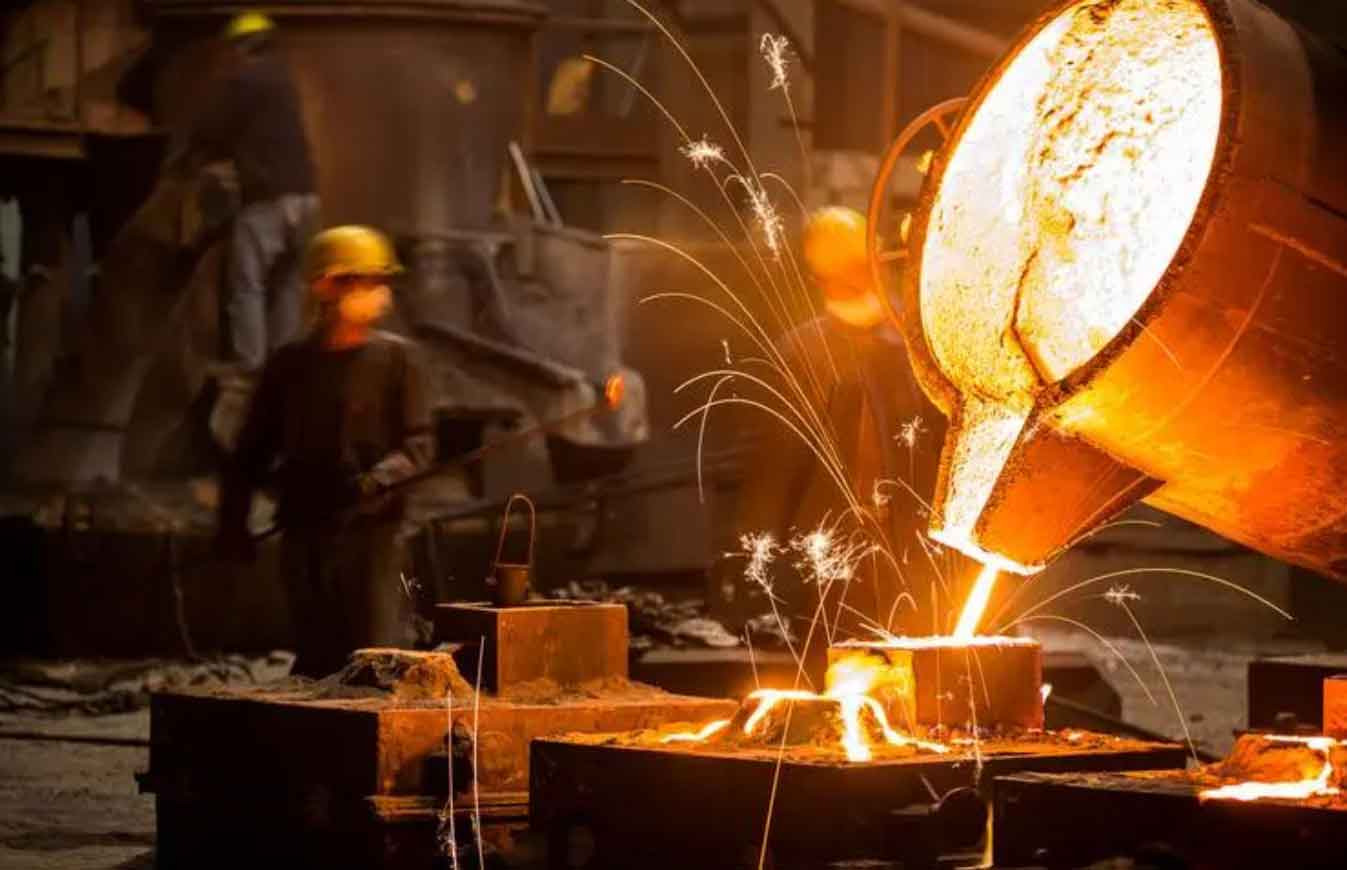
The sand casting services for the hub-spoke section involved wooden patterns and core boxes. I selected a shrinkage allowance of 2.2% for the wood patterns, which included allowances for the investment shell interface. The molding material was 40/70 mesh chromite sand mixed with sodium silicate for CO2 hardening, used as facing sand, while quartz sand served as backing sand. A zircon coating was applied to improve surface finish. The sand mixture had a moisture content below 2%, and hardening was achieved by CO2 gassing at 0.10-0.15 MPa for 20-30 seconds. During molding, I ensured uniform compaction and vented each blade top with 1-2 vents to release gases during pouring. The use of sand casting services here allowed for easy integration of large risers and gating systems, which are essential for feeding the thick sections. The economic benefits of sand casting services are significant, as they reduce material costs and simplify tooling compared to full investment casting.
Assembly of the compound mold required precise alignment. I used locating pins and sleeves to match the investment shell with the sand mold. The shell was placed in the lower sand mold, and the upper mold was closed, forming a complete cavity. The gating system included the hub riser as a pour cup and rim risers for additional feeding. This design facilitated rapid filling and directional solidification. The mold assembly process highlights the synergy between investment casting and sand casting services: the investment shell provides intricate detail for blades, while the sand mold offers robustness and feeding capacity for the hub-spoke area.
Melting and pouring were critical steps to ensure material quality. I used a GG W-0.30 medium-frequency induction furnace with a basic lining to melt ZG1Cr18Ni9Ti. The charge consisted of 60%返回 steel, 20% low-phosphorus scrap steel, and additions of electrolytic nickel, manganese, titanium iron, chromium iron, and silicon iron. Deoxidation was performed with 0.08% aluminum powder for pre-deoxidation and 0.1% aluminum block for final deoxidation. The aim was to minimize oxide inclusions and improve fluidity. The pouring temperature was maintained at 1580±10°C, with a fast initial pour to fill the thin blades quickly, followed by a slower pour to feed the risers. The total pouring time was 8-12 seconds. The temperature control can be modeled using the heat transfer equation: $$ \frac{\partial T}{\partial t} = \alpha \nabla^2 T $$ where T is temperature, t is time, and α is thermal diffusivity. Proper pouring minimizes thermal gradients and reduces defect formation.
After casting, cleaning involved alkali boiling to remove the investment shell without damaging the blade surfaces. The risers were cut off using oxygen-acetylene flame vibration cutting, suitable for stainless steel’s low plasticity and work-hardening characteristics. Heat treatment included solution treatment at 1050-1100°C for 3-4 hours, followed by water quenching above 950°C, and stabilization at 850-950°C for 4 hours with air cooling. This treatment enhances mechanical properties and corrosion resistance by dissolving carbides and reducing segregation. The properties achieved are summarized in the table below:
| Property | Value | Standard Requirement |
|---|---|---|
| Surface Roughness | Ra3.2-1.6 | ≤Ra6.3 |
| Dimensional Accuracy | CT4-CT5 | CT6-CT7 |
| Tensile Strength | ≥520 MPa | ≥500 MPa |
| Yield Strength | ≥220 MPa | ≥200 MPa |
| Elongation | ≥40% | ≥35% |
Quality verification showed that all impellers met the technical specifications. The blade positions were accurate, with chord length differences below 3 mm and twist angle deviations within 1°. Non-destructive testing revealed no defects like slag inclusions, porosity, or cracks. Dynamic balance and overspeed tests at 110% rated speed for 2 minutes were passed successfully. The compound casting process enabled a 100% yield rate for over 20 impellers, resulting in cost savings of over 100,000 yuan. This success underscores the value of integrating sand casting services with precision methods for large complex castings.
In conclusion, the compound casting technology for large stainless steel impellers effectively combines investment casting and sand casting services to overcome limitations of单一 methods. The key innovations include a specialized welding fixture for blade patterns, a silicone-water glass composite shell, and a optimized gating system with risers designed via modulus calculations. The use of sand casting services for the hub-spoke section provided economic and technical benefits, such as easier feeding and lower tooling costs. This approach can be extended to other large complex castings, offering a model for hybrid manufacturing in the foundry industry. The reliance on sand casting services highlights their versatility and importance in modern casting production, enabling high-quality outcomes while maintaining cost efficiency. Further research could explore automation in mold assembly or advanced materials for shells to enhance the process.
Throughout this project, I found that the compound casting process requires careful coordination between different casting techniques. The investment casting ensures precision for complex geometries, while sand casting services offer scalability and feeding solutions. By leveraging both, manufacturers can produce components that meet stringent requirements without prohibitive costs. The integration of sand casting services into such hybrid processes is essential for advancing casting technology and meeting the demands of industries like pharmaceuticals, energy, and aerospace. This experience has reinforced my belief in the potential of compound methods to drive innovation in sand casting services and beyond.