
In my extensive experience providing sand casting services, I have encountered numerous defects that can compromise the integrity of cast components. Among these, endogenous reaction porosity stands out as a particularly challenging issue, often leading to significant quality control problems. This article delves deep into the mechanisms, identification, and prevention of endogenous reaction porosity, emphasizing practical insights for enhancing sand casting services. Through detailed explanations, formulas, and tables, I aim to equip professionals in sand casting services with the knowledge to mitigate this defect effectively.
Endogenous reaction porosity refers to gas pores formed within a casting due to chemical reactions during metal solidification. These reactions involve elements in the metal’s composition or compounds dissolved in the melt, generating gases that become trapped as bubbles. Unlike exogenous pores from mold gases, endogenous pores originate from the metal itself, making them inherent to the melting and solidification processes. In sand casting services, understanding this defect is crucial for producing high-integrity parts, especially for critical applications in industries like automotive, aerospace, and machinery.
The visual characteristics of endogenous reaction porosity are distinct and must be accurately identified. Based on my observations in sand casting services, these pores typically exhibit large sizes, ranging from a few millimeters in diameter, and can be spherical, irregular, or clustered in shape. They are often dispersed throughout the entire cross-section of the casting, appearing as a honeycomb pattern after machining. The pore walls are smooth and metallic in color, usually hidden internally until processing reveals them. This defect tends to be prevalent across all castings from a single heat or ladle, indicating a systemic issue with the melt. To summarize, I have compiled key features in the table below, which is essential for diagnosis in sand casting services.
| Feature | Description | Relevance to Sand Casting Services |
|---|---|---|
| Size and Shape | Large pores (up to several mm), spherical or irregular | Helps distinguish from other defects like microporosity |
| Distribution | Dispersed throughout the casting cross-section | Indicates a melt-related issue rather than mold-related |
| Pore Wall Appearance | Smooth and metallic bright | Aids in visual inspection during quality control |
| Occurrence Pattern | Consistent across a batch from the same melt | Highlights the need for melt treatment in sand casting services |
Endogenous reaction porosity can be classified based on the gas produced during the chemical reaction. The two primary types are carbon monoxide (CO) reaction porosity and water vapor (H2O) reaction porosity. Each type has unique formation mechanisms and prevention strategies, which I will explore in detail, underscoring their impact on sand casting services.
CO reaction porosity is common in steel castings and occasionally in white iron castings with low carbon and silicon content. The formation mechanism revolves around poor deoxidation during melting. When steel contains high dissolved oxygen [O], during solidification, the enriched liquid phase at the solid-liquid interface exceeds the equilibrium solubility of carbon [C] and oxygen. This triggers a reaction that generates CO gas, as shown in the formula below:
$$[C] + [O] \rightarrow CO$$
In some contexts, this is expressed using iron oxide: $$[C] + FeO \rightarrow [Fe] + CO$$, but the core principle remains the same. The CO gas has negligible solubility in steel, leading to bubble nucleation at interdendritic sites. These bubbles grow by absorbing dissolved hydrogen and nitrogen, resulting in dispersed porosity. For sand casting services, this means that melt quality is paramount. I often emphasize that effective deoxidation can prevent this defect. Measures include adding deoxidizers like ferrosilicon, ferromanganese, or silicon-calcium, followed by aluminum for final deoxidation. This reduces dissolved oxygen from levels like 40×10-6 to as low as 4×10⁻⁶, significantly lowering porosity risk. To illustrate, consider the equilibrium constant for the reaction, which can be approximated as: $$K = \frac{P_{CO}}{[C][O]}$$, where PCO is the partial pressure of CO. In sand casting services, controlling [C] and [O] through melt treatment is key to minimizing PCO and porosity.
Water vapor reaction porosity primarily affects copper alloys, such as pure copper, tin bronzes, and leaded gunmetals. In sand casting services, this defect arises from inadequate deoxidation and hydrogen absorption during melting. Copper can react with water vapor in the furnace atmosphere, forming cuprous oxide (Cu2O) and atomic hydrogen [H], which dissolve in the melt. During solidification, a reaction between Cu2 and [H] produces water vapor, leading to porosity. The chemical equation is:
$$Cu_2O + [H] \rightleftharpoons 2Cu + H_2O$$
This equilibrium highlights the interplay between oxygen and hydrogen in copper melts. To prevent this in sand casting services, I recommend a process of oxygen enrichment followed by deoxidation. By using oxidizing fluxes like copper oxide (CuO) or manganese dioxide (MnO2), the melt is enriched with oxygen, which reduces hydrogen content through reactions such as: $$4CuO \rightarrow 2Cu_2O + 2[O]$$ and $$Cu_2O + 2[H] \rightarrow 2Cu + H_2O$$. After hydrogen removal, deoxidation with phosphorus-copper eliminates excess Cu2. Alternatively, vacuum degassing or inert gas flushing can be employed in high-end sand casting services to achieve low hydrogen and oxygen levels. The solubility relationship in copper can be expressed as: $$[H] \cdot [O] = K’$$, where K’ is a constant at a given temperature, underscoring the need for balanced control.
To further aid professionals in sand casting services, I have developed a comprehensive table summarizing the causes and preventive measures for both types of endogenous reaction porosity. This table integrates practical insights from my work in sand casting services, ensuring actionable strategies.
| Porosity Type | Root Cause | Preventive Measures for Sand Casting Services | Key Formulas/Principles |
|---|---|---|---|
| CO Reaction Porosity | High dissolved oxygen in steel due to poor deoxidation | $$[C] + [O] \rightarrow CO$$; Minimize [O] to below equilibrium | |
| Water Vapor Reaction Porosity | Presence of Cu2 and dissolved hydrogen in copper alloys | $$Cu_2O + [H] \rightleftharpoons H_2O$$; Maintain low [H] and [O] |
In addition to these primary types, other endogenous reactions can occur in sand casting services, such as those involving nitrogen or sulfur compounds. For instance, in cast iron, reactions like $$[S] + [O] \rightarrow SO_2$$ might lead to porosity if not controlled. Therefore, a holistic approach to melt management is essential. I often advocate for real-time monitoring of melt chemistry in sand casting services, using techniques like spectroscopic analysis to track elements like oxygen, hydrogen, and carbon. This proactive stance can prevent defects before casting begins.
The role of process parameters in sand casting services cannot be overstated. Factors such as pouring temperature, cooling rate, and mold design influence gas solubility and bubble formation. For example, higher pouring temperatures can increase gas solubility, but rapid cooling may trap gases. A balance must be struck, often guided by empirical models. One useful formula for gas solubility in metals is Sieverts’ law: $$[G] = k \sqrt{P_G}$$, where [G] is the dissolved gas concentration, k is a constant, and PG is the partial pressure of the gas. In sand casting services, controlling the mold atmosphere and melt handling can adjust PG, thereby reducing [G].
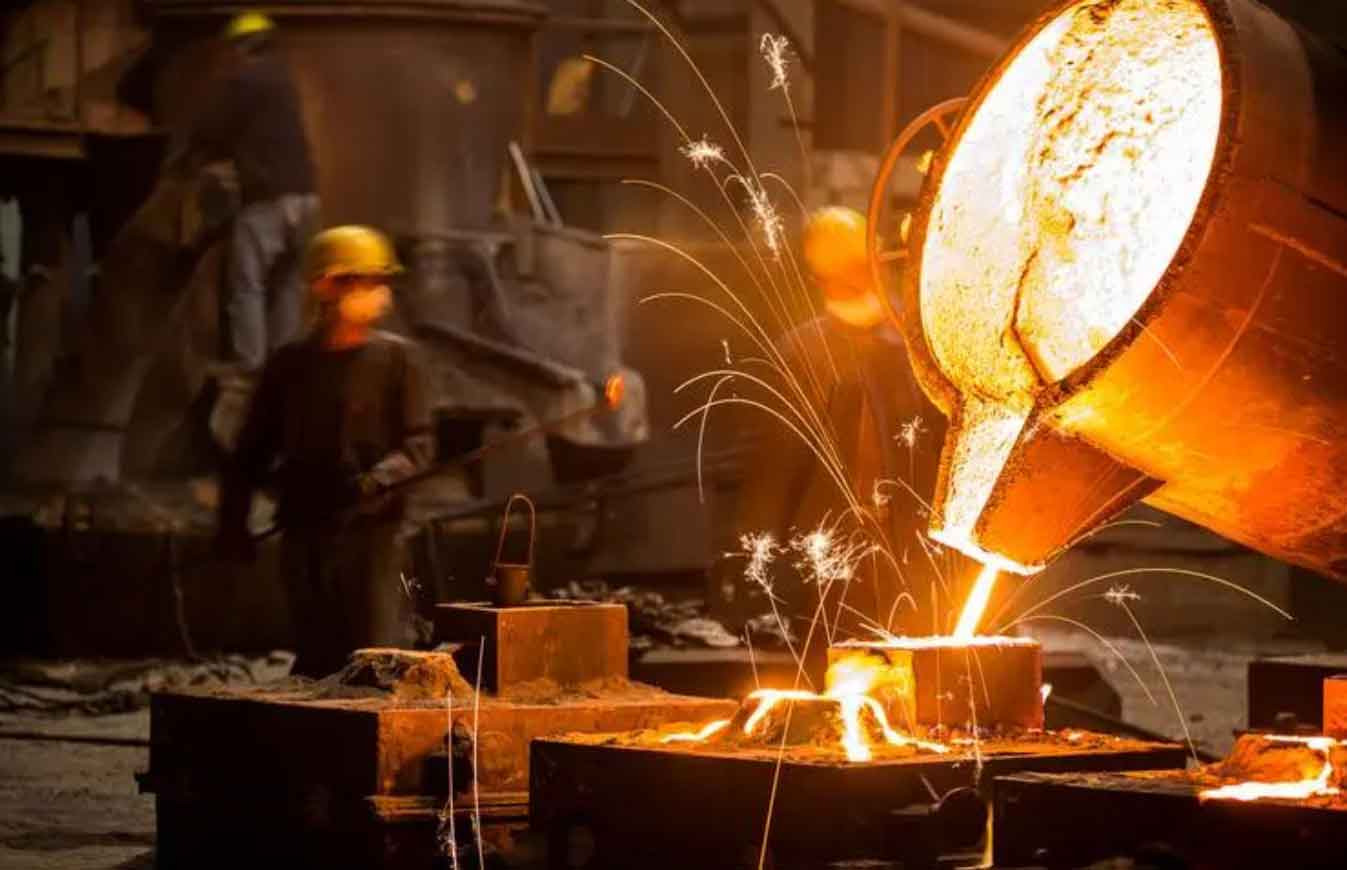
Case studies from my involvement in sand casting services illustrate the importance of these measures. In one instance, a batch of steel castings exhibited severe endogenous porosity, traced to insufficient deoxidation. By implementing a revised deoxidation protocol and adjusting pouring practices, the defect rate dropped by over 80%. Similarly, for copper alloy castings, introducing flux-based degassing improved yield and reduced scrap. These experiences reinforce that sand casting services must integrate metallurgical expertise with process control.
To quantify the economic impact, consider that endogenous porosity can lead to part rejection, rework, and customer dissatisfaction. In sand casting services, preventive costs are often lower than corrective ones. For example, adding deoxidizers may increase material costs by 5-10%, but defect reduction can save 20-30% in quality-related expenses. I recommend regular training for technicians in sand casting services on defect identification and melt handling, as human factors play a critical role.
Looking ahead, advancements in sand casting services, such as simulation software for porosity prediction, offer promising tools. These programs use finite element analysis to model solidification and gas evolution, allowing preemptive adjustments. Coupled with automated melt treatment systems, they can enhance consistency. For instance, a simulation might solve equations like the heat transfer equation: $$\frac{\partial T}{\partial t} = \alpha \nabla^2 T$$, where T is temperature and α is thermal diffusivity, to predict cooling rates and gas entrapment zones. By leveraging such technology, sand casting services can achieve higher quality standards.
In conclusion, endogenous reaction porosity is a complex defect that demands a multifaceted approach in sand casting services. Through meticulous melt treatment, process optimization, and continuous education, it can be effectively managed. As a practitioner dedicated to advancing sand casting services, I urge the industry to adopt these strategies to ensure reliability and efficiency. By prioritizing quality control, sand casting services can meet the evolving demands of modern manufacturing, delivering components that excel in performance and durability.