
In the realm of modern manufacturing, sand casting services have long been a cornerstone for producing complex metal components, especially in industries such as automotive, aerospace, and heavy machinery. As a seasoned engineer specializing in foundry processes, I have witnessed firsthand the evolution of these services from traditional trial-and-error methods to today’s sophisticated computer-aided approaches. The inherent complexity of sand casting—involving fluid flow, heat transfer, and solidification—often leads to defects like shrinkage porosity, hot tears, and misruns if not properly managed. Traditionally, sand casting services relied heavily on the empirical knowledge of skilled designers and extensive physical prototyping, which not only prolonged development cycles but also incurred significant costs in materials and labor. However, with the advent of computational tools, we are now able to simulate and optimize these processes with remarkable accuracy, revolutionizing how we deliver high-quality sand casting services.
The shift toward digitalization in sand casting services is driven by the need for efficiency and precision. In this article, I will delve into the application of simulation software, particularly Procast, in enhancing sand casting services for gravity casting processes. By integrating numerical analysis, we can predict and mitigate defects before physical production begins, thereby reducing waste and improving product reliability. This approach aligns with the growing demand for sustainable and cost-effective sand casting services in global markets. Throughout this discussion, I will emphasize the role of simulation in refining sand casting services, using detailed examples, mathematical models, and data summaries to illustrate its impact.
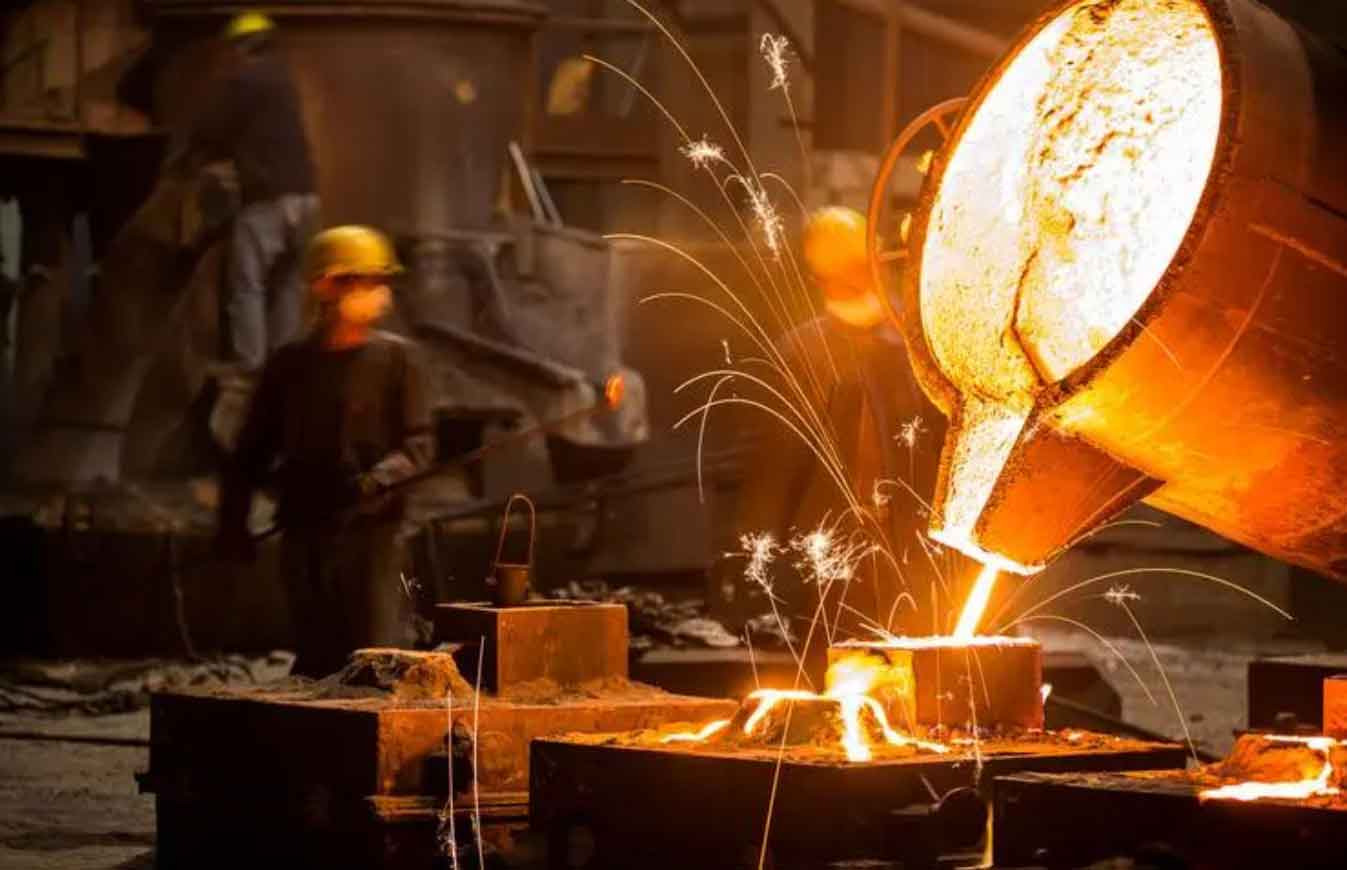
To understand the transformative power of simulation in sand casting services, we must first examine the fundamental physics involved. Gravity sand casting, a subset of sand casting services, entails the pouring of molten metal into a sand mold cavity under gravitational force. This process is governed by three key conservation laws: mass, momentum, and energy. In Procast, these principles are encapsulated through the Navier-Stokes equations for fluid dynamics and the Fourier equation for heat transfer. The coupled solution of these equations allows us to model the filling and solidification stages, providing insights into temperature distributions and potential defect formations. For instance, the velocity field of molten metal can be described by the incompressible Navier-Stokes equation:
$$ \frac{\partial \mathbf{u}}{\partial t} + (\mathbf{u} \cdot \nabla) \mathbf{u} = -\frac{1}{\rho} \nabla p + \nu \nabla^2 \mathbf{u} + \mathbf{g} $$
where \(\mathbf{u}\) is the velocity vector, \(t\) is time, \(\rho\) is density, \(p\) is pressure, \(\nu\) is kinematic viscosity, and \(\mathbf{g}\) is gravitational acceleration. Simultaneously, the heat transfer during solidification is modeled using the Fourier equation with phase change latent heat:
$$ \rho c_p \frac{\partial T}{\partial t} = \nabla \cdot (k \nabla T) + L \frac{\partial f_s}{\partial t} $$
where \(T\) is temperature, \(c_p\) is specific heat, \(k\) is thermal conductivity, \(L\) is latent heat, and \(f_s\) is solid fraction. These equations form the backbone of simulation in sand casting services, enabling precise predictions that guide process optimization.
One critical aspect of sand casting services is the prediction of shrinkage defects, such as porosity and cavities, which compromise component integrity. In Procast, the Nyiama criterion is commonly employed to assess these defects. The criterion is expressed as:
$$ M = \frac{G}{\sqrt{R_C}} $$
where \(M\) is the Nyiama coefficient, \(G\) is the temperature gradient, and \(R_C\) is the cooling rate. A threshold of \(M \geq 1\) is typically used to indicate regions free from centerline shrinkage in steel castings. By applying this criterion, sand casting services can identify hot spots and adjust cooling rates accordingly, often through the strategic placement of chills or risers. To illustrate the practical application, let’s consider a generic case study involving a large valve body casting produced via sand casting services. The material is a heat-resistant steel akin to ZG35Cr26Ni12, with a weight of approximately 7.2 metric tons. The chemical composition, vital for simulating material behavior, is summarized in Table 1.
| Element | Composition (wt%) |
|---|---|
| C | 0.35 |
| Si | 2.00 |
| Mn | 2.00 |
| Cr | 26.00 |
| Ni | 12.00 |
| S | ≤0.04 |
| P | ≤0.04 |
| Fe | Balance |
Table 1: Typical chemical composition of heat-resistant steel used in sand casting services.
In sand casting services, the initial step involves creating a 3D model of the casting, usually in STL format from CAD software like Pro/ENGINEER. For this valve body, two potential orientation schemes were evaluated to determine the optimal placement for minimizing defects. Scheme 1 positioned the casting vertically, while Scheme 2 oriented it horizontally. Through simulation, the thermal analysis revealed that Scheme 2 concentrated hot spots in more accessible regions, simplifying subsequent riser design. The temperature distribution and shrinkage volume were calculated using Procast, with results indicating that Scheme 2 had primary shrinkage areas near the upper outlets, with volumes of 64,897.9 mm³ and 43,786,386.5 mm³, respectively. This quantitative assessment underscores how sand casting services leverage simulation to make informed decisions.
Based on these findings, the gating and risering system was designed. For sand casting services, riser design is crucial to compensate for solidification shrinkage. Using Procast’s riser design module with a shrinkage allowance of 5%, two risers were specified: an elliptical open riser with dimensions of diameter 510 mm, length 760 mm, and height 640 mm; and a circular open riser with diameter 640 mm, length 740 mm, and height 640 mm. The gating system included two sprue with diameters of 70 mm, eight ingates with diameters of 50 mm, and four runners with trapezoidal cross-sections (upper base 50 mm, lower base 55 mm, height 45 mm). This configuration aims to ensure smooth metal flow and adequate feeding, hallmarks of reliable sand casting services.
Simulating the solidification process with this setup revealed defect distributions, as shown in Figure 4 (referenced conceptually). Porosity was primarily localized in the risers, with minor scattered shrinkage at the bottom circumference due to isolated hot spots. To address this, sand casting services often employ chills to accelerate cooling in critical zones. In this case, chill blocks were added around the bottom periphery, and the simulation was rerun. The improved results demonstrated a significant reduction in shrinkage defects, validating the optimization. This iterative process highlights how sand casting services utilize simulation to refine designs without physical trials, saving time and resources.
Beyond defect analysis, sand casting services benefit from simulation in optimizing pouring parameters. For example, the pouring temperature and velocity can be adjusted based on simulated temperature fields to minimize turbulence and oxidation. The energy equation during filling can be extended to account for heat loss to the mold and environment:
$$ \frac{\partial (\rho h)}{\partial t} + \nabla \cdot (\rho \mathbf{u} h) = \nabla \cdot (k \nabla T) + S_h $$
where \(h\) is enthalpy and \(S_h\) represents source terms. By solving this, sand casting services can determine ideal pouring conditions that enhance casting quality. Additionally, microstructural predictions are possible through coupling with kinetics models, such as the Johnson-Mehl-Avrami-Kolmogorov (JMAK) equation for phase transformations:
$$ f = 1 – \exp(-k t^n) $$
where \(f\) is transformed fraction, \(k\) is rate constant, and \(n\) is Avrami exponent. This allows sand casting services to predict grain size and mechanical properties, further adding value to the process.
The economic impact of simulation in sand casting services cannot be overstated. By reducing scrap rates and shortening lead times, foundries can offer more competitive sand casting services. Table 2 compares traditional versus simulation-aided approaches for a typical sand casting service project.
| Aspect | Traditional Sand Casting Services | Simulation-Aided Sand Casting Services |
|---|---|---|
| Design Cycle | 4-6 weeks | 1-2 weeks |
| Prototyping Cost | High (multiple iterations) | Low (virtual iterations) |
| Defect Rate | 15-20% | 5-10% |
| Material Utilization | 70-80% | 85-95% |
| Energy Consumption | High due to rework | Optimized through simulation |
Table 2: Benefits of integrating simulation into sand casting services.
Moreover, sand casting services are increasingly adopting advanced simulation features like inverse modeling, where desired outcomes are specified, and the software derives optimal process parameters. For instance, to achieve a uniform temperature field, we might solve an inverse heat conduction problem using optimization algorithms. This aligns with the trend toward smart manufacturing in sand casting services, where data-driven decisions enhance efficiency.
In terms of software capabilities, Procast offers modules for stress analysis, which is vital for predicting residual stresses and distortions in sand casting services. The equilibrium equation for stress can be expressed as:
$$ \nabla \cdot \sigma + \mathbf{b} = 0 $$
where \(\sigma\) is the stress tensor and \(\mathbf{b}\) is body force. Coupled with thermal strains, this allows sand casting services to preemptively address issues like warping, ensuring dimensional accuracy. Another key area is the simulation of mold properties, such as sand permeability and binder degradation, which affect gas porosity. Darcy’s law is often incorporated:
$$ \mathbf{u} = -\frac{\kappa}{\mu} \nabla p $$
where \(\kappa\) is permeability and \(\mu\) is dynamic viscosity. By integrating these physics, sand casting services can holistically optimize the entire process chain.
Looking ahead, the future of sand casting services lies in the integration of artificial intelligence and machine learning with simulation tools. Predictive models can be trained on historical data to further refine parameters, reducing computational costs. For example, neural networks might approximate the relationship between cooling rate and porosity, enabling real-time adjustments in sand casting services. The overarching goal is to achieve “first-time-right” production, a mantra for modern sand casting services striving for excellence.
In conclusion, as an advocate for technological advancement in foundry operations, I firmly believe that computer simulation is indispensable for elevating sand casting services. Through detailed modeling of fluid dynamics and heat transfer, coupled with criteria like Nyiama’s, we can proactively identify and mitigate defects. The case study of the valve body casting exemplifies how simulation guides riser design, gating layout, and chill placement, culminating in robust sand casting services. By embracing these tools, foundries can not only improve product quality but also contribute to sustainable manufacturing through resource efficiency. As sand casting services continue to evolve, the synergy between simulation and practical expertise will undoubtedly drive innovation, ensuring that this age-old technique remains vital in the industrial landscape.
To further elaborate on the technical nuances, let’s explore additional mathematical formulations relevant to sand casting services. The solidification kinetics, for instance, can be modeled using the Scheil equation for non-equilibrium conditions:
$$ C_s = k C_0 (1 – f_s)^{k-1} $$
where \(C_s\) is solute concentration in solid, \(C_0\) is initial concentration, and \(k\) is partition coefficient. This helps sand casting services predict segregation defects in alloys. Additionally, the fluid flow during mold filling can be analyzed using the volume of fluid (VOF) method to track the free surface:
$$ \frac{\partial \alpha}{\partial t} + \nabla \cdot (\alpha \mathbf{u}) = 0 $$
where \(\alpha\) is volume fraction of metal. Such detailed analyses empower sand casting services to optimize gating designs for minimal air entrapment.
In practice, sand casting services must also consider economic factors. The total cost \(C_{\text{total}}\) for a casting project can be modeled as:
$$ C_{\text{total}} = C_{\text{material}} + C_{\text{labor}} + C_{\text{energy}} + C_{\text{scrap}} $$
where each component can be minimized through simulation. For example, by optimizing riser size, \(C_{\text{material}}\) is reduced, and by preventing defects, \(C_{\text{scrap}}\) approaches zero. This holistic view underscores why sand casting services are increasingly investing in simulation technologies.
Finally, I encourage foundries to continuously update their sand casting services with the latest simulation advancements. Whether it’s through cloud-based platforms for collaborative design or real-time monitoring systems, the integration of digital tools will define the next era of sand casting services. By sharing knowledge and case studies, we can collectively push the boundaries of what’s possible in metal casting, ensuring that sand casting services remain a preferred choice for complex, high-performance components worldwide.